

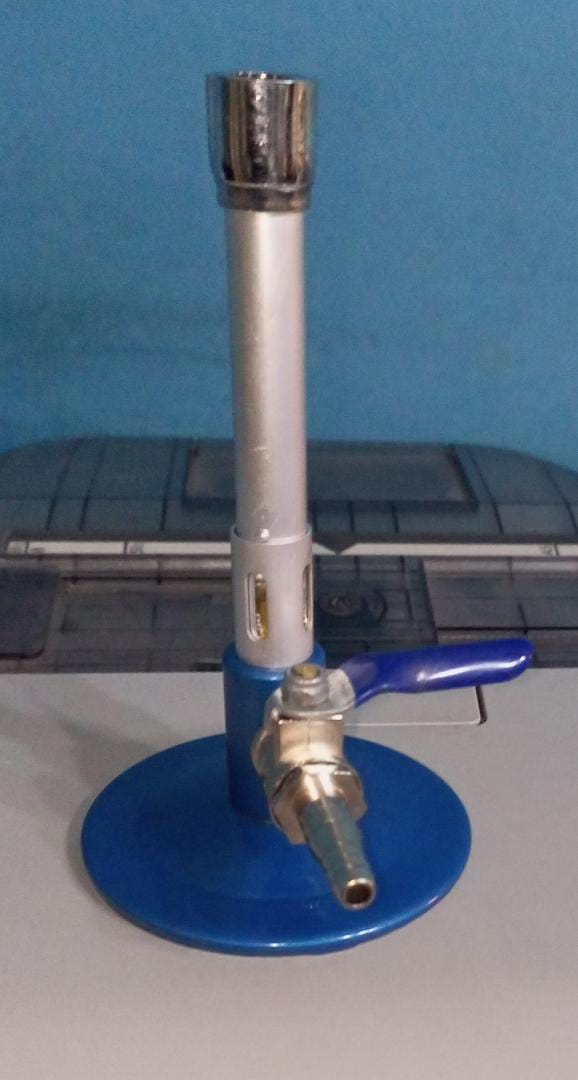

The Bunsen burner is a laboratory burner commonly used for heating, sterilizing, or burning substances.
Its main characteristics are as follows:
Components: It consists of a stable base, a gas inlet (with a control valve), a vertical tube (chimney), and a movable ferrule at the base of the tube that controls the air supply.
How it works: It mixes combustible gas (town gas, butane, propane) with air to produce an open flame. The ferrule regulates the air supply, thus influencing the intensity and temperature of the flame.
Types of Flames: By adjusting the air supply, different flames can be obtained, ranging from a cool, yellow flame (incomplete combustion) to a hot, blue, and almost invisible flame (complete combustion).
Temperature: The flame temperature can vary considerably depending on the air setting, reaching high temperatures (e.g., 750 to 1600°C).
Use: It is essential in chemistry and biology laboratories for various applications, including heating reagents, sterilizing instruments, and creating a sterile area for delicate manipulations such as mushroom cultivation.




Reviews
There are no reviews yet.