

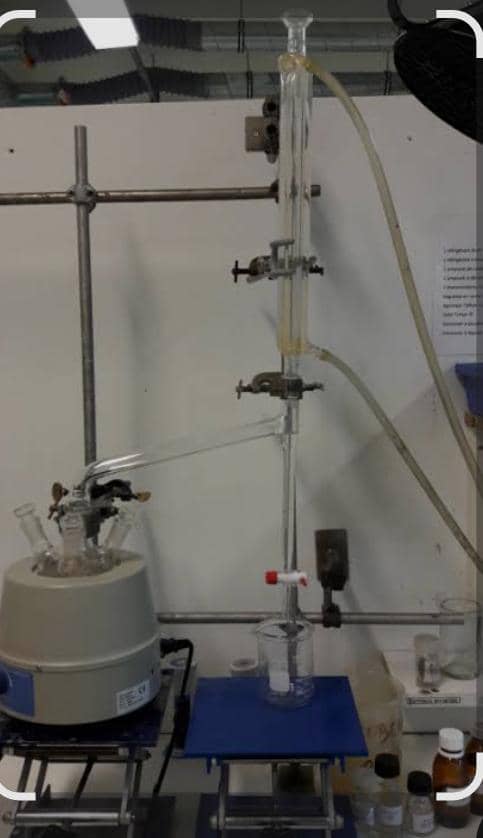

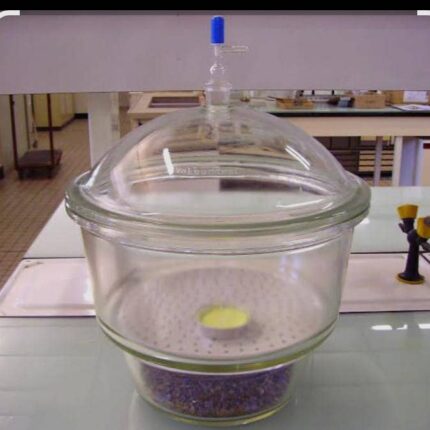
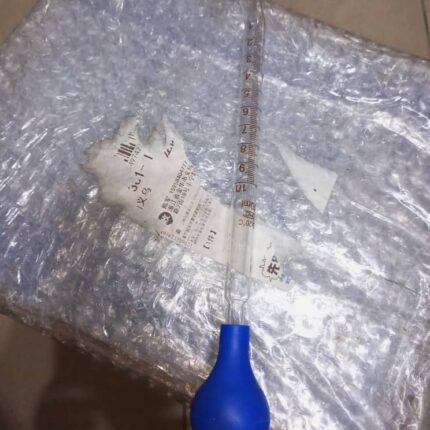
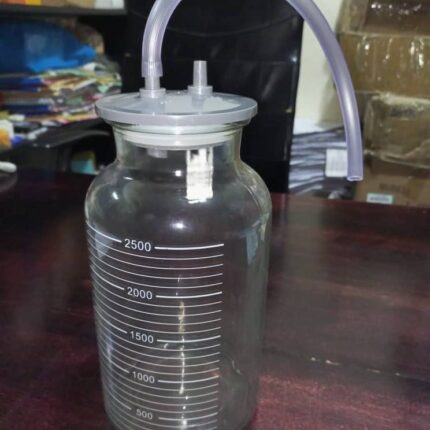
The apparatus presented is a Dean-Stark setup, used in chemistry for the extraction of water (or other liquids) from a reaction medium, particularly during syntheses requiring the elimination of water to shift the equilibrium and increase yield.
Main Features of the Dean-Stark Apparatus:
Function: It enables azeotropic distillation to separate and collect a liquid (usually water) that is immiscible with the reaction solvent.
Composition: It consists of a graduated, cylindrical, vertical glassware element topped with a reflux condenser and connected to a flask or reactor.
Operating Principle:
During reflux heating, the vapors of the solvent and the liquid to be extracted (e.g., water) rise towards the condenser.
After condensation, the liquids fall back into the graduated tube of the Dean-Stark apparatus. Immiscible liquids separate into two distinct phases based on their density (e.g., denser water settles to the bottom).
The solvent (less dense) overflows from the graduated tube and returns to the reaction flask, while the extracted liquid (water) is collected in the graduated tube and can be removed through a tap.
Typical use: It is frequently used in esterification reactions where the removal of water promotes ester formation.
Variations: There are devices adapted depending on whether the density of the solvent used is lower or higher than that of the liquid to be extracted.





Reviews
There are no reviews yet.