



Skin Characteristics
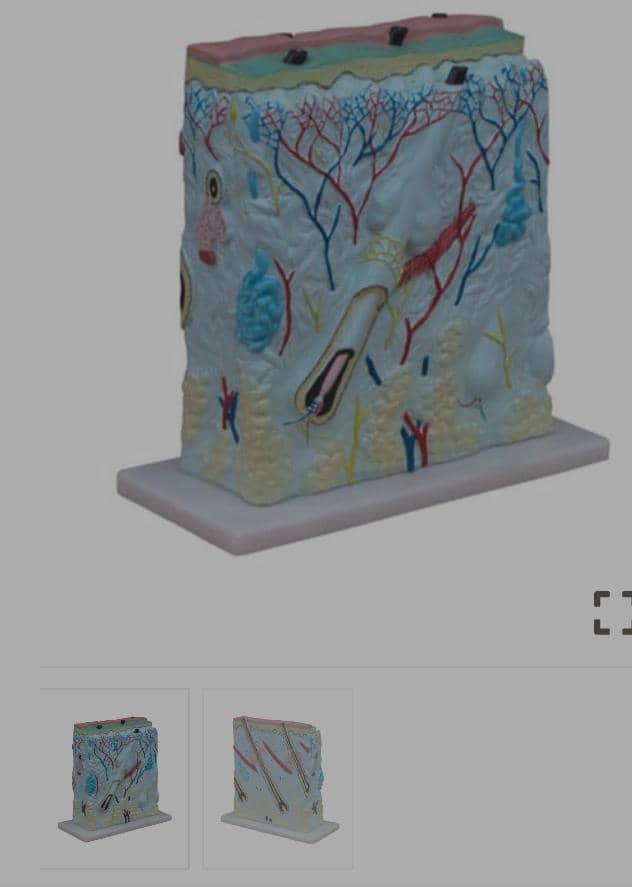
The skin, represented by the anatomical model, is the largest organ in the human body and has several essential characteristics and functions.
Structure
The skin is composed of three main layers, visible on the model:
The epidermis: The outermost layer, visible and palpable, which protects against toxins, bacteria, and fluid loss. It contains melanocytes that produce melanin, which filters UV rays.
The dermis: Located beneath the epidermis, it is a thick layer of elastic and fibrous tissue that gives the skin its strength and elasticity. It contains nerve endings, sweat and sebaceous glands, hair follicles, and blood vessels.
The hypodermis (or fatty layer): Located beneath the dermis, it insulates the body from heat and cold and serves as a protective layer for storing energy reserves. Functions
The skin performs many vital functions:
Protection: It protects the body from heat, cold, UV rays, injuries, and infections.
Thermal regulation: It controls body temperature through perspiration (produced by sweat glands) and vasodilation/vasoconstriction of blood vessels.
Sensory: It allows the perception of touch, pain, pressure, and temperature through nerve endings.
Vitamin D synthesis: Under the influence of sunlight, the skin participates in the production of vitamin D.
Excretion: It removes waste from the body through perspiration.
Aesthetic and psychosocial: Its color, texture, and quality play an important role in appearance and social interactions.









Reviews
There are no reviews yet.