

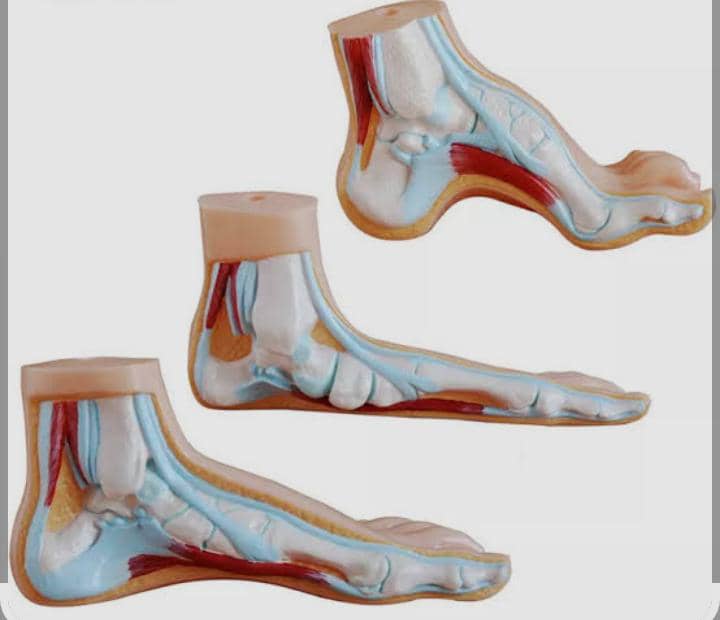


The human foot is a complex anatomical structure with several important features, visible in models and confirmed by anatomy.
Key Features of the Human Foot:
Complex Bony Structure: The foot is composed of 26 bones, forming a longitudinal and transverse arch that acts as a shock absorber and support for the body’s weight.
Multiple Joints: It contains approximately 30 joints, allowing for great mobility and flexibility, particularly at the ankle, which connects the foot to the leg.
Muscles, Tendons, and Ligaments: More than 100 muscles, tendons, and ligaments work together to provide movement, stability, and support for the structure of the foot, including the arch.
Three Distinct Parts: The foot is subdivided into three main parts: the hindfoot (comprising the calcaneus and talus), the midfoot (comprising the cuboid, navicular, and cuneiform bones), and the forefoot (comprising the metatarsals and phalanges of the toes).
Essential Functional Role: The foot is fundamental for balance, locomotion (walking, running), and shock absorption during physical activities.
Form Variations: The models illustrate different foot shapes, such as the normal foot, flat foot (with a low arch), and pes cavus (with an excessively high arch), each with specific biomechanical implications.
Sensory Receptors: Sensory receptors detect touch, temperature, and pain, sending signals to the brain to adjust posture and gait.







Reviews
There are no reviews yet.