

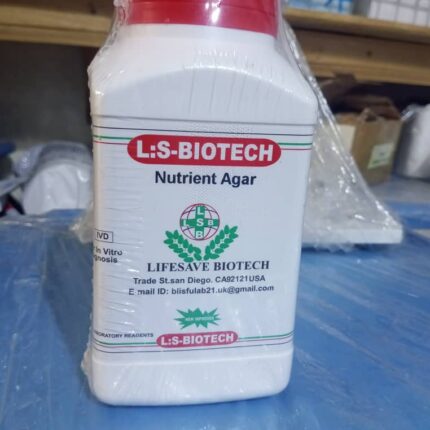
Nutrient Agar
L:S-BIOTECH Nutrient Agar (IVD Grade)
General-Purpose Microbiological Culture Medium
Manufactured/Distributed by LIFESAVE BIOTECH
1. Product Identification
-
Product Name: Nutrient Agar
-
Brand: L:S-BIOTECH
-
Classification:
-
Laboratory reagent (“MORATORY REAGENTS” label)
-
IVD In Vitro Diagnostics (CE marked if applicable)
-
-
Intended Use: Cultivation of non-fastidious microorganisms
2. Key Features
-
General-purpose medium for routine bacteriology
-
IVD-compliant formulation for diagnostic use
-
Standard composition:
-
Peptones (nitrogen source)
-
Beef extract (growth factors)
-
Sodium chloride (osmotic balance)
-
Agar (solidifying agent)
-
-
Typical pH: 7.4 ± 0.2
3. Applications
✔ Quality control testing
✔ Environmental monitoring
✔ Educational demonstrations
✔ Primary isolation of non-fastidious:
-
Bacteria
-
Yeasts
-
Molds
4. Compliance & Safety
-
For In Vitro Use Only (Not for human/animal administration)
-
Manufactured under ISO 13485 (if IVD-certified)
-
Standard shelf life: 3 years when stored sealed at 15-30°C
5. Preparation Protocol
-
Suspend 28g per 1L distilled water
-
Autoclave at 121°C for 15 minutes
-
Pour into sterile Petri dishes
6. Performance Characteristics
-
Growth Promotion: Supports growth of:
-
E. coli ATCC 25922
-
S. aureus ATCC 25923
-
-
Sterility: No contamination after incubation
7. Ordering Information
Manufacturer: LIFESAVE BIOTECH
Packaging: Typically 500g bottles
Storage: Room temperature (dry)
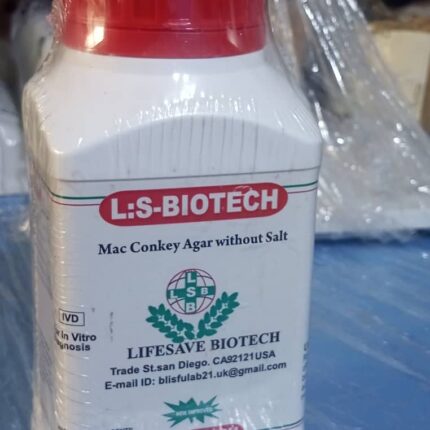
Salt-Free MacConkey Agar
L-S Biotech / Lifesave Biotech Salt-Free MacConkey Agar
(Selective & Differential Medium for Gram-Negative Enteric Bacteria)
Product Description
A specialized salt-free variant of MacConkey Agar designed for superior isolation of Gram-negative enterics while suppressing Proteus swarming.
Key Features
1. Selective Properties
-
Bile salts inhibit Gram-positive organisms
-
Crystal violet-free formulation (varies by product)
-
Salt-free composition prevents Proteus swarming
2. Differential Capability
-
Lactose fermentation detection via neutral red indicator:
-
Fermenters (e.g., E. coli, Klebsiella): Pink/red colonies
-
Non-fermenters (e.g., Salmonella, Pseudomonas): Colorless colonies
-
3. Unique Salt-Free Advantage
-
Eliminates NaCl to:
-
Improve isolation of non-Proteus enterics
-
Reduce overgrowth in mixed cultures
-
Technical Specifications
| Parameter | Detail |
|---|---|
| Format | Dehydrated powder |
| Selective Agents | Bile salts (crystal violet optional) |
| pH Indicator | Neutral red |
| Key Application | Isolation of enteric bacilli from Proteus-rich samples |
| Regulatory Status | IVD use only |
Applications
-
Clinical microbiology (stool/urine cultures)
-
Food/water testing
-
Research on Proteus-contaminated specimens
Typical Workflow:
-
Reconstitute per manufacturer instructions
-
Pour plates and inoculate
-
Incubate 18-24h at 35±2°C
-
Interpret colony morphology/color
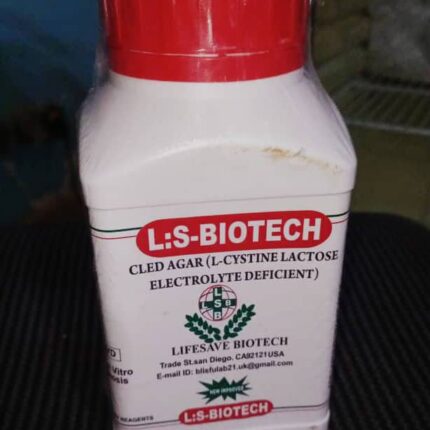
Cleb Agar Culture Medium
CLED Agar (Cystine Lactose Electrolyte Deficient Medium)
CLED Agar is a differential, non-selective culture medium designed for isolating, enumerating, and differentiating urinary tract microorganisms.
Key Features:
-
Differential Properties:
-
Supports the growth of most urinary pathogens while distinguishing them based on lactose fermentation.
-
Lactose fermenters (e.g., E. coli, Klebsiella) produce yellow colonies due to acid production.
-
Non-lactose fermenters (e.g., Proteus, Pseudomonas) form blue/green colonies.
-
-
Electrolyte Deficiency:
-
Prevents swarming of Proteus, which can overgrow other bacteria in conventional media.
-
-
Composition:
-
L-Cystine: Promotes growth of cysteine-dependent dwarf coliforms.
-
Lactose: Serves as a fermentable carbohydrate source.
-
Bromothymol Blue: pH indicator for colony differentiation.
-
-
Primary Use:
-
Ideal for urine culture (ECBU), especially for quantitative bacterial counts in diagnostic microbiology.
-