

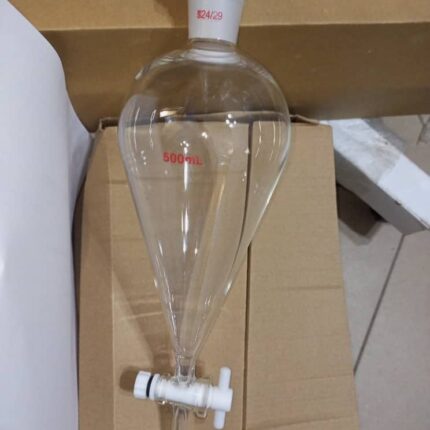
Separating Funnel
The separating funnel has the following characteristics:
Shape:
It is pear-shaped (or conical), optimized for phase separation.
Materials:
Made of borosilicate glass, which gives it chemical resistance and inertness.
Capacity:
The marking on the funnel indicates a capacity of 500 mL.
Stopcock:
It is equipped with a PTFE (polytetrafluoroethylene) stopcock, known for its chemical resistance and leak-tightness. The stopcock allows precise control of liquid flow.
Ground Joint:
The upper neck has a 24/29 type ground joint, indicating compatibility with stoppers or other laboratory equipment of the corresponding size.
Conformity:
This type of funnel complies with international standards such as ISO 4800.
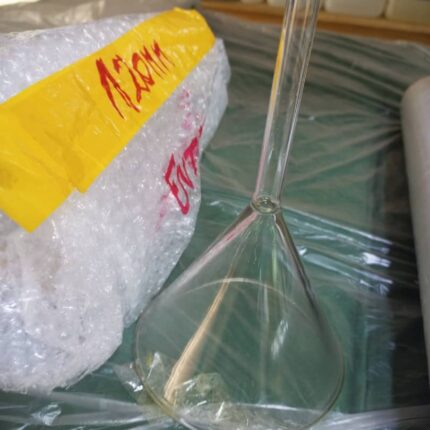
Glass Funnel
Glass laboratory funnel. Its main characteristics are as follows:
Material:
Made of borosilicate glass, known for its resistance to saline solutions, acids, bases, and organic solvents, as well as thermal shock.
Construction:
It consists of a flared conical portion for easy pouring and a tubular stem to direct the flow into a narrow-mouthed container.
Use:
Mainly used for transferring liquids or powders into narrow-mouthed containers without spilling, and can also be used as a filter paper holder during gravity filtration.
Dimensions:
Glass funnels are available in various sizes, namely: 90mm, 120mm, with varying stem diameters and lengths, suitable for various laboratory applications.
Standards:
Manufactured according to specific standards such as ISO 4798 or DIN 12445 to ensure quality and laboratory compatibility.

Burettes
Burettes – Precision Liquid Dispensing Instruments
(For Titrations & Volumetric Analysis)
1. Key Components
| Part | Description |
|---|---|
| Graduated Tube | Long cylindrical glass with precision markings (Class A/B tolerance) |
| Stopcock | PTFE or glass valve for flow control |
| Tip | Tapered delivery end for drop-wise dispensing |
| Mounting Clamp | For secure positioning on stands |
2. Technical Specifications
| Parameter | Details |
|---|---|
| Standard Volumes | 10 mL, 25 mL, 50 mL (Also available: 5 mL, 100 mL) |
| Graduation | 0.1 mL increments (50 mL) |
| Accuracy | ±0.05 mL (Class A) |
| Meniscus Reading | Bottom (clear liquids) / Top (dark solutions) |
| Material | Borosilicate glass (3.3) |
3. Types & Selection Guide
-
Digital Burettes: Motorized, programmable dispensing
-
Microburettes: For <1 mL volumes (0.01 mL gradations)
-
Automatic Zeroing: Self-refilling designs
4. Proper Usage Protocol
-
Rinsing: Pre-wet with titrant solution
-
Filling: Avoid air bubbles (use funnel)
-
Reading: Eye level at meniscus
-
Delivery: Slow, drop-wise near endpoint
5. Calibration & Maintenance
-
Verification: Annual calibration with distilled water
-
Cleaning: Chromic acid for stubborn residues
-
Storage: Vertical position, stopcock grease applied
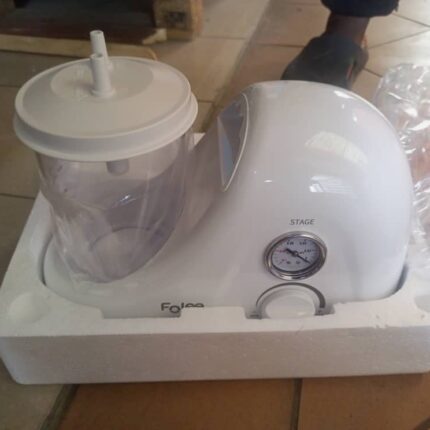
Single-jar electric aspirator
Electric Aspirator – Model HOO3-A
Product Overview
The HOO3-A single-jar electric aspirator is a medical-grade suction device designed for efficient fluid and mucus extraction in clinical and home-care settings.
Key Features & Specifications
General Characteristics
-
Type: Electric suction unit (portable/tabletop)
-
Applications:
-
Oral/nasal/tracheal suctioning
-
Postoperative care
-
Tracheostomy management
-
Minor surgical procedures
-
-
Patient Suitability: Adults & pediatric use
Core Components
✔ Collection Jar
-
Material: Autoclavable polycarbonate
-
Capacity: 1000 mL (1L)
✔ Vacuum System
-
Adjustable suction power (via regulator)
-
Pressure gauge (displays kPa/bar)
-
Max. negative pressure: >0.075 MPa (~563 mmHg)
-
Flow rate: 16 L/min (model-dependent)
✔ Hygiene & Maintenance
-
Autoclavable parts: Jar, tubing
-
Disposable components: Antibacterial filters, suction catheters
Technical Data
-
Power Supply: AC 220V, 50Hz
-
Power Consumption: 250VA
-
Noise Level: <50 dB (quiet operation)
Intended Use Environments
-
Hospitals & clinics
-
Home healthcare
-
Emergency care units

ECG Electrode
Disposable ECG electrodes have the following characteristics:
Product Type: Disposable ECG Electrodes.
Sensor: Ag/AgCl sensor (Silver/Silver Chloride).
Packaging: Each pack contains 50 pieces.
Compliance: CE marked, indicating compliance with European standards.
Use: Designed for electrocardiography (ECG).
Gel: Generally equipped with a conductive gel for good signal transmission.
Backing: Made with a foam or non-woven backing for patient comfort and good adhesion.
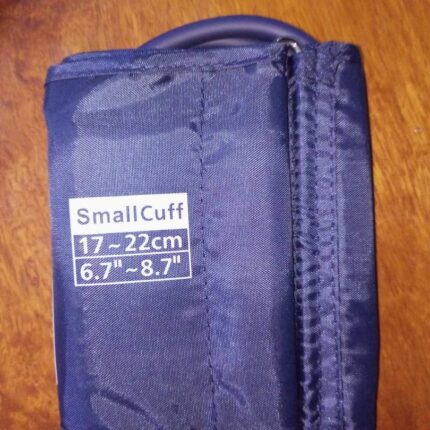
Pediatric Cuff
Pediatric Blood Pressure Cuff – Features & Specifications
Key Attributes:
✔ Small Cuff Design – Optimized for young patients
✔ Arm Circumference Range: 17–22 cm (6.7″–8.7″)
✔ Universal Compatibility – Fits most standard BP monitors via interchangeable connectors (4.6 mm, 5 mm, 6 mm, 7 mm)
Material Composition:
-
Outer Layer: High-density nylon for durability & easy cleaning
-
Inflatable Bladder: Medical-grade non-toxic TPU for safety & accuracy
-
Hook-and-Loop Closure: Secure yet gentle on delicate skin
Clinical & Practical Benefits:
-
Accurate Measurement: Ensures proper fit to avoid false high/low readings
-
Adjustable Fit: Contoured shape prevents slippage during inflation
-
Comfort-Focused: Soft edges minimize discomfort for children
Intended Use:
-
Routine pediatric BP monitoring (hospitals, clinics, home use)
-
Ideal for toddlers to school-aged children
-
Compatible with manual & digital sphygmomanometers

Ear Piercing Gun
Professional Ear Piercing Gun – Features & Specifications
Complete Piercing Kit Includes:
✔ Piercing gun – Precision-engineered for accurate placement
✔ Medical-grade marking pen – For symmetrical dot placement
✔ Compact storage case – Hygienic and portable
✔ Round inspection mirror – Allows for self-application
Premium Construction:
-
High-grade stainless steel & metal alloy – Durable, corrosion-resistant, and long-lasting
-
Ergonomic grip – Ensures steady control during piercing
User-Friendly Design:
-
Quick-release mechanism – Enables fast, single-action piercing
-
Adjustable tension control – For varying ear cartilage thickness
-
Lightweight & portable – Ideal for professional studios, clinics, or home use
Hygiene & Safety Features:
-
Autoclavable (or disposable cartridge options) – Reduces cross-contamination risks
-
Pre-sterilized hypoallergenic studs – Minimizes infection risk
-
Single-use safety lock – Prevents accidental re-use
Versatile Applications:
-
Primary Use: Standard earlobe piercing
-
Adaptable For:
-
Helix/cartilage piercings (with proper attachments)
-
Nose stud application (select models)
-
Navel piercing (specialized variants)
-
Ideal For:
-
Professional piercers – Ensures consistent, sterile results
-
Clinics & dermatologists – Medical-grade safety for patients
-
Home users – Easy self-piercing with proper precautions
Note: Always follow sterilization protocols and aftercare instructions to prevent complications.
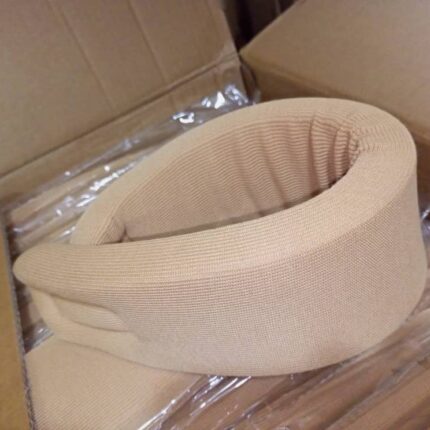
Cervical Collar
Navid Code 154 Medical Cervical Collar – Features & Applications
Key Specifications:
-
Materials: Soft sponge core with breathable fabric cover
-
Closure System: Adjustable hook-and-loop (Velcro®) strap for secure fit
-
Hypoallergenic: Anti-irritation design for sensitive skin
-
Origin: Manufactured in Iran
Design & Comfort:
-
Balanced Support: Maintains natural cervical alignment while allowing gentle mobility
-
Lightweight & Comfortable: Ideal for prolonged wear without skin irritation
-
Contoured Shape: Anatomically designed to reduce pressure on the jaw and occiput
Medical Applications:
-
Cervical Stabilization:
-
Post-traumatic support (whiplash, minor cervical injuries)
-
Management of cervical osteoarthritis (spondylosis)
-
Torticollis (congenital or acquired) correction
-
-
Therapeutic Benefits:
-
Reduces nerve root compression via mild axial traction
-
Alleviates muscle spasms and ligament strain
-
Prevents abnormal neck flexion/extension
-
-
Post-Surgical Use:
-
Supplemental support after cervical spine procedures
-
Target Conditions:
✔ Cervical radiculopathy
✔ Cervicalgia (neck pain syndromes)
✔ Mild cervical disc herniation
✔ Postural neck deformities
Advantages:
-
Non-restrictive for daily activities
-
Adjustable fit accommodates varying neck circumferences
-
Easy to clean (hand wash recommended)
Note: For moderate to severe instability, consult a physician for rigid collar alternatives.

Optical Lens Trial Case
The optical lens trial case has the following characteristics:
Type of Equipment:
This is a trial lens set (or “Trial Lens Set”), used in optometry and ophthalmology.
Contents:
It contains a full range of spherical lenses (positive and negative), cylindrical lenses (positive and negative), and prisms, as well as accessories such as a trial frame and an occluder.
Use:
This set is essential for determining the necessary visual correction during an eye exam, allowing you to test different lens powers to refine your optical prescription.
Case Materials:
The case is rigid, made of aluminum or a similar material, with a padded interior to protect the lenses.
Organization:
Lenses are generally systematically organized by dioptric power and type (spherical, cylindrical) to facilitate quick selection by the practitioner.
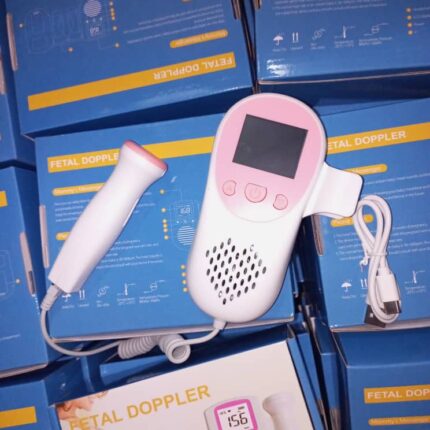
Fetal Doppler
his professional-grade fetal doppler is designed for accurate, safe, and convenient fetal heart monitoring with the following features:
1. High-Performance Probe
-
High sensitivity for early detection (typically from 12 weeks)
-
Precision accuracy (±1 BPM) in heart rate measurement
-
Ergonomic design for comfortable handling
2. Superior Audio Quality
-
Adjustable volume control with high-fidelity sound output
-
Noise reduction technology for clear fetal heartbeat detection
-
Dual audio modes:
-
Built-in speaker for shared listening
-
Earphone jack for private monitoring
-
3. User-Friendly Display
-
Backlit LCD screen for clear visibility in all lighting conditions
-
Real-time fetal heart rate (FHR) display
-
Battery level indicator
4. Safe & Hygienic Design
-
Radiation-free operation (ultrasound power <10mW/cm²)
-
Medical-grade ABS plastic construction:
-
Durable & impact-resistant
-
Easy to clean & disinfect
-
5. Power & Portability
-
Rechargeable lithium battery (4-6 hours continuous use)
-
USB charging for convenience
-
Compact & lightweight for clinic or home use

Pregnant Female Anatomy
An anatomical model or medical simulator, likely used for teaching or training in obstetrics or gynecology.
Its main features are as follows:
Anatomical Representation:
This is a detailed model of the pregnant uterus, showing the position of the fetus inside.
Materials:
Made from soft, realistic materials to simulate human tissue.
Functionality:
Designed to simulate obstetric procedures or gynecological examinations, allowing students to practice palpation, simulated deliveries, or other procedures.
Visible Details:
The model allows for observation of the relationship between the fetus and the uterus, as well as the structure of the pelvis.
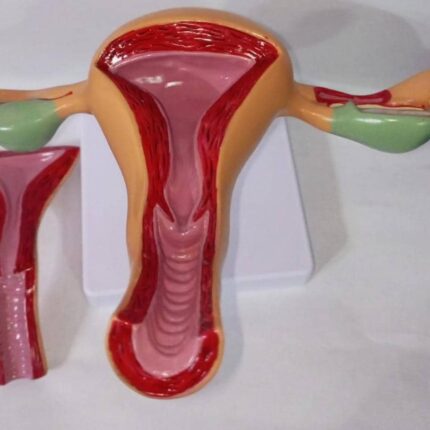
Healthy Uterus
Features of a healthy uterus model, such as this one, include the following:
Detailed Anatomical Representation: The model shows the three-layered structure of the uterus (endometrium, myometrium), the uterine cavity, the cervix, and the vagina, often with the fornix visible.
Associated Female Reproductive Organs:
It includes the ovaries and fallopian tubes (oviducts), illustrating their relationship to the uterus. Sections may show follicles and the egg in various stages of maturity.
Open Vagina and Cervix:
The vagina and cervix are cut longitudinally to allow internal visualization of the uterine lining and uterine muscles.
Life-Size and Realistic:
The model is generally life-size for better anatomical understanding, with hand-painted structures for increased realism.
Educational Use:
Designed as an educational tool for teaching female anatomy, it is useful for medical students and healthcare professionals.