Spinal Needle
Spinal needles have several important characteristics:
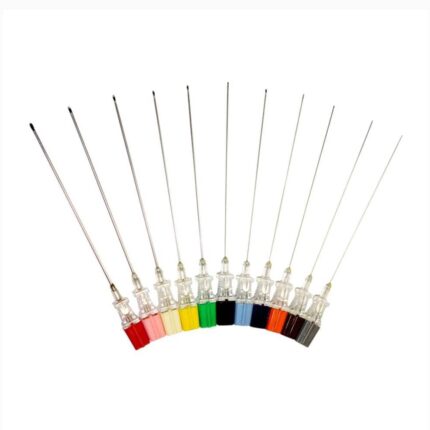
Needle Type: These are Quincke-type spinal needles used for spinal anesthesia or lumbar puncture.
Sterility and Single Use: They are sterile and designed for single use only to prevent infection.
Material and Design:
The needle barrel is made of thin-walled steel, facilitating the reflux of cerebrospinal fluid (CSF).
The needle hub is transparent to allow rapid visualization of CSF or blood reflux.
A notch or lug on the hub can indicate the bevel orientation.
Style:
The stylet fits snugly into the needle lumen to prevent coring and minimize tissue damage.
Its hub is colored differently depending on the needle’s outer diameter (standardized color coding).
Steam indicator tape
Features of Steam Sterilization Indicator Tape
Steam sterilization indicator tape has the following features:
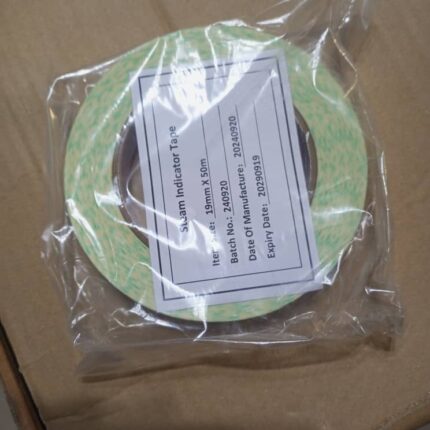
Indicator function: It is designed to indicate whether an item has been exposed to a steam sterilization process. Stripes printed with heat-sensitive ink change color (usually from white to dark brown or black) after exposure to sufficient heat and steam.
Dimensions: 19mm x 50m, which corresponds to the width and length of the tape.
Batch Number and Dates: The tape is identified by a batch number (“Batch No.: 240920”) and a manufacturing date (“Date of Manufacture: 20240920″).
Material and Adhesive: It is made from saturated crepe paper and uses a natural rubber-based adhesive, providing good adhesion and resistance to heat and humidity.
Standard Compliance: These tapes are designed to comply with international sterilization standards, such as ISO 11140-1:2014, which specifies the requirements for sterilization indicators.
Use: It is used to seal sterilization packages and visually differentiates sterilized items from those that have not yet been sterilized.
Sterile Single-Use Gown
Disposable surgical gown, typically used in medical environments such as operating rooms or clinics.
Detailed Description:
Material and Design:
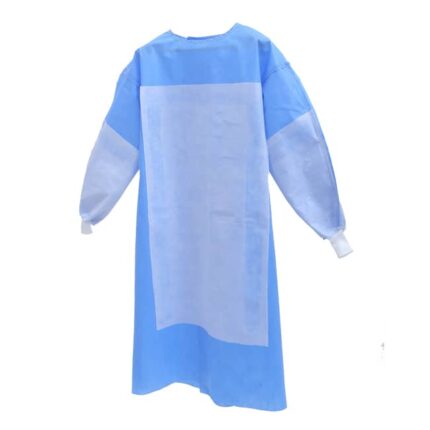
This is a blue, non-woven protective gown designed to be worn by medical personnel during procedures requiring strict hygiene.
Features of
Protection:
The gown features long sleeves with elastic cuffs and a lighter-colored, reinforced center section, indicating an area of increased protection against fluids and contaminants.
Use:
It is part of the essential personal protective equipment (PPE) to prevent the spread of infection and ensure the safety of both patients and healthcare professionals during surgical procedures or other medical procedures.
Sterilization Sleeve
The sterilization sleeves are designed for sterilizing medical, dental, or beauty instruments. Their key characteristics include:
- Materials: Made from medical-grade paper and multi-layer composite film (e.g., paper + PET/CPP film)
- Sterilization Compatibility: Suitable for steam (autoclave) and ethylene oxide (EO) sterilization
- Sterilization Indicators: Feature chemical indicators that change color to confirm sterilization (e.g., pink to brown for steam, yellow for EO)
- Dimensions: Available in various widths (e.g., 50 mm, 75 mm, 100 mm, 200 mm) and roll lengths (typically 200 m), customizable to desired size
- Protection: Offer excellent microbial barrier and moisture resistance, safeguarding instruments from post-sterilization contamination
- Ease of Use: Designed for sealing with a heat sealer
- Quality: Manufactured to international safety standards, ensuring instrument sterility
Stool Container
The stool container is a sterile sample container with specific characteristics for collecting stool samples.
Main Features:
Sterility:
It is labeled “STERILE EO,” meaning it has been sterilized with ethylene oxide, guaranteeing the absence of microorganisms and reliable analysis.
Materials:
Generally made of polypropylene (PP), a transparent and durable material that allows for easy viewing of the contents.
Screw Cap:
It has a red screw cap, ensuring a tight seal and preventing leaks and contamination.
Integrated Spoon:
A spoon or spatula is often attached to the lid or included to facilitate hygienic sample collection.
Traceability Information:
The label on the container indicates information such as the batch number (LCT: 202210) and the manufacturing date (MF: 202210), essential for the management of medical products.
Capacity:
Stool containers are available in different capacities, commonly 60 ml or 40 ml, adapted to the needs of the analyses.
Surgical Light Bulb
Shadowlees Lamp Features:
Bulb Type: Tungsten Halogen Lamp
Voltage: 24V
Wattage: 25W
Cap Size: BA15D
Main Application: Surgical shadowlees lamps, including single-hole, four-hole, five-hole, and nine-hole shadowless.
Brightness: High luminous intensity, luminous flux of 300LM
Lifespan: Designed for reliable use, up to 600 hours of continuous use.
Body Material: Durable glass
Energy Efficiency: 25lm/W light output, providing good energy efficiency.
Light Quality: Provides a soft, warm white light with a color temperature of 2700K, providing comfortable lighting.
User-friendly design: Compatible with dimmers and meets CE certification standards for safety and quality.
Swab
Sterile swabs (“Sterile Swab Sticks”) and their main characteristics are as follows:
Sterility: They are individually packaged and labeled “STERILE SWAB STICK,” indicating that they are intended for medical or laboratory use requiring a sterile environment.
Single Use: As sterile consumables, they are designed for single use only to prevent cross-contamination.
Design: Each swab consists of a plastic stick and one end covered with an absorbent material (cotton).
Identification: The packaging includes fields for recording information such as the name (“NAME”), date (“DATE”), time (“HOUR”), bed (“BED”), and reference (“REF”), essential for sample tracking.
Certification: The presence of the “CE” marking indicates compliance with European Union health, safety, and environmental protection standards.
Application: These swabs are commonly used for collecting biological samples (nasal, oropharyngeal, skin, etc.) for diagnostic purposes, particularly for the detection of infectious diseases.
Talquist Paper
The Tallquist hemoglobin scale, like the R. Terry®, is a quick and easy tool for estimating hemoglobin levels in the blood.
Key Features:
Visual Comparison Method: It compares the color of a drop of blood absorbed onto a filter paper to a predefined color scale to estimate hemoglobin concentration.
Simple and Quick to Use: It does not require sophisticated equipment or electricity, making it useful in resource-limited settings, such as rural areas or primary healthcare centers.
Anemia Screening: It is primarily used for rapid anemia screening by assessing hemoglobin concentration in the blood.
Components: The kit includes a booklet or card with a color scale and absorbent filter papers for collecting blood samples.
Developed in the early 20th century: The Tallquist method was developed around 1900.
Tape Measure
Features of Tape Measures
Tape measures have several typical features of this measuring tool:
Flexible material: Generally made of fabric, plastic, fiberglass, or metal (for the more robust versions), which allows them to adapt to uneven surfaces for measurement.
Clear graduations: They feature precise measurement markings, in centimeters and inches, to make lengths easier to read.
Ease of reading: The scales are designed to be easily read, with a high contrast between the markings and the tape background.
Durability: The ends are reinforced with metal sheets for greater wear resistance.
Variety of colors and lengths: As shown in the image, they are available in different colors and lengths to suit various needs.
Portability: Their flexibility and ability to be rolled up make them easy to transport and store.
Test Tube Rack
The test tube rack features the following:
Material: It is made of polypropylene (PP), providing good visibility and easy cleaning.
Capacity: The model shown is a 40-position rack, designed to hold 40 test tubes simultaneously.
Design: It features a three-layer structure for greater stability. The top two layers have holes of the same diameter, while the bottom layer has openings of different sizes to ensure stable support for the tubes.
Assembly: This type of rack is detachable or easy to assemble and disassemble, making it convenient for storage, transport, or cleaning.
Use: Ideal for organizing and holding test tubes in the laboratory, for school experiments, or for applications requiring upright tubes.
Tip Holder
Tip racks are essential laboratory equipment designed to organize, protect, and facilitate the use of tips. Their key features include:
Material: They are made of polypropylene (PP) plastic, a lightweight, durable, and temperature-resistant material (allowing freezing and autoclaving for sterilization).
Design and Functionality:
Organization and Safety: They feature multiple slots (96 wells) to securely hold tips in place and protect them from contamination when the box is closed.
Refill and Reuse: The case and rack are reusable, and the rack can be refilled with loose tips, saving money and reducing waste.
Ease of Use: The rack design facilitates quick and clean attachment of the tip to the automatic pipette.
Compatibility and Specifications:
They are designed to fit specific pipette tip volumes (e.g., 200 µL, 1000 µL) and are compatible with various pipette brands (DragonLab, etc.).
Sterility and Purity: The racks and tips can be sterilized at high temperatures (autoclavable), and high-purity tips (DNase-free, RNase-free, etc.) are available for sensitive applications.
Tourniquet with Clasp
Tourniquet with ClaspCharacteristics of a Tourniquet with Clasp
A tourniquet with clasp, used for blood draws or in case of hemorrhage, has several distinctive features.
Features:
Secure closure and opening: It features a clip closure system for quick and secure application, and gradual or rapid one-handed release for patient comfort.
Patient comfort and safety: The closure mechanism is designed not to pinch the skin, ensuring greater comfort during use.
Materials: The band is made of elastic and durable materials such as polyamide and synthetic rubber, while the casing and clasp are made of ABS (a type of plastic).
Functionality: It allows for gradual reduction of blood flow, facilitating the visualization of veins for blood draws or controlling blood flow in an emergency.
Hygiene: Some models are designed to be easily disinfected, machine-washable, or hand-washable with products suitable for the materials.
Durability: The elastic band is strong and durable, designed for intensive use.
Size and adaptability: Available in various lengths to accommodate different limb sizes (children and adults).