

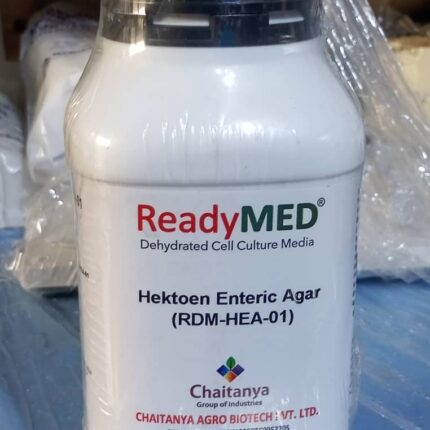
Hektoen Enteric Agar
Hektoen Enteric Agar (HEA) – Technical Specifications
Selective & Differential Medium for Enteric Pathogens
1. Intended Use
-
Primary Application: Isolation/differentiation of Salmonella and Shigella spp.
-
Sample Types: Clinical stool specimens, food, environmental samples
2. Key Functional Components
| Component | Role |
|---|---|
| Bile salts | Inhibits Gram-positive & non-pathogenic Gram-negative bacteria |
| Lactose/sucrose/salicin | Carbohydrate sources for fermentation |
| Sodium thiosulfate + Ferric ammonium citrate | H₂S production detection |
| Bromothymol blue + Acid fuchsin | pH indicators (differentiate fermenters) |
3. Physical Characteristics
-
Color: Green (prepared medium)
-
Clarity: Clear to slightly opalescent
-
pH: 7.5 ± 0.2 at 25°C
-
Format: Dehydrated powder
Performance Characteristics
Colony Morphology
| Organism | Colony Appearance | Biochemical Basis |
|---|---|---|
| E. coli (coliform) | Salmon-pink, may yellow medium | Rapid lactose fermentation |
| Salmonella spp. | Blue-green with black centers | H₂S production (thiosulfate → FeS) |
| Shigella spp. | Pale green, translucent | Non-lactose fermenter |
| Proteus spp. | Colorless with blackening | H₂S production only |
Quality Control Parameters
-
Sterility: No growth after 24h at 35°C
-
Growth Promotion:
-
Salmonella enterica ATCC 14028: Blue-green colonies with H₂S
-
Shigella flexneri ATCC 12022: Pale green colonies
-
-
Selectivity: ≥80% inhibition of E. coli ATCC 25922
Protocol Summary
-
Preparation: Suspend 75g/L, boil to dissolve, autoclave (121°C, 15 min)
-
Plating: Pour into Petri dishes (~20mL/plate)
-
Inoculation: Streak for isolation
-
Incubation: 35-37°C for 18-24h (extend to 48h for low-density samples)
Regulatory & Storage
-
Shelf Life: 3 years (unopened, <30°C)
-
Safety: Handle as potential biohazard post-inoculation
Advantages Over Competing Media
✔ Dual differentiation (fermentation + H₂S)
✔ Superior Shigella recovery vs. SS Agar
✔ Color contrast enhances readability
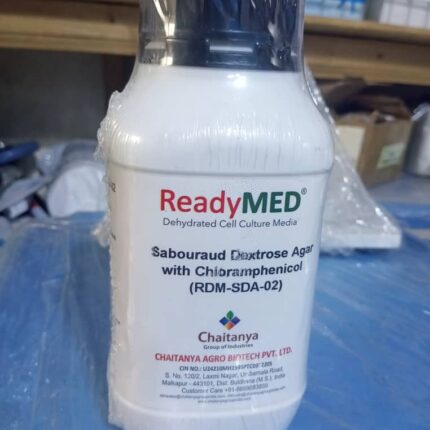
Sabouraud Dextrose Agar with Chloramphenicol
ReadyMED™ Sabouraud Dextrose Agar with Chloramphenicol (RDM-SDA-02)
Manufactured by Chaitanya Agro Biotech Pvt. Ltd.
Product Overview
A selective fungal culture medium optimized for isolation of yeasts and molds, with added chloramphenicol to suppress bacterial contamination. Ideal for clinical, pharmaceutical, and cosmetic testing.
Key Specifications
1. Composition
| Component | Function |
|---|---|
| Dextrose (40g/L) | Primary carbon source |
| Peptones (10g/L) | Nitrogen/vitamin source |
| Agar (15g/L) | Solidifying agent |
| Chloramphenicol | Antibacterial inhibitor |
2. Selective Properties
-
Chloramphenicol (0.05g/L):
-
Broad-spectrum antibiotic
-
Suppresses Gram-positive & Gram-negative bacteria
-
-
Acidic pH (5.6 ± 0.2):
-
Enhances fungal growth
-
Further inhibits bacterial competitors
-
3. Physical Characteristics
-
Form: Free-flowing dehydrated powder
-
Prepared Medium: Clear to slightly opaque
-
Gel Strength: Firm (1.5% agar equivalent)
Applications
-
Clinical Mycology: Isolation of Candida, dermatophytes
-
Pharmaceutical QC: Sterility testing (USP/EP compliant)
-
Cosmetic Testing: Preservative efficacy evaluation
-
Environmental Monitoring: Air and surface fungal sampling
Preparation & Usage
Protocol
-
Suspension: 65g powder per 1L purified water
-
Heating: Boil with stirring until dissolved
-
Sterilization: Autoclave at 121°C for 15 minutes
-
Pouring: Cool to 45-50°C before plating
Incubation
-
Yeasts: 30-35°C for 24-48 hours
-
Molds: 20-25°C for 3-5 days
Quality & Compliance
-
Manufactured under cGMP
-
Meets USP/EP/JP standards
-
Batch-controlled for consistency
Product Code: RDM-SDA-02
Shelf Life: 36 months (unopened, at 15-30°C)
Why Choose ReadyMED SDA-CAF?
✔ Dual selectivity (antibiotic + acidic pH)
✔ Optimized for fastidious fungi
✔ Regulatory-compliant for critical testing
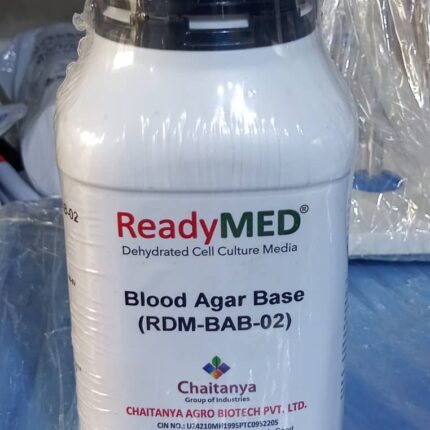
Blood Agar Base
ReadyMED™ Blood Agar Base (RDM-BAB-02)
Manufactured by Chaitanya Agro Biotech Pvt. Ltd.
Product Overview
A high-quality dehydrated blood agar base medium designed for the cultivation of fastidious microorganisms and hemolysis observation. Ideal for clinical, pharmaceutical, and research laboratories.
Key Features
-
Universal base medium for preparing blood agar plates
-
Optimal nutrition for fastidious organisms (streptococci, pneumococci, etc.)
-
Clear hemolysis visualization when supplemented with 5-10% blood
-
Ready-to-prepare dehydrated formulation
Technical Specifications
| Parameter | Specification |
|---|---|
| Product Code | RDM-BAB-02 |
| Form | Free-flowing powder |
| Typical Composition | Peptones, beef extract, NaCl, agar |
| pH (prepared) | 7.3 ± 0.2 |
| Sterilization | Requires autoclaving (121°C for 15 mins) |
| Recommended Supplement | 5-10% defibrinated blood |
Applications
-
Isolation of pathogenic streptococci
-
Hemolysis pattern studies (α, β, γ)
-
Routine culture of fastidious organisms
-
Clinical microbiology diagnostics
Manufacturer Details
Chaitanya Agro Biotech Pvt. Ltd.
-
Registered Corporate Identity Number (CIN) provided on label
-
Customer support contacts included
-
Website for product information
Preparation Protocol
-
Suspend 40g in 1L distilled water
-
Heat to boiling with stirring
-
Autoclave at 121°C for 15 minutes
-
Cool to 45-50°C; add sterile blood aseptically
-
Pour plates under sterile conditions
Quality Assurance
-
Manufactured under strict quality controls
-
Batch-to-batch consistency
-
Complies with international microbiological standards
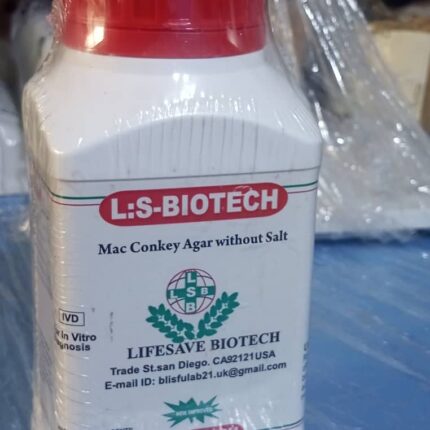
Salt-Free MacConkey Agar
L-S Biotech / Lifesave Biotech Salt-Free MacConkey Agar
(Selective & Differential Medium for Gram-Negative Enteric Bacteria)
Product Description
A specialized salt-free variant of MacConkey Agar designed for superior isolation of Gram-negative enterics while suppressing Proteus swarming.
Key Features
1. Selective Properties
-
Bile salts inhibit Gram-positive organisms
-
Crystal violet-free formulation (varies by product)
-
Salt-free composition prevents Proteus swarming
2. Differential Capability
-
Lactose fermentation detection via neutral red indicator:
-
Fermenters (e.g., E. coli, Klebsiella): Pink/red colonies
-
Non-fermenters (e.g., Salmonella, Pseudomonas): Colorless colonies
-
3. Unique Salt-Free Advantage
-
Eliminates NaCl to:
-
Improve isolation of non-Proteus enterics
-
Reduce overgrowth in mixed cultures
-
Technical Specifications
| Parameter | Detail |
|---|---|
| Format | Dehydrated powder |
| Selective Agents | Bile salts (crystal violet optional) |
| pH Indicator | Neutral red |
| Key Application | Isolation of enteric bacilli from Proteus-rich samples |
| Regulatory Status | IVD use only |
Applications
-
Clinical microbiology (stool/urine cultures)
-
Food/water testing
-
Research on Proteus-contaminated specimens
Typical Workflow:
-
Reconstitute per manufacturer instructions
-
Pour plates and inoculate
-
Incubate 18-24h at 35±2°C
-
Interpret colony morphology/color

Sabouraud Dextrose Agar
ReadyMED Sabouraud Dextrose Agar (RDM-SDA-01) – Technical Specifications
Product Description
ReadyMED Sabouraud Dextrose Agar (SDA) is a selective fungal culture medium optimized for isolation and cultivation of yeasts and molds. The formulation complies with international standards for pharmaceutical and cosmetic testing.
Key Characteristics
1. Composition
| Component | Function | Concentration |
|---|---|---|
| Peptones | Nitrogen/vitamin source | 10 g/L |
| Dextrose | Energy/carbon source | 40 g/L |
| Agar | Solidifying agent | 15 g/L |
2. Selective Properties
-
Natural pH 5.6 creates acidic environment that:
-
Promotes fungal growth
-
Inhibits most bacterial contaminants
-
-
Optional antibiotic supplementation (chloramphenicol/gentamicin) available for enhanced selectivity
3. Performance Characteristics
-
Growth Promotion: Supports robust development of:
-
Pathogenic yeasts (e.g., Candida albicans)
-
Filamentous fungi
-
Dermatophytes
-
-
Colony Morphology: Produces characteristic fungal colonies for easy identification
Quality Attributes
-
Physical Parameters:
-
Dehydrated form: Free-flowing powder
-
Prepared medium: Clear to slightly opalescent
-
Gel strength: Equivalent to 1.5% agar
-
-
pH: 5.6 ± 0.2 at 25°C
Applications
-
Pharmaceutical QC:
-
Sterility testing
-
Microbial limit testing
-
-
Clinical Mycology:
-
Isolation of fungal pathogens
-
-
Cosmetic Testing:
-
Preservative efficacy testing
-
-
Environmental Monitoring:
-
Air and surface sampling
-
Regulatory Status
-
Manufactured under cGMP conditions
-
Meets compendial requirements (USP/EP)
Product Code: RDM-SDA-01
Packaging: 500g dehydrated powder
Shelf Life: 36 months when stored sealed at 15-30°C
Preparation Protocol
-
Suspend 65g in 1L purified water
-
Heat to boiling with stirring
-
Autoclave at 121°C for 15 minutes
-
Cool to 45-50°C before pouring
Incubation Conditions:
-
20-25°C for 3-5 days (molds)
-
30-35°C for 24-48 hours (yeasts)
Columbia Agar
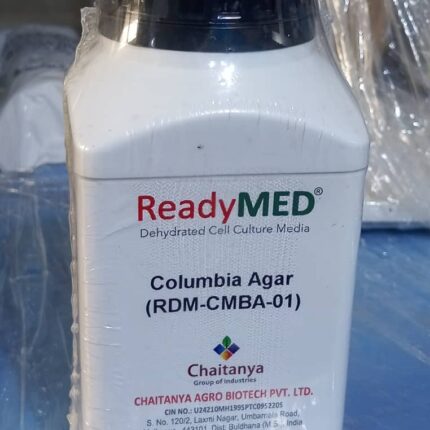
ReadyMED Columbia Agar (RDM-CMBA-01) – Product Overview
General Description
ReadyMED Columbia Agar is a highly nutritious, dehydrated culture medium designed for the isolation and cultivation of a broad spectrum of microorganisms, including fastidious organisms such as Streptococci and Pneumococci.
Key Features
1. Primary Applications
-
Isolation and cultivation of diverse microorganisms, particularly fastidious bacteria
-
Ideal for clinical specimens where broad-spectrum recovery is needed
-
Hemolysis detection when supplemented with blood (e.g., 5% sheep blood)
2. Composition & Functionality
| Component | Function |
|---|---|
| Protein hydrolysates (polypeptones, pancreatic heart peptone) | Promotes rapid growth of fastidious organisms |
| Corn starch | – Energy source – Absorbs toxic metabolites – Enhances streptococcal hemolysis |
| Yeast extract | Supplies essential B vitamins for growth |
| Sodium chloride | Maintains osmotic balance |
| Agar | Solidifying agent |
3. Preparation
-
Form: Dehydrated powder
-
Preparation Steps:
-
Dissolve in distilled water
-
Boil to ensure complete dissolution
-
Sterilize by autoclaving
-
-
Optional: Add 5% defibrinated sheep blood for hemolysis studies
4. Quality & Compliance
-
Meets harmonized USP/EP/JP pharmacopeial requirements
-
Ensures consistent performance for diagnostic and research applications

Eosin Methylene Blue Agar
ReadyMED Eosin Methylene Blue (EMB) Agar – Product Overview
General Description
ReadyMED EMB Agar is a selective and differential dehydrated culture medium designed for the isolation and identification of Gram-negative bacilli (GNB), particularly Enterobacteriaceae.
Key Characteristics
1. Selective & Differential Properties
-
Selective for Gram-negative bacteria due to eosin Y and methylene blue dyes, which inhibit most Gram-positive organisms.
-
Differential capability distinguishes lactose/sucrose fermenters from non-fermenters based on colony color and morphology.
2. Composition
| Component | Function |
|---|---|
| Peptone | Nutrient source |
| Lactose & Sucrose | Fermentable carbohydrates |
| Dipotassium phosphate | pH buffer |
| Agar | Gelling agent |
| Eosin Y & Methylene Blue | – Selective inhibitors – pH indicators (color change on acidification) |
3. Fermentation Indicators
-
Lactose/Sucrose Fermenters:
-
Escherichia coli: Green metallic sheen (characteristic)
-
Other coliforms (e.g., Klebsiella, Enterobacter): Pink to purple colonies
-
-
Non-Fermenters (e.g., Salmonella, Shigella, Pseudomonas): Colorless or pale colonies
Applications
-
Water testing: Detection of coliforms (indicator organisms for fecal contamination).
-
Food & environmental microbiology: Enumeration of coliforms.
-
Clinical bacteriology: Differentiation of Enterobacteriaceae in stool and urine cultures.
Preparation & Usage
-
Form: Dehydrated powder (requires reconstitution with distilled water and sterilization).
-
ReadyMED Product Code: RDM-EMB-XX (specific code may vary).

Salmonella Shigella Agar
ReadyMED Salmonella Shigella Agar (RDM-SSA-01) – Product Description
Appearance:
-
Homogeneous, free-flowing powder
-
Light yellow to pink in color
Gel Properties:
-
Forms a firm gel (equivalent to 1.5% agar)
-
Prepared medium appears as a clear to slightly opalescent, reddish-orange gel in Petri dishes
pH:
-
7.0 ± 0.2 (6.3% w/v solution at 25°C)
Composition:
-
Selective Agents: Bile salts, sodium citrate, and brilliant green (inhibit Gram-positive bacteria, coliforms, and Proteus spp.)
-
Nutrients: Beef extract, enzymatic digest of casein, and animal tissue
-
Carbohydrate Source: Lactose
-
H₂S Detection: Sodium thiosulfate and ferric citrate
-
pH Indicator: Neutral red
Cultural Response (After 18-24 hrs at 35-37°C):
| Organism | Colony Characteristics |
|---|---|
| Salmonella | Colorless colonies with black centers (H₂S production) |
| Shigella | Colorless colonies (no H₂S) |
| E. coli | Pink colonies (lactose fermentation) |
| Enterobacter/Klebsiella | Large, mucoid, pale cream to pink colonies |
Use:
-
Selective isolation of Salmonella and Shigella from clinical, food, and environmental samples
Product Code: RDM-SSA-01
Selenite F Broth
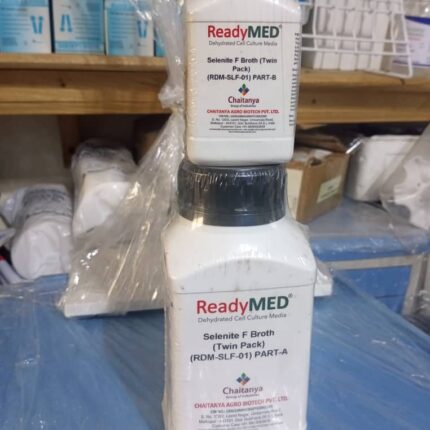
ReadyMED’s Selenite F Broth (Twin Pack) is a dehydrated selective enrichment medium designed for the isolation of Salmonella and Shigella from clinical and non-clinical specimens.
Key Features:
-
Medium Type: Selective enrichment broth (Selenite F formulation).
-
Purpose: Enhances the growth of Salmonella and Shigella while inhibiting competing flora.
-
Packaging: Twin Pack (contains Part-A & Part-B) for convenient medium preparation.
-
Manufacturer: Chaitanya Agro Biotech Pvt. Ltd.
-
Product Code: RDM-SLF-01
Ideal for microbiological testing in clinical, food, and environmental laboratories.
Cleb Agar Culture Medium
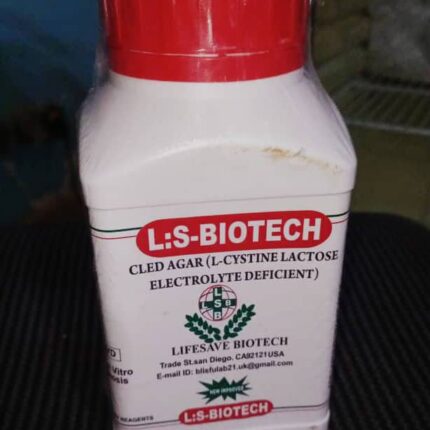
CLED Agar (Cystine Lactose Electrolyte Deficient Medium)
CLED Agar is a differential, non-selective culture medium designed for isolating, enumerating, and differentiating urinary tract microorganisms.
Key Features:
-
Differential Properties:
-
Supports the growth of most urinary pathogens while distinguishing them based on lactose fermentation.
-
Lactose fermenters (e.g., E. coli, Klebsiella) produce yellow colonies due to acid production.
-
Non-lactose fermenters (e.g., Proteus, Pseudomonas) form blue/green colonies.
-
-
Electrolyte Deficiency:
-
Prevents swarming of Proteus, which can overgrow other bacteria in conventional media.
-
-
Composition:
-
L-Cystine: Promotes growth of cysteine-dependent dwarf coliforms.
-
Lactose: Serves as a fermentable carbohydrate source.
-
Bromothymol Blue: pH indicator for colony differentiation.
-
-
Primary Use:
-
Ideal for urine culture (ECBU), especially for quantitative bacterial counts in diagnostic microbiology.
-

Mannitol Salt Agar Culture Medium
Mannitol Salt Agar (MSA), also called Chapman Agar, is a selective and differential medium used in microbiology to isolate and identify staphylococci, especially Staphylococcus aureus.
Key Characteristics:
Selectivity:
-
Contains 7.5% sodium chloride, creating a high-salt environment that inhibits most bacteria except halotolerant staphylococci.
Differentiation:
-
Distinguishes staphylococcal species based on mannitol fermentation:
-
Mannitol Fermenters (e.g., S. aureus): Produce acid, turning the phenol red pH indicator from red to yellow around colonies.
-
Non-Fermenters (e.g., S. epidermidis): No acid production; the medium stays red or may turn magenta.
-
Nutrient Composition:
-
Includes peptones and beef extract to support bacterial growth.
Applications:
-
Used for isolating pathogenic staphylococci from clinical, food, cosmetic, and water samples.

Blood Agar Base Culture Medium
ReadyMED™ Blood Agar Base (RDM-BAB-02) – Product Specifications
Product Overview
A dehydrated culture medium formulated for preparing blood agar plates and cultivating fastidious microorganisms. Manufactured by Chaitanya Agro Bio-Tech Pvt. Ltd.
Key Features & Applications
Functional Properties
✔ Nutrient-Rich Formula – Supports growth of demanding pathogens
✔ Versatile Usage – Can be used:
-
As a base for blood agar (5-10% defibrinated blood addition)
-
As a general-purpose medium (without blood)
Primary Applications
-
Isolation & Cultivation of Fastidious Bacteria:
-
Streptococcus spp.
-
Neisseria spp.
-
-
Hemolysis Studies:
-
Differentiation of Listeria species
-
CAMP test for Streptococcus agalactiae identification
-
-
Clinical & Diagnostic Use:
-
Blood cultures
-
Respiratory/sputum specimens
-
Composition Highlights
-
Peptones & Yeast Extract – Provide essential nitrogen/vitamin sources
-
Sodium Chloride – Maintains osmotic balance
-
Agar – Solidifying agent (1.5-2.0% typical concentration)
Technical Specifications
-
Form: Free-flowing powder
-
pH (after reconstitution): 7.3 ± 0.2
-
Sterilization: Autoclave at 121°C for 15 mins
-
Storage: Keep sealed at 10-30°C; avoid humidity
Preparation Guide
-
Suspend 40g in 1L distilled water
-
Heat to dissolve completely
-
Sterilize & cool to 45-50°C
-
Add 5-10% sterile blood (if required)
-
Pour into plates
Quality Assurance
-
Batch-Tested for microbial growth performance
-
ISO Certified manufacturing