

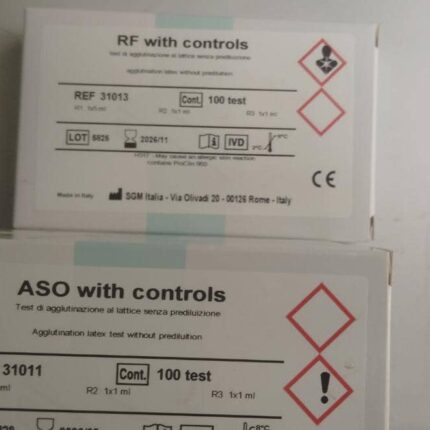
RF With controls
The main product characteristics are as follows:
Product name: RF with controls (Latex agglutination test without predilution).
Reference (REF): 31013.
Contents: 100 tests.
Batch number (LOT): 6826.
Regulatory marking: IVD (In Vitro Diagnostic Medical Device) and CE.
Safety warning: May cause an allergic skin reaction (H317) and contains ProClin 950.
Manufacturer and address: SGM Italia – Via Olivadi 20 – 00126 Rome – Italy.
Hazard symbols: Two hazard pictograms are visible, one indicating a health hazard (human silhouette with a star) and the other a general hazard (exclamation mark).
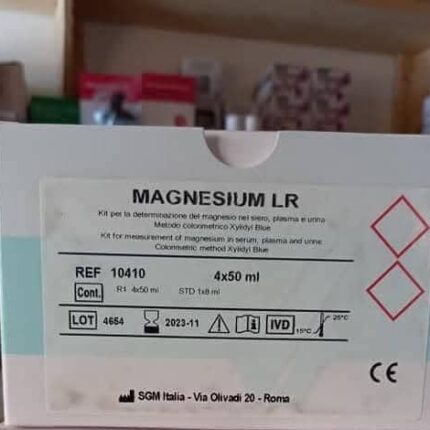
Magnesium and Cholesterol
In vitro diagnostic reagents produced by SGM Italia. Their main characteristics are as follows:
1. MAGNESIUM LR Kit
Intended use: Quantitative determination of magnesium in serum, plasma, and urine.
Method: Colorimetric, using Xylidyl Blue.
Reference (REF): 10410.
Contents: 4 x 50 ml (reagent R1) and one standard (STD).
Batch number (LOT): 4654.
Storage temperature: 15-25°C.
Certification: CE marked, indicating compliance with European standards.
Precautions: This is an in vitro diagnostic (IVD) medical device.
2. CHOLESTEROL LR MONO Kit
Intended use: Quantitative determination of cholesterol in serum or plasma.
Method: Enzymatic, using the Trinder method.
Reference (REF): 10023.
Contents: 4 x 100 ml (reagent R1) and one standard (STD).
Batch number (LOT): 4631.
Precautions: Indicates an in vitro diagnostic (IVD) medical device and safety warnings (hazard pictogram).
Certification: Marking
Disposable Cervical Brush
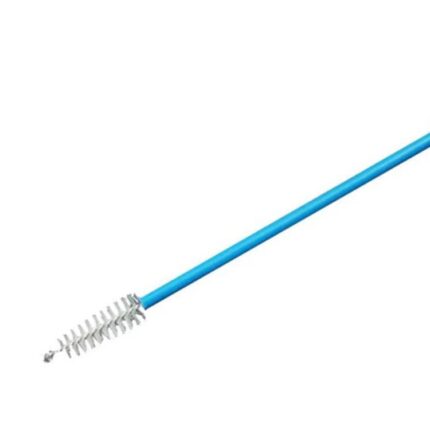
The sterile disposable cervical brush (or cytobrush) is primarily used for endocervical swabs during cervical cancer screening.
Its main features are:
Composition:
Shaft: Polystyrene or PVC with a stainless steel shaft.
Brush: Nylon bristles, soft to prevent damage to cervical tissue.
Dimensions (approximate):
Total Length: Approximately 18-19 cm.
Handle Length: Approximately 16 cm.
Brush Length: Approximately 20 mm (2 cm).
Brush Diameter: Approximately 5.5 mm to 8 mm.
Features:
Sterility: Sterile and single-use to prevent cross-contamination.
Design: Ergonomic brush head with soft synthetic bristles and a conical shape for optimal adaptation to the cervical opening.
Strength: Materials resistant to traction and handling.
Safety: Design to minimize discomfort and the risk of injury during collection.
Use:
Medical device designed for the collection of cervical cell samples for Pap smears.
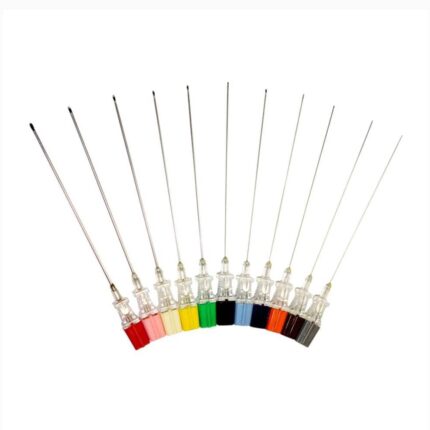
Spinal Needle
Spinal needles have several important characteristics:
Needle Type: These are Quincke-type spinal needles used for spinal anesthesia or lumbar puncture.
Sterility and Single Use: They are sterile and designed for single use only to prevent infection.
Material and Design:
The needle barrel is made of thin-walled steel, facilitating the reflux of cerebrospinal fluid (CSF).
The needle hub is transparent to allow rapid visualization of CSF or blood reflux.
A notch or lug on the hub can indicate the bevel orientation.
Style:
The stylet fits snugly into the needle lumen to prevent coring and minimize tissue damage.
Its hub is colored differently depending on the needle’s outer diameter (standardized color coding).
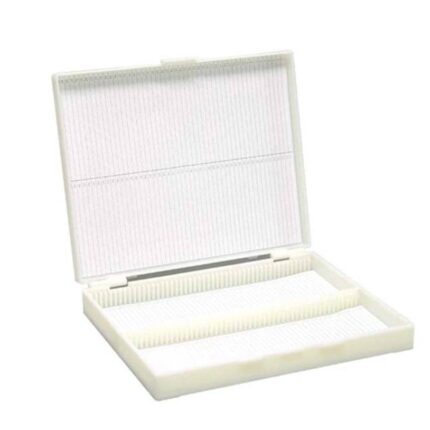
Microscope Slide Storage Box
The features of a microscope slide storage box generally include the following:
Material: Made of durable, impact-resistant ABS plastic.
Capacity: Designed to store a specific number of slides, such as 25, 50, or 100 standard microscope slides.
Slide Protection: Individually numbered slots separate slides to prevent contact and protect them from damage, dust, and moisture.
Safety and Storage:
Hinged lid with a clasp or lock for secure storage.
Cork base or interior lining for improved slide stability.
Stackable and with a frame on the lid for content identification.
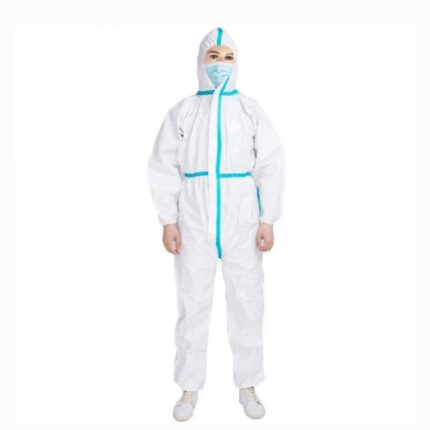
Protective Coverall
The main features of the protective coverall are:
Full Body Protection: The coverall covers the entire body, including the head (with an integrated hood), torso, arms, and legs, providing a physical barrier against contaminants.
Barrier Material: It is made of polypropylene material, which acts as a barrier against liquids, particles, and potentially pathogens.
Secure Closure: The coverall features a front zipper, covered by a flap for increased waterproofness, as suggested by the blue stripe visible on the zipper.
Reinforcement/Visibility Features: Blue stripes are present along the seams and zipper, which may indicate sealed seams for better protection or simply for design/visibility features.
Single Use: This type of coverall is single-use, designed to be discarded after use to prevent cross-contamination. Compatibility with other equipment: It is worn in conjunction with other personal protective equipment (PPE) such as face masks (such as face shields, potentially gloves, and overshoes).
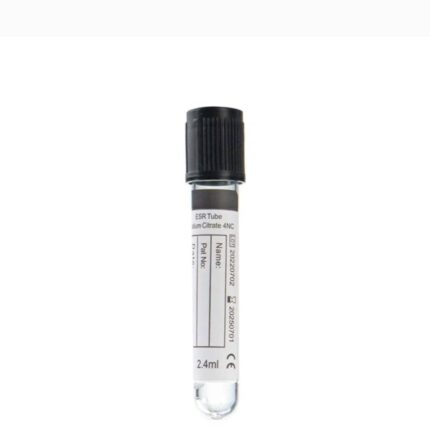
ESR (Erythrocyte Sedimentation Rate) Tubes
The blood collection tube shown is an ESR (Erythrocyte Sedimentation Rate) tube, also known as a 4NC sodium citrate tube. Its main features are:
Use: It is specifically designed for the collection and anticoagulation of blood for erythrocyte sedimentation rate (ESR) testing.
Anticoagulant: It contains a 3.8% sodium citrate solution.
Anticoagulant/Blood Ratio: The mixing ratio is one part citrate solution to four parts blood (1:4).
Volume: Available in 2.4 ml, 1.6 ml, 3.2 ml, and 4 ml.
Material: Made of PET (polyethylene terephthalate) or glass.
Cap: The cap is black, which is a standard feature for ESR tubes containing sodium citrate.
Markings: The tube includes fields for the patient’s name (Name), patient number (Pat No.), and batch and date information.
Certification: It bears the CE mark, indicating its compliance with European health, safety, and environmental protection standards.
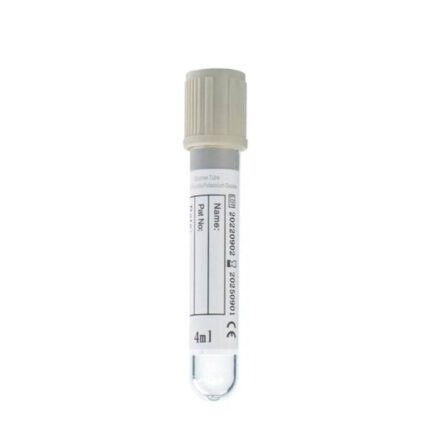
Sodium Fluoride Tube
The illustrated evacuated sodium fluoride blood tube, recognizable by its gray cap and 4 ml volume, has the following characteristics:
Primary Use: It is specifically designed for blood glucose testing, sugar tolerance, erythrocyte electrophoresis, anti-alkali hemoglobin, and lactate.
Additives: It contains sodium fluoride as a glycolysis inhibitor, which prevents the breakdown of glucose, and potassium oxalate as an anticoagulant to prevent blood clotting.
Material: Made of polyethylene terephthalate (PET), it is shatterproof and transparent, allowing easy sample visualization while reducing the risk of blood exposure.
Safety and Sterility: This is a sterile system operating in a closed circuit, minimizing the risk of contamination. The interior of the tubes is sterilized.
Accuracy: Calibrated vacuum ensures a consistent blood-to-anticoagulant ratio and standardized, accurate tube filling.
Identification Information: The tube includes fields for the patient’s name and PAT number, as well as information on the manufacturing and expiration dates, and the CE marking.
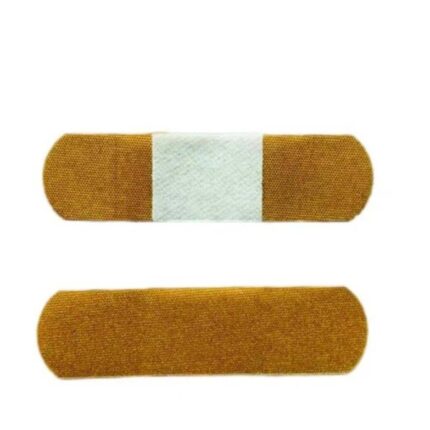
Adhesive Bandages
Characteristics of an Adhesive Bandage
An adhesive bandage has several main characteristics:
Adhesive material: It has an adhesive strip around the edges to adhere to the skin and hold the bandage in place over the wound.
Absorbent pad: In the center, there is a soft, absorbent pad made of gauze or non-woven material designed to cover the wound, absorb exudate, and protect it.
Protection and hygiene: It provides a physical barrier against bacteria and dirt, helping to prevent wound infection.
Flexibility: Designed to be flexible, it adapts to body movements and the contours of the area where it is applied.
Sterility: Adhesive bandages are individually wrapped and sterile for hygienic application to wounds. Answer:
The main characteristics of an adhesive bandage are its adhesive material, its central absorbent pad, its ability to provide protection and hygiene, its flexibility, and its sterility.
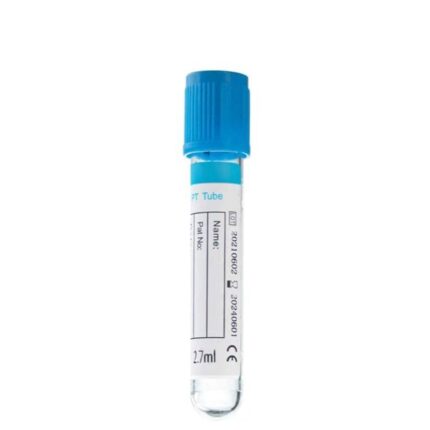
Prothrombin Time Tube
The blood collection tube shown is a PT (Prothrombin Time) tube, commonly used for blood coagulation tests. Its main characteristics are as follows:
Tube Type: Evacuated blood collection tube, specifically a PT (Prothrombin Time) tube.
Anticoagulant: It contains a buffered sodium citrate solution, usually at a concentration of 3.2% or 3.8% (0.109 mol/L or 0.129 mol/L).
Mechanism of Action: Sodium citrate acts as an anticoagulant by chelating calcium ions, thereby inhibiting the blood coagulation cascade.
Collection Volume: A volume of 2.7 ml, which corresponds to the filling capacity of the tube.
Blood to Anticoagulant Ratio: The standard recommended ratio of blood to anticoagulant is 9:1 for coagulation tests. Use: Primarily used for blood coagulation studies, including prothrombin time (PT) and activated partial thromboplastin time (APTT).
Cap Color: Blue cap is the standard color for tubes containing sodium citrate for coagulation tests.
Material: Available in glass or PET (Polyethylene Terephthalate).
Labeling Information: The label allows for the patient’s name (Name) and case number (Pat No), as well as batch information (Lot) and the expiration date (represented by the second date on the tube).
Certification: The “CE” mark indicates compliance with European health, safety, and environmental protection standards.
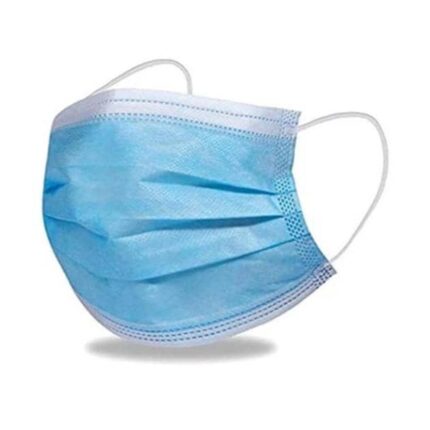
3-Ply Surgical Mask
These blue disposable surgical masks have several important features:
Type: Disposable surgical mask.
Composition: Made from 3-ply non-woven polypropylene, including a melt-blown filter layer.
Design:
3-Ply: Pleated design to fit different face shapes.
Nose clip: Incorporates a coated aluminum nose clip for a custom fit around the nose and a better fit.
Ear loops: Elastic spandex loops to hold the mask comfortably in place.
Filtration efficiency: Bacterial (BF) greater than 95% or 98% for medium-sized aerosols of 3 µm, according to EN14683:2019.
Splash resistance: These masks are also splash resistant.
Comfort and Safety:
Skin-Friendly: Soft, non-irritating materials.
Breathability: Designed to be comfortable and breathable, even during extended wear.
Use: Ideal for protection against dust particles, germs, and bacteria in various environments (home, outdoor, office).
Packaging: Sold in packs of 50