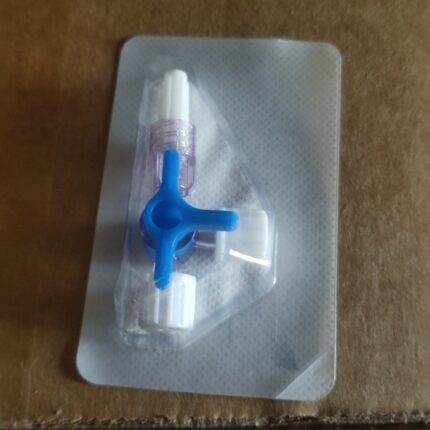
3-Way Stopcock
The characteristics of the 3-way stopcock, commonly used for infusion and sampling, are as follows:
Materials and Composition:
Made of polycarbonate, offering lipid resistance.
Fully transparent housing for clear identification of the open/closed position and flow direction.
Sterilized with ethylene oxide.
Latex-free and pyrogen-free.
Connections and Use:
Features two female inlets and one male outlet, usually Luer Lock type.
360° rotating ring for opening and closing each line.
Designed to manage the flow of infusion fluids and allow for switching flow lines.
Single-use only to prevent cross-infection.
Features and Specifications:
Allows the administration of infusion solutions and intermittent intravenous medications.
Can be used for blood sampling.
Resistance to hydrostatic pressure (e.g., 3-5 bar).
Compatible with blood and blood derivatives.
May be lipid-resistant, cytostatic, and resistant to antiseptics and other caustic drugs.
Conformity:
CE Marking – Class IIa.
Complies with the requirements of European Directive 93/42/EEC as amended by Directive 2007/47/EC.
Umbilical Cord Clamp
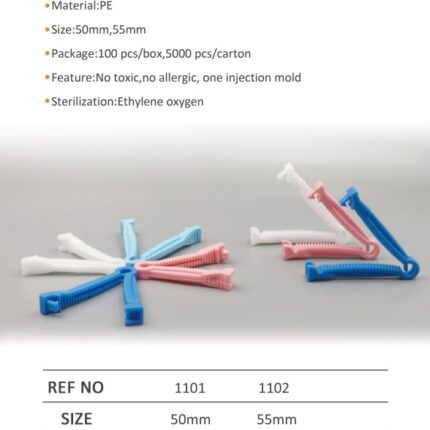
The characteristics of the umbilical cord clamps shown in the image are as follows:
Material: Polyethylene (PE).
Available sizes: 50 mm and 55 mm.
Packaging: 100 pieces per box, 5000 pieces per carton.
Properties: Non-toxic, non-allergenic, single-injection molded.
Sterilization: Ethylene Oxide
Single-Use Specula
Disposable vaginal specula, commonly used for gynecological examinations. Their main characteristics are:
Single-use and hygiene:
These specula are designed for single-use, eliminating the need for complex cleaning and sterilization associated with reusable specula. They are generally sterilized with ethylene oxide and individually wrapped to ensure maximum hygiene and reduce the risk of cross-infection.
Material and transparency:
Made of polystyrene resin or transparent plastic, they provide excellent visibility of the vaginal canal and cervix during the examination. Plastic is also perceived as cooler and more comfortable for the patient than metal.
Design and practicality:
They are lightweight and robust, facilitating handling by the healthcare professional. Most incorporate a locking system (often by twisting) to keep the valves open during the examination.
Various Sizes:
Available in several sizes (medium and large) to accommodate different anatomies.
Type:
The specula shown in the image are of the Cusco type, recognizable by their two-valve shape.
X-ray Protective Collar
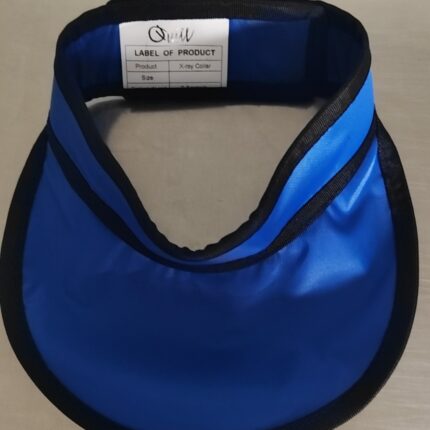
The X-ray protective collar, also known as a lead thyroid collar, has the following features:
Radiation Protection:
It is designed to provide optimal protection of the neck and thyroid area from X-rays during radiological examinations. It has a lead equivalent of 0.3 mm or 0.5 mmpb for effective protection.
Design and Materials:
Made of durable lead rubber or polyurethane-coated fabric.
Ease of Use:
The Velcro design on the back allows for easy on and off and allows the collar to be adjusted for a comfortable and secure fit.
It is designed to be lightweight and soft for the comfort of the patient or professional.
Durability:
It is robust and designed for durability, ensuring extended use.
Applications:
Suitable for various medical settings, including dentistry, hospitals, and X-ray offices.
Microscope Bulb
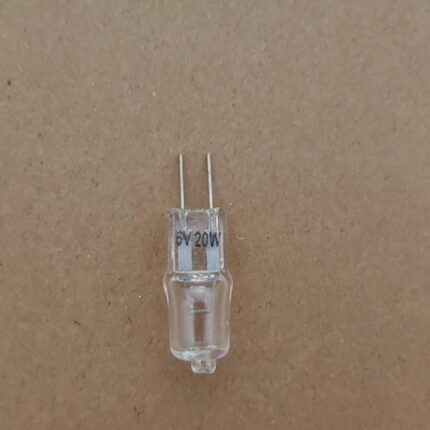
The specifications of a halogen microscope bulb are as follows:
Voltage: 6V
Wattage: 20W
Explanation of specifications:
6V (Volts):
This indicates the nominal electrical voltage at which the bulb is designed to operate. A 6V bulb is generally used in low-voltage applications, such as certain types of machine lighting, microscope lighting, or specific lighting systems requiring low voltage.
20W (Watts):
This represents the electrical power consumed by the bulb when in operation. Wattage relates to the amount of light produced, although luminous efficacy (lumens per watt) can vary depending on the type of bulb.
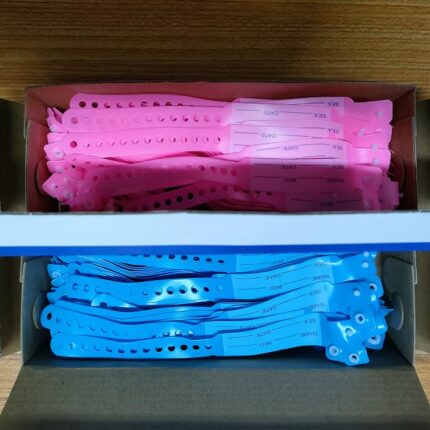
Identification Bracelet
The characteristics of the identification bracelets are as follows:
Color:
The bracelets are available in two distinct colors, pink and blue.
Material:
They are made of a soft, durable plastic or vinyl material commonly used for identification bracelets.
Writable Information:
Each bracelet has pre-printed fields for recording key patient information, such as:
NAME: For the patient’s name.
BED: For the patient’s bed number or location.
SEX: For the patient’s sex.
DATE: For the admission or identification date.
Closure:
The bracelets feature a perforated closure mechanism, allowing for a secure fit around the wrist.
Packaging:
They are packaged in cardboard boxes.
Coverslips
Coverslips have the following characteristics:
Material: They are made of D 263 M borosilicate glass, of the first hydrolytic class, known for its chemical resistance.
Quantity: The package contains 100 coverslips.
Dimensions: The coverslips measure 22x22mm.
Optical quality: They are colorless, perfectly clear, and suitable for fluorescence microscopy.
Conformity: They meet all the requirements of DIN ISO 8255.
Thickness: The thickness corresponds to standard No. 1 (0.13-0.16 mm).
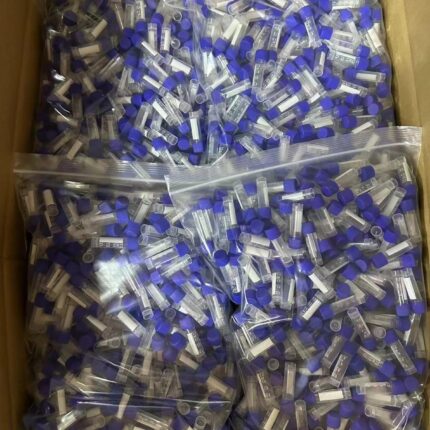
Plastic Hemolysis Tubes
Plastic hemolysis tubes are often used in laboratories.
Explanation:
Description:
These are round-bottomed test tubes made of polystyrene (PS) or polypropylene (PP), designed to contain liquids, particularly blood samples.
Use:
They are commonly used in laboratories for sample collection, serum or plasma separation after hemolysis (destruction of red blood cells), and various medical or research analyses.
Packaging:
As shown in the image, they are packaged in bulk quantities of 500 pieces, sometimes sterile and without caps.
Cryotubes
2 ml cryotubes, such as those shown in the image, have several important characteristics for their use in laboratories:
Materials:
They are generally made of high-quality polypropylene, a material resistant to corrosion, extreme temperatures (low and high), and acids and bases.
Capacity and Dimensions:
The typical capacity is 2 ml, with dimensions of approximately 11 x 50 mm (diameter x length).
Leak-Proof:
They are designed with a screw cap and often equipped with a silicone washer to ensure an excellent seal, preventing leaks and sample volatilization, even at very low temperatures (down to -180°C or -200°C).
Freestanding:
These vials have a round or conical bottom that allows them to stand upright, facilitating handling and storage.
Graduations and Writable Area:
They feature clear graduations to facilitate volume measurement and a writable area on the tube for labeling and sample identification.
Resistance:
They are designed to withstand very low temperatures (down to -180°C or -200°C) and can withstand high temperature and high pressure conditions, such as autoclaving.
Sterility and Non-Toxicity:
Many cryogenic vials are sterile, non-pyrogenic, and non-cytotoxic, ensuring the safety of biological samples.
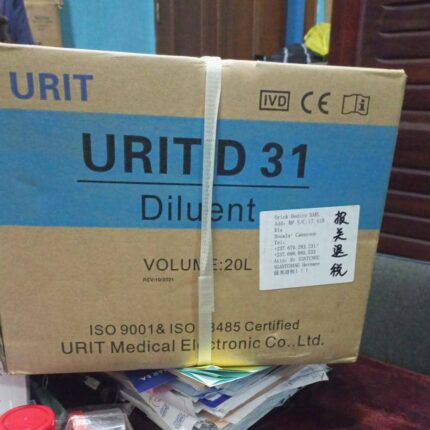
Diluent
The product presented is URIT D 31 Diluent, and its main characteristics are as follows:
Product Type: Diluent.
Volume: 20 Liters.
Manufacturer: URIT Medical Electronic Co., Ltd.
Certifications: ISO 9001 and ISO 13485.
Possible Uses: URIT D 31 Diluent is used in urine analyzers, such as the URIT-31 Urine Analyzer.
Revision: REV: .
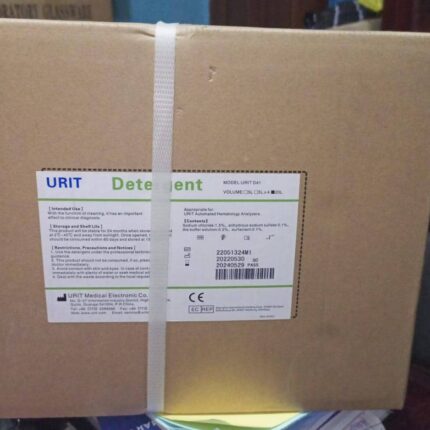
Detergent
The characteristics of URIT Detergent, as indicated on the packaging, are as follows:
Product Name: URIT Detergent
Model: URIT 041
Volume: 20L
Intended Use: Cleaning for URIT automated hematology analyzers, with an important impact on clinical diagnosis.
Contents: Sodium chloride (1.5%), anhydrous sodium sulfate (0.2%), buffer solution (0.2%), surfactant (0.1%).
Storage and Shelf Life: Stable for 24 months when stored between 2 and 40°C and protected from light. Once opened, it must be consumed within 60 days and stored at 18°C.
Restrictions, Precautions, and Warnings:
Use the detergent under professional supervision. Do not consume this product; if swallowed, seek medical advice immediately. Avoid contact with skin and eyes; if contact occurs, rinse immediately with plenty of water. Dispose of waste in accordance with local regulations.
Additional Information:
Batch Number: 22051324M1
Certification: CE Marked
Manufactured by: URIT Medical Electronic Co. Ltd.
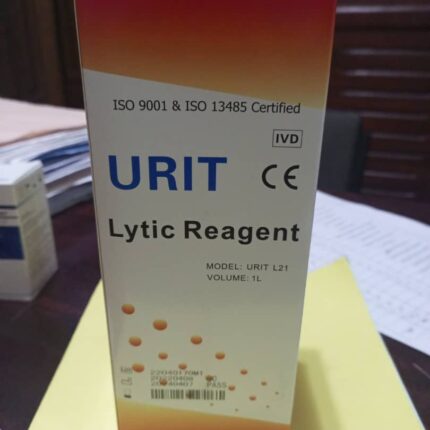
Lyse
MODEL: URIT L21
URIT Lytic Reagent.
URIT Lyse Reagent Description:
Use:
This reagent is specifically designed for use with the URIT series automated hematology analyzers.
Function:
Its primary function is to measure blood cell content, which is essential for blood analysis.
Composition:
It is composed of various ingredients, including chloride, sulfate, preservative solution, anticoagulant, buffer solution, and quaternium.
Certification:
The product is certified according to ISO 9001 and ISO 13485 standards and bears the CE mark, indicating its compliance with European standards.
Model and Volume:
The specific model shown in the image is the URIT L21, and it is packaged in a 1-liter volume.