Hypodermic Needle

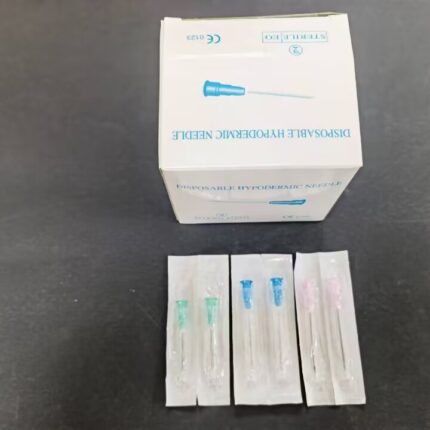
Disposable hypodermic needles have several essential characteristics for their medical use:

Sterility and Single Use:
They are sterilized (e.g., by EO gas, as shown in the image “STERILE EO”) and designed for single use only to prevent contamination and the transmission of infections.
Material of Construction:
Made of high-quality stainless steel, they are non-toxic and non-pyrogenic.
Tip Design:
They feature a sharp, beveled tip for smooth penetration and maximum patient comfort.

Easy Identification:
The needle hub is color-coded by size (gauge) for quick and easy identification, and can be semi-transparent to allow for visualization of blood flow (flashback).

Compatibility:
They are designed to securely connect to syringes, often via a Luer Lock or Luer Slip connector.

Quality Certifications:
They bear conformity marks such as the CE mark (e.g., “CE 0123” in the image), attesting to their compliance with European safety and quality standards.

Packaging:
Each needle is generally individually sterile packaged to maintain its integrity until use.

Identification Bracelet

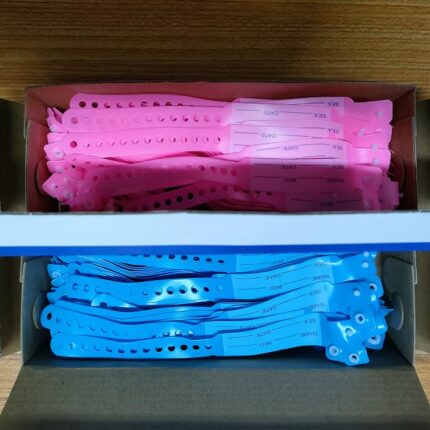
The characteristics of the identification bracelets are as follows:

Color:
The bracelets are available in two distinct colors, pink and blue.

Material:
They are made of a soft, durable plastic or vinyl material commonly used for identification bracelets.

Writable Information:
Each bracelet has pre-printed fields for recording key patient information, such as:
NAME: For the patient’s name.
BED: For the patient’s bed number or location.
SEX: For the patient’s sex.
DATE: For the admission or identification date.

Closure:
The bracelets feature a perforated closure mechanism, allowing for a secure fit around the wrist.

Packaging:
They are packaged in cardboard boxes.

Immersion Oil

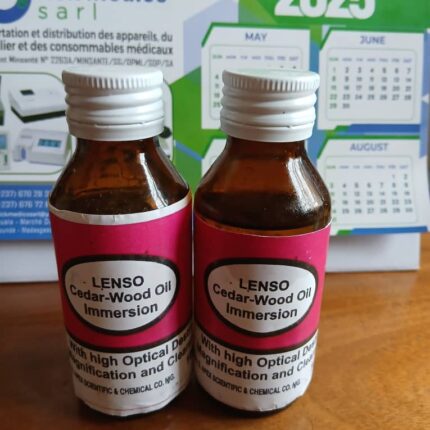
LENSO Cedarwood Immersion Oil is an immersion oil used in microscopy to improve the resolution and clarity of high-magnification images.
Key Features:

Use in Microscopy:
It is specifically designed for use with microscope immersion objectives, particularly at high magnifications (e.g., 100x).

Improving Resolution:
Its primary role is to reduce light refraction between the slide and the objective lens, minimizing image blur and increasing the sharpness of details, allowing for better observation of specimens.

Refractive Index:
Cedarwood oil has a refractive index of approximately 1.515, very close to that of the glass used in slides and coverslips, which is crucial for its effectiveness.

Suitable for biological specimens:
It is commonly used for observing biological specimens.

Origin:
It is a natural oil derived from cedarwood.

Infusion Pump

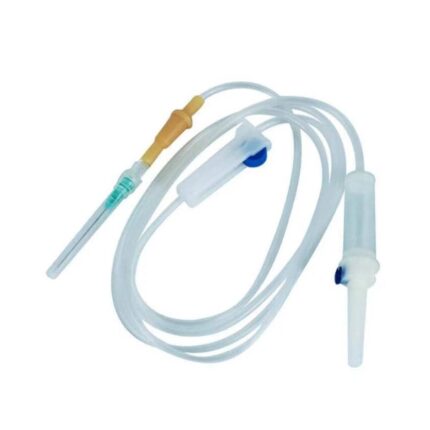
Here are the main features of an infusion set:

Essential Components:

Vented Spike: Allows the bottle or solution bag to be pierced and ensures an air inlet for a smooth flow.
Drip Chamber: Allows the flow rate of drops to be visualized and is equipped with a filter to prevent the entry of particles.
Flexible Tubing: Made of medical-grade PVC, it transports the liquid from the bottle to the patient.
Flow Regulator: Allows precise adjustment of the rate of liquid administration.
Injection Site (or Y-Port): An access point for injecting additional medication without interrupting the main infusion.
Luer Lock or Luer Slip Connector: Ensures a secure connection to the needle or catheter inserted into the patient’s vein.
Needle or Catheter: The end inserted into the vein for fluid administration.
Materials: Made from medical-grade materials, soft, non-toxic, and non-bendable PVC.
Sterilization: Sterilized with ethylene oxide to ensure patient safety.
Single Use: Designed for single use only to prevent cross-infection.
Function: Administers fluids, medications, or nutrients directly into the patient’s bloodstream intravenously.

Lancet

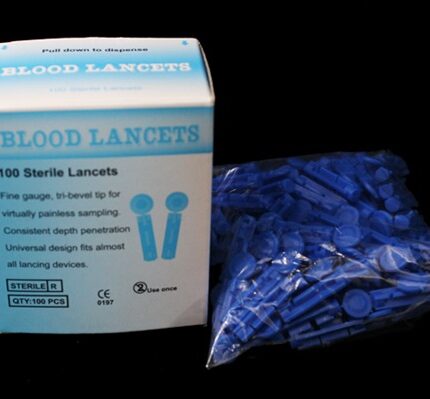
The blood lancets have the following features:

Gauge and Tip:
They are fine gauge and feature a tri-bevel tip for virtually painless blood collection.

Sterility:
The lancets are sterile, as indicated by the words “100 Sterile Lancets” and “STERILE R” on the box. They are sterilized by gamma irradiation.

Penetration Depth:
They provide consistent depth penetration.

Compatibility:
Their design is universal (“Universal design fits almost all lancing devices”), making them compatible with most lancing devices.

Materials:
They are made from LDPE (Low Density Polyethylene) and stainless steel needles.

Safety and Use:
They are single-use and designed for safety, with a fully enclosed needle port to prevent accidental injury before and after use.

Certifications:
They bear the CE mark, indicating their compliance with European health, safety, and environmental protection standards.

LDH LR

The product “LDH LR Kinetic optimized method SCE” is a reagent for the determination of Lactate Dehydrogenase (LDH) with the following characteristics:

Method: Kinetic optimized method SCE. LDH catalyzes the reduction of pyruvate by NADH, and the rate of NADH reduction is measured photometrically, being proportional to the LDH concentration.

Reference (REF): 10118.

Batch number (LOT): 5965B.

Contents (Cont.): The kit contains 4 x 20 ml in total, consisting of:
R1: 4 x 16 ml.
R2: 1 x 16 ml.

Manufacturer: SGM Italia srl, located at Via Olivadi 20 – 00126 Rome – Italy.

Clinical significance: LDH is an enzyme present in the body, and elevated serum levels may indicate liver disease, myocardial infarction, kidney problems, muscular dystrophy, and anemia.

Lead Apron

Personal protective equipment designed to shield medical personnel and patients from ionizing radiation (X-rays) during medical examinations or procedures.

Main Characteristics:

  • Protective Material: Made with lead or lead-free composite materials to block X-rays
  • Protective Thickness: Lead equivalent typically ranges from 0.25 mm to 0.50 mm, with options for differentiated protection (e.g., 0.50 mm front, 0.25 mm back)
  • Design and Styles:
    • Available in one-piece styles (e.g., closed apron) or half-sleeve styles
    • Includes padded shoulder pads for weight distribution and comfort
    • Features waistbands for enhanced lumbar support
  • Sizes and Fit: Offered in various sizes (XS to XXL) with custom-made options for optimal coverage
  • Weight: Varies by size and lead thickness (e.g., a medium-sized apron with 0.35 mmPb filtration weighs approximately 3.8 kg)

Leather Gynecological Apron

This waterproof PVC gynecological apron features the following features:

Material: Made of durable PVC (polyvinyl chloride).

Waterproofness: Provides excellent resistance to water, blood, chemicals, and oils, making it ideal for humid work or retail environments.

Protection: Designed to cover the entire body, it provides effective protection against splashes and dirt.

Ease of Maintenance: Easy to clean and disinfect after use.

Comfort: Lightweight and easy to wear for extended periods of work.

Design: Includes adjustable neck and waist straps for a secure and comfortable fit.

Color: Available in bright colors like orange for better visibility and identification.

LED Microscope Bulb

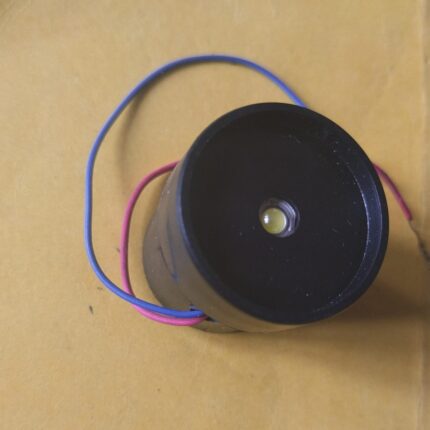
The main features of an LED microscope bulb include high brightness, long lifespan, low heat emission, and low power consumption.
Here is a detailed explanation of these features:

High brightness and uniform illumination: LEDs provide powerful, focused illumination with adjustable intensity (0 to 100%), which is essential for clear and detailed observation of samples under the microscope. LED ring lights, for example, provide virtually shadow-free illumination.

Long lifespan: Unlike traditional bulbs, LEDs have a significantly longer lifespan, reducing replacement frequency and maintenance costs.

Low heat emission: LEDs generate very little heat compared to halogen or incandescent light sources, which is crucial for the protection of heat-sensitive samples and for user comfort.

Low energy consumption: LEDs are highly energy efficient, converting electricity into light more efficiently and reducing energy consumption.

Compact and durable: LEDs are small, allowing for easy integration into increasingly miniaturized microscopes. They are also resistant to vibration and shock, as they contain no fragile filaments or glass.

Constant color temperature: They provide a stable color temperature, which helps reduce eye strain during prolonged observations.

Lipase

The characteristics of the lipase kit are as follows:

Product Name: LIPASE

Use: Kit for measuring lipase in serum or plasma.

Determination Method: Colorimetric determination.

Reference (REF): 10285.

Batch Number (LOT): 5874B.

Contents (Cont.): 2 x 20 + 1 x 10 + 1 x 5.

R1: 2 x 20 ml.

R2: 1 x 10 ml.

R3: 1 x 5 ml.

Manufacturer/Distributor: SGM Italia srl ​​- Via Olivadi 20 – 00126 Rome – Italy

Lyse

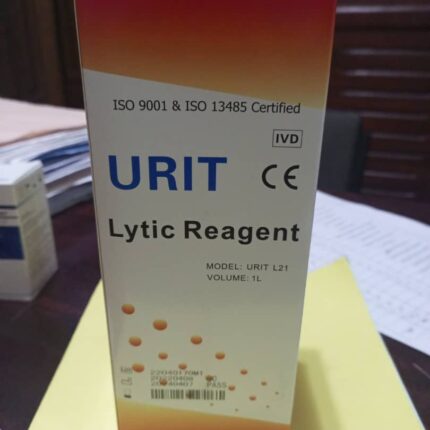
MODEL: URIT L21

URIT Lytic Reagent.
URIT Lyse Reagent Description:

Use:
This reagent is specifically designed for use with the URIT series automated hematology analyzers.

Function:
Its primary function is to measure blood cell content, which is essential for blood analysis.

Composition:
It is composed of various ingredients, including chloride, sulfate, preservative solution, anticoagulant, buffer solution, and quaternium.

Certification:
The product is certified according to ISO 9001 and ISO 13485 standards and bears the CE mark, indicating its compliance with European standards.

Model and Volume:
The specific model shown in the image is the URIT L21, and it is packaged in a 1-liter volume.

Magnesium and Cholesterol

In vitro diagnostic reagents produced by SGM Italia. Their main characteristics are as follows:

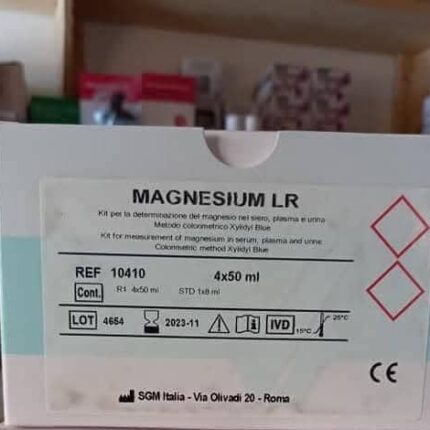
1. MAGNESIUM LR Kit
Intended use: Quantitative determination of magnesium in serum, plasma, and urine.
Method: Colorimetric, using Xylidyl Blue.
Reference (REF): 10410.
Contents: 4 x 50 ml (reagent R1) and one standard (STD).
Batch number (LOT): 4654.
Storage temperature: 15-25°C.
Certification: CE marked, indicating compliance with European standards.
Precautions: This is an in vitro diagnostic (IVD) medical device.

2. CHOLESTEROL LR MONO Kit
Intended use: Quantitative determination of cholesterol in serum or plasma.
Method: Enzymatic, using the Trinder method.
Reference (REF): 10023.
Contents: 4 x 100 ml (reagent R1) and one standard (STD).
Batch number (LOT): 4631.
Precautions: Indicates an in vitro diagnostic (IVD) medical device and safety warnings (hazard pictogram).
Certification: Marking