Surgical Cerclage Box
The surgical cerclage box includes:
General Features:
Material: They are made of stainless steel, which makes them durable, corrosion-resistant, and easy to sterilize.
Functionality: Each instrument is designed for a specific task during surgical procedures, whether dissecting, grasping, cutting, retracting, or suturing.
Sterilization: These instruments are designed to be sterilized, often by autoclave or moist heat, to ensure asepsis during medical procedures.
Examples of visible instruments and their specific dimensions: SURGICAL CERClage Box
Description
It consists of the following elements:
Stainless steel box, 350 x 180 x 80 mm;
2 Collin specula, 35 x 110 mm;
1 Doyen Vaginal Valve, 90 x 45 mm, 24 cm;
1 Doyen Vaginal Valve, 120 x 45 mm, 24 cm;
4 Backhaus Drape Forceps, 14 cm;
1 Museux Forceps, 8 mm, 24 cm;
1 Forester Heart Forceps (straight), 25 cm;
1 Bozermann Forceps, angled, 26 cm;
2 Pozzi Forceps, 25 cm;
1 Hegar Mayo Needle Holder, 25 cm;
1 Mayo Scissors (curved), 23 cm;
1 O’Shaugnessy Dissector (curved), 90, 20 cm;
1 Stainless Steel Cup, 60 mm;
1 Auvard Valve, fixed weight 1100 g.
Empty stainless steel boxes
They are available in various sizes:
500 x 100 x 12 mm;
400 x 200 x 90 mm;
350 x 180 x 70 mm;
300 x 150 x 60 mm;
250 x 120 x 60 mm;
200 x 100 x 50 mm;
180 x 80 x 40 mm;
180 x 80 x 40 mm.
Cataract Surgery Box
A cataract surgery box is a set of ophthalmic surgical instruments, housed in a sterilization box, and designed for cataract procedures.
General Features:
Container: A stainless steel box with a silicone mat to hold the instruments in place.
Sterilization: Designed to be sterilized by standard methods such as autoclave, ethylene oxide, dry heat, or cold solutions.
Contents: It includes a selection of ocular microsurgery instruments specific to cataract surgery.Examples of commonly found instruments:
Blepharostat: To hold the eye open during surgery.
Scissors: Such as Vannas scissors (straight or curved), corneal scissors, or cataract scissors.
Forceps: Including Bonn-Moria forceps, capsulorhexis forceps, and corneal scleral forceps.
Cannulas: For injection or aspiration, such as the Rycroft cannula or Bonnet cannula.
Other instruments: Such as microneedle holders, Buratto-Sinskey manipulators, or phacocleavers.
These boxes contain instruments from various well-known brands in surgical ophthalmology, such as Storz, Moria, and Corneal.
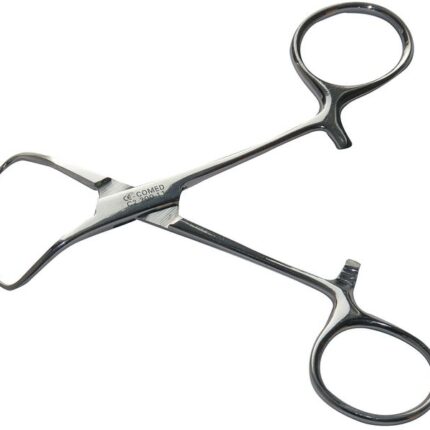
Backhaus drape forceps
The characteristics of the Backhaus drape forceps are as follows:
Primary use: They are primarily used in surgery to secure surgical drapes, but can also be used to puncture and hold tissue or compresses.
Material: They are made of high-quality stainless steel, ensuring corrosion resistance and durability.
Design: They are scissor-shaped with curved, pointed jaws, providing a good grip. They feature a ratchet locking system for secure fixation.
Sterilization: They are autoclavable at 134°C for 18 minutes and can be cleaned manually or in a washing machine with products suitable for stainless steel.
Sizes: They are available in various lengths, commonly 9 cm, 12 cm, and 14 cm.
Regulation: This is a regulated medical device bearing the CE mark.
Stainless Steel Medical Forceps Holder
The stainless steel serving forceps holder has the following characteristics:
Material: It is made of AISI 304 or 18/10 stainless steel, ensuring durability, corrosion resistance, and hygiene, making it ideal for medical or surgical use.
Dimensions: Common dimensions include a diameter of approximately 50 to 55 mm and a height of approximately 180 to 200 mm.
Design: It generally consists of a tube attached to a stable round base, designed to hold and store medical instruments, particularly forceps.
Sterilization and Cleaning: Stainless steel allows for easy decontamination by immersion in detergent and disinfectant solutions, and it is autoclavable at 121°C.
Use: It is primarily used in medical or hospital environments for the storage and sterilization of surgical forceps or other instruments.
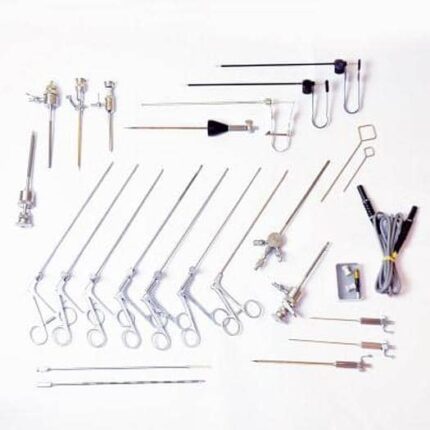
Laparoscopic Set
SET CONSISTS OF:
* 0° Laparoscopic Telescope 10x330mm
* Monopolar Hook (Ceramic) 5x330mm
* Simple Clipping Forceps 10x330mm
* Bipolar Forceps 5x330mm
* Push-Type Suction and Irrigation Tube 10x330mm
* 2 Trocars 5x95mm
* 2 Trocars 10x95mm
* Veress Needle 3x120mm
* 2 Reducers 10mm-5mm
* Straight Scissors, Double Action 5x330mm
* Curved Scissors, Double Action 5x330mm
* Babcock Forceps, Horizontal Teeth 5x330mm
* Grasping Forceps Windowed
Vincent rongeur forceps, long jaws, 26 cm
The Vincent rongeur forceps with long jaws, 26 cm, is a surgical instrument used primarily in bone surgery and trauma, particularly for regularizing bone edges after extractions or for bone remodeling.
Characteristics:
Instrument type: Gouge forceps, also called rongeur forceps.
Design: It features articulated handles and long jaws.
Operation: A return system on the handles ensures automatic opening of the forceps.
Jaws: The jaws are symmetrical, pointed at the ends, hollow and sharp, allowing bone to be worked by subtraction, removing splinters and thin alveolar edges.
Material: Typically made of corrosion-resistant stainless steel (e.g., DIN: X12Cr13 | AISI: 410 | UNS: S41000, S41001).
Length: 26 cm.
Medical Specialties: Bone Surgery, Traumatology.
Biopsy Forceps, 2-Jaw Movable
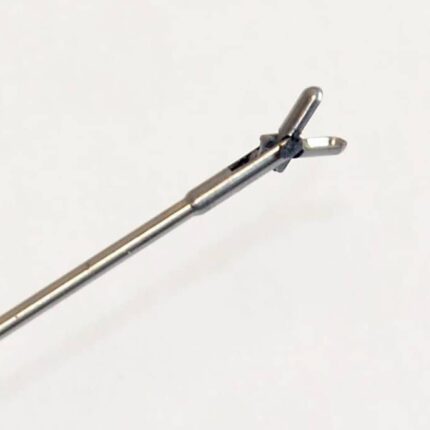
A biopsy forceps, 2-jaw movable, used in endoscopy, characterized by the following features:
Instrument Type: This is a grasping forceps, a biopsy forceps, designed to collect tissue samples or remove foreign bodies during endoscopic procedures.
Tip Design: The exposed tip features hinged jaws, allowing for grasping and cutting tissue fragments (biopsy) or manipulating small objects (foreign body removal).
Compatibility: These instruments are designed to be inserted through the working channel of a flexible endoscope (such as a bronchoscope or a digestive endoscope) or a rigid endoscope, depending on the specific application.
Material: Generally made of medical-grade stainless steel, they are robust and sterilizable to ensure patient safety and instrument durability.
Function: The instrument is used for biopsies (tissue sampling for microscopic analysis) or for retrieving foreign bodies from various body cavities, such as the respiratory tract or the digestive tract.
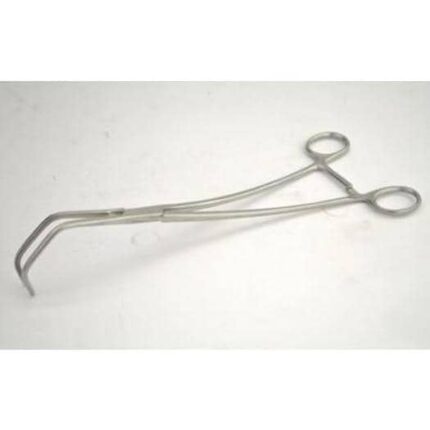
Aesculap DeBakey Vascular Forceps
DeBakey vascular forceps, particularly those manufactured by Aesculap, are specialized surgical instruments recognized for their atraumatic characteristics and precision, essential in vascular surgery.
Key features of DeBakey Vascular Forceps (Aesculap):
Atraumatic Jaws: They feature delicately serrated jaws (in 1×2 rows) designed to minimize tissue trauma when clamping blood vessels, thus protecting the integrity of vascular walls.
Ergonomic Design: The instrument is designed for a comfortable grip and superior surgeon control, with ring-shaped finger grips and a streamlined construction for lightweight performance.
Precise Access: The specific curvature of the jaws and/or angled design allow deep and precise access to vessels in restricted or difficult-to-reach surgical areas.
High-quality materials: Generally made of high-quality stainless steel, they guarantee corrosion resistance, durability, and compatibility with sterilization processes.
Ratchet mechanism: A resilient ratchet mechanism is integrated to control the occlusion pressure exerted on the vessel, ensuring secure clamping without excessive compression.
Meniscus, Knee, and Foot Instrument Case with Basket
A surgical instrument case with a basket, specifically designed for orthopedic procedures involving the meniscus, knee, and foot.
Features of the Meniscus, Knee, and Foot Instrument Case with Basket:
Specialized Contents: It contains an assortment of surgical instruments suitable for procedures on the meniscus (such as meniscus scalpels), knee (retractors, clamps), and foot (clamps, elevators).
Sterilization Basket: The case features a perforated basket, which allows for easy cleaning, disinfection, and sterilization by steam or other appropriate methods.
Materials: Typically made of surgical-grade stainless steel for durability and corrosion resistance, essential for repeated sterilization.
Organization and Safety: The basket and internal compartments help organize instruments and keep them in place, preventing damage during transport and sterilization.
Suitable Dimensions: The box is designed to accommodate a complete set of instruments.
24-piece pediatric laparoscopic set compatible with Karl Storz
The features of a 24-piece pediatric laparoscopic set compatible with Karl Storz include the following elements and properties:
Set Composition:
Laparoscopic forceps: Equipped with revolver handles and external ratchets, they can be disassembled for easy cleaning and sterilization.
Monopolar Grasping Forceps: Specific instruments, such as the Karl Storz 26180 N Monopolar Grasping Forceps, with dimensions adapted to pediatrics (e.g., diameter 3.5 mm, length 20 cm).
Laparoscope: A laparoscope with a specific viewing angle (0°) for internal observation.
Cold light cable: Essential for illuminating the surgical field via the laparoscope.
Other Instruments: The set includes various other forceps and instruments required for pediatric laparoscopic procedures.
Compatibility: The set is designed to be compatible with standard Karl Storz camera systems and equipment, ensuring seamless integration into operating rooms equipped with this brand.
Materials and Sterilization: The instruments are generally made of high-quality stainless steel and are designed to withstand high temperatures (134°C/273°F) for sterilization.
Optics (for Endoscopes): The endoscopes included in the set can use high-quality fiber optics and light cones for clear visualization.
Skull Surgery Box
The characteristics of a skull surgery box are primarily related to its specific instrument content and dimensions, designed for neurosurgical procedures.
Specific Contents: A skull surgery box contains instruments suitable for procedures on the skull and brain. This includes olivary pens, Frazier cannulas of various sizes (2 mm, 3 mm), scalpel handles, various forceps (Kocher, Pean Murphy, dissecting), needle holders, and cotton swabs.
Material and Sterilization: The boxes and instruments are generally made of medical-grade stainless steel, ensuring durability, corrosion resistance, and ease of sterilization.
Dimensions: The box’s dimensions are designed to hold all the necessary instruments.
Design for Organization and Access: The instruments are ergonomically arranged for quick access and proper organization.