Applanation Tonometer
CT) use a puff of air to flatten the cornea, eliminating the need for anesthesia or contact.
Corneal Thickness Influence: The rigidity and thickness of the cornea affect the measurement; thinner corneas may result in artificially low readings, while thicker corneas may lead to falsely high ones.
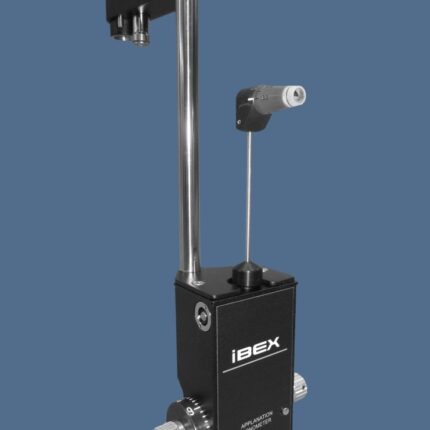
Slit-Lamp Integration: The most common Goldmann applanation tonometer is mounted on a slit lamp.
Calibration: Instruments require daily calibration using standard weights to ensure accuracy.
Mire Rings (Goldmann): A split-image prism creates mires (marked rings) that are aligned to determine the applanation point and thus the IOP.
Portable Kerameter
Ultra-small corneal curvature tester, is mainly used to measure the corneal curvature radius and diopter, wireless output print data.
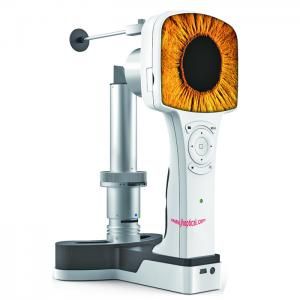
Digital portable slit lamp
Portability & Design: Lightweight and compact for convenient transport and use in mobile or remote settings.
Magnification: Offers 10x magnification with the option for 16x magnification.
Illumination: Equipped with a high-brightness white LED light source and a heat absorption filter.
Image Capture: Features a built-in camera and digital display for real-time, high-resolution image and video capture.
Display & Storage: Has a 3.5″ color screen and 8GB of internal storage for images.
User Interface: Manual focus mode and a user-friendly design for simple operation.
Connectivity: Includes Mini USB and WiFi for transferring data.
Power: Powered by a rechargeable 3.7V lithium battery, providing over 4 hours of continuous operation.
Slit Control: Allows for continuous adjustment of the slit width from 0 to 12mm.
Filters: Comes with red-free, heat absorption, and cobalt blue filters.
Portable Slit Lamp
Model KJ5S1
- Portable slit lamp, one hand operated.
- With all function of destop. Slit lamp, but ideal for pediatric, senior, nursing home, carry-out or mobile hospital.
- This handled slit lamp has four lights spot 1mm,3mm,5mm,10mm
- Fully charged can be used for about 6hours.
- Smart design, easy carry with.
Portable slit lamp.
Ultra-portable: The ultra-portable Model S150 is an excellent diagnostic instrument for examination of anterior segment structures and ocular abnormalities. Its easy-to-operate optical system produces a high-brightness, continuously adjustable slit image ideal for pediatric and geriatric setting, emergency department screenings, ward rounds, bedside examination, post-op evaluations and mission work.
LED illumination: S150 is the first and the only Portable Slit Lamp in the world applying LED illumination system. The most prominent advantage of our LED illumination system gives examiner the clearest image without glare.
Comfortable using experience: The low heat radiation from our LED lamp makes the most comfortable examine experience for the patient.
Sharp slit as classic slit lamp: S150 uses the blade imaging system of classic slit lamp, so it has a good imaging effect as the classic one and much smaller size.
Sharpest Slit: With the blade imaging system S150 gives equally sharpest slit as the best classic slit lamp in the world.
No need to replace illumination lamp: The LED lamp used in S150 Portable Slit Lamp is rated 20, 000 hours at full power. Its life time is almost 10 times longer than normal Halogen lamp.
Power- saving: S150 can work for long hours without changing batteries.
Specifications:
Magnification: 5×
Length of slit: 5mm ~ 11mm (stepless)
Minimum width of slit: 0.2mm
Working distance: 12 ~ 32mm
Light source: LED ( 3V/1W, 20, 000 hours working life )
Power supply: AA alkaline batteries x 2 (more than 3 hrs working life)
Net weight: 150g(without batteries.
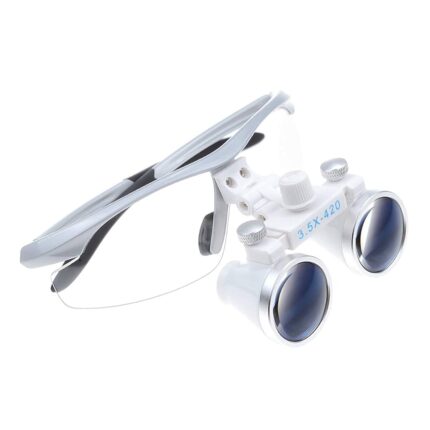
Children frame/trial frame
Lightweight and Comfortable:
Designed to be less burdensome and more comfortable on a child’s face, allowing for better cooperation during eye examination
Smaller Dimensions:
Smaller overall size and often fixed Pupillary Distance (PD) options, including specific infant and child sizes, to ensure a proper fit.
Adjustable Features:
Adjustable Temples: Allow for a customized length and fit to suit the child’s head size.
Lens Capacity:
Typically has multiple slots (often 3 or 4) to hold trial lenses and accessories like occluders or prisms.
Axis & PD Controls:
Knobs are present for rotating the cylindrical lens to adjust the astigmatism axis and for adjusting the interpupillary distance for accurate measurements.
Secure Fit Options:
An elastic headband can be included or used to help keep the frame centered on the child’s face.
Durable Materials:
Made from high-quality, durable, and long-lasting materials, often a combination of lightweight in
plastic and metal.
Ophthalmic Ultrasound Pachymeter-Biometer
MODEL: SW-1000AP
The device shown is an ophthalmic ultrasound pachymeter-biometer, such as the SW-1000AP or a similar model. Its main features include:
Display: Large color touchscreen with backlight and brightness control, facilitating operation.
Portability: Portable design and lightweight (approximately 1.2 kg for some models), making it easy to carry.
Integrated Features: Integrates a Type A (10 MHz) ultrasound biometer and a Type P (20 MHz) ultrasound pachymeter into a single combined unit.
Printer: Built-in high-speed thermal printer.
Pachymetry: Reliable measurement of central and peripheral corneal thickness with automatic compensation, including detailed pachymetry maps.
Biometrics: Accurate measurements with molecular identification, implant power calculations using common formulas, and automatic or manual measurement modes.
Probe: Uses an LED light probe for biometrics.
Ultrasound Biomicroscopy System
The characteristics of an ultrasound biomicroscopy (UBM) system like the one shown include several key aspects, including technology, applications, and benefits.
Technology and Specifications:
High Frequency: Uses very high-frequency ultrasound (e.g., 50 MHz) for high-resolution imaging of the anterior segment of the eye.
Resolution and Penetration: Provides very high-resolution cross-sectional images with good tissue penetration, allowing visualization of fine structures such as the cornea, iris, ciliary body, and iridocorneal angle.
Portability: Often designed to be portable, connecting to laptops or desktops via USB, facilitating its use in various clinical environments.
Integrated Software: Works with dedicated software for image acquisition, analysis, and management, often with measurement and reporting features.
Specialty Probes: Uses sheathless oscillating probes designed for ocular examination, sometimes with guards and alarms for patient safety.
Clinical Applications:
Anterior Segment Analysis: Allows for detailed examination of the cornea, lens, ciliary body, iris, and iridocorneal angle.
Glaucoma Diagnosis: Essential for analyzing iridocorneal angle opening and detecting angles at risk of closure.
Evaluation of Ocular Pathologies: Used in the diagnosis and follow-up of various conditions, including ocular trauma, ciliary body disease, and other anterior segment pathologies.
Postoperative Follow-up: Allows for screening for complications after filtration surgery and assessment of reasons for surgical failure.
Benefits:
Detailed Imaging: Provides clear visualization of ocular structures difficult to observe with other methods. Non-invasive: UBM is a non-invasive procedure for analyzing the anterior segment of the eye.
Versatility: Applicable in a wide range of clinical situations for diagnosis, monitoring, and research in ophthalmology.
Phacoemulsifier
MODEL: MD-480A
The Meda MD-480A Phacoemulsifier features:
Control and Monitoring: All parts of the system are fully controlled and monitored by microprocessor technology.
Ultrasonic Emulsification (U/S):
Phaco Emulsification Frequency: 40 kHz ± 20%.
U/S Handpiece Upper Tip Vibration Accuracy: Max. 120 μm ± 20%.
Operating Modes: Continuous, Pulse, Linear, Burst.
Emulsification Power: 0-100%.
Pulse Frequency: 1 Hz to 99 Hz.
Burst Time: 5 ms to 100 ms.
Irrigation/Aspiration (I/A):
Peristaltic pump for aspiration.
Maximum flow rate: 40 ml/min.
Reflux flow rate: 20 ml/min.
Maximum vacuum: 66.7 kPa (500 mmHg).
Vitrectomy:
Cutting frequency: 20 to 600 cuts/min.
Cutting power source: Air pump.
Cauterization:
Frequency: 1 MHz.
Maximum power: 10 watts (with a 200 Ω load).
Power range: 0-100%.
User interface: Large TFT touchscreen and user-friendly menu.
Additional features:
Up to 10 sets of preset parameters.
Automatic testing for tubing and handpiece problems.
Intelligent voice reminder.
Electrical Requirements: 220 Volts ± 10%, 50 Hz ± 2%.
Dimensions and Weight: 43 cm (W) × 22.5 cm (H) × 32 cm (D), Weight: 8 kg.
Matronix B-scan Biometer
The Matronix B-scan Biometer is an advanced ophthalmic ultrasound system designed for the diagnosis and monitoring of ocular conditions. Its key features include:
High-resolution imaging: Provides clear and detailed images of internal ocular structures, with 256-level grayscale imaging for exceptional tissue differentiation.
Probes: Typically equipped with a 10 MHz probe for accurate measurements.
Display: Incorporates a large 10.4-inch or 12.1-inch LED display for comfortable viewing and easy image interpretation.
Scanning modes: Combines A-scan and B-scan modes, allowing for distance measurements (ACD, lens, vitreous, AXL) and observation of intraocular and posterior segment diseases.
Portability and Design: Compact and portable tabletop model (dimensions: 256 x 150 x 326 mm; weight: 4.5 kg), ideal for clinics and mobile environments.
Power Supply: Mains powered (AC 100-240V) and often equipped with a 4400 mAh lithium battery for stand-alone use.
Additional Features: Supports single and multiple image selection, real-time dynamic scanning to display lesion location, volume, and shape, and can be connected to a video recorder or ultrasound workstation.
Clinical Applications: Used for the diagnosis of ocular and orbital diseases, including refractive media turbidity, ocular somatometry, pre- and post-vitrectomy diagnosis, intraocular foreign body localization, intraocular tumors, exophthalmos, and ocular and orbital hemodynamics.
Ophthalmic YAG Laser System
MODEL: MD-920
The MD-920 ophthalmic YAG laser system, as shown in the image, has the following specifications:
Laser Specifications:
Laser Type: Nd:YAG, Q-switched
Wavelength: 1064 nm
Mode: Q-switched (multimode)
Pulse Output: Single pulse, double pulse, and triple pulse burst
Pulse Duration: 4.5 ns
Repetition Rate: 2.5 Hz
Cone Angle: 18°
Spot Size: 30 µm
Aiming Beam Wavelength: 633 nm
Aiming Beam Output Power: <0.4 mW
Slit Lamp (Galilean Stereoscopic Microscope) Features:
Provides high clarity and sharpness, avoiding double images.
Five-level drum magnification.
Optional accessories: teaching tube, CCD camera, and tonometer.
Other Features:
Easy setup for installation and maintenance.
Mounted on a mobile rolling stand for transport.
Uses microprocessor control technology with a digital display for easy operation.
Built-in laser protection system to ensure surgical safety.
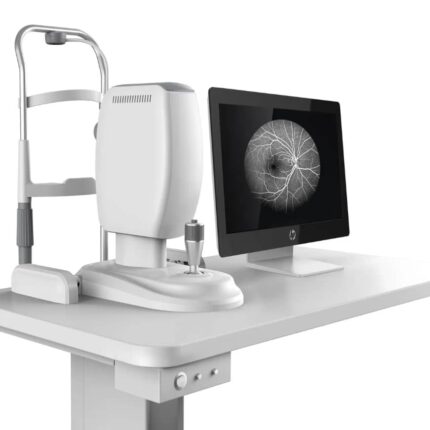
Color Fundus Camera
The device shown is a color fundus camera, a confocal ophthalmoscope for retinal angiography.
Its key features include:
Confocal laser scanning technology: Enables high-resolution imaging and stereoscopic viewing for depth perception.
High-resolution video capture: Ability to record videos at high resolutions, up to 1024 x 1024 pixels.
Multi-band fluorescence imaging and photography: Allows the use of different dyes such as fluorescein and indocyanine green to visualize retinal and choroidal vessels, although OCT angiography can reduce the need for dyes.
Non-mydriatic and continuous operation: Ability to capture images without prior pupil dilation, providing smoother operation.
Wide Field of View: Capable of capturing a 65-degree angle in a single undilated fundus photograph, with composite fields of view up to 120°.
High Resolution: Up to 1536 x 1536 pixels for high-resolution images.
Multiple Laser Sources: Uses different laser wavelengths (e.g., 488 nm for FA, 795 nm for ICGA, 830 nm for IR) for various imaging applications.