

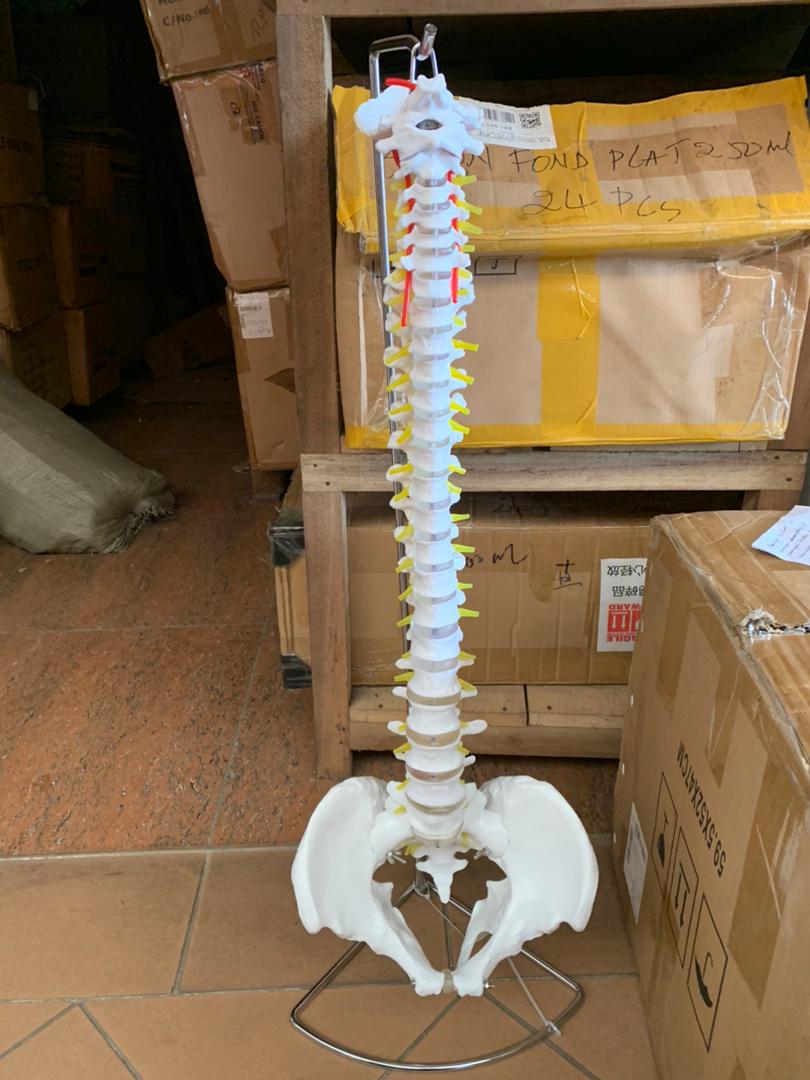


The human spine anatomical model, commonly referred to as the spine, represents the central support structure of the human skeleton, extending from the skull’s base to the pelvis.
Structure and Composition:
Comprised of 33 vertically stacked vertebrae, separated by intervertebral discs that function as shock absorbers.
Segments:
Divided into five regions: 7 cervical vertebrae, 12 thoracic vertebrae, 5 lumbar vertebrae, the sacrum (5 fused vertebrae), and the coccyx (3-4 fused vertebrae).
Functions:
Serves three primary roles:
– **Static**: Maintains upright posture.
– **Dynamic**: Enables trunk and head mobility.
– **Protective**: Shields the spinal cord within the spinal canal.
Role:
Supports body weight, facilitates a wide range of movements, and acts as an anchor for muscles and ligaments.





Reviews
There are no reviews yet.