


Characteristics of a Desiccator
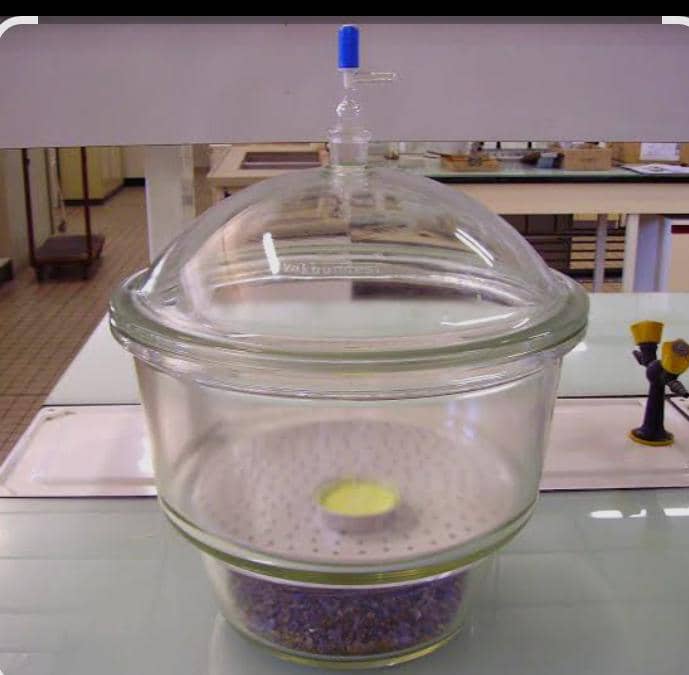
A desiccator is a piece of laboratory equipment designed to create and maintain a dry environment to protect or dry moisture-sensitive substances.
Its main characteristics are as follows:
Glass or polycarbonate structure: It consists of a circular tank made of thick glass (borosilicate glass 3.3 for better thermal and chemical resistance) or polycarbonate, topped with a hermetic lid.
Hermetic lid: The lid ensures a perfect seal, protecting samples from external moisture.
Perforated tray: Inside, a perforated tray (made of porcelain) is provided to support the sample to be dried or protected, while allowing air circulation and access to the drying agent placed underneath. Desiccant: A moisture-absorbing substance, such as silica gel (with a colored indicator), calcium chloride, or phosphorus pentoxide, is placed at the bottom of the desiccator to absorb residual moisture from the ambient air within the chamber.
How it works: The desiccator maintains a dry environment without actively heating the products, unlike a dehydrator, which uses heat to accelerate water evaporation. It is ideal for drying and preserving moisture-sensitive samples.



Reviews
There are no reviews yet.