


Characteristics of an External Fixator
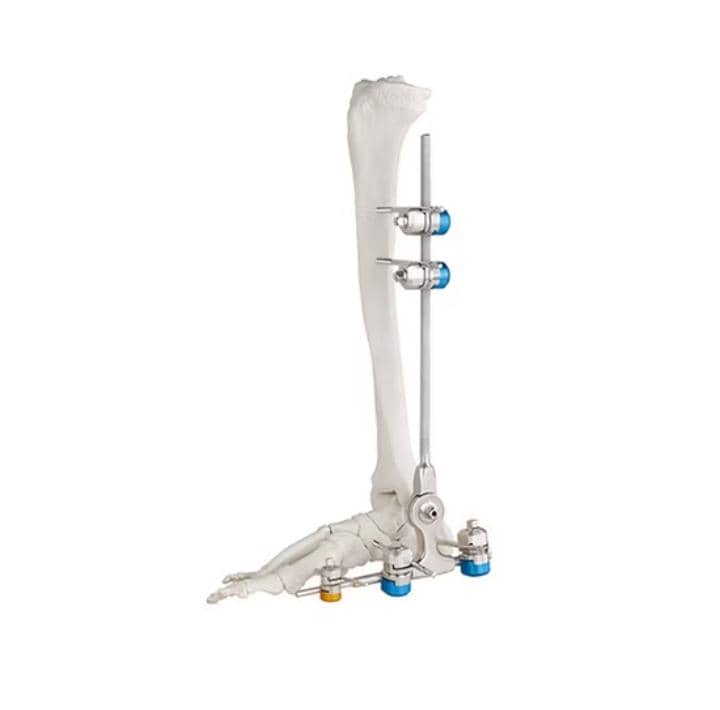
An external fixator, such as the one shown in the leg and foot, is a medical device used to stabilize fractured or deformed bones from outside the body.
General Characteristics:
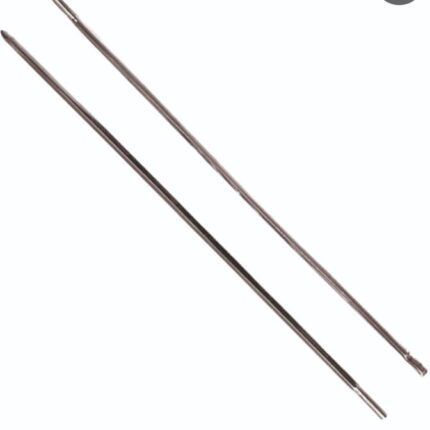
External Components: It consists of pins or screws inserted into the bone, connected to external rods or rings that maintain stability.
Stability and Alignment: It helps maintain the fractured bone in the correct position and alignment until it heals, or to make corrections to a limb.
Adjustability: External fixators can be adjusted to change their length, angle, or compression/distraction, facilitating fracture reduction or deformity correction.
Biocompatibility: The materials used, such as stainless steel or titanium, are chosen for their biocompatibility with human tissue.
Temporary or permanent use: They can be used temporarily, pending internal osteosynthesis, or permanently, sometimes combined with minimal osteosynthesis.
Specific characteristics (depending on the type):
Monolateral fixators: Used for periarticular fractures and providing stable fixation.
Hybrid fixators: Combine rings and pins for high mechanical stability and precise correction of deformities.
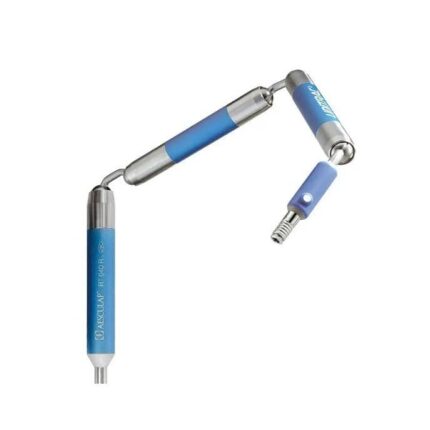
Tubular fixators: Consisting of clamps, a rail, and a distraction-compression unit, designed to stabilize bone segments.
Advantages:
Less invasive: Requires smaller incisions compared to some internal fixation methods.
Visibility of the injury site: Allows easy access for wound care, particularly useful in open fractures.
Considerations:
Care and follow-up: Regular follow-up is essential to monitor healing and prevent complications, including infections at the pin site.



Reviews
There are no reviews yet.