


Characteristics of Orthopedic Plates and Screws
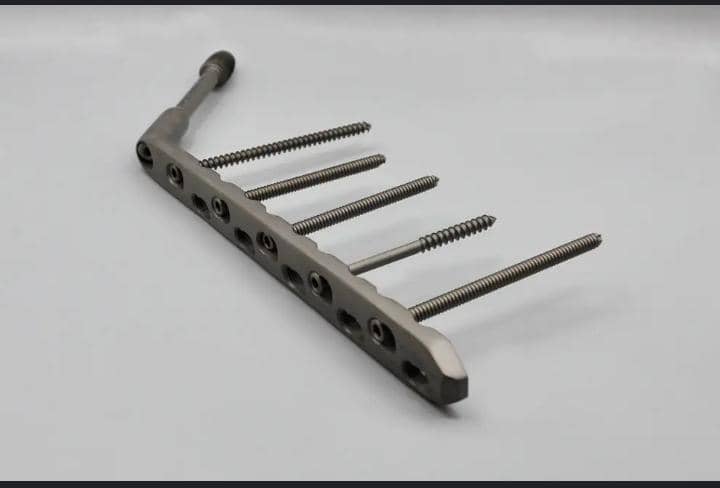
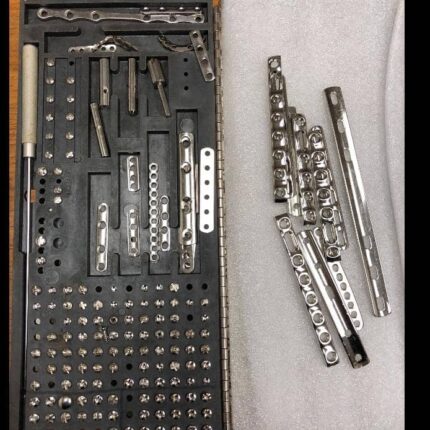
Orthopedic plates and screws, like the ones pictured, are medical devices used in surgery to stabilize fractures and promote bone healing.
Their main characteristics are as follows:
Material: They are generally made of stainless steel or titanium alloys (such as Ti-6Al-4V), chosen for their biocompatibility, corrosion resistance, and strength. Titanium is often preferred for its light weight and lower modulus of elasticity, which can reduce the stress shielding effect on the surrounding bone compared to stainless steel.
Biocompatibility: The materials used are selected to be well tolerated by the human body, thus minimizing the risk of rejection or allergies.
Design:
Plates: These act as internal splints, providing a framework for fixation of bone fragments and facilitating anatomical fracture reduction. They can have specific designs, such as locking compression plates (LCPs) with combination holes for different types of screws.
Screws: These are designed to secure the plates to the bone and can vary in diameter, length, and thread type (cortical for dense bone, cortico-cancellar for less dense bone) depending on the anatomical area and bone characteristics. Screws are also available in different types, such as malleolar, cortical, and cancellous screws.
Function: They are used for internal fixation of fractures, correction of deformities, and support of bone healing. They provide the necessary stability during the healing process.
Strength and Durability: The materials chosen give the implants high mechanical strength to withstand the stresses exerted on the bone during healing and ensure long-lasting fixation.



Reviews
There are no reviews yet.