

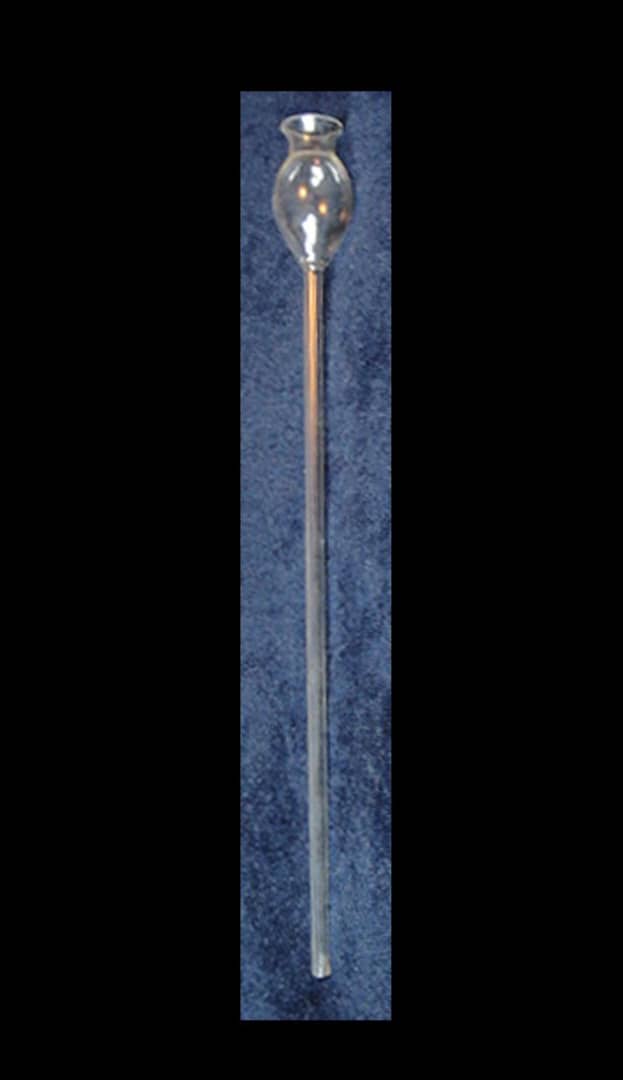

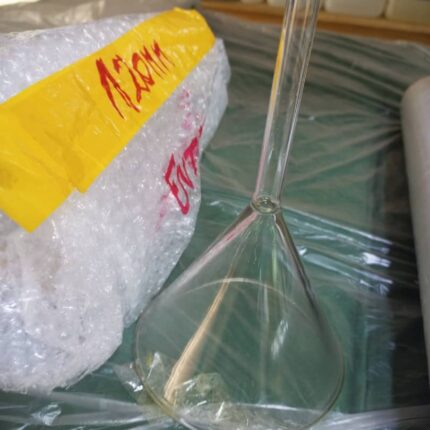
A safety tube, also known as a Thistle tube, is a glass laboratory instrument primarily used to add liquids to a solution or apparatus system, or to act as a safety valve to relieve excess pressure.
Its main characteristics are:
Structure: It consists of a long, hollow stem and a funnel-shaped reservoir at its upper end.
Material: It is usually made of glass.
Function:
Liquid Addition: It allows liquids to be slowly introduced into a container, such as an Erlenmeyer flask, by inserting the thin end of the stem through a stopper.
Safety: It can be used to prevent overflow in the event of changes in pressure or temperature. An increase in pressure or expansion of the liquid will cause it to rise up the tube and overflow into the reservoir, thus acting as a safety valve.
Variations: The shape of the stem end can vary, resulting in types such as straight, curly, or multi-chamber safety tubes.





Reviews
There are no reviews yet.