

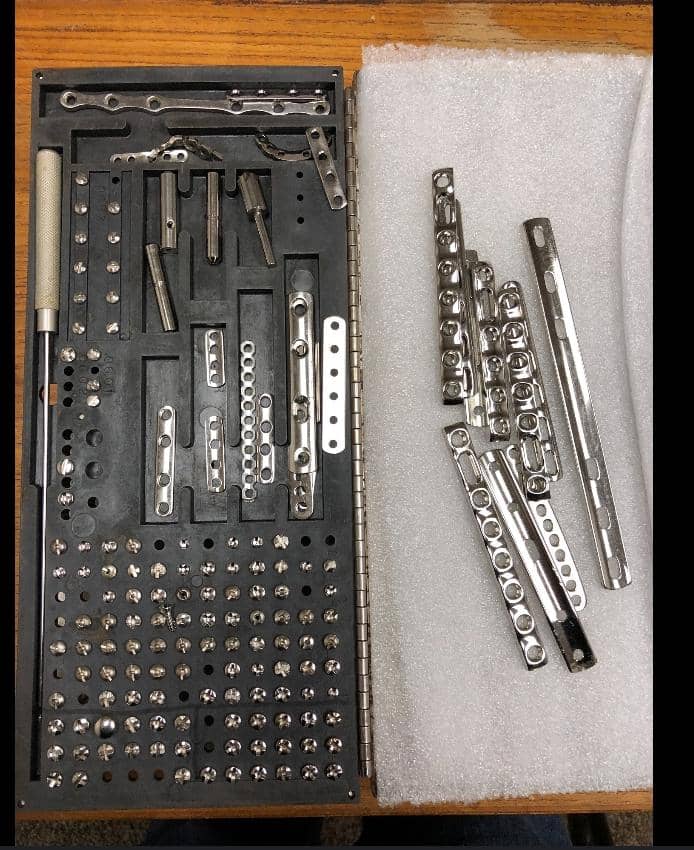
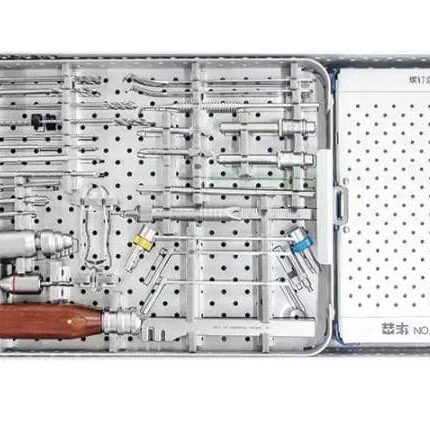
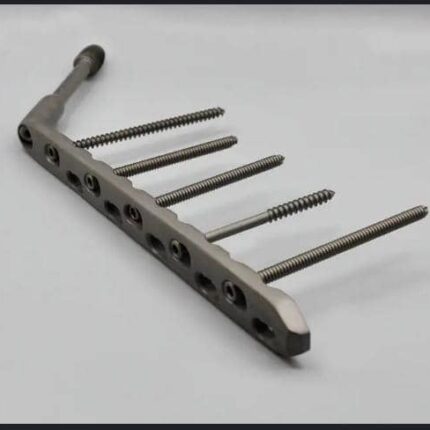
The characteristics of the surgical plates and screws presented, typically used in orthopedics for bone fixation, include:
Materials: They are often made from biocompatible and corrosion-resistant materials, such as medical-grade stainless steel or titanium alloys.
Fixation Design: Plates are designed to stabilize bone fragments, facilitating healing, while screws ensure secure fixation of the plate to the bone.
Variety of Shapes and Sizes: They are available in various sizes and shapes to accommodate different anatomies and fracture types, whether thin plates, mini-plates, or screws of varying lengths and diameters.
Fixation Mechanisms: Some systems may include captive screws or specific designs to improve stability and ease of installation, such as barrier screws in other settings, but the principle remains secure fixation.
Adaptability: The design’s flexibility allows the implants to be adjusted to each patient’s specific needs and fracture complexity.
Stability and Durability: The combination of plates and screws provides strong fixation, essential for a stable and long-lasting healing process.





Reviews
There are no reviews yet.