



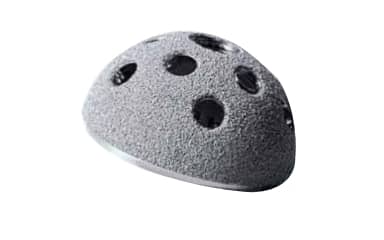
A stem centralizer is a component used in hip surgery, particularly during the implantation of cemented hip prostheses. It serves to ensure proper positioning of the femoral stem in the medullary canal and to ensure a uniform thickness of the cement mantle.
Key Features:
Material: Often made of UHMWPE (ultra-high molecular weight polyethylene) or PMMA (polymethyl methacrylate), the same material as bone cement.
Shape and Design: Typically round or pyramidal, designed to fit the distal tip of the femoral stem. Some models are hollow to allow the stem to subside without direct contact with the centralizer, thus avoiding pressure on the stem tip.
Function:
Centering: Helps center the femoral stem in the medullary canal, ensuring a uniform cement mantle around the stem.
Bone-prosthesis contact prevention: Avoids direct contact between the bone and the distal end of the prosthesis.
Cement mantle optimization: Helps maintain a consistent cement thickness, essential for the stability and longevity of the prosthesis.
Positioning: Distal centralizers are available, attached to the end of the stem, and proximal centralizers can improve cement penetration and cementing pressure in the proximal region of the femur.
Sizes: Available in various sizes to match the femoral canal diameter or the size of the cement restrictor.
Placement: Slipped onto the distal tip of the stem prior to implantation, sometimes with a thin layer of cement to ensure good adhesion.





Reviews
There are no reviews yet.