


HJ Hoffmann External Fixation System Trauma Instrument Kit
- The HJ external fixation system (Hoffmann type) is divided into two subgroups for small and large fragments.
- Small fragments use the CF 5.0 rod coupled with SS 3.0-4.0 pins, and large fragments use the CF 8.0 rod coupled with SS 5.0-6.0 pins.
- It is indicated for external fixation of open and/or unstable fractures of the humerus, ulna, radius, tibia, femur, and the elbow, knee, and ankle joints.
- Temporary external fixation is intended for stabilization when soft tissue damage prevents other internal fixation treatments for the fracture, and is designed to be non-weightbearing.
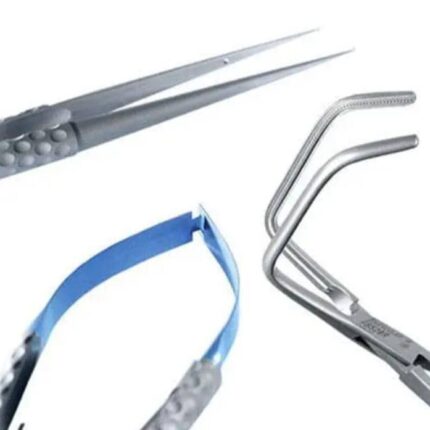
Thoracic Surgery Instrument Kit
Surgical Instruments
For Cardiovascular and Thoracic Surgery
Aesculap instruments for cardiovascular and thoracic surgery offer superior functionality, comfort, and reliability and meet the high standards required in this specialty.
– Sternal Saw
– Titanium Instruments
– Microinstruments
– Vascular Instruments
– SUSI – Single-Use Surgical Instruments
– Endoscopy
– Electrosurgery
– Bone Instruments
– Retraction Systems, Retractors, and Hooks
– General Surgical Instruments
– Reprocessing, Care, and Maintenance
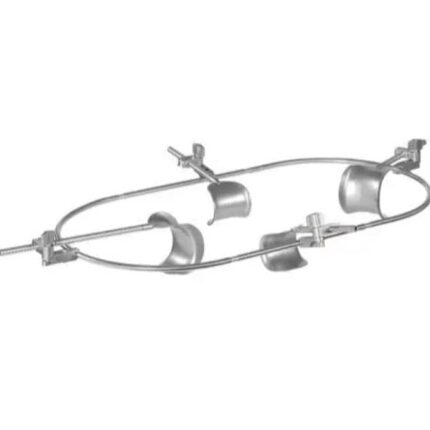
Universal Retractor
Retraction for a Wide Range of Applications
MÜNSTER Retraction System
Universal, flexible, safe, and easy to use – the MÜNSTER Retraction System is based on a kit construction principle that offers the surgeon great flexibility. At the same time, it is easy to apply. The individual blades are adjusted using a special, easy-to-use ratchet mechanism.
The variety of different frames, clamps, rods, and retractors allows for an individually adjustable retraction system for urology, gynecology, visceral, and vascular surgery that meets the surgeon’s needs.
Vario Retractor System
Vario retractor system with integrated cold light for additional intensive illumination of deep and complex surgical fields.
Frankfurt Retraction System
The Frankfurt Mini-Retraction System is designed for thyroid and pediatric surgery. Two different frames are available. Carbotrac Retractors
Lighten your load – these retractors are made from a carbon fiber-reinforced polymer. Carbotrac retractors are lightweight and X-ray translucent. Stability is always assured.
Note
Further information can be found in the enclosed brochure.
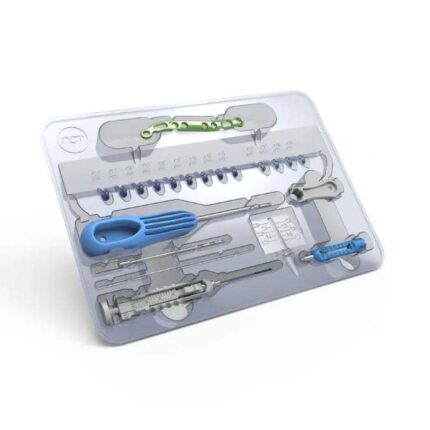
Trauma Instrument Kit
KIT COMPOSITION
Instrumentation
Implants: Plates and Screws
The Initial C kits are available with the following implants:
Plates:
8 types of plates:
Middle third clavicle plates
– Middle third plate, size 2
– Formable middle third plate, sizes 1 and 2
Lateral clavicle plates
– Lateral plate, sizes 1 and 2
– Formable lateral plate, size 2
Lateral middle third plates, sizes 1 and 2
Lateral medial plate: size 2 (93 mm)
Technical characteristics:
Preformed implants: Developed using an original design technique based on bone surface modeling, this generation of implants boasts optimized anatomical congruity.
Fixation:
2.8 mm locking screws
3.5 mm locking screws
3.5 mm cortical screws
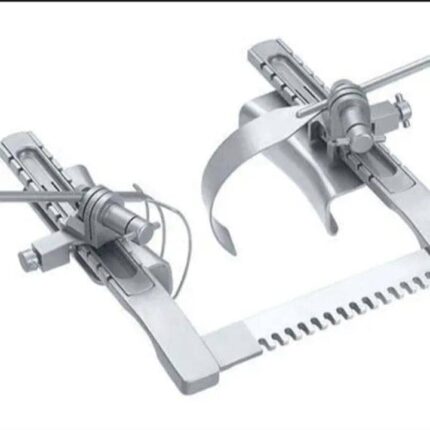
XS Sternal Retractor for the Heart
Median Access for Cardiothoracic Surgery
The Aesculap Heart XS Retraction System is a modular sternal retraction system for open median sternotomy – applicable for surgeries with and without a beating heart machine.
Features
– One retractor, four blade sizes
– Interchangeable blades – rigid or pivoting
– Seven different hooks and retractors
– OPCAB accessory attachment available
Note
In addition to the Heart XS Retraction System, Aesculap offers a variety of other sternal retractors for adults and children – made of stainless steel or aluminum – as well as a mammary retractor. Lateral retractors can be found in the minimally invasive heart valve surgery chapter.
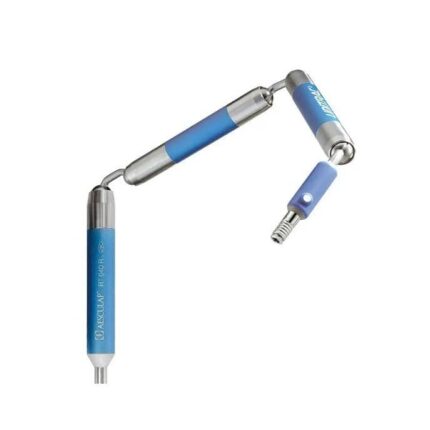
Pneumatic Retraction and Holding System for Open Surgery
Pneumatic Holding Arm
The pneumatic retraction and holding system for open and minimally invasive surgery, neurosurgery, orthopedics, and trauma.
Features
– 4 kg holding force
– 350° range of motion
– Quick connector for attaching accessories
– CO2 air cartridge for compressed air supply
– Installation with a sterile field
– One-handed operation
– Wide range of accessories – blades, AtriumLift, camera holder, and endoscope holder
Note
Aesculap offers a wide range of accessories for the Unitrac® pneumatic holding arm for various disciplines
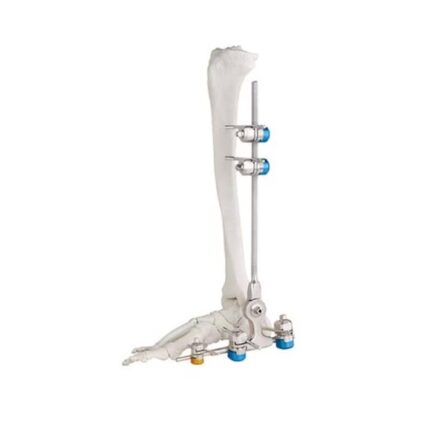
Medical External Fracture Fixation Device
Characteristics of an External Fixator
An external fixator, such as the one shown in the leg and foot, is a medical device used to stabilize fractured or deformed bones from outside the body.
General Characteristics:
External Components: It consists of pins or screws inserted into the bone, connected to external rods or rings that maintain stability.
Stability and Alignment: It helps maintain the fractured bone in the correct position and alignment until it heals, or to make corrections to a limb.
Adjustability: External fixators can be adjusted to change their length, angle, or compression/distraction, facilitating fracture reduction or deformity correction.
Biocompatibility: The materials used, such as stainless steel or titanium, are chosen for their biocompatibility with human tissue.
Temporary or permanent use: They can be used temporarily, pending internal osteosynthesis, or permanently, sometimes combined with minimal osteosynthesis.
Specific characteristics (depending on the type):
Monolateral fixators: Used for periarticular fractures and providing stable fixation.
Hybrid fixators: Combine rings and pins for high mechanical stability and precise correction of deformities.
Tubular fixators: Consisting of clamps, a rail, and a distraction-compression unit, designed to stabilize bone segments.
Advantages:
Less invasive: Requires smaller incisions compared to some internal fixation methods.
Visibility of the injury site: Allows easy access for wound care, particularly useful in open fractures.
Considerations:
Care and follow-up: Regular follow-up is essential to monitor healing and prevent complications, including infections at the pin site.

Exactech Equinoxe Shoulder Prosthesis
The Exactech Equinoxe shoulder prosthesis offers several key features:
Modularity and Flexibility: It is a modular system that allows surgeons to transition from a primary shoulder or hemifracture to a reverse shoulder without removing the humeral stem, thanks to the platform stem.
Anatomical Adjustments: It offers dual eccentricity (humeral head and replicator plate) that allows independent adjustment of medial and posterior offsets, ensuring anatomical orientation of the humeral head.
Various Glenoid Solutions: The system offers a wide range of glenoids (pear-shaped, peg-shaped, keel-shaped, and augmented) to accommodate various bone defects and preserve bone.
Osseointegration Design: For stemless prostheses, it incorporates a 3D-printed structure with optimized porosity, designed to promote osseointegration and biological fixation.
Biomechanical Improvement: The design, particularly for reverse prostheses, aims to lateralize the humerus7 for a more anatomical deltoid envelope and better tension of the remaining rotator cuff, thus improving active rotation.

Exactech Equinoxe Modular Shoulder Prosthesis
Exactech’s Equinoxe® modular shoulder prostheses, pictured, offer several key features:
Modularity: The system is designed to offer high flexibility. A platform humeral stem allows for conversion from a primary or hemifracture shoulder to a reverse shoulder without removing the humeral stem.
Glenoid Solutions: The system offers a wide range of glenoid solutions, including pear-shaped, pegged, keeled, and augmented options, designed to preserve bone and provide initial and biological fixation.
Reverse Biomechanics: The Equinoxe system design aims to lateralize the humerus to create a more anatomically correct deltoid shell, promoting stability and improving active rotation by tensioning the remaining cuff.
Humeral Head: The anatomical stem allows for surgical conversions (e.g., from a total shoulder to a reverse shoulder) without requiring stem removal. Glenoid curvatures allow for the combination of different head and glenoid sizes while maintaining optimal radial offset.
Stemless Technology (for select models): Some models, such as the Equinoxe stemless shoulder, utilize direct metal 3D printing for their manufacturing, providing primary stability.
Surgical Navigation (GPS): The Equinoxe system can be used with GPS navigation to guide the surgeon during implantation, enabling precise positioning of implants and screws.
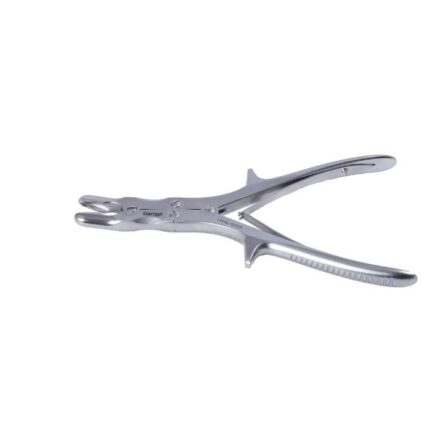
Pince arthroscopie
Conçu pour l’arthroplastie totale de la hanche mini-invasive, il permet d’éviter toute interférence dans le champ opératoire en évitant l’occlusion de la main de l’opérateur.
Avantages du produit :
●Une conception spéciale précise améliore la friction de la morsure.
●Réseau de diamants tridimensionnel avec texture antidérapante, améliorant la stabilité de la manipulation.
●Différentes conceptions de mâchoires répondent aux besoins d’une variété de scénarios chirurgicaux.
●Courbes conçues avec précision, large champ d’intervention chirurgicale

Biocompatible Coatings for Implants
Orthopedic and spinal implants are characterized by the need for a long service life, which requires implants to resist wear and not cause any adverse effects to their recipient. Ionbond’s Medthin™ coatings have the surface properties necessary to achieve this goal.
Anti-allergy: For patients with particular sensitivity to metals, Medthin™ coatings reduce allergic reactions caused by the release of metal ions. Our biocompatible Medthin™ coatings act as a barrier to metal ions: they inhibit 98% of the Co or Ni ions released by the metal implant.
Reduces wear: Due to their hardness, Medthin™ coatings reduce wear and friction between the implant’s articulating surfaces by up to 70%. This results in a reduction in UHMWPE and metal implant debris, as well as an increase in implant lifespan.
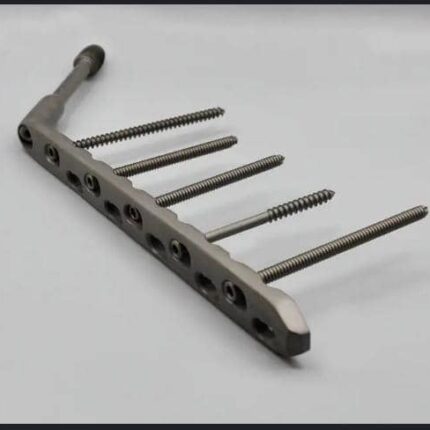
Orthopedic Plate and Screw
Characteristics of Orthopedic Plates and Screws
Orthopedic plates and screws, like the ones pictured, are medical devices used in surgery to stabilize fractures and promote bone healing.
Their main characteristics are as follows:
Material: They are generally made of stainless steel or titanium alloys (such as Ti-6Al-4V), chosen for their biocompatibility, corrosion resistance, and strength. Titanium is often preferred for its light weight and lower modulus of elasticity, which can reduce the stress shielding effect on the surrounding bone compared to stainless steel.
Biocompatibility: The materials used are selected to be well tolerated by the human body, thus minimizing the risk of rejection or allergies.
Design:
Plates: These act as internal splints, providing a framework for fixation of bone fragments and facilitating anatomical fracture reduction. They can have specific designs, such as locking compression plates (LCPs) with combination holes for different types of screws.
Screws: These are designed to secure the plates to the bone and can vary in diameter, length, and thread type (cortical for dense bone, cortico-cancellar for less dense bone) depending on the anatomical area and bone characteristics. Screws are also available in different types, such as malleolar, cortical, and cancellous screws.
Function: They are used for internal fixation of fractures, correction of deformities, and support of bone healing. They provide the necessary stability during the healing process.
Strength and Durability: The materials chosen give the implants high mechanical strength to withstand the stresses exerted on the bone during healing and ensure long-lasting fixation.