

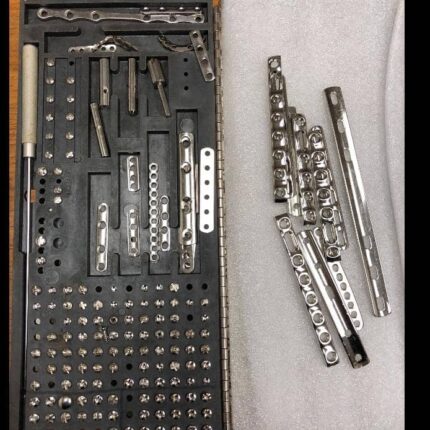
Screw Plate
The characteristics of the surgical plates and screws presented, typically used in orthopedics for bone fixation, include:
Materials: They are often made from biocompatible and corrosion-resistant materials, such as medical-grade stainless steel or titanium alloys.
Fixation Design: Plates are designed to stabilize bone fragments, facilitating healing, while screws ensure secure fixation of the plate to the bone.
Variety of Shapes and Sizes: They are available in various sizes and shapes to accommodate different anatomies and fracture types, whether thin plates, mini-plates, or screws of varying lengths and diameters.
Fixation Mechanisms: Some systems may include captive screws or specific designs to improve stability and ease of installation, such as barrier screws in other settings, but the principle remains secure fixation.
Adaptability: The design’s flexibility allows the implants to be adjusted to each patient’s specific needs and fracture complexity.
Stability and Durability: The combination of plates and screws provides strong fixation, essential for a stable and long-lasting healing process.
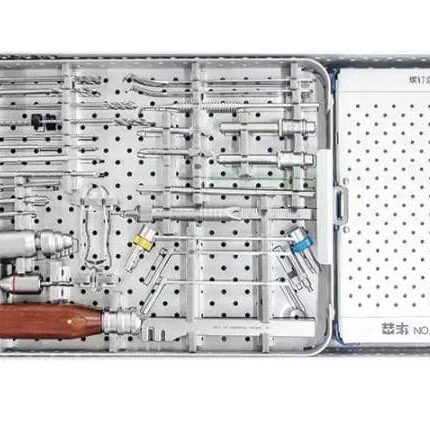
Watson Trauma Instrument Kit
The Watson Trauma Instrument Kit has the following features:
Instrument Type: This is an orthopedic surgical instrument kit specifically designed for trauma, including instruments for general surgery and fractures (femoral, humeral, etc.).
Composition: The kit consists of various orthopedic surgical instruments, made from high-quality materials such as stainless steel for durability and corrosion resistance. It may include pins, retractors, plate trays, and other tools necessary for orthopedic procedures.
Organization and Sterilization: The instruments are neatly organized and presented in a perforated tray, facilitating access and maintaining a sterile surgical environment.
Applications: Ideal for a variety of orthopedic scenarios, including fracture repairs, reconstructions, and arthritis treatments.
Quality and Safety: Each part of the kit is subject to strict quality standards to ensure reliable performance and patient safety.

PFN instruments set
- A PFN (Proximal Femoral Nail) Instrument Set is a collection of specialized implants used in orthopedic procedures to treat fractures of the femur bone.
- The instruments are specifically designed for insertion and fixation of a PFN nail.
- These nails are inserted into the medullary canal of the femur to provide internal support and promote healing of the fractured bone
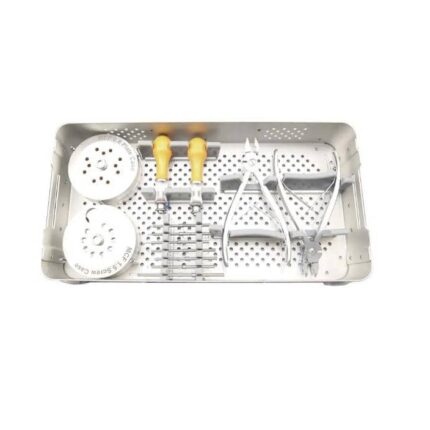
Maxillofacial Surgery Kit
- The MCF instrumentation kit includes a range of installation tools specifically designed for craniofacial, mandibular, and orthognathic surgeries.
- The plates and screws are meticulously arranged in metal cases, each labeled for easy identification.
- The tools are securely mounted on holders, allowing the surgeon quick access and maintaining clarity throughout the surgical procedure.
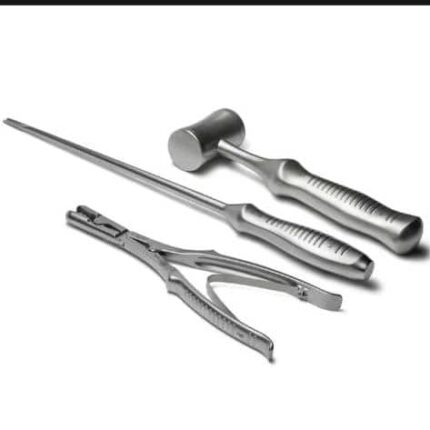
Orthopedic Instruments
Orthopedic instruments offer several key features and benefits:
Ergonomic Design: They are designed to reduce pressure points and joint stress for the surgeon, providing better handling and reduced fatigue.
Material and Durability: Made entirely of stainless steel, they are robust and have no critical interfaces with other materials, ensuring their durability.
Improved Grip: Their unique design offers a significant improvement in grip (up to 70% more than previous products), requiring less force for safe use.
Ease of Reprocessing: The instruments are designed for fully automated cleaning, eliminating manual pre-cleaning steps and saving considerable time during reprocessing.
Safety and hygiene: They help improve daily work in central sterilization departments (CSSD) by facilitating visual inspection and ensuring the safety of staff and patients thanks to their uniform surfaces and rounded shapes.
Interchangeable jaws: Some instruments, such as forceps, can have interchangeable jaws, providing greater flexibility for repairs and various procedures.
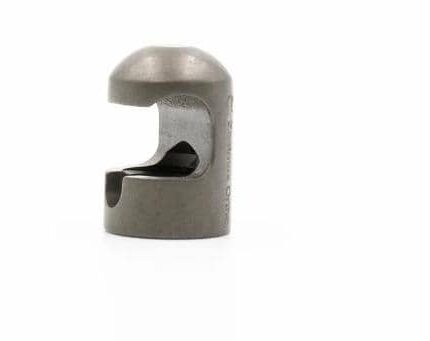
Transverse Connector Titanium
Specifications
- Fixation with 3 mm x 5.5 mm Rod
- Available in both Titanium and Stainless Steel

LCP Olecranon 3.5mm
- LCP Olecranon trauma plate 3.5mm is a specific type of trauma implant used to fix fractures in the olecranon, which is the prominent bony projection at the end of the ulna bone in the forearm, forming the point of the elbow.
- This plate is a part of the LCP design that uses locking screws and plates to securely fix broken bones for proper healing
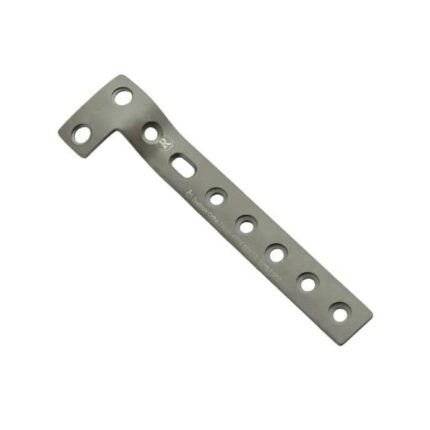
4.5mm DCP L-Buttress Plate
- The 4.5 mm DCP L-Buttress Plate is a specific type of trauma implant that is used to treat fractures near the ends of long bones, especially around the knee and ankle.
- This L-shaped buttress angled design acts like a supportive ledge, providing additional stability and preventing fractured bone fragments. Standard 4.5 mm cortical screws are used for strong fixation
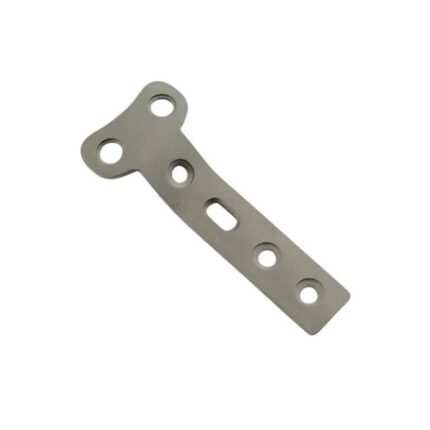
4.5mm DCP T-Buttress Plate
- The 4.5 mm DCP T-Buttress Plate is a specific type of plate that is used to treat fractures around the ends (metaphyseal regions) of long bones.
- It comprises biocompatible materials and features a unique double-bend design.
- This bend acts like a supporting structure, providing extra stability and support against forces that might tend to separate the fractured bone fragments during healing
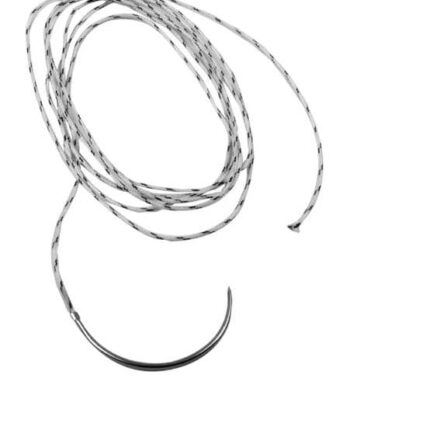
Refiber
- A ReFiber is a high-strength suture used in arthroscopic procedures, consisting of a braided core of polyester and ultra-high molecular weight polyethylene (UHMWPE).
- It combines a soft feel with abrasion resistance and strength, reducing the risk of breakage during knot tying.
- Available in various lengths, diameters, and needle types, ReFiber enhances surgical flow, minimizes surrounding tissue damage, lowers the risk of complications, and facilitates quicker recovery post-operation.
A ReFiber is used in arthroscopic surgeries for easier surgical flow. It is primarily used in tissue repair and minimizes surrounding tissue damage, lowering the risk of complications, and facilitating quicker recovery post-operation
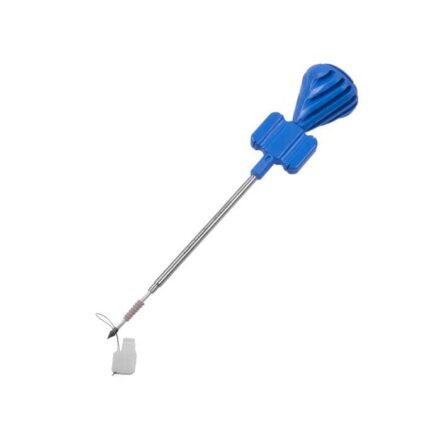
Suture Anchor Shoulder (Knotless)
- The Suture Anchor Shoulder (Knotless) is an orthopedic implant used in shoulder arthroscopic surgeries.
- Unlike traditional anchors requiring knots, the knotless design of the implant simplifies surgical procedures.
- It reduces surgical time, minimizes surgical trauma, and enhances surgical precision.
- Primarily, Suture Anchor Shoulder implant is used to secure soft tissues like tendons or ligaments to the bone, aiding in optimal repair and stabilization of the shoulder joint.
- The integration of the Shoulder Suture Anchor (Knotless) Peek also brings out better post-operative outcomes.
- Additionally, the peek material ensures more compatibility with the human body.
- Available in both titanium and peek tips, Suture Anchor Shoulder comes in 4.5mm, 5.0mm, and 5.5mm lengths to accommodate individual anatomical variations

Dual Threaded Suture Anchor
- The Dual Threaded Suture Anchor is an arthroscopic implant used in shoulder arthroscopy surgeries to enhance fixation strength.
- It features two different thread patterns, allowing easy pull-out and insertion during surgeries.
- The anchor is particularly useful in cases where bone quality is compromised or a higher tensile strength is required.
- With optimal anchor performance, surgeons can achieve better post-operative outcomes in repairing rotator cuff tears and other shoulder injuries.
- It is loaded with Two/Three Pc Refiber (with/without Needle) which saves time and reduces the risk of irritation/contamination during surgical procedures.
- The Suture Anchor is available in 5.0mm and 6.5mm lengths to accommodate individual anatomical variations