

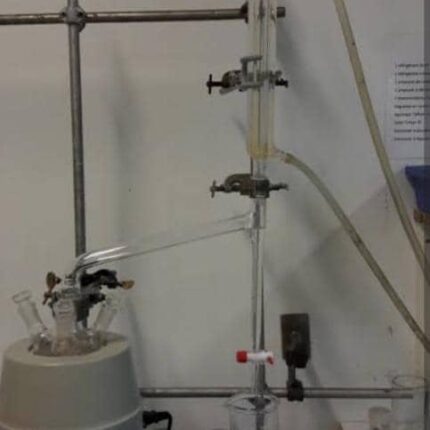
Dean-Stark Apparatus
The apparatus presented is a Dean-Stark setup, used in chemistry for the extraction of water (or other liquids) from a reaction medium, particularly during syntheses requiring the elimination of water to shift the equilibrium and increase yield.
Main Features of the Dean-Stark Apparatus:
Function: It enables azeotropic distillation to separate and collect a liquid (usually water) that is immiscible with the reaction solvent.
Composition: It consists of a graduated, cylindrical, vertical glassware element topped with a reflux condenser and connected to a flask or reactor.
Operating Principle:
During reflux heating, the vapors of the solvent and the liquid to be extracted (e.g., water) rise towards the condenser.
After condensation, the liquids fall back into the graduated tube of the Dean-Stark apparatus. Immiscible liquids separate into two distinct phases based on their density (e.g., denser water settles to the bottom).
The solvent (less dense) overflows from the graduated tube and returns to the reaction flask, while the extracted liquid (water) is collected in the graduated tube and can be removed through a tap.
Typical use: It is frequently used in esterification reactions where the removal of water promotes ester formation.
Variations: There are devices adapted depending on whether the density of the solvent used is lower or higher than that of the liquid to be extracted.
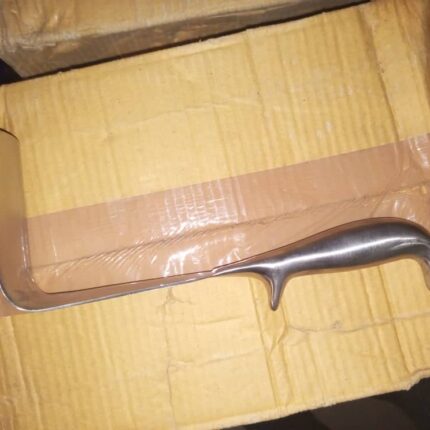
Dean’s Vaginal Valve
The Dean’s Vaginal Valve is a medical instrument used in gynecology, particularly during surgical procedures such as cesarean sections.
Key Features:
Material: Made of surgical-grade stainless steel with a satin finish to reduce glare.
Design: Reusable and sterilizable.
Use: Designed to retract and protect the vaginal walls and bladder during gynecological procedures, ensuring maximum patient comfort.
Safety: Features smooth edges and a blunt tip to facilitate insertion and protect soft tissue from damage.
Dimensions: Available in various sizes, such as 120 mm x 45 mm.
Surgeon Comfort: Its smooth design and light weight contribute to user comfort during surgery.
Marking: Class I medical device, with CE marking.

Defibrillator
BRAND: ZOLL AED Plus
DESCRIPTION:
Features of the ZOLL AED Plus Defibrillator
The ZOLL AED Plus defibrillator is designed to assist people in cardiac arrest, offering advanced features to guide the rescuer.
Here are its key features:
Shock Waveform and Energy: It uses a rectilinear biphasic waveform and can deliver shocks up to 200 joules for an adult, with a progressive shock protocol (120, 150, 200 joules).
Cardiopulmonary Resuscitation (CPR) Assistance: It incorporates a CPR assistance system, providing visual guidance and an adaptive metronome to assist with the depth and rate of compressions.
Electrodes: It uses specific electrodes such as the ZOLL CPR-D-padz, which simplify positioning and incorporate a sensor for CPR assistance.
Battery Life and Power: Powered by disposable batteries (10 x 123A batteries), it offers a battery life of approximately 5 years or 300 shocks.
Self-Tests and Reliability: It performs daily, weekly, and monthly self-tests to verify its components, and operational status indicator (green dot) indicates proper operation.
Robustness and Protection: Compliant with the IP55 standard, it offers optimal protection against dust and liquid splashes, ensuring its robustness.
Ease of Use: Designed to be easy to use, it is suitable for both professionals and the general public in the event of a cardiac emergency.
Pediatric Adaptability: Pediatric-specific electrodes are available, automatically adjusting energy levels and ECG analysis for children.
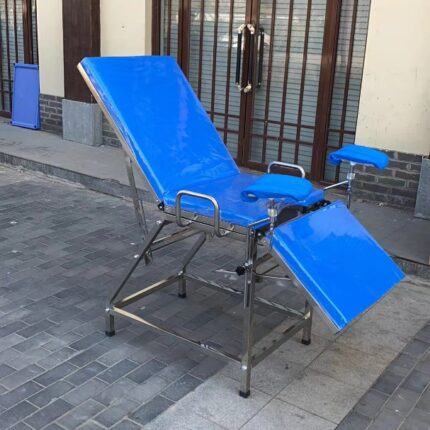
Delivery Table or Gynecological Table
Delivery tables, like the one pictured, have several essential features to ensure patient comfort and facilitate the work of medical staff.
Delivery Table Features
Structure and Materials: They are made with a sturdy stainless steel or chrome-plated frame, ensuring durability and stability. The mattress is padded and covered with washable, fire-resistant material for hygiene and safety.
Adjustable Sections: The table is divided into several sections (backrest, seat, footrest) that are independently adjustable, allowing the patient’s position to be adapted to the different stages of delivery or gynecological examinations. The adjustment is manual.
Accessories and Equipment: They are equipped with essential accessories such as adjustable anatomical leg rests (stirrups), padded shoulder pads for patient comfort and safety, and a stainless steel basin for fluid collection.
Dimensions: Dimensions vary, but they are designed to provide sufficient and comfortable space for the patient and allow medical staff to work efficiently.
These features are designed to optimize conditions for the mother and caregivers during childbirth and gynecological procedures.

Dental Anatomy Model
Features of the Dental Demonstration Model:
Materials:
Constructed from non-toxic, eco-friendly polyvinyl chloride (PVC) plastic.
Structure:
Features a full set of 32 fixed teeth, soft gums, and an included tongue for realistic representation.
Function:
Designed to demonstrate proper dental hygiene, especially correct toothbrushing techniques.
Use:
Serves as an effective educational tool for dental students, dentists (for patient instruction), and teachers (to promote good oral habits in school and kindergarten settings).
Simulation:
Boasts naturally colored gums and highly durable teeth with accurate anatomical shaping.
Durability & Maintenance:
Resistant to corrosion and easy to clean and disinfect for long-term use.
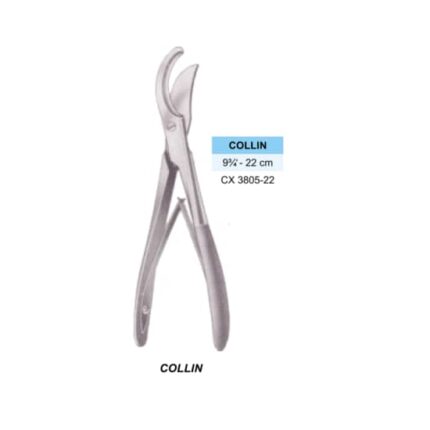
Dental Forceps
The dental forceps, identified as “COLLIN”.
Its main features are:
Model Name: COLLIN.
Dimensions: 9.5 – 22 cm.
Product Reference: CX 3805-22.
Use: It is often used for tooth extraction, particularly for upper molars in children, based on similar products found in search results.
Material: Generally made of surgical-grade stainless steel.
Design: It has serrated jaws for a better grip and ergonomic, non-slip handles for easy handling.
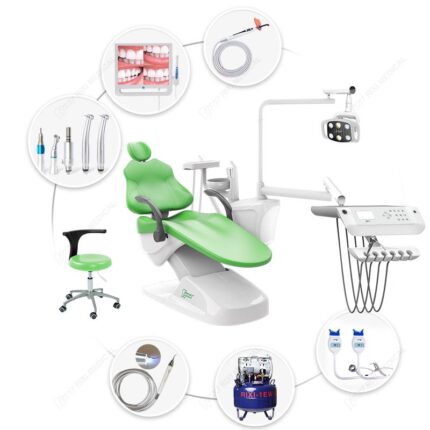
Dental Unit
1,ADOPTED THE SLOPE DESIGN
convenient for operation, and expanded the using area of instrument tray
2,90 degree rotatable Side Box Design
Make the treatment processeasy and convenient.
3,ADJUSTABLE BACKREST
Adjust the backrest among
90°-185°
1. Adjustable back angle
2. Double safety switch.
3. Relaxed and comfortable
4,ULTRA-LOW CHAIR POSITION DESIGN
convenient for the elderly and children to sit down
5, *LED DENTAL LAMP
With 6 bulbs
Spot size: 80*160mm
Distance for 700mmLED DENTAL LAMP
6,90° ROTATABLE
SIDE BOX DESIGN
Make the treatment process
easy and convenient.

Desiccant Tube
The laboratory equipment presented is a DURAN® borosilicate glass elbow desiccant tube with a male ground joint.
Its main characteristics are as follows:
Material: DURAN® borosilicate glass (known for its chemical and thermal resistance and low thermal expansion).
Shape: 75° elbow.
Ground Joint: Features a male ground joint (standard size 24/29), allowing for a leak-proof connection with other glassware.
Use: Designed to contain a desiccant, such as calcium chloride (CaCl2), to protect a reaction or system from atmospheric moisture.
Resistance: Offers very good chemical and high temperature resistance, as well as relatively high resistance to temperature fluctuations due to its minimal thermal expansion.
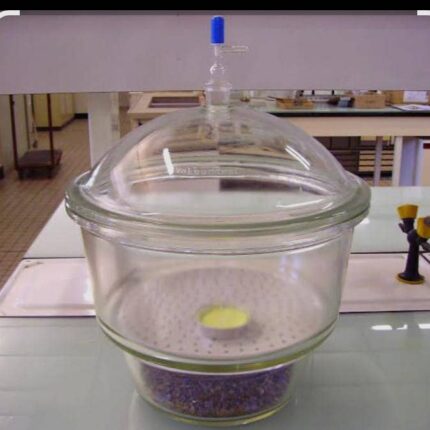
Desiccator
Characteristics of a Desiccator
A desiccator is a piece of laboratory equipment designed to create and maintain a dry environment to protect or dry moisture-sensitive substances.
Its main characteristics are as follows:
Glass or polycarbonate structure: It consists of a circular tank made of thick glass (borosilicate glass 3.3 for better thermal and chemical resistance) or polycarbonate, topped with a hermetic lid.
Hermetic lid: The lid ensures a perfect seal, protecting samples from external moisture.
Perforated tray: Inside, a perforated tray (made of porcelain) is provided to support the sample to be dried or protected, while allowing air circulation and access to the drying agent placed underneath. Desiccant: A moisture-absorbing substance, such as silica gel (with a colored indicator), calcium chloride, or phosphorus pentoxide, is placed at the bottom of the desiccator to absorb residual moisture from the ambient air within the chamber.
How it works: The desiccator maintains a dry environment without actively heating the products, unlike a dehydrator, which uses heat to accelerate water evaporation. It is ideal for drying and preserving moisture-sensitive samples.

Detergent
The characteristics of URIT Detergent, as indicated on the packaging, are as follows:
Product Name: URIT Detergent
Model: URIT 041
Volume: 20L
Intended Use: Cleaning for URIT automated hematology analyzers, with an important impact on clinical diagnosis.
Contents: Sodium chloride (1.5%), anhydrous sodium sulfate (0.2%), buffer solution (0.2%), surfactant (0.1%).
Storage and Shelf Life: Stable for 24 months when stored between 2 and 40°C and protected from light. Once opened, it must be consumed within 60 days and stored at 18°C.
Restrictions, Precautions, and Warnings:
Use the detergent under professional supervision. Do not consume this product; if swallowed, seek medical advice immediately. Avoid contact with skin and eyes; if contact occurs, rinse immediately with plenty of water. Dispose of waste in accordance with local regulations.
Additional Information:
Batch Number: 22051324M1
Certification: CE Marked
Manufactured by: URIT Medical Electronic Co. Ltd.

Developer
Product Type:
Automatic Concentrated X-Ray Bath Solution – Developer
Function:
Formulated for developing X-ray films in automatic processing systems, ensuring consistent image quality and reliable film development.
pH Values:
-
5 L Can (Concentrate for 20 L): pH 11–13
-
0.5 L Red Bottle: pH 2–5
-
0.5 L White Bottle (D3): pH not specified on label
Available Volumes:
-
5 liters (concentrated solution for preparation of 20 liters)
-
0.5 liters (individual bottles for component mixing)
Application:
Specially designed for the development phase of X-ray film processing, this solution supports image clarity, processing efficiency, and long-term film preservation.

DHS and DCS Plate Instruments
The image shows a set of instruments for DHS and DCS plates, commonly used in orthopedic surgery for femoral fracture fixation.
Features of this instrument set include:
Set Components: It contains instruments for the implantation and removal of DHS (Dynamic Hip Screw) and DCS (Dynamic Condylar Screw) plates. These instruments are used to fix proximal and distal femur fractures.
Specific Contents: The set typically includes angle guides, triple reamers, drill sleeves, taps, screwdrivers, a depth gauge, and guide wires.
Organization: The instruments are often organized in a sterilization container, usually made of aluminum, with silicone trays and holders for orderly storage and efficient sterilization.
Materials: Instruments and implants (such as plates and screws) are manufactured from medical-grade materials, such as stainless steel or titanium, to ensure high mechanical strength and biocompatibility.
Implant Functionality: DHS and DCS plates are designed to stabilize fractures and promote healing. For example, the DHS system allows controlled sliding of the screw within the plate for dynamic compression of the fracture.
Plate Design: Plates are optimized in terms of the number of holes for cortical screws, allowing precise fixation and increased stability, while minimizing the incision. They often incorporate an anti-rotational design to prevent rotation of the screw and bone fragment.