


Heating and Massaging Lumbar Belt
Here are the main features of the heating and massaging lumbar belt shown in the image:
Material and Comfort: Made of high-quality diving fabric, it is lightweight, soft, elastic, and provides good thermal insulation for a comfortable feel.
Combination Functions: It combines infrared red light heating and vibration massage, with a dual vibration motor.
Operating Modes: The heating and massage functions can be used simultaneously or separately, providing flexibility of use.
Settings: It has three temperature settings and three vibration modes to customize the experience.
Display and Control: A touch screen allows you to turn the device on/off and easily adjust the temperature or massage mode.
Power Supply: It is USB rechargeable and features a high-capacity 5000mAh battery, allowing for cordless use.
Lumbar Support: It features an ergonomic support system with integrated removable steel bars and springs for strong lumbar support.
Benefits: It is designed to effectively relieve muscle pain, relax muscles, and promote blood circulation.

Heating Mantle
The 250 ml laboratory heating mantle.
Key Features:
Capacity: Designed to heat round-bottomed flasks with a capacity of 250 ml.
Temperature Control: It is equipped with electronic temperature control, allowing precise heating control.
Maximum Temperature: Can reach a maximum temperature of 370°C, or even 450°C for some models.
Power: Typically 150 W.
Construction: Chemical-resistant steel or polypropylene outer shell, with thermal insulation made of mineral fiber wool or molded silica.
Safety: Some models include protective fuses and a “cool-touch” outer casing to minimize the risk of burns.
Additional Features: Some heating mantles of this capacity can also incorporate magnetic stirring, allowing the contents of the flask to be heated and stirred simultaneously.
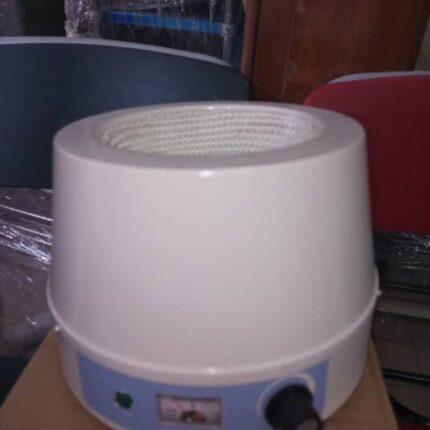
Heating Mantle
The 250 ml laboratory heating mantle.
Key Features:
Capacity: Designed to heat round-bottomed flasks with a capacity of 250 ml.
Temperature Control: It is equipped with electronic temperature control, allowing precise heating control.
Maximum Temperature: Can reach a maximum temperature of 370°C, or even 450°C for some models.
Power: Typically 150 W.
Construction: Chemical-resistant steel or polypropylene outer shell, with thermal insulation made of mineral fiber wool or molded silica.
Safety: Some models include protective fuses and a “cool-touch” outer casing to minimize the risk of burns.
Additional Features: Some heating mantles of this capacity can also incorporate magnetic stirring, allowing the contents of the flask to be heated and stirred simultaneously.
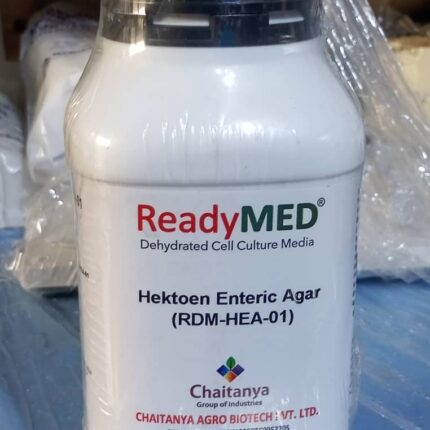
Hektoen Enteric Agar
Hektoen Enteric Agar (HEA) – Technical Specifications
Selective & Differential Medium for Enteric Pathogens
1. Intended Use
-
Primary Application: Isolation/differentiation of Salmonella and Shigella spp.
-
Sample Types: Clinical stool specimens, food, environmental samples
2. Key Functional Components
| Component | Role |
|---|---|
| Bile salts | Inhibits Gram-positive & non-pathogenic Gram-negative bacteria |
| Lactose/sucrose/salicin | Carbohydrate sources for fermentation |
| Sodium thiosulfate + Ferric ammonium citrate | H₂S production detection |
| Bromothymol blue + Acid fuchsin | pH indicators (differentiate fermenters) |
3. Physical Characteristics
-
Color: Green (prepared medium)
-
Clarity: Clear to slightly opalescent
-
pH: 7.5 ± 0.2 at 25°C
-
Format: Dehydrated powder
Performance Characteristics
Colony Morphology
| Organism | Colony Appearance | Biochemical Basis |
|---|---|---|
| E. coli (coliform) | Salmon-pink, may yellow medium | Rapid lactose fermentation |
| Salmonella spp. | Blue-green with black centers | H₂S production (thiosulfate → FeS) |
| Shigella spp. | Pale green, translucent | Non-lactose fermenter |
| Proteus spp. | Colorless with blackening | H₂S production only |
Quality Control Parameters
-
Sterility: No growth after 24h at 35°C
-
Growth Promotion:
-
Salmonella enterica ATCC 14028: Blue-green colonies with H₂S
-
Shigella flexneri ATCC 12022: Pale green colonies
-
-
Selectivity: ≥80% inhibition of E. coli ATCC 25922
Protocol Summary
-
Preparation: Suspend 75g/L, boil to dissolve, autoclave (121°C, 15 min)
-
Plating: Pour into Petri dishes (~20mL/plate)
-
Inoculation: Streak for isolation
-
Incubation: 35-37°C for 18-24h (extend to 48h for low-density samples)
Regulatory & Storage
-
Shelf Life: 3 years (unopened, <30°C)
-
Safety: Handle as potential biohazard post-inoculation
Advantages Over Competing Media
✔ Dual differentiation (fermentation + H₂S)
✔ Superior Shigella recovery vs. SS Agar
✔ Color contrast enhances readability

Hematology Analyzer
Key Features:
White Blood Cell Differentiation:
-
Provides 3-part WBC differentiation, enabling clear identification of lymphocytes, monocytes, and granulocytes.
Parameters Analyzed:
-
Measures 20 to 23 parameters, including:
-
WBC, RBC, PLT, and hemoglobin (HGB), among others.
-
Performance:
-
Analysis Speed: Up to 60 samples per hour
-
Sample Volume: Requires just 9.8 µL of venous blood for testing
Technology:
-
Dual-channel counter for simultaneous measurements
-
Time-volume and electrical impedance measurement (Coulter principle)
-
SFT method for hemoglobin analysis
-
Advanced valve control for high-precision fluid management
User Interface & Operation:
-
8.4-inch TFT color display with intuitive Windows-based graphical interface
-
Operable via mouse and keyboard
-
Simplified user interaction with large buttons and fast access menus
Automated Functions:
-
Automatic dilution, mixing, rinsing, unclogging
-
Automatic internal and external probe cleaning
Data Handling & Output:
-
Stores data for up to 10,000 samples with 3 histograms
-
Equipped with a built-in thermal printer
-
Supports external printer connection
-
RS232 port for PC connectivity
Design & Usability:
-
Compact, lightweight, and ergonomic build
-
Optimized for ease of use in busy lab environments
Quality Control Features:
-
Supports statistical QC parameters: X-B, L-J, X, SD, CV%
Language Support:
-
Available in English, Spanish, French, Portuguese, Italian, and Indonesian

Hematology Machine
URIT-3000Plus Hematology Analyzer – Technical Specifications
Key Features
✅ Fully Automated 3-Part Differential Analyzer
✅ High Throughput: Up to 60 samples/hour
✅ 21 Measured Parameters + 3 Histograms
Technical Specifications
Analysis Principles
-
Electrical Impedance: WBC, RBC, PLT counts
-
Photoelectric Colorimetry: HGB measurement
Performance & Efficiency
-
Sample Volume: 20 μL (capillary or venous blood)
-
Memory Capacity: 100,000+ results (with histograms)
-
Data Export: USB, HL7-compatible (LIS/HIS integration)
User Interface & Operation
-
10.4-inch Color LCD (Linux OS)
-
Input Options:
-
Standard keyboard & mouse
-
Optional touchscreen upgrade
-
-
Real-time monitoring of system status
Quality & Compliance
-
Certifications: CE, ISO 13485
-
Built-in QC: Supports 3-level calibration
Maintenance & Service
-
Self-Check Diagnostics: Minimizes downtime
-
Low-Consumable Design: Cost-effective operation

Hemoglobin Test Strips
The characteristics of the URIT H12 hemoglobin test strips, used with the URIT-12 hemoglobin meter, are as follows:
Sample Type: Capillary or venous whole blood (13 to 15 µL, equivalent to one drop of blood).
Measurement Principle: Optical reflectance (dry chemistry colorimetric method, azidomethemoglobin method).
Measured Parameters: Hemoglobin and hematocrit (HCT).
Measurement Speed: Results obtained in 10 seconds or less.
Measurement Range: 4.0 g/dL to 24.0 g/dL (results outside this range are indicated by “Lo” or “Hi”).
Accuracy: ≥ 95%.
Calibration: Factory calibrated according to the ICSH (International Council for Standardization in Haematology) standard.
Memory: Can store up to 250 test results.
Automation: Self-checking, automatic judgment, and malfunction display.
Strip Storage Conditions: Store in a dry, dark place between 0°C and 30°C, away from direct sunlight and heat, and not frozen.
Use: Strips should be used immediately after removal from the container; used strips should be disposed of as normal medical waste.
Restrictions on Use: Not for serum, plasma, arterial blood, or patient self-testing; intended for use by healthcare professionals.

Hemoglobinometer
The Mission Hb Hemoglobin Testing System features:
Fast and Accurate Measurement:
It measures hemoglobin (Hb) and hematocrit (Hct) levels in less than 15 seconds with only 10 µL of blood (capillary or venous).
Ease of Use:
The system is designed to be simple to use, with a large display for easy reading of results.
Data Storage and Transfer Capabilities:
It can store up to 1,000 test results with the date and ID, and this data can be transferred to a computer via a USB port.
Portability:
Compact and powered by 3 AAA batteries, it is ideal for in-office or mobile use.
Detection Method:
It uses reflectance photometry and the methemoglobin principle for detection.
Automatic Calibration:
For convenience and necessary.
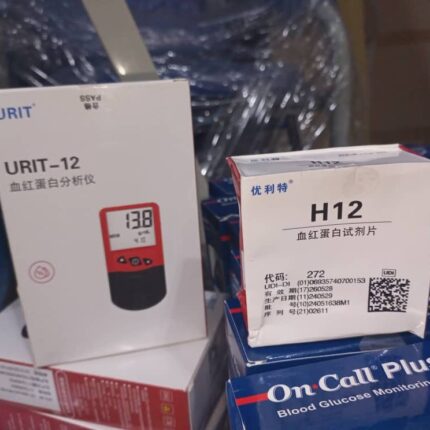
Hemoglobinometer
BRAND: URIT-12
DESCRIPTION:
The URIT-12 is a portable hemoglobinometer designed for the rapid and reliable measurement of hemoglobin and hematocrit.
Main Features:
Parameters Measured: Hemoglobin (Hb) and hematocrit (HCT).
Measurement Principle: Optical Reflectance.
Sample: Capillary or venous whole blood (approximately 13-15 µL).
Speed: Results obtained in 10 seconds or less.
Measurement Range: 4.0 g/dL to 24.0 g/dL (g/L option available).
Memory: Storage capacity for 250 test results.
Quality Control: Uses HQ-A hemoglobin control solution.
Calibration: Factory calibrated according to the ICSH (International Council for Standardization in Hematology) standard.
Automation: Self-monitoring, self-diagnosis, and fault display.
Power supply: Operates on two CR2032 batteries (DC 6V).
Dimensions: Compact (102 mm x 50 mm x 19 mm).
Certifications: CE ISO, ensuring compliance with European standards.
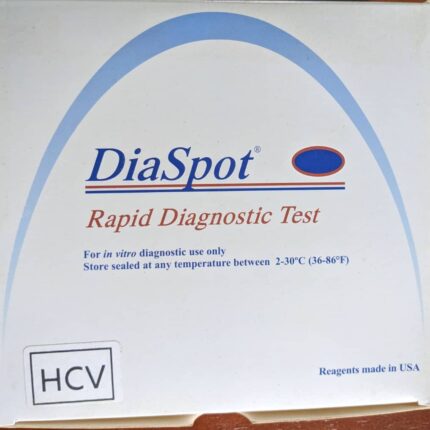
Hepatitis C
The DiaSpot HCV Rapid Diagnostic Test features are as follows:
Test Type: Rapid Diagnostic Test.
Use: Intended for in vitro diagnostic use only.
Target: Detection of HCV (Hepatitis C Virus).
Storage Conditions: Store sealed at any temperature between 2 and 30°C (36-86°F).
Reagent Origin: Reagents are made in the USA.
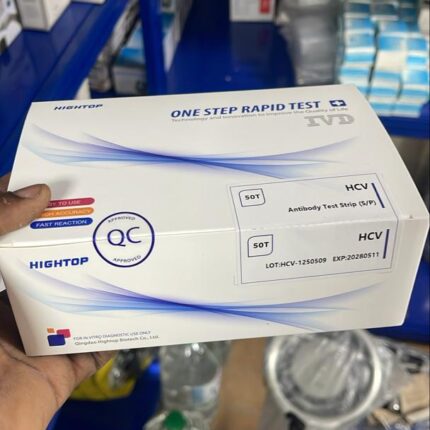
Hepatitis C
The following are the main features of the HIGHTOP HCV (Hepatitis C Virus) One-Step Rapid Test:
Test Type: Rapid lateral flow chromatographic immunoassay for the qualitative detection of hepatitis C virus (HCV) antibodies.
Applicable Specimens: Whole blood, serum, or plasma.
Rapid Results: Results are available in 10 to 20 minutes.
Ease of Use: Simple to use, requiring no specialized equipment, and results can be read visually.
Sensitivity and Specificity: High sensitivity and specificity.
Storage Conditions: Stable at room temperature (2-30°C).
Format: Available in strip or cassette form.
Principle: Based on the principle of the dual-antigen sandwich immunoassay for the determination of anti-HCV.
Intended Use: Aid in the diagnosis of hepatitis C virus infection.

HF-300 ventilators are pneumatic and microcomputer controlled
This HF-300 ventilators are pneumatic and microcomputer controlled. They are mainly A / C, SIMV, PSV, Spont, MMV, IPPV, SIGH, PEEP etc, which can set Freq., Inspiration time, Respiration hold time etc parameters to keep management for respiration, the main parts of the machine are imported in high quality level, which greatly improves the reliability and stability of the machine. The machine is reasonable in structure, convenient in operation and reliable in performance, and is suitable for emergency, ICU ward and other respiratory rescue and treatment.
Please read user’s manual before operating.
Main performance and technical index
1.
Ventilation mode and composition:
the ventilator is composed of main unit, humidifier, circuit and oxygen regulator.
Ventilation modes: A/C,SIMV,PSV,SPONT,MMV,IPPV,SIGH, PEEP;
2. Air circuit performance:
a) Maximum safety pressure of air circuit: no more than 12kpa.
b) Inspiratory oxygen concentration: 40-100% ± 15%.
c) The maximum working pressure is not greater than the upper pressure limit.
3. Ventilation performance:
a) Respiratory frequency (f): 4-99 times / min, error ± 15%.
b) Inspiratory time (TI): 0.2-6s, less than 1s ± 0.15s, and other errors ± 15%.
c) Breath holding time (TP): 0-2s, less than 1s ± 0.15s, and other errors ± 15%.
d) Trigger pressure (PT): – 2KPa~0kpa. When the inspiratory trigger pressure is – 2KPa to – 1kPa, the tolerance is ± 20%; when the inspiratory trigger pressure is – 1kPa to 0kpa, the tolerance is ± 200Pa.
e) Tidal volume (VT): 0-2000ml; when 0ml-200ml, display value tolerance ± 40ml; when 200ml-2000ml, display value tolerance ± 20%.
f) Maximum minute ventilation volume: not less than 18L / min.
g) PSV: 2-5kpa, error ± 20%
h) Peep pressure: 0.0kpa ~ 3.0KPa. When 0.0kpa-1.0kpa, the tolerance is ± 0.2kpa; when 1.0kpa-3.0kpa, the tolerance is ± 20%
i) SIMV frequency: 4-99 times / min, error ± 15%.
4. Alarm performance:
a) Pressure upper limit (PH) alarm: 2-6kpa, error ± 20%, audible and visual alarm.
b) Pressure lower limit (PL) alarm: 0.0kpa ~ 4.0kpa. When 0.0kpa-1.0kpa, the tolerance is ± 200Pa; when 1.0kpa-4.0kpa, the tolerance is ± 20%. When the airway pressure is lower than the set value of the lower pressure limit for 5s-15s, there shall be an audible and visual alarm.
c) Upper ventilation limit (MVH) alarm: audible and visual alarm when ventilation is higher than the set value.
d) Low ventilation limit (MVL) alarm: audible and visual alarm when ventilation is lower than the set value.
e) Power off alarm: power off alarm shall be given immediately, and the alarm duration shall not be less than 120s.
f) Insufficient air, insufficient oxygen alarm
g) Mute: no more than 2 minutes.
5. Monitoring performance:
a) Tidal volume (VT): 0-2000ml, 0ml-200ml, display value tolerance ± 40ml; 200ml-2000ml, display value tolerance ± 20%.
b) The measured total frequency (ftot) and autonomous frequency (fspont).
c) Minute ventilation (MV).
d) I: E ratio.
e) Peak pressure (Ppeak).
f) Peep pressure: 0.0kpa ~ 3.0KPa. When 0.0kpa-1.0kpa, the tolerance is ± 0.2kpa; when 1.0kpa-3.0kpa, the tolerance is ± 20%.
6. Overall performance:
a) Power supply: AC 220V ± 22v.50hz ± 1Hz.
b) Main unit input power: 90va.
c) Electrical safety: Meet the relevant requirements of GB9706.1-1995 medical electrical equipment Part I: General requirements for safety for class I type B equipment.
d) Noise of the whole machine: no more than 65dB (a).
e) System compliance: no more than 4ml / 100Pa.
7. Service conditions:
a) Ambient temperature: + 5 ℃ ~ + 40 ℃.
b) Relative humidity: 30% – 75%;
c) Atmospheric pressure: 96-104kpa.
d) Use air source, 0.28-0.6mpa, flow rate > 60L / min.
e) Preheating time: 5 minutes.
8. Dimension: 375 × 320 × 300 mm.
9. Net weight: 16KG.
10. Storage and transportation:
The temperature range of normal storage and transportation of this product is – 15 ℃ ~ + 40 ℃;
Relative humidity is not more than 75%, atmospheric pressure range is 50kPa ~ 106kpa, there should be no acid, alkali and corrosive gas in the room, and there should be no strong mechanical vibration, impact, strong magnetic field and well ventilated place. During transportation, it should be moisture-proof, handle with care, and pay attention to direction signs.