

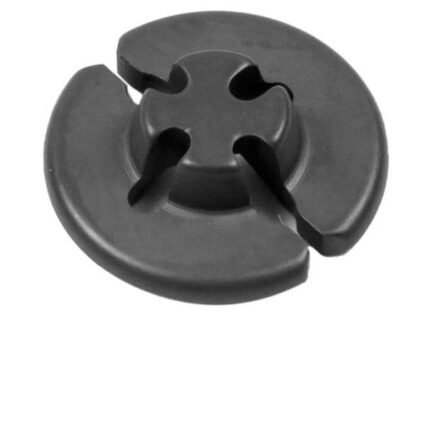
Loop Washer
- A Loop Washer is an arthroscopic implant, primarily used in knee ligament reconstruction surgeries.
- It provides secure fixation to the graft by creating an adjustable loop that attaches to various button configurations.
- The use of a loop washer in an arthroscopic surgery enables surgeons to achieve secure customized graft fixation through small incisions, promoting faster post-operative results
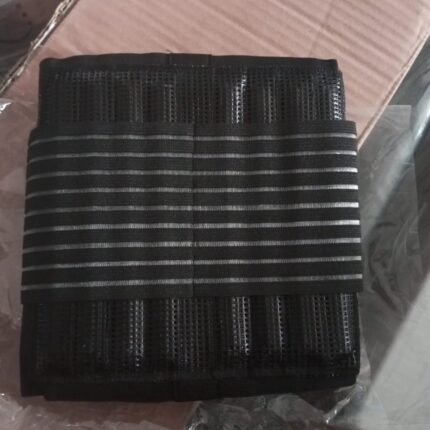
Lumbar belt
The lumbar belt in the image is a lumbar support belt or corset, and its main characteristics are as follows:
Material: It is made from a black mesh fabric, likely providing breathability and flexibility.
Construction: The belt features horizontal and parallel elastic bands, silver or gray in color, running across the central portion, suggesting targeted reinforcement and support.
Design: Its rectangular shape and construction indicate that it is designed to wrap around a part of the body, likely the torso or lumbar region.
Implied function: The presence of elastic bands and mesh suggests that it is intended to provide support, compression, or restraint, potentially for physical activities or to relieve back pain.

Lumbar Support Belt
The Motech Lumber Support Belt features:
Support and Immobilization: Designed to support and immobilize the lumbosacral region, correcting postural deformity to relieve lower back pain.
Firm Compression: Provides firm compression and effective support to the lumbar region.
Pressure Relief: Relieves pressure on the lumbar capsule.
Protection: Prevents sprains and strains of the lumbar joints and surrounding muscles during exercise, and mitigates external shock.
Ergonomic Design: Features a wide back support system that conforms to the lordotic curve of the lumbar spine for maximum support.
Materials: Made from durable and breathable neoprene for comfort.
Adjustability: Adjustable in multiple locations for a personalized fit and optimal compression.
Support Braces: Includes rigid, malleable, and contoured back braces that can be customized for correct posture and effective immobilization. Some versions include two pre-contoured rigid braces and two flexible braces to support weak back muscles.
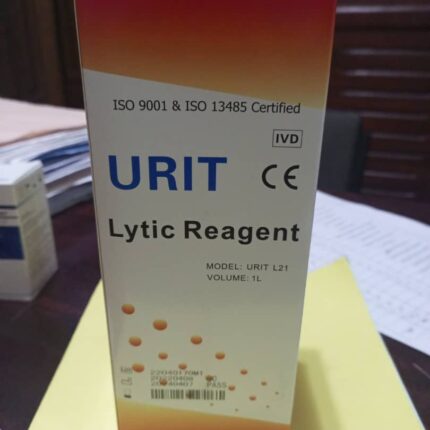
Lyse
MODEL: URIT L21
URIT Lytic Reagent.
URIT Lyse Reagent Description:
Use:
This reagent is specifically designed for use with the URIT series automated hematology analyzers.
Function:
Its primary function is to measure blood cell content, which is essential for blood analysis.
Composition:
It is composed of various ingredients, including chloride, sulfate, preservative solution, anticoagulant, buffer solution, and quaternium.
Certification:
The product is certified according to ISO 9001 and ISO 13485 standards and bears the CE mark, indicating its compliance with European standards.
Model and Volume:
The specific model shown in the image is the URIT L21, and it is packaged in a 1-liter volume.
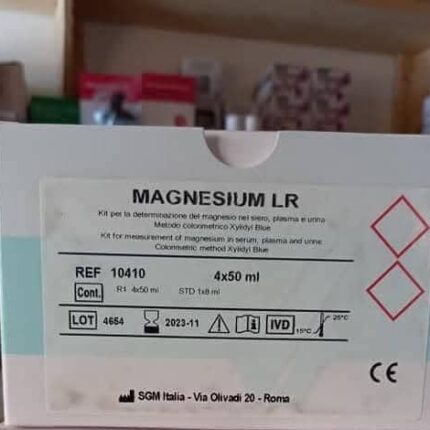
Magnesium and Cholesterol
In vitro diagnostic reagents produced by SGM Italia. Their main characteristics are as follows:
1. MAGNESIUM LR Kit
Intended use: Quantitative determination of magnesium in serum, plasma, and urine.
Method: Colorimetric, using Xylidyl Blue.
Reference (REF): 10410.
Contents: 4 x 50 ml (reagent R1) and one standard (STD).
Batch number (LOT): 4654.
Storage temperature: 15-25°C.
Certification: CE marked, indicating compliance with European standards.
Precautions: This is an in vitro diagnostic (IVD) medical device.
2. CHOLESTEROL LR MONO Kit
Intended use: Quantitative determination of cholesterol in serum or plasma.
Method: Enzymatic, using the Trinder method.
Reference (REF): 10023.
Contents: 4 x 100 ml (reagent R1) and one standard (STD).
Batch number (LOT): 4631.
Precautions: Indicates an in vitro diagnostic (IVD) medical device and safety warnings (hazard pictogram).
Certification: Marking
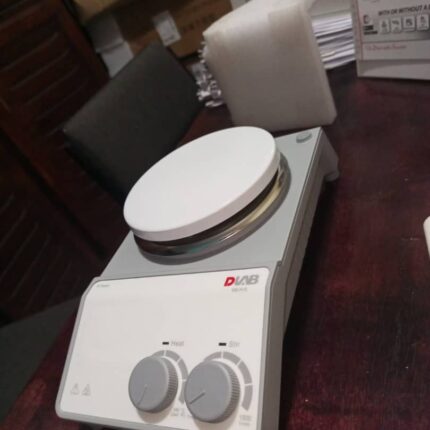
Magnetic Stirrer with Heating Plate
MODEL: MS-H-S
DESCRIPTION:
The main features of the DLAB MS-H-S magnetic stirrer with heating plate are as follows:
Stirring Speed: It can reach a stirring speed of up to 1500 rpm.
Heating Temperature: The heating plate can reach a maximum temperature of 340°C.
Stirring Capacity: It can stir a maximum volume of 20 liters of H2O.
Working Plate Material: The plate is made of ceramic-coated stainless steel, offering good chemical resistance and easy cleaning.
Control: This is an analog model with rotary knobs for adjusting speed and temperature.
Safety: It incorporates safety circuits for overheating protection and a safety indicator when the plate temperature exceeds 50°C.
Motor: It features a brushless motor for extended life and reduced maintenance.
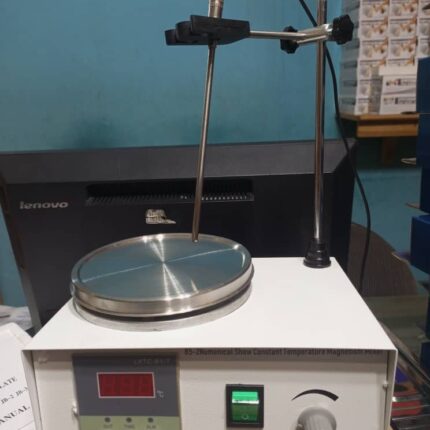
Magnificent Mixer
MODEL: 85-2
Features of the 85-2 Laboratory Magnetic Mixer
Here are the main features of the 85-2 Laboratory Magnetic Mixer
shown:
Functionality: This is a magnetic stirrer with a heating function, enabling powerful stirring and uniform heating of liquids.
Temperature Control: It features a digital temperature display and can maintain a constant temperature, typically up to 100°C (212°F).
Speed Control: The stirring speed is continuously adjustable from 0 to 2000 rpm, thanks to a high-quality DC motor.
Materials: The heating plate is usually made of high-quality stainless steel for good thermal conductivity and corrosion resistance, while the stirring bar is often coated with PTFE.
Power: The heating power is typically 200 W, and the motor power is 25 W.
Applications: It is designed for stable mixing of liquids, particularly useful for small sample volumes in fields such as biochemistry, microbiology, or chemistry.
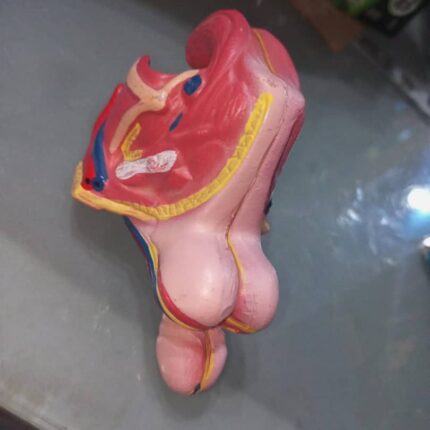
Male Genital Organ
This model consists of 4 parts and is life-size. It is easy to assemble and disassemble for dissecting the details of the internal and external structure of the male genital organ.
The 4 parts include:
2 halves of the penis showing median and transverse sections;
2 halves of the male genital apparatus.
With numbers to indicate:
1. Testicle
2. Epididymis
3. Ductus deferens; Vas deferens (sperm duct)
4. Seminal gland (Seminal vesicle)
5. Prostate
6. Bulbourethral gland (Cowper’s gland)
7. Penis
8. Scrotum
9. Corpora cavernosa of the penis
10. Spongy (cavernous) urethra (corpus cavernosum of the urethra)
11. Urinary bladder
12. Male urethra

Male Reproductive System Anatomical Model
The male reproductive system anatomical model offers a midsagittal view of the male pelvis, showcasing the structure and arrangement of the reproductive organs, bladder, and rectum.
Key Features:
Detailed Visualization:
The midsagittal section provides a clear, in-depth perspective of the male pelvis’s internal anatomy, including reproductive organs, bladder, and rectum.
Structures Highlighted:
Depicts key components such as the testes, epididymis, vas deferens, seminal vesicles, prostate, and urethra, among others.
Material Quality:
Constructed from durable PVC, ensuring accurate representation of anatomical details.
Educational Purpose:
Serves as a valuable medical education tool, enhancing understanding of the male reproductive system’s anatomy and physiology.

Male Urinal
The features of a portable male urinal generally include the following:
Capacity and Measurement: 1000 ml capacity, with a graduated scale to measure urine volume.
Material: Made of sturdy and durable plastic, lightweight and resistant to compression.
Ergonomic Design:
Integrated, easy-to-grip handle for easy handling.
Wide, stable base to prevent spills.
Wide, smooth opening for comfortable and discreet use.
Lid: Leak-proof lid to prevent spills and reduce odors.
Easy to Clean: Smooth surfaces for easy cleaning, can be washed by hand or in automatic disinfection machines.
Versatile Use: Ideal for bedridden people, the elderly, travel (long car trips, camping), and emergency situations.

Mannitol Salt Agar Culture Medium
Mannitol Salt Agar (MSA), also called Chapman Agar, is a selective and differential medium used in microbiology to isolate and identify staphylococci, especially Staphylococcus aureus.
Key Characteristics:
Selectivity:
-
Contains 7.5% sodium chloride, creating a high-salt environment that inhibits most bacteria except halotolerant staphylococci.
Differentiation:
-
Distinguishes staphylococcal species based on mannitol fermentation:
-
Mannitol Fermenters (e.g., S. aureus): Produce acid, turning the phenol red pH indicator from red to yellow around colonies.
-
Non-Fermenters (e.g., S. epidermidis): No acid production; the medium stays red or may turn magenta.
-
Nutrient Composition:
-
Includes peptones and beef extract to support bacterial growth.
Applications:
-
Used for isolating pathogenic staphylococci from clinical, food, cosmetic, and water samples.

Manual Blood Pressure Monitor
The features of the aneroid sphygmomanometer presented, based on the generic information regarding this type of device, generally include the following:
Type of Blood Pressure Monitor:
Aneroid, meaning it uses a dial gauge rather than mercury to display blood pressure.
Components:
It consists of an inflatable cuff, an inflation bulb with a pressure release valve, and an aneroid manometer for pressure reading.
Accuracy:
Professional aneroid sphygmomanometers are designed to provide reliable and reproducible blood pressure measurement, often within a specified accuracy (e.g., +/- 3 mm/Hg according to certain standards).
Comfort and Materials:
The cuff is usually made of nylon with a Velcro closure for an easy and secure fit. The bulb and valve can be made of PVC or latex, and the manometer can be made of aluminum alloy.
Standards:
These devices are often manufactured in accordance with specific standards for medical devices, such as EN 1060-1/2 and Directive 93/42/EEC.
Accessories:
A carrying case is often included for easy storage and portability.