


Stopcock
Characteristics of a Glass Stopcock
The main characteristics of a borosilicate glass (polytetrafluoroethylene) stopcock are as follows:
Explanation:
Material:
The stopcock body is made of borosilicate glass 3.3, known for its high resistance to temperature, corrosion, and chemicals.
The stopcock key is made of PTFE, a self-lubricating material that eliminates the need for grease and ensures an excellent seal.
Design and Functionality:
Straight-bore: Allows direct flow of liquid or gas when the stopcock is open.
Two-way: Indicates the ability to control flow in two directions or to connect two sections of glassware.
PTFE Key: The key is interchangeable and has a threaded plastic retainer to hold it in place.
Leak-Proof: The keys and seats are ground for a perfect fit, ensuring a good seal, compliant with standards such as DIN 12540-1.
Use:
These stopcocks are commonly used in laboratories to control the flow of liquids or gases in glass apparatus such as burettes, separating funnels, or inert gas lines.
They are particularly suitable for applications requiring high chemical resistance and the absence of grease contamination.
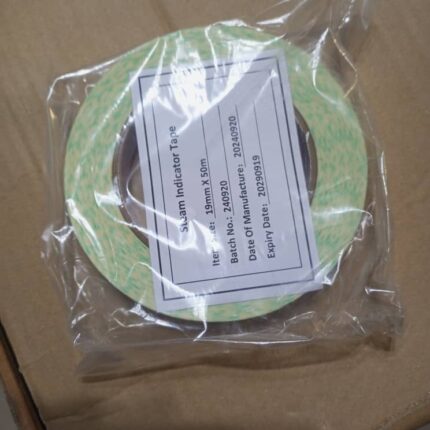
Steam indicator tape
Features of Steam Sterilization Indicator Tape
Steam sterilization indicator tape has the following features:
Indicator function: It is designed to indicate whether an item has been exposed to a steam sterilization process. Stripes printed with heat-sensitive ink change color (usually from white to dark brown or black) after exposure to sufficient heat and steam.
Dimensions: 19mm x 50m, which corresponds to the width and length of the tape.
Batch Number and Dates: The tape is identified by a batch number (“Batch No.: 240920”) and a manufacturing date (“Date of Manufacture: 20240920″).
Material and Adhesive: It is made from saturated crepe paper and uses a natural rubber-based adhesive, providing good adhesion and resistance to heat and humidity.
Standard Compliance: These tapes are designed to comply with international sterilization standards, such as ISO 11140-1:2014, which specifies the requirements for sterilization indicators.
Use: It is used to seal sterilization packages and visually differentiates sterilized items from those that have not yet been sterilized.
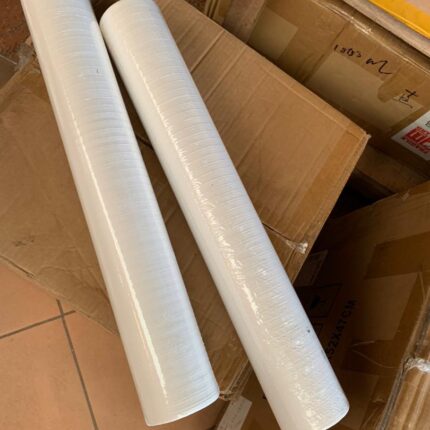
Examination Sheet
Characteristics of Examination Sheets
Examination sheets are essential medical consumables with several important features to ensure patient hygiene and comfort during examinations.
Composition and Structure:
Made of pure cellulose wadding, double-layered for improved absorption.
Embossed and laminated to provide an absorbent side (wadding) and a waterproof side (laminated).
Functionality and Hygiene:
Absorption: Designed to effectively absorb liquids and spills, reducing the risk of contamination and discomfort.
Protection: Serve as a barrier between the patient and medical equipment, preventing direct contact and limiting the risk of cross-contamination.
Single-use: Single-use only to ensure optimal hygiene and prevent the proliferation of microbes.
Dimensions and Format:
Available in 50×50 size
Pre-cut into individual sizes on a roll for ease of use.
Comfort: It provides a soft, breathable surface for patient comfort during the examination.

Male Urinal
The features of a portable male urinal generally include the following:
Capacity and Measurement: 1000 ml capacity, with a graduated scale to measure urine volume.
Material: Made of sturdy and durable plastic, lightweight and resistant to compression.
Ergonomic Design:
Integrated, easy-to-grip handle for easy handling.
Wide, stable base to prevent spills.
Wide, smooth opening for comfortable and discreet use.
Lid: Leak-proof lid to prevent spills and reduce odors.
Easy to Clean: Smooth surfaces for easy cleaning, can be washed by hand or in automatic disinfection machines.
Versatile Use: Ideal for bedridden people, the elderly, travel (long car trips, camping), and emergency situations.

Swab
Sterile swabs (“Sterile Swab Sticks”) and their main characteristics are as follows:
Sterility: They are individually packaged and labeled “STERILE SWAB STICK,” indicating that they are intended for medical or laboratory use requiring a sterile environment.
Single Use: As sterile consumables, they are designed for single use only to prevent cross-contamination.
Design: Each swab consists of a plastic stick and one end covered with an absorbent material (cotton).
Identification: The packaging includes fields for recording information such as the name (“NAME”), date (“DATE”), time (“HOUR”), bed (“BED”), and reference (“REF”), essential for sample tracking.
Certification: The presence of the “CE” marking indicates compliance with European Union health, safety, and environmental protection standards.
Application: These swabs are commonly used for collecting biological samples (nasal, oropharyngeal, skin, etc.) for diagnostic purposes, particularly for the detection of infectious diseases.

Breathalyzer Mouthpieces
Breathalyzer mouthpieces have several essential features to ensure hygiene and reliable measurements.
Material and Hygiene: They are made of high-quality plastic (such as rigid PVC or food-grade polyethylene), safe to use, and single-use to prevent cross-contamination. Many are individually wrapped for maximum hygiene.
Compatibility and Adaptability: The mouthpieces are designed to be compatible with specific models. Their installation is simple and intuitive.
Use: They are essential for blowing into the breathalyzer and ensuring accurate blood alcohol level measurements.
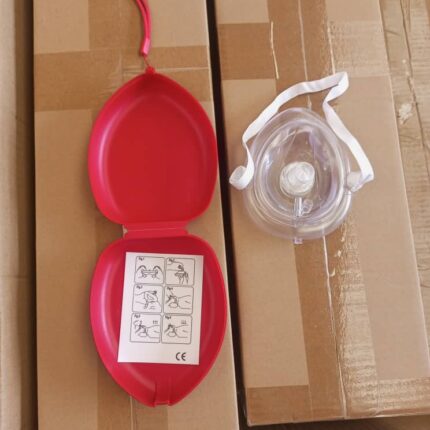
Mouth-to-Mouth Mask
The mouth-to-mouth mask, in its compact red case or the separate transparent mask, is a resuscitation device designed to facilitate artificial ventilation while protecting the rescuer.
Its main features are:
Hygiene and Protection: It reduces direct contact between the rescuer and the victim, minimizing the risk of cross-contamination from saliva, blood, or other bodily fluids.
One-Way Valve: Essential for safety, this valve prevents the victim’s exhaled air or regurgitation from returning to the rescuer.
Transparency: Most masks are transparent, allowing the rescuer to visually monitor the patient’s condition, including the presence of regurgitation.
Comfort and Effectiveness: It is designed to provide a good seal around the victim’s nose and mouth, ensuring effective ventilation. Some models incorporate an anatomical pad for a better fit.
Ease of use: Instructions are diagrammatically or printed directly on the mask or its packaging, as shown in the red case in the image.
Portability: Compact and lightweight, it can be easily carried in a first aid kit or as a keychain.
Materials: Made of PVC or silicone, and often latex-free to avoid allergies.
CE marking: Indicates compliance with European health, safety, and environmental protection standards.
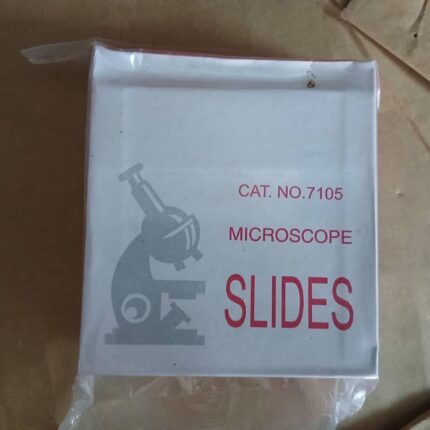
Microscope Slide
The specifications of microscope slides (CAT. NO. 7105 MICROSCOPE SLIDES) are as follows:
Material: Optical-grade glass.
Standard Dimensions: Approximately 75 mm x 25 mm (3″ x 1″) with a thickness of approximately 1 mm.
Shape: Rectangular
Edges: Ground for safety.
Surface: Plain (single), frosted at one end for labeling, or even concave to hold liquid samples.
Use: Designed to hold specimens for examination under a microscope, essential in scientific, medical, and educational laboratories.
Packaging: Sold in boxes of 72, interleaved with tissue paper to prevent scratches and moisture.
Catalog number: (“CAT. NO. 7105”), a manufacturer-specific identifier for this type of product
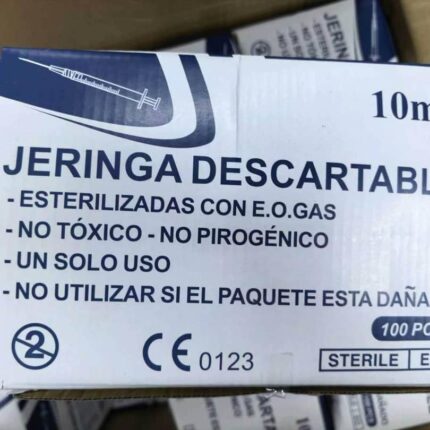
10ml Syringe
The characteristics of the 10ml disposable syringe are as follows:
Product Type: Disposable Syringe.
Capacity: 10 mL.
Sterilization: Sterilized by EO gas.
Use: Single use only.
Conditions of Use: Do not use if the packaging is damaged.
Qualities: Non-bacterial, non-toxic, non-pyrogenic.
Compliance: CE Marked
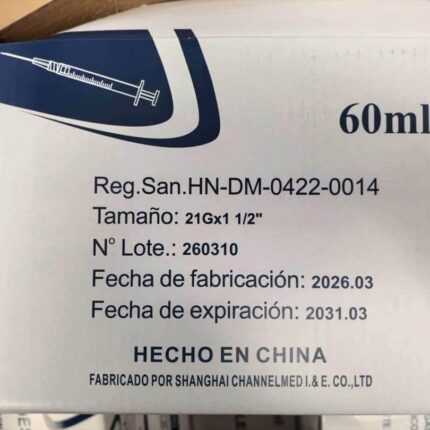
60 ml Syringe
The 60 nml disposable syringe has the following characteristics:
Type: Disposable Syringe.
Volume: 60 ml.
Sterilization: Sterilized with ethylene oxide (STERILE EO).
Quality Standards: Complies with CE 0197 and ISO 13485:2016 standards.
Use: Single use (indicated by the symbol ② and the word “Disposable Syringe”).
In addition, it has the following characteristics:
Material: Transparent polypropylene body and polyethylene or polypropylene plunger.
Transparency: Transparent body for visual inspection of the liquid and detection of air bubbles.
Plunger Glide: Smooth and precise plunger glide for easy administration or aspiration.
Safety: Sterile and non-pyrogenic (free from fever-inducing substances).
Packaging: Individually sterile wrapped.
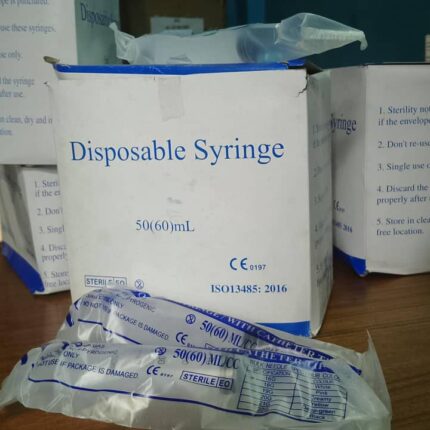
50/60 ml Syringe
The 50/60 ml disposable syringes have the following characteristics:
Type: Disposable Syringe.
Volume: 50 (60) mL, indicating a nominal capacity of 50 mL with a capacity of up to 60 mL. The volume can also be expressed in cubic centimeters (cc), where 1 mL equals 1 cc.
Sterility: Sterile and non-pyrogenic, meaning it is free of live microorganisms and fever-inducing substances.
Materials: Made of non-toxic polypropylene for the barrel and plunger, with latex-free rubber and non-toxic silicone for the seal.
Standards: Complies with CE 0197 and ISO13485:2016, attesting to its compliance with European requirements and quality management systems for medical devices.
Use: Designed for single use only.
Precautions: Do not use if the package is damaged.
Storage: Must be stored in a cool, dry place (store-free lock).
Versatility: Suitable for various medical, scientific, craft, and household uses, such as injections, blood sampling, aspiration, force-feeding, and the application of substances.
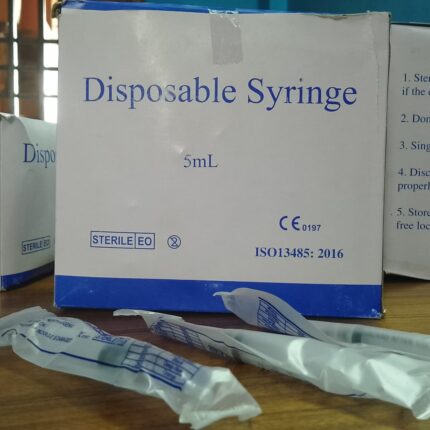
5ml Syringe
The characteristics of the 5ml disposable syringe are as follows:
Product Type: Disposable Syringe.
Capacity: 5mL.
Sterilization: Sterilized by EO gas.
Use: Single use only.
Conditions of Use: Do not use if the packaging is damaged.
Qualities: Non-bacterial, non-toxic, non-pyrogenic.
Conformity: CE marked.