


Laparotomy Box
A laparotomy box is a set of surgical instruments specifically designed for laparotomy procedures (abdominal surgery).
Its main features include:
Material: The box itself is usually made of stainless steel (inox) for sterilization and durability.
Contents: It contains a selection of essential instruments for abdominal surgery, such as:
Needles (e.g., Reverdin needle)
Scissors (e.g., Mayo scissors, Metzenbaum scissors)
Scalpel handle
Retractors (e.g., Farabeuf retractor, Gosset retractor)
Forces (e.g., Babcock forceps, dissecting forceps)
Needle holders (e.g., Mayo Hegar needle holder)
Function: The instrument set allows surgeons to safely access and manipulate organs, tissues, and blood vessels in the abdominal cavity, facilitating exploration and surgical intervention.
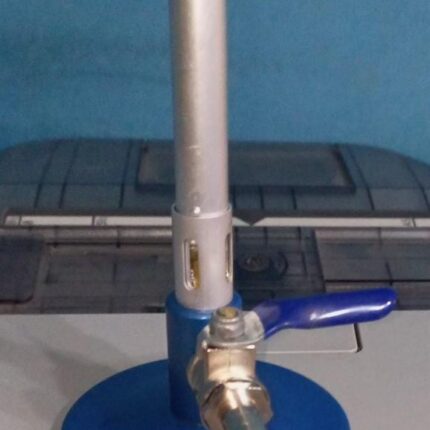
Bunsen Burner
The Bunsen burner is a laboratory burner commonly used for heating, sterilizing, or burning substances.
Its main characteristics are as follows:
Components: It consists of a stable base, a gas inlet (with a control valve), a vertical tube (chimney), and a movable ferrule at the base of the tube that controls the air supply.
How it works: It mixes combustible gas (town gas, butane, propane) with air to produce an open flame. The ferrule regulates the air supply, thus influencing the intensity and temperature of the flame.
Types of Flames: By adjusting the air supply, different flames can be obtained, ranging from a cool, yellow flame (incomplete combustion) to a hot, blue, and almost invisible flame (complete combustion).
Temperature: The flame temperature can vary considerably depending on the air setting, reaching high temperatures (e.g., 750 to 1600°C).
Use: It is essential in chemistry and biology laboratories for various applications, including heating reagents, sterilizing instruments, and creating a sterile area for delicate manipulations such as mushroom cultivation.
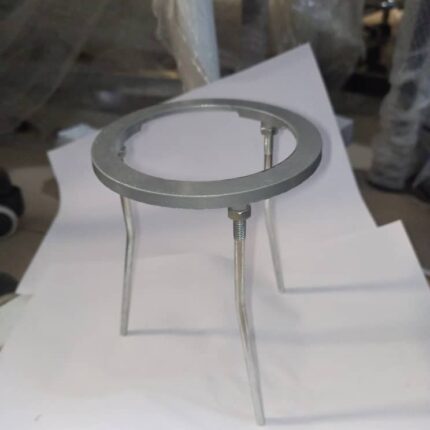
Laboratory Tripod
The object in the image is a laboratory tripod, also known as a Bunsen burner tripod or alcohol lamp stand. It is commonly used in laboratories to support containers such as beakers, flasks, or crucibles above a heat source, such as a Bunsen burner.
Its main features are:
Material: Generally made of cast iron or stainless steel for its strength and heat resistance.
Structure: It consists of a stable three-legged base and a circular top ring that serves as a support.
Stability: The three-legged design ensures great stability for containers placed on it, even when heated.
Use: Designed to be used with a wire mesh (mesh) to distribute heat evenly under the container.
Application: Essential in chemistry and physics experiments for heating, evaporating, or reacting substances.
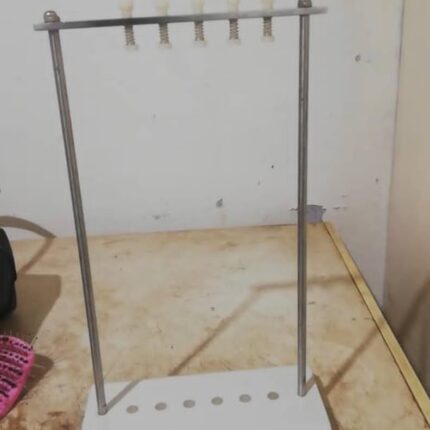
Westergren Pipette Stand
This is a Westergren pipette stand for erythrocyte sedimentation rate (ESR).
Here are its main features:
Function: It is used to hold Westergren pipettes upright during erythrocyte sedimentation rate (ESR) testing, also known as hemo-sedimentation rate (HSR).
Capacity: It can hold multiple pipettes simultaneously, facilitating the organization and reading of results for multiple samples.
Material: Made of metal (such as stainless steel for the stems) and plastic or composite material for the base, ensuring stability and durability.
Design: It is designed to hold Westergren pipettes stably and upright, which is crucial for accurate sedimentation measurements.
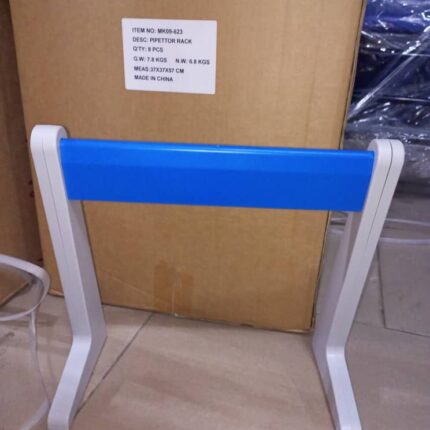
Micropipette Stand
The identified micropipette stand has the following characteristics:
Product Name: Micropipette Stand.
Ease of Installation: Generally simple to assemble.
Small Footprint: Designed to take up little space on a laboratory bench.
Sturdiness: Made of sturdy materials to ensure pipette stability.
Capacity: Holds multiple micropipettes, up to 5.
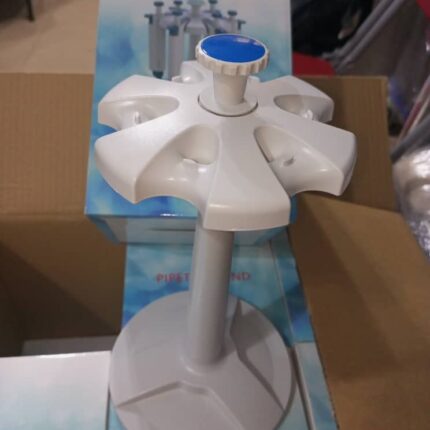
Micropipette Holder
Micropipette holder or pipette tip holder.
Potential Features:
Material:
Generally made of durable plastic for laboratory use.
Capacity:
This model has multiple positions (6 positions) to accommodate multiple pipettes or pipette tips.
Functionality:
Designed to hold pipettes or tips organized and upright, facilitating storage and access in the laboratory.
Stability:
Has a wide base to ensure stability and prevent tipping.
Compatibility:
Suitable for use with micropipettes.

Spoon Stretcher
A spoon stretcher (or lifting stretcher).
Its main features are:
Separable design: It consists of two parts that can be separated by pressing latches, usually located at the top and bottom of the stretcher.
Facilitates patient transfer: This design allows the two parts to slide under the patient without excessive lifting or handling, minimizing the risk of further injury, especially in cases of suspected spinal cord injury.
Materials: It is made of aluminum or ABS plastic, making it both sturdy and lightweight.
Adjustable length: The length of the stretcher is usually adjustable to fit the patient’s height.
Safety straps: It is equipped with straps to secure the patient during transport.
Load capacity: Its sturdy design allows it to support a significant weight, often up to 159 kg.
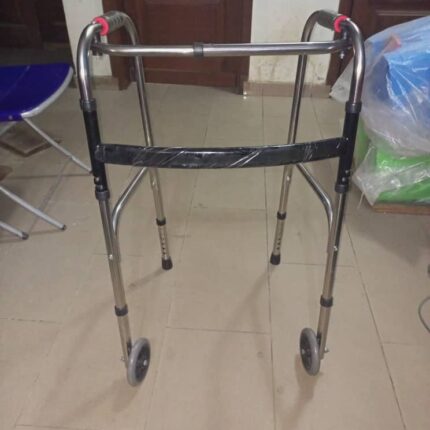
Rollator with Wheels
The rollator with wheels has the following characteristics:
Type:
This rollator has two wheels, making it easier to move around by sliding it instead of lifting it.
Material:
The frame is made of metal, stainless steel, for lightweight and strength.
Adjustable:
The height is adjustable to suit the user’s height, allowing for correct and comfortable posture.
Foldable:
Its design allows it to be folded for easy storage or transport.
Stability:
It provides significant support to improve the user’s stability and confidence when walking.
Handles:
It is equipped with padded or ergonomic handles for a comfortable grip.
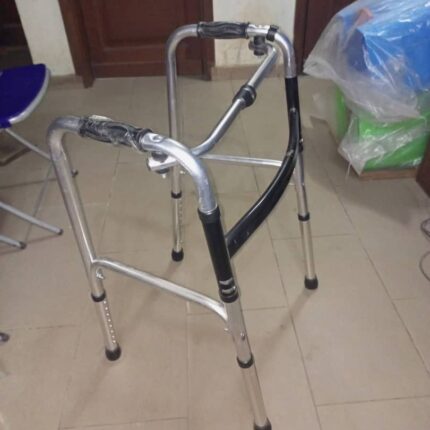
Wheelless Walker
The features of a wheelless walker generally include the following:
Structure:
It is made of a lightweight aluminum metal frame, designed to provide stable support to the user while walking.
Handles:
It is equipped with two handles, with comfortable padding, to facilitate grip and improve user comfort.
Legs:
This specific model does not have wheels and rests on four legs with non-slip tips to ensure maximum stability, especially indoors.
Stability:
It offers significant support and stability, making it ideal for people who need maximum support and balance assistance.
Mobility:
Unlike wheeled walkers, this type of walker requires lifting and moving with each step.
Adjustability:
The height of the legs is adjustable to suit the user’s height, as indicated by the visible perforations on the leg posts.
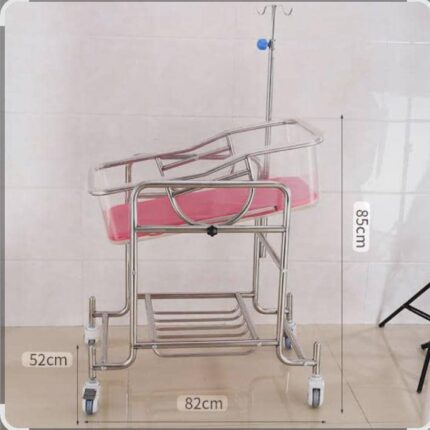
Plexiglas Crib
The Plexiglas crib has the following characteristics:
Dimensions:
Length: 82 cm.
Width: 52 cm.
Height: 85 cm.
Materials:
Frame: Stainless steel or chrome-plated.
Carrycot/Shell: Plexiglas or transparent plastic.
Mobility and Stability:
Castors: Mounted on 4 casters, with brakes for safety.
Additional Features (depending on similar models):
Mattress: Comes with a mattress.
Storage Basket: A lower basket is often included for baby’s belongings.
Hygiene: Plexiglas is easy to clean and can be sterilized.

Stepladder
The stepladder is designed to provide safe assistance to patients and staff in medical environments. Its main features include:
Robust and hygienic materials: They are made of stainless steel, ensuring durability, corrosion resistance, and ease of cleaning to maintain hygiene.
Non-slip steps: The steps are covered with a non-slip plastic material to prevent slipping and ensure user safety, especially those with limited mobility.
Stability and safety: The feet are equipped with non-slip rubber tips for optimal grip and increased stability, even on smooth surfaces.
High load capacity: These stepladders are designed to support a significant weight, often up to 150 kg, ensuring reliable and safe use for a wide range of patients.
Adapted dimensions: Available in various heights and with a variable number of steps (often two), their dimensions are designed to facilitate access to examination tables or other medical equipment.
Compact design: Their format is designed to be space-saving and easy to store, which is an advantage in medical spaces where space optimization is important.
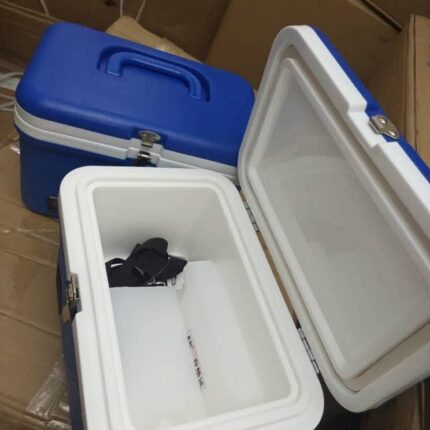
Vaccine Cooler (Cold Box)
General Description:
Type: Large Long Range Vaccine Cooler (Cold Box)
Vaccine Storage Capacity: 6 liters
Technical Specifications:
Model: BCW 6 (from B Medical Systems)
Vaccine Storage Capacity: 6 liters
Net Weight: 1.2 kg
Fully Loaded Weight: 6 kg
Cold Autonomy at 43°C (unopened): 72 hours
Additional Features: Hinged lid and carrying handles. Comes with two 0.4-liter ice packs.