

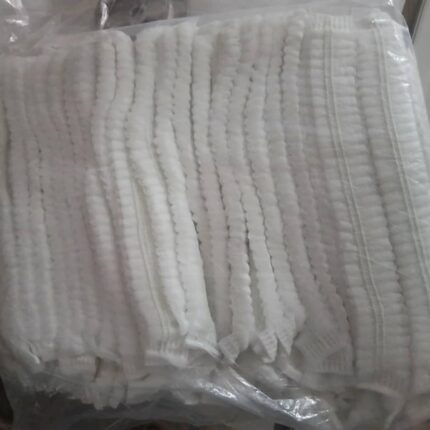
Disposable Hairnets
Key Characteristics of Disposable Hairnets
Disposable hairnets are an essential component of hygiene and safety protocols across various industries. Their design incorporates several key features:
-
Material and Design: Typically constructed from lightweight, breathable non-woven polypropylene, these hairnets feature an elasticated edge. This design ensures a secure and comfortable fit that adapts to different head sizes and volumes of hair.
-
Hygiene and Single Use: Designed exclusively for single use, they are discarded after each task. This prevents cross-contamination and upholds the stringent hygiene standards required in sensitive environments like food processing, healthcare, catering, and laboratories.
-
Protection and Comfort: Hairnets serve a dual purpose: they protect the wearer’s hair from dust and airborne particles, while simultaneously preventing hair from contaminating products or sterile work areas. Their lightweight, breathable material ensures comfort, even during extended periods of wear.
-
Universal Adaptability: The elastic band provides a one-size-fits-all solution, making them adaptable to most head shapes and hairstyles, from short hair to long hair tied up.

Gentian Violet
Crystal Violet (Gentian Violet): Key Characteristics
Crystal Violet, also known as Gentian Violet, is a triarylmethane dye with significant applications in microbiology and medicine. Its key properties are outlined below.
-
Primary Application: Its principal use is in microscopic staining, most notably in the Gram stain procedure. It differentiates bacteria by causing Gram-positive organisms to retain the dye and appear purple, while Gram-negative bacteria do not retain it and can be counterstained a different color.
-
Mode of Action: As a cationic (positively charged) dye, it readily binds to negatively charged cellular components, such as proteins and nucleic acids (DNA/RNA).
-
Antimicrobial Properties: It exhibits potent antibacterial and antifungal activity, which has led to its historical use as a topical antiseptic for treating minor skin infections and wounds.
-
Chemical Composition: It is an organic chemical compound classified as an aminotriarylmethane, also known under the broader name of methyl violet.
-
Physical Properties:
-
Appearance: In its pure form, it is a dark green, crystalline or powdery solid that dissolves in water to form an intense purple solution.
-
Solubility: It is highly soluble in water and chloroform, and partially soluble in alcohol and glycerol.
-
-
Safety Profile: Crystal violet requires careful handling. It is very toxic to aquatic life and is classified as a potential carcinogen (cancer-causing agent) in humans.

Rapid Test Cassette of Toxoplasmosis
The HIGHTOP One Step TOXO IgM/IgG Antibody Rapid Test is an antibody (IgM/IgG) panel test designed for the detection of toxoplasmosis. General features of Hightop rapid tests include:
Specimen Type: Consists of serum and plasma (indicated by “S/P” on the box).
Fast Response Time: Hightop rapid tests provide results in approximately 15 minutes.
Reliability: Hightop rapid tests are designed to offer high sensitivity and specificity, ensuring good reliability.
Format: The test is presented as an antibody panel test.
Manufacturer: QINGDAO HIGHTOP BIOTECH CO.,LTD.
Specific Box Information:
Quantity: 25 tests (25T) per box.
Lot Number: TOX-1240702.
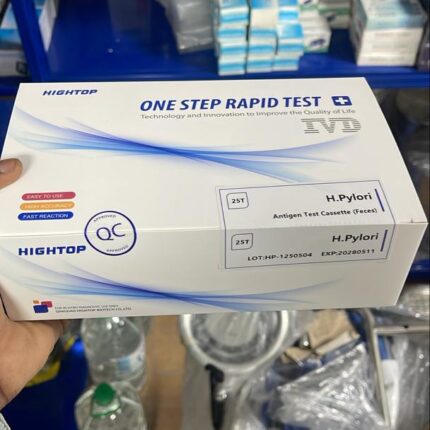
H. pylori
The features of the Hightop H. pylori Antigen Rapid Test are as follows:
Test Type: One-step rapid test for the detection of H. pylori (Helicobacter pylori) antigen.
Specimen: Designed for the detection of H. pylori antigen in stool (feces).
Format: Antigen test cassette.
Quantity: Box contains 25 tests.
Ease of Use: Easy to use, no equipment required.
Speed: Fast response, with instant results in approximately 10 minutes.
Storage: Store at room temperature (2-30°C).
Quality Control (QC): Includes an internal quality control check to validate the procedure.
Test Principle: Detects the presence of H. pylori antigens using specific antibodies conjugated to colored particles, with a test line (T) and a control line (C) on a nitrocellulose membrane.
Interpretation of Results: The presence of a colored line in both the T and C lines indicates a positive result, while a C line alone indicates a negative result. The absence of a C line renders the test invalid.
Application: Intended for the identification of H. pylori bacteria, which play a role in chronic gastritis, peptic ulcer disease, and gastric cancer.
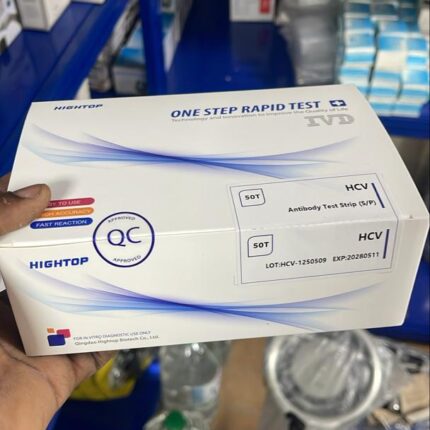
Hepatitis C
The following are the main features of the HIGHTOP HCV (Hepatitis C Virus) One-Step Rapid Test:
Test Type: Rapid lateral flow chromatographic immunoassay for the qualitative detection of hepatitis C virus (HCV) antibodies.
Applicable Specimens: Whole blood, serum, or plasma.
Rapid Results: Results are available in 10 to 20 minutes.
Ease of Use: Simple to use, requiring no specialized equipment, and results can be read visually.
Sensitivity and Specificity: High sensitivity and specificity.
Storage Conditions: Stable at room temperature (2-30°C).
Format: Available in strip or cassette form.
Principle: Based on the principle of the dual-antigen sandwich immunoassay for the determination of anti-HCV.
Intended Use: Aid in the diagnosis of hepatitis C virus infection.
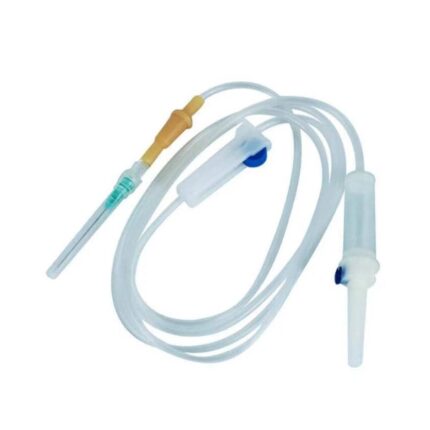
Infusion Pump
Here are the main features of an infusion set:
Essential Components:
Vented Spike: Allows the bottle or solution bag to be pierced and ensures an air inlet for a smooth flow.
Drip Chamber: Allows the flow rate of drops to be visualized and is equipped with a filter to prevent the entry of particles.
Flexible Tubing: Made of medical-grade PVC, it transports the liquid from the bottle to the patient.
Flow Regulator: Allows precise adjustment of the rate of liquid administration.
Injection Site (or Y-Port): An access point for injecting additional medication without interrupting the main infusion.
Luer Lock or Luer Slip Connector: Ensures a secure connection to the needle or catheter inserted into the patient’s vein.
Needle or Catheter: The end inserted into the vein for fluid administration.
Materials: Made from medical-grade materials, soft, non-toxic, and non-bendable PVC.
Sterilization: Sterilized with ethylene oxide to ensure patient safety.
Single Use: Designed for single use only to prevent cross-infection.
Function: Administers fluids, medications, or nutrients directly into the patient’s bloodstream intravenously.
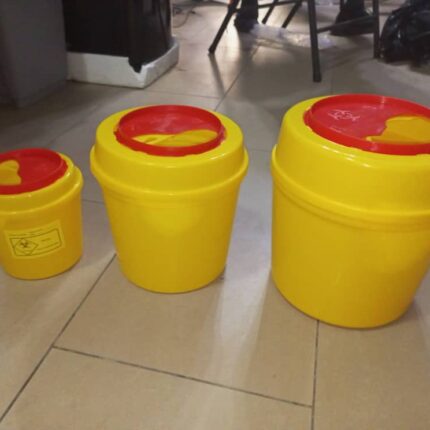
Sharps Container
The characteristics of a sharps container are as follows:
Material and Durability: Generally made of polypropylene (PP), it is designed to be leak-proof and puncture-resistant to safely contain sharps. It is also resistant to moderate temperature fluctuations.
Safety Design: It features a lid with an intermediate and final closure system to prevent needlestick injuries and prevent waste from dispersing.
Purpose: Specifically designed for the collection, storage, and safe disposal of sharps medical waste, such as needles, syringes, lancets, pipettes, and glass slides.
Environmental: The PVC-free PP construction aims to reduce environmental contamination during waste disposal by high-temperature incineration.
Capacity: Available in various capacities, such as 3 liters, 5 liters, and 10 liters, to suit various needs.
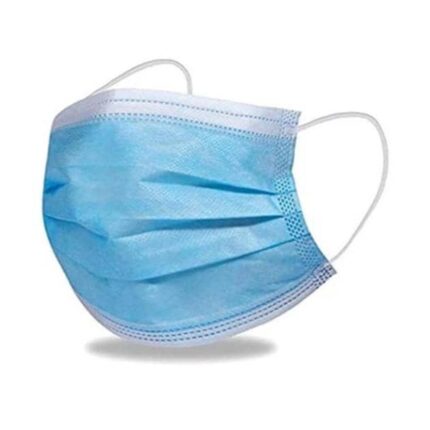
3-Ply Surgical Mask
These blue disposable surgical masks have several important features:
Type: Disposable surgical mask.
Composition: Made from 3-ply non-woven polypropylene, including a melt-blown filter layer.
Design:
3-Ply: Pleated design to fit different face shapes.
Nose clip: Incorporates a coated aluminum nose clip for a custom fit around the nose and a better fit.
Ear loops: Elastic spandex loops to hold the mask comfortably in place.
Filtration efficiency: Bacterial (BF) greater than 95% or 98% for medium-sized aerosols of 3 µm, according to EN14683:2019.
Splash resistance: These masks are also splash resistant.
Comfort and Safety:
Skin-Friendly: Soft, non-irritating materials.
Breathability: Designed to be comfortable and breathable, even during extended wear.
Use: Ideal for protection against dust particles, germs, and bacteria in various environments (home, outdoor, office).
Packaging: Sold in packs of 50
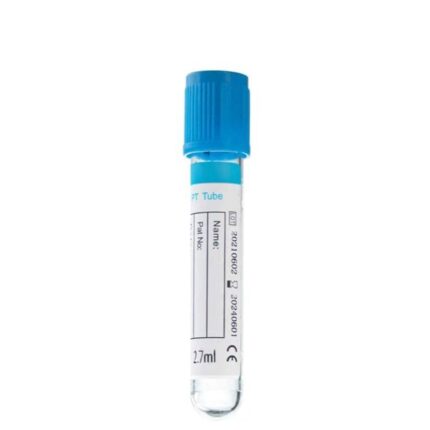
Prothrombin Time Tube
The blood collection tube shown is a PT (Prothrombin Time) tube, commonly used for blood coagulation tests. Its main characteristics are as follows:
Tube Type: Evacuated blood collection tube, specifically a PT (Prothrombin Time) tube.
Anticoagulant: It contains a buffered sodium citrate solution, usually at a concentration of 3.2% or 3.8% (0.109 mol/L or 0.129 mol/L).
Mechanism of Action: Sodium citrate acts as an anticoagulant by chelating calcium ions, thereby inhibiting the blood coagulation cascade.
Collection Volume: A volume of 2.7 ml, which corresponds to the filling capacity of the tube.
Blood to Anticoagulant Ratio: The standard recommended ratio of blood to anticoagulant is 9:1 for coagulation tests. Use: Primarily used for blood coagulation studies, including prothrombin time (PT) and activated partial thromboplastin time (APTT).
Cap Color: Blue cap is the standard color for tubes containing sodium citrate for coagulation tests.
Material: Available in glass or PET (Polyethylene Terephthalate).
Labeling Information: The label allows for the patient’s name (Name) and case number (Pat No), as well as batch information (Lot) and the expiration date (represented by the second date on the tube).
Certification: The “CE” mark indicates compliance with European health, safety, and environmental protection standards.
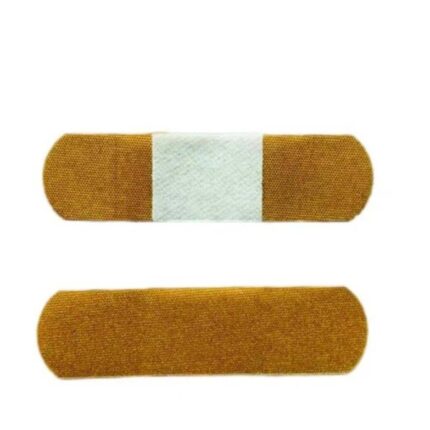
Adhesive Bandages
Characteristics of an Adhesive Bandage
An adhesive bandage has several main characteristics:
Adhesive material: It has an adhesive strip around the edges to adhere to the skin and hold the bandage in place over the wound.
Absorbent pad: In the center, there is a soft, absorbent pad made of gauze or non-woven material designed to cover the wound, absorb exudate, and protect it.
Protection and hygiene: It provides a physical barrier against bacteria and dirt, helping to prevent wound infection.
Flexibility: Designed to be flexible, it adapts to body movements and the contours of the area where it is applied.
Sterility: Adhesive bandages are individually wrapped and sterile for hygienic application to wounds. Answer:
The main characteristics of an adhesive bandage are its adhesive material, its central absorbent pad, its ability to provide protection and hygiene, its flexibility, and its sterility.
Sodium Fluoride Tube
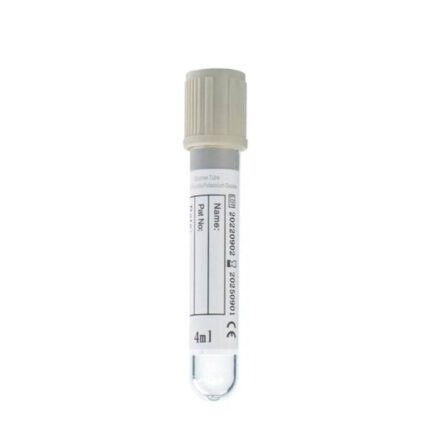
The illustrated evacuated sodium fluoride blood tube, recognizable by its gray cap and 4 ml volume, has the following characteristics:
Primary Use: It is specifically designed for blood glucose testing, sugar tolerance, erythrocyte electrophoresis, anti-alkali hemoglobin, and lactate.
Additives: It contains sodium fluoride as a glycolysis inhibitor, which prevents the breakdown of glucose, and potassium oxalate as an anticoagulant to prevent blood clotting.
Material: Made of polyethylene terephthalate (PET), it is shatterproof and transparent, allowing easy sample visualization while reducing the risk of blood exposure.
Safety and Sterility: This is a sterile system operating in a closed circuit, minimizing the risk of contamination. The interior of the tubes is sterilized.
Accuracy: Calibrated vacuum ensures a consistent blood-to-anticoagulant ratio and standardized, accurate tube filling.
Identification Information: The tube includes fields for the patient’s name and PAT number, as well as information on the manufacturing and expiration dates, and the CE marking.
ESR (Erythrocyte Sedimentation Rate) Tubes
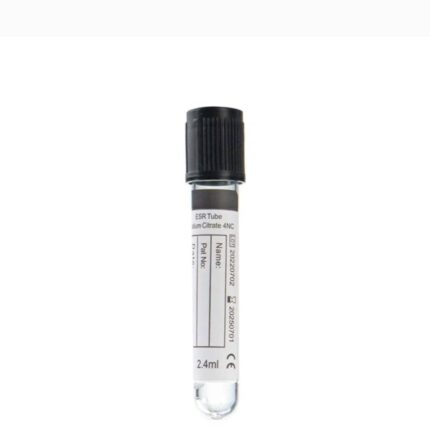
The blood collection tube shown is an ESR (Erythrocyte Sedimentation Rate) tube, also known as a 4NC sodium citrate tube. Its main features are:
Use: It is specifically designed for the collection and anticoagulation of blood for erythrocyte sedimentation rate (ESR) testing.
Anticoagulant: It contains a 3.8% sodium citrate solution.
Anticoagulant/Blood Ratio: The mixing ratio is one part citrate solution to four parts blood (1:4).
Volume: Available in 2.4 ml, 1.6 ml, 3.2 ml, and 4 ml.
Material: Made of PET (polyethylene terephthalate) or glass.
Cap: The cap is black, which is a standard feature for ESR tubes containing sodium citrate.
Markings: The tube includes fields for the patient’s name (Name), patient number (Pat No.), and batch and date information.
Certification: It bears the CE mark, indicating its compliance with European health, safety, and environmental protection standards.