


Modular Dual Mobility, Mobile Bearing Hip System
Modular Dual Mobility
Mobile Bearing Hip System
- Dislocation is one of the most common causes of total hip arthroplasty failure, both in primary and revision procedures. The Modular Dual Mobility 1-4 (MDM) is designed to help prevent dislocation and achieve your operative goals of stability, longevity, and advanced fixation for fractures, primary, or revision total hip arthroplasty cases.
Key Benefits: Stability, Versatility, Longevity, Cost-Effective, Clinical Evidence, Videos
- The Stryker MDM consists of a modular cobalt-chromium insert, a large-diameter X3 polyethylene insert, and a femoral head. The highly polished, modular cobalt-chromium insert can be assembled to any Stryker acetabular cup using the Trident locking mechanism.
- Together, these components form a dual-mobility device with two points of articulation: one between the X3 polyethylene insert and the metal insert (outer tray), and the other between the X3 polyethylene insert and the femoral head (inner tray). The primary movement occurs at the inner tray, while the outer tray moves during extreme range of motion, which can minimize wear, reduce friction torque, and improve stability.

Modular Revision Femoral Stem
The M-Vizion® Modular Revision Femoral Stem features the following:
Intelligent Modular Design: The M-Vizion system is designed with a modular approach to meet the challenges of femoral revision surgery, providing intraoperative flexibility.
Robust Modular Junction: The M-Vizion stem incorporates a proprietary mechanical design that improves the taper’s resistance to fretting-induced fractures, ensuring greater stability at the modular junction.
High mechanical strength of the taper and conical connection.
Diaphyseal Stability: The distal portion of the stem is based on the clinically proven Wagner concept, which provides immediate diaphyseal stability while avoiding areas of proximal bone loss.
Wagner-type cross-section with 8 longitudinal ribs for immediate stability and improved fixation.
Improved Proximal Fixation: The addition of a Mectagrip titanium plasma coating on the proximal body promotes proximal bone fixation.
Coatings and Surfaces:
TiNbN surface coating to prevent cold welding.
Grit Blasted Surface for long-term stability through bone fixation.
Specific Design Features:
Mirror-polished neck to minimize soft tissue damage and liner wear.
Rounded shoulder to facilitate greater trochanter reassembly.
Bullet-shaped tip for easier stem insertion.
Short stem with 12/14 taper to reduce the risk of liner wear.
3 holes for compatibility with cerclage cables and greater trochanter reconstruction.
Dimensions: Available in various lengths (e.g., 190 mm, 240 mm, 290 mm) and diameters (e.g., 12-26 mm), with proximal bodies of various sizes and offset options (standard and lateralized).

Mortar and Pestle
Features of the Laboratory Mortar and Pestle
Mortars and pestles are essential laboratory tools used for grinding and mixing solid substances. Their characteristics are as follows:
Materials: They are generally made of glazed porcelain for high durability and chemical resistance.
Mortar Design:
Shape: The mortar is a bowl-shaped container, spherical, or with a round bottom.
Interior: The interior of the mortar is unglazed or frosted for better grinding efficiency, providing a rough surface that aids in particle size reduction.
Pouring Spout: Equipped with a pouring spout to facilitate the transfer of ground substances.
Pestle Design:
Shape: The pestle is a heavy, blunt object, elongated cylindrical in shape, with a flat or rounded end for grinding.
Material: It is made of the same material as the mortar to ensure optimal compatibility and efficiency.
General Properties:
Chemical Resistance: They must be resistant to commonly used laboratory chemicals to prevent contamination and degradation.
Mechanical and Abrasion Resistance: The materials used must be hard and abrasion-resistant to withstand the grinding of solid substances.
Ease of Cleaning: The surfaces are easy to clean to prevent cross-contamination between experiments.
Applications: They are commonly used in laboratories, pharmaceutical, chemical, and food industries for sample preparation, powder mixing, and grinding solid substances into fine powders.
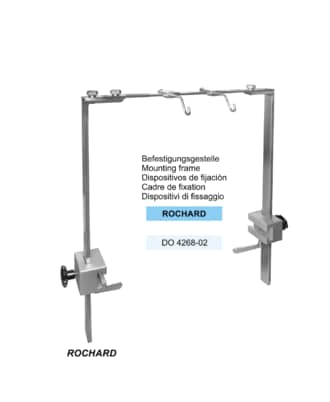
Mounting Frame
The mounting frame (or “Mounting Frame”) from the ROCHARD brand, bearing the reference DO 4268-02.
The main features visible in the image are:
Product Type: Mounting Frame / Mounting Bracket.
Brand: ROCHARD.
Model Reference: DO 4268-02.
Material: Metal device (stainless steel), suggesting strength and durability.
Design: Gantry-like structure with two vertical uprights and an upper horizontal bar.
Attachment: Equipped with clamps at the bases of the vertical uprights, allowing it to be securely attached to a surface (e.g., an operating table or a stand).
Supports: The horizontal bar is equipped with hooks or brackets for hanging or holding other instruments or equipment.
Adjustability: The mounting elements and possibly the brackets are adjustable to accommodate different configurations.
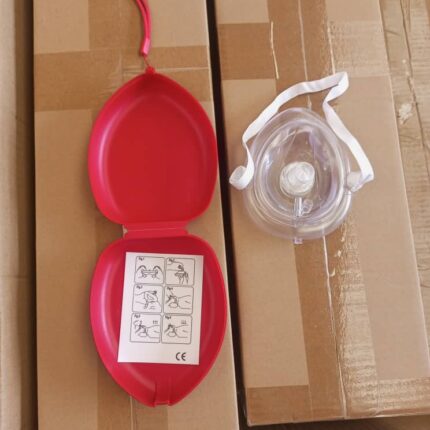
Mouth-to-Mouth Mask
The mouth-to-mouth mask, in its compact red case or the separate transparent mask, is a resuscitation device designed to facilitate artificial ventilation while protecting the rescuer.
Its main features are:
Hygiene and Protection: It reduces direct contact between the rescuer and the victim, minimizing the risk of cross-contamination from saliva, blood, or other bodily fluids.
One-Way Valve: Essential for safety, this valve prevents the victim’s exhaled air or regurgitation from returning to the rescuer.
Transparency: Most masks are transparent, allowing the rescuer to visually monitor the patient’s condition, including the presence of regurgitation.
Comfort and Effectiveness: It is designed to provide a good seal around the victim’s nose and mouth, ensuring effective ventilation. Some models incorporate an anatomical pad for a better fit.
Ease of use: Instructions are diagrammatically or printed directly on the mask or its packaging, as shown in the red case in the image.
Portability: Compact and lightweight, it can be easily carried in a first aid kit or as a keychain.
Materials: Made of PVC or silicone, and often latex-free to avoid allergies.
CE marking: Indicates compliance with European health, safety, and environmental protection standards.

Müller Hinton Agar
ReadyMED™ Mueller Hinton Agar (RDM-MHA-01)
Standardized Medium for Antimicrobial Susceptibility Testing
Manufactured by Chaitanya Agro Biotech Pvt. Ltd. (Buldhana, Maharashtra, India)
1. Product Overview
-
Form: White biotech-grade dehydrated powder
-
Packaging: 1 kg bottles
-
Storage: 2-8°C (until expiration date)
-
Purity: ≥95%
2. Key Applications
-
Kirby-Bauer disk diffusion testing
-
Broth microdilution assays
-
Standardized AST for non-fastidious pathogens
3. Composition & Performance
| Component | Function | Concentration |
|---|---|---|
| Beef extract | Nutrient source | 2.0 g/L |
| Acid hydrolysate of casein | Amino acids | 17.5 g/L |
| Starch | Absorbs toxins | 1.5 g/L |
| Agar | Solidifying agent | 17.0 g/L |
Critical Properties:
-
Low levels of sulfonamide/trimethoprim inhibitors
-
pH 7.3 ± 0.1 (after solidification)
-
4mm depth compliance for disk diffusion
4. Quality Assurance
-
Batch-to-batch consistency for reproducible zone sizes
-
Validated with reference strains:
-
E. coli ATCC 25922
-
S. aureus ATCC 29213
-
P. aeruginosa ATCC 27853
-
-
Meets CLSI/EUCAST standards
5. Preparation Protocol
-
Suspension: 38g per 1L distilled water
-
Heating: Boil with stirring (100°C, 1 min)
-
Sterilization: Autoclave (121°C, 15 min)
-
Pouring: 25mL per 90mm plate (4mm depth)
-
QC Testing: Verify with control strains
6. Manufacturer Credentials
-
Parent Company: Chaitanya Group
-
Facility: cGMP-compliant production
-
Regulatory Status: IVD-grade (CE marked if applicable)
7. Why Choose ReadyMED MHA?
✔ CLSI-compliant formulation
✔ Optimized for accurate zone edge definition
✔ Traceable raw materials
✔ Long shelf life (typically 3 years)
Product Code: RDM-MHA-01

Multi-parameter monitor
MODEL: P12M
The multi-parameter monitor is a multi-parameter monitor from SUNMED UK. General features of this type of monitor include:
Monitored parameters:
They measure ECG (electrocardiogram), SpO2 (blood oxygen saturation), NIBP (non-invasive blood pressure), RESP (respiration), and TEMP (temperature). Some models may include options for IBP (invasive blood pressure) or EtCO2 (end-tidal carbon dioxide).
Display:
They feature a color TFT display of various sizes to display waveforms and numerical data of vital signs.
Portability and design:
Portable and ergonomically designed with an integrated handle for easy transport.
Power Supply:
They operate on a rechargeable battery with variable battery life and can also be connected to the mains.
Additional Features:
Audible and visual alarms, trend data storage, arrhythmia analysis, and drug dose calculation functions.
Applications:
Suitable for monitoring adult, pediatric, and neonatal patients.

Multifunctional Operating Table
Essential medical equipment with specific features to facilitate various surgical procedures.
General Features:
Materials:
They are often made of stainless steel for hygiene, durability, and ease of cleaning.
Adjustments:
They offer flexible adjustments to accommodate different surgical positions and patient needs. These adjustments can include elevation, lateral tilt (Trendelenburg/Anti-Trendelenburg), and adjustment of the backrest, seat, headrest, and legrests.
Mobility:
They are generally mobile, equipped with locking casters for easy movement within the operating room.
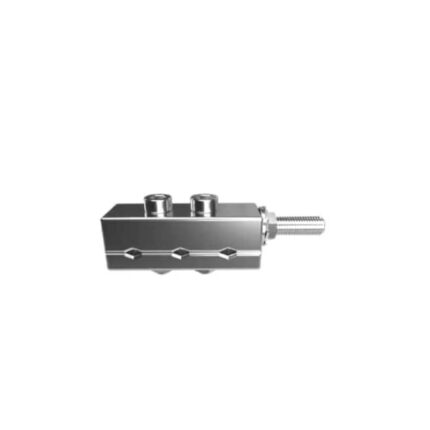
Multiple pin fixation clamp
Multiple fixation points: The clamp is designed to accommodate multiple pins (e.g., 5 or 8 holes), allowing for the creation of solid structures for bone fragment fixation.
Configuration flexibility: Some clamps offer 70 to 80 degrees of movement, allowing independent positioning of pins in three dimensions and thus facilitating the construction of a flexible frame.
Component reduction: They incorporate features that reduce the number of parts required to build the fixation structure, thus optimizing inventory management.
Compatibility with various systems: The clamps are designed to accommodate external fixation systems with various pin and bar sizes, such as 11 mm carbon fiber bars.

Musculature Model, Male Mannequin
This dissectible anatomical model offers a comprehensive study experience with 27 removable parts, mounted on a stand with a green base.
Key Features:
-
Detailed Organ Set: Includes the skull cap, brain (2 parts), lungs (2 halves), heart (2 parts), liver, stomach, and intestinal system.
-
Muscular Anatomy: Features four removable muscles on the arms and nine detailed leg muscles.
-
Full-Body Structure: Comprises the chest/abdominal wall, arms, and the main body.
-
Stable Display: Provided with a dedicated stand and a green base.
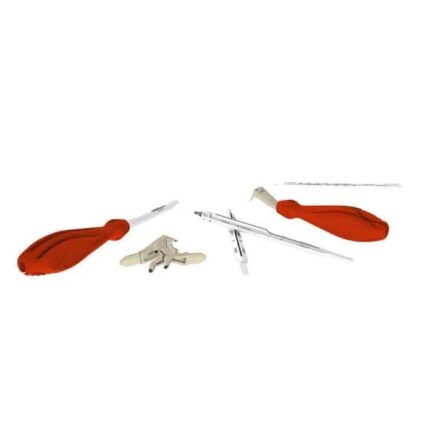
N’oses Trauma Instrument Kit
In2Bones products meet European standards for manufacturing, traceability, safety, labeling, and packaging. True innovation must address the constraints and requirements of each healthcare provider.
The In2Bones® Single-Use solution guarantees equipment that is always sterile, complete, and ready to use. Our instrumentation thus overcomes most of the drawbacks inherent in traditional systems. Whether it’s the surgeon, medical teams, the facility, or the patient, everyone benefits from the advantages of this innovative approach in terms of safety and efficiency.
In2Bones® single-use instrumentation is made of recyclable polymer. It has been specially developed for single use while ensuring consistent effectiveness and comfort for the practitioner. The instrument design ensures precision and resistance to associated torsional stresses.
In2Bones products meet European standards for manufacturing, traceability, safety, labeling, and packaging. True innovation must address the constraints and requirements of each healthcare provider.
The In2Bones® Single-Use solution guarantees equipment that is always sterile, complete, and ready to use. Our instrumentation thus overcomes most of the drawbacks inherent in traditional systems. Whether it’s the surgeon, medical teams, the facility, or the patient, everyone benefits from the advantages of this innovative approach in terms of safety and efficiency.
In2Bones® single-use instrumentation is made of recyclable polymer. It has been specially developed for single use while ensuring consistent effectiveness and comfort for the practitioner. The instrument design ensures precision and resistance to associated torsional stresses.

Nail Cap for Gam Nail
The “Nail Cap for Gam Nail” is a component used in orthopedics, particularly with proximal femoral nails (PFNA). Its features include:
Compatibility: Designed for use with proximal femoral nails (PFNA) such as the New Gam Nail.
Dimensions: Available in various lengths, such as 5.0 mm, 10.0 mm, and 15.0 mm.
Drive: Features a 3.5 mm hex drive for insertion and removal.
Material: Made of 316L stainless steel or titanium alloy (according to ISO 5832-3), biocompatible and corrosion-resistant materials.