


DHS and DCS Plate Instruments
The image shows a set of instruments for DHS and DCS plates, commonly used in orthopedic surgery for femoral fracture fixation.
Features of this instrument set include:
Set Components: It contains instruments for the implantation and removal of DHS (Dynamic Hip Screw) and DCS (Dynamic Condylar Screw) plates. These instruments are used to fix proximal and distal femur fractures.
Specific Contents: The set typically includes angle guides, triple reamers, drill sleeves, taps, screwdrivers, a depth gauge, and guide wires.
Organization: The instruments are often organized in a sterilization container, usually made of aluminum, with silicone trays and holders for orderly storage and efficient sterilization.
Materials: Instruments and implants (such as plates and screws) are manufactured from medical-grade materials, such as stainless steel or titanium, to ensure high mechanical strength and biocompatibility.
Implant Functionality: DHS and DCS plates are designed to stabilize fractures and promote healing. For example, the DHS system allows controlled sliding of the screw within the plate for dynamic compression of the fracture.
Plate Design: Plates are optimized in terms of the number of holes for cortical screws, allowing precise fixation and increased stability, while minimizing the incision. They often incorporate an anti-rotational design to prevent rotation of the screw and bone fragment.

Broken Screw Removal Kit
The surgical instruments shown in the image, a broken screw removal kit for orthopedic devices, have several important features:
High-quality materials: They are generally made of medical/surgical grade stainless steel or titanium, ensuring durability, strength, and corrosion resistance.
Specific design: Each instrument is designed for a specific function in screw or implant removal, including locking, non-locking, headless, and headless screws.
Ergonomics: The instruments are designed for easy grip and smooth handling, reducing the force required and improving precision during procedures.
Sterilization and hygiene: These sets are organized and sterilized to maintain a sterile surgical environment, and many instruments are designed to be fully machine-cleanable.
Variety of Tools: The kit includes a range of tools such as screwdrivers, extractors, pliers, and other specialized instruments for various removal situations.
Quality Assurance: Before being marketed, these instruments undergo rigorous testing to ensure compliance with quality and safety standards, such as FDA-certified guidelines and ISO 13485.

External Fixator Instruments
The external fixator instruments featured here are:
High-quality materials: Made of premium stainless steel, aluminum, and titanium for durability and corrosion resistance.
Specific design for orthopedic surgery: The set is designed for external fixation, fusion, stability, and alignment of bones, particularly in the treatment of complex fractures and limb lengthening.
Modular components: Includes carbon fiber rods, clamps (pin clamps, rod-to-rod clamps), cortical screws, and cancellous bone screws, allowing adaptation to various clinical applications.
Radiocluency: Carbon fiber rods are radiolucent, allowing radiographic monitoring without significant obstruction, facilitating the monitoring of bone healing.
Load-bearing capacity: Carbon fiber rods offer high strength, supporting significant loads during bone healing.
Biocompatibility: Materials, particularly carbon fiber, are generally well tolerated by the body, minimizing the risk of adverse reactions.
Rigorous Quality Testing: Instruments undergo quality tests such as boiling, form, and performance testing to ensure their reliability.
Sterilizable: Supplied in sterilized aluminum cases, suitable for use in the operating room.
Versatile Application: Used for rapid initial fixation, periarticular fractures, severe comminuted fractures, orthopedic reduction, certain pelvic ring injuries, and pediatric fractures, as well as for non-unions and post-traumatic infections.

HF2 Small Fragment Kit
Surgical instrument set, identified as an HF2 Small Fragment Kit, with a diameter of 5.0 mm.
Features of this type of kit may include:
- Single Lock Monoaxial Screws
- General Instrument Set
- Locking Head Cancellous Screws Fully Threaded
- Mesh Plates
- Mini Plates without Bridge
- 4.5 mm Locking Condylar Buttress Plates
- 3.5 mm Calcaneal Locking Plates (Left/Right)
- fixLOCK Instrument Set – Large
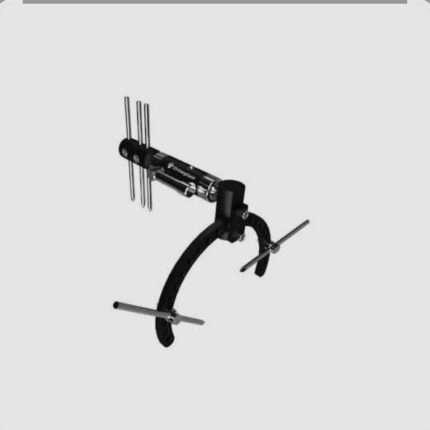
Aysam Hybrid Femur-Tibia External Fixator
The Aysam Hybrid Femur-Tibia External Fixator has the following main features and uses:
Fracture stabilization: It is designed for temporary fixation of various femur and tibia conditions, including fractures, nonunions, calluses, and osteotomies.
Specific Applications:
- Particularly useful for open fractures of the proximal femur.
- Used for proximal femur fractures (intertrochanteric, pertrochanteric) in elderly patients to allow early mobilization.
- Used for distraction and compression at the fracture site, promoting progressive bone lengthening or correction of deformities.
Soft Tissue Management: External fixators, such as this one, can help correct soft tissue injuries or defects by stabilizing and aligning the tissues around the injured bone.
Joint Stability: It can be used to stabilize joints, particularly in cases of severe ligament or tendon injuries.

Ti-Force Titanium Anchors
The characteristics of Ti-Force Titanium Anchors are as follows:
Material and Biocompatibility: Made of high-purity titanium alloy (Ti-6Al-4V), they offer excellent biocompatibility, minimizing the risk of adverse reactions and promoting integration with surrounding tissues.
Design: They feature a fully threaded design (Full Thread Anchor), including a full thread covering the implant surface, which is designed for stronger fixation and greater stability.
Sutures: They are often pre-loaded with ultra-high molecular weight polyethylene (UHMWPE) sutures, offering high knot strength, ideal lubrication, and strong resistance to fraying.
Ease of Use: The design, particularly the very sharp tip, allows for insertion without tapping in most cases, although a drill can be used for hard bones.
Surgical Applications: Available in various sizes (e.g., 2.0 mm, 3.5 mm, 5.0 mm), they are suitable for various orthopedic procedures, such as hand surgery, Bankart and SLAP procedures, and rotator cuff repair.
Fixation Strength: The design and materials contribute to high pull-out strength, ensuring secure fixation of soft tissue or prosthetic material to bone.
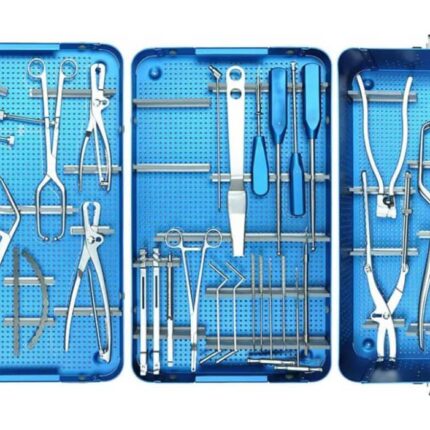
Basic Orthopedic Instrument Set for Pelvic Reconstruction and Trauma Treatment
The basic orthopedic instrument set for pelvic reconstruction and trauma treatment.
Features:
Material: Typically surgical-grade stainless steel for durability and sterilization.
Contents: The set includes various tools such as forceps, screwdrivers, elevators, punches, drill guides, and potentially pins or nails for bone fixation.
Use: Designed specifically for orthopedic procedures involving pelvic reconstruction, fracture reduction, and internal bone fixation.
Presentation: The instruments are organized in a perforated sterilization tray, often made of blue-anodized aluminum, allowing for sterilization and secure storage.
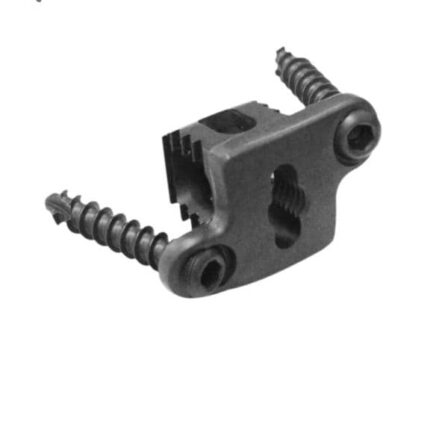
Anterior Cervical Cage Peek
- An Anterior Cervical Cage Titanium is a spinal implant used in spinal surgeries involving the cervical spine.
- The small, hollow design of the cage allows it to be placed between the vertebrae between the vertebrae in the cervical spine.
- The lordotic curve of the implant mimics the natural curvature of the spine.
- Especially used in Anterior Cervical Discectomy and Fusion Surgery (ACDF), this cage supports the space between the vertebrae after the removal of a damaged disc, promoting bone growth and spinal alignment for better stability.
- Made out of PEEK material, these cages prove to be lighter, potentially reducing post-operative stress on the spine
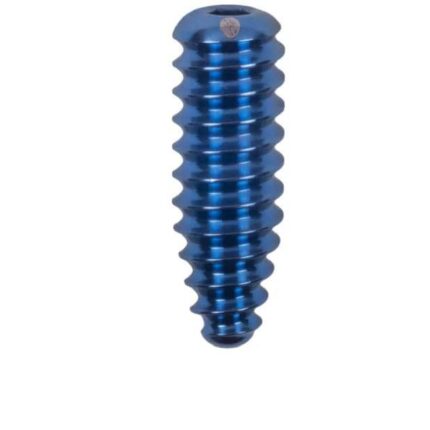
ACL interference screw, cannulated
- The ACL Interference Screw, Cannulated, is an arthroscopic implant, primarily used in Anterior Cruciate Ligament (ACL) reconstruction surgeries.
- The screw’s design is to secure the grafted ligament to the bone.
- The term “Cannulated” here refers to the hollow center, creating a smoother passageway for accurate implant placement.
- The implant provides initial stability to the graft while it heals the bone.

Disposable Cannula
Disposable cannulas are devices designed for the creation and maintenance of access routes in the joints. They allow the insertion or removal of instruments, implants and sutures in arthroscopic surgical procedures.
Specifications
The contents are provided sterile, for single use only.
Reusable obturators are also available for repeated use.
Transparent cannula for optimal monitoring of instrumentation and suture
Unique threaded design for easy insertion and secure retention.
Luer and 1/4” tube connection on an adjustable fluid port.
Color coding by diameter.
Available length 8.25x70mm.
Indications:
Shoulder Arthroscopy Procedures
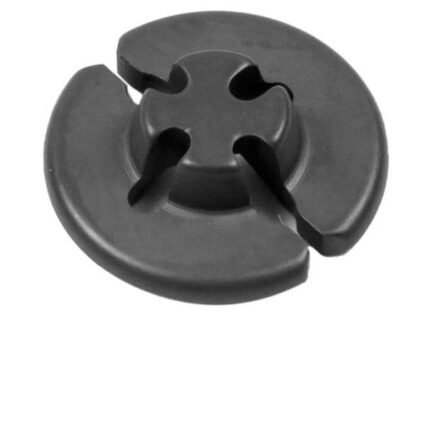
Loop Washer
- A Loop Washer is an arthroscopic implant, primarily used in knee ligament reconstruction surgeries.
- It provides secure fixation to the graft by creating an adjustable loop that attaches to various button configurations.
- The use of a loop washer in an arthroscopic surgery enables surgeons to achieve secure customized graft fixation through small incisions, promoting faster post-operative results
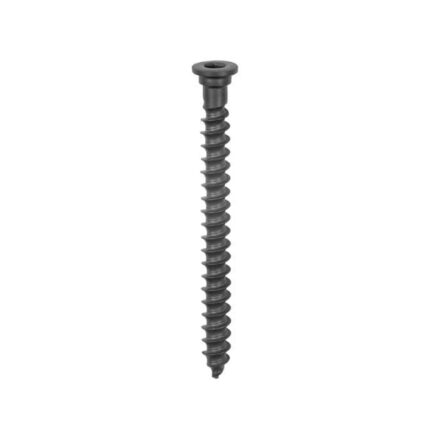
4.0mm Low Profile Cancellous Screw
- 4.0mm Profile Cancellous Screw is a specialized arthroscopic implant used in knee arthroscopic surgeries to secure soft tissues, such as ligaments or tendons, to the bone.
- Designed with a small head and height, it reduces the risk of post-operative irritation and inflammation.
- The diameter of the screw is 4.0mm.
- The screw is used with a washer for enhanced fixation and is available in different lengths to fit into individual anatomical variations