


Rapid Test Strip of Syphilis
The HIGHTOP One Step Syphilis Ab (S/P) Rapid Test features are as follows:
Test Type: Lateral flow immunochromatographic rapid test, designed for screening.
Detection: It detects anti-syphilis antibodies (TP Ab) in serum or plasma samples.
Antigens Used: Uses purified recombinant syphilis antigens as capture materials in the test strip.
Mechanism: If anti-syphilis antibodies are present in the sample at a concentration above the threshold, a complex forms, indicating a positive result.
Ease of Use: The test is designed for ease of use.
Accuracy: Offers high accuracy.
Speed: Provides rapid results.
Quantity: The package contains 50 tests.

Rappaport stethoscope
MODÈLE :DT-210
FEATURES:
The Rappaport stethoscope is a medical instrument used for auscultation, i.e., listening to internal body sounds.
Main features of a Rappaport stethoscope:
Chestpiece:
This is the part that is placed on the patient’s body. It is double-sided, with a diaphragm for high-frequency sounds (heart, lungs) and a bell for low-frequency sounds (heart murmurs, bowel sounds).
Acoustic tube:
This transmits sound from the chestpiece to the earphones. It is made of thick PVC to minimize external sound interference.
Lyre and eartips:
The lyre is the metal part that splits in two to hold the eartips. These are designed to fit comfortably in the user’s ear canals and provide good sound insulation.
Materials:
Stethoscopes are made of high-quality materials to ensure good sound transmission and durability, such as stainless steel for the chestpiece and rubber or PVC for the tubing.
Uses:
It is primarily used by healthcare professionals to listen to heartbeats, breath sounds, bowel sounds, and vascular murmurs, thus aiding in the diagnosis of various conditions.

Rebound Tonometer
Suitable for Specific Populations:
They are ideal for measuring IOP in children, uncooperative elderly patients, and for self-monitoring at home.
Automatic Reading Processing:
The device typically performs multiple measurements, discards the highest and lowest, and averages the others to provide a reliable reading.
Built-in Reliability Indicator:
A reliability indicator may be displayed to show the consistency of the measurements.

Rechargeable ophtalmoscope.
Energy Efficiency:
Efficient power management systems, sometimes with LED indicators for battery level, help users monitor power and reduce wasted energy.

Reconstruction Plate
The characteristics of a Y-shaped reconstruction plate generally include the following:
Shape and Design: It is designed in a “Y” shape to accommodate specific anatomical configurations, often used for complex fractures or osteotomies requiring fixation in multiple directions, such as the calcaneus or pelvis.
Material: Made of high-quality stainless steel or titanium, providing biocompatibility and corrosion resistance.
Screw Holes: Multiple holes along the plate legs for the insertion of fixation screws, providing angular stability or compression, depending on the type of screw used (locking or non-locking).
Dimensions: Can vary in thickness, width, and hole spacing to accommodate different bone sizes and fracture types. For example, a Y-shaped reconstruction plate might be 2.0 mm thick, 9.6 mm wide, and have a 12.0 mm hole spacing, and be designed for 3.5 mm screws.
Applications: Used for internal fixation of fractures, osteotomies, or arthrodesis in areas such as the calcaneus, pelvis (especially the acetabulum), or distal fibula.
Redon Drain
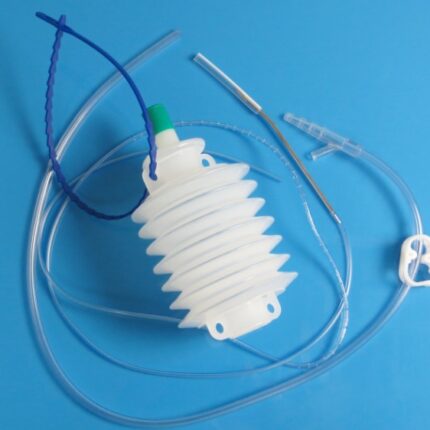
A suction wound drainage system, such as a Redon drain. Its main features are:
Suction Reservoir:
The central element is a bellows-shaped reservoir (or bulb) that creates continuous suction to remove wound fluid.
Continuous Drainage:
The system ensures constant drainage of exudate and blood to prevent fluid accumulation and promote healing.
Sterility:
These systems are generally supplied sterile to minimize the risk of wound infection.
Materials:
Reservoirs can be made of PVC or silicone, and drains are often made of silicone for their biocompatibility and flexibility, minimizing tissue reactions.
Components:
The kit includes a reservoir, a drainage tube (sometimes with a trocar for insertion), and connectors.
Use:
It is used for postoperative drainage of surgical wounds to remove excess fluids and maintain an environment conducive to healing.
Refiber
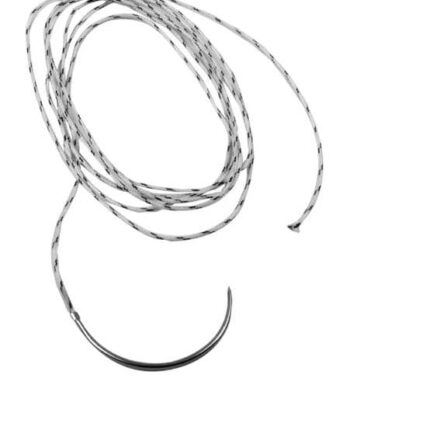
- A ReFiber is a high-strength suture used in arthroscopic procedures, consisting of a braided core of polyester and ultra-high molecular weight polyethylene (UHMWPE).
- It combines a soft feel with abrasion resistance and strength, reducing the risk of breakage during knot tying.
- Available in various lengths, diameters, and needle types, ReFiber enhances surgical flow, minimizes surrounding tissue damage, lowers the risk of complications, and facilitates quicker recovery post-operation.
A ReFiber is used in arthroscopic surgeries for easier surgical flow. It is primarily used in tissue repair and minimizes surrounding tissue damage, lowering the risk of complications, and facilitating quicker recovery post-operation

Reflex Hammer
The reflex hammer has several distinctive features:
Design and Materials:
Made of stainless steel, ensuring strength and durability.
Features a stainless steel head with rubber washers of two different diameters for testing various tendon reflexes.
Integrated Features:
Integrates a stimulation needle screwed into the hammer head for examining skin reflexes and nerve sensation.
A neurological brush is housed in the handle, also used to assess nerve sensation.
Use:
Essential for healthcare professionals, particularly for assessing tendon reflexes and skin and nerve sensation in patients.

Reinforced Gown
The disposable reinforced gown has several key features:
Material and Use:
Made of polypropylene (PP) or polyethylene (PE) non-woven fabric, providing protection against splashes and contamination.
Designed for single use to prevent cross-contamination.
Design and Protection:
Features long sleeves for extended arm protection.
Can include elastic or tight cuffs for a secure fit and enhanced protection.
The design can be breathable for wearer comfort, while maintaining fluid barrier properties.
Functionality:
Easy to put on and take off, with ties at the waist and neck for a customizable fit.
Used in a variety of environments, including hospitals, laboratories, or for visitors in hazardous areas, to protect both the wearer and the environment.

Reinforced Surgical Gown
A reinforced surgical gown is a sterile, disposable protective garment primarily used in medical environments such as operating rooms.
Its main characteristics are:
Material: It is made of non-woven fabric, often polypropylene or a combination of multiple layers such as SMS (Spunbond-Meltblown-Spunbond) or SMMMS (Spunbond-Meltblown-Meltblown-Spunbond). This material offers good air permeability while being hydrophobic.
Reinforcement: It has reinforced areas on the chest and sleeves, as seen in the image. This reinforcement is designed to provide greater protection against bodily fluids, blood, and microorganisms, which is essential during high-risk procedures.
Comfort and Fit: It is designed to be breathable and comfortable for extended periods of time. It usually has a Velcro neck closure and elastic knit cuffs for a secure fit.
Sterilization: These gowns are sterile and disposable. They are often individually wrapped with a surgical fold for easy donning while maintaining asepsis.
Standards: They comply with strict quality standards, such as European standard EN 13795.
Retort
The defining characteristic of a laboratory retort is its specific design for distillation.
Here are its detailed characteristics:
Shape and structure:
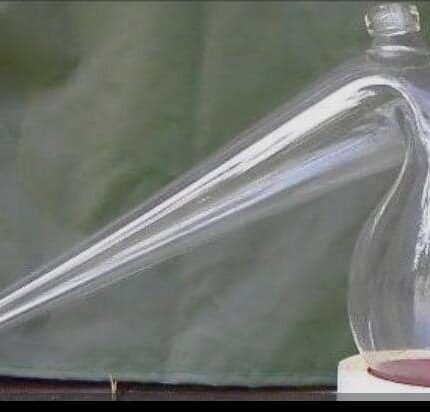
It consists of a spherical or pear-shaped vessel intended to contain the substance to be heated.
It has a long, narrow, downward-curving neck, which serves as a condenser and conduit for the distillate.
Material: It is made of glass, blown glass.
Function: Its main purpose is distillation, allowing substances to be separated by heating and condensation of vapors. The distillate flows down the neck to be collected in another container.
History: The retort is an ancient instrument, widely used by alchemists and early chemists for distillation, before the advent of modern refrigerants.

Retractor blade handle for cervical retr
Ergonomics and Design: Handles can be hand-held for manual retraction or designed to clip into table-mounted arms, allowing for hands-free, stable exposure of the surgical site.
Secure Blade Attachment: A positive engagement system, such as a ball-snap or cross-cut design, ensures a rigid connection between the blade and the handle, preventing blade movement and rotation during surgery.
Adjustable Locking Mechanisms:
Ratchet/Speedlock: These mechanisms hold the blade open in a fixed position for consistent retraction and tissue exposure.
Pivoting and Angle Adjustment: Some systems offer pivoting blades or handles with knobs that allow for precise up-or-down adjustments of the blade angle (e.g., ±45°) to adapt to patient anatomy.