


Reusable neutral scalpel plate
The reusable neutral scalpel plate, also called a patient plate, is used in electrocautery or diathermy.
Main Features:
Type:
Reusable neutral scalpel plate / Patient plate.
Use:
Designed for diathermy or electrocautery, it is used to disperse electrical current throughout the patient’s body during surgical procedures using an electrocautery unit (ESU).
Materials:
Generally made with a conductive surface for effective contact with the patient’s skin.
Connectivity:
Has an extension cable with a connector (e.g., 6.3 mm) to connect to the electrocautery unit.
Shape:
The “melon” shape or the specific shape shown in the image may be designed for better anatomical adaptation and uniform current distribution.
Reusable:
Indicates that it can be sterilized and used multiple times, unlike single-use electrodes.
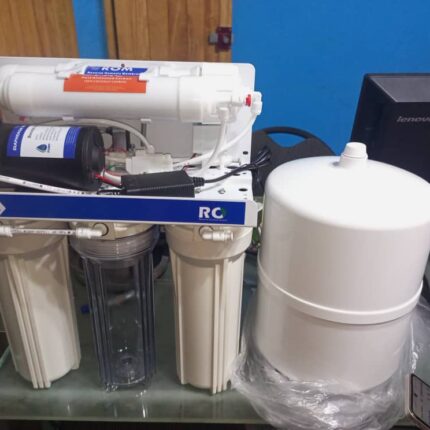
Reverse Osmosis System
A domestic reverse osmosis system is a filtration system that uses reverse osmosis to purify water.
Water Purification: It removes impurities such as heavy metals, chlorine, pesticides, nitrates, and bacteria, improving the quality and taste of tap water.
How It Works: The water passes through several filters (sediment, activated carbon) before passing through an ultra-thin semi-permeable membrane that traps contaminants.
Use: Reverse osmosis water is ideal for drinking, cooking, but also for aquariums and watering sensitive plants.
Considerations: It discharges a quantity of wastewater during the filtration process.
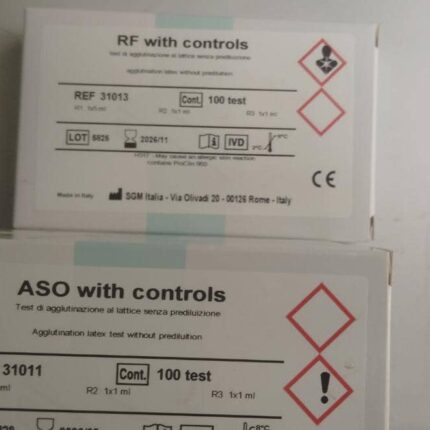
RF With controls
The main product characteristics are as follows:
Product name: RF with controls (Latex agglutination test without predilution).
Reference (REF): 31013.
Contents: 100 tests.
Batch number (LOT): 6826.
Regulatory marking: IVD (In Vitro Diagnostic Medical Device) and CE.
Safety warning: May cause an allergic skin reaction (H317) and contains ProClin 950.
Manufacturer and address: SGM Italia – Via Olivadi 20 – 00126 Rome – Italy.
Hazard symbols: Two hazard pictograms are visible, one indicating a health hazard (human silhouette with a star) and the other a general hazard (exclamation mark).

Rochard Valve
The Rochard Valve, a surgical instrument.
Here are its main characteristics:
Instrument Type: It is a suprapubic valve, used as a surgical retractor.
Function: It is used to retract and hold tissue, muscles, organs, or bones to expose the surgical field during surgery, particularly in urology.
Material: Generally made of stainless steel.
Common Dimensions: A common size is 100 mm x 50 mm.
Classification: It is a Class I medical device with CE marking.
Use: It is often used in combination with tissue forceps for precise manipulation and optimal tissue support.

Roll Mixer
The Roll Mixer is a piece of laboratory equipment designed for the gentle and homogeneous mixing of samples in test tubes or flasks. Its main features include:
Smooth Rolling and Tilting Action: It uses a rolling and tilting motion that ensures homogeneous mixing of samples while preventing sedimentation, without damaging sensitive materials.
Durable and Compact Design:
Built with sturdy materials, it takes up minimal space on the laboratory bench.
Ease of Use: It is equipped with a simple on/off switch for easy operation.
Prevention of Sedimentation: The continuous movement helps keep particles suspended, preventing sediment from forming at the bottom of containers.
Versatility: It is suitable for mixing various types of biological and chemical samples in tubes or flasks.

Rollator with Wheels
The rollator with wheels has the following characteristics:
Type:
This rollator has two wheels, making it easier to move around by sliding it instead of lifting it.
Material:
The frame is made of metal, stainless steel, for lightweight and strength.
Adjustable:
The height is adjustable to suit the user’s height, allowing for correct and comfortable posture.
Foldable:
Its design allows it to be folded for easy storage or transport.
Stability:
It provides significant support to improve the user’s stability and confidence when walking.
Handles:
It is equipped with padded or ergonomic handles for a comfortable grip.
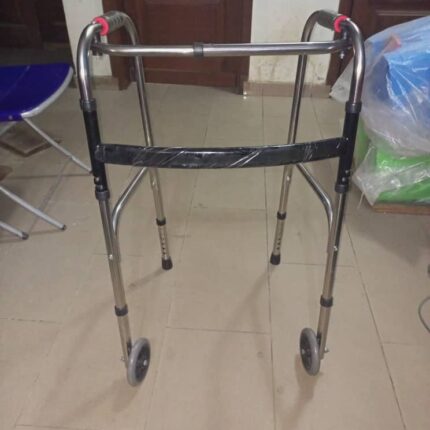
Rollator with Wheels
The rollator with wheels has the following characteristics:
Type:
This rollator has two wheels, making it easier to move around by sliding it instead of lifting it.
Material:
The frame is made of metal, stainless steel, for lightweight and strength.
Adjustable:
The height is adjustable to suit the user’s height, allowing for correct and comfortable posture.
Foldable:
Its design allows it to be folded for easy storage or transport.
Stability:
It provides significant support to improve the user’s stability and confidence when walking.
Handles:
It is equipped with padded or ergonomic handles for a comfortable grip.

Root Elevator
Surgical root elevators, with the following main characteristics:
SÖRENSEN-HEIN
Type: Root elevator or surgical instrument with a curved tip and an ergonomic handle.
Length: 7 – 17.5 cm.
Product code: DO 4318-20/17.
Use: Generally used in dental surgery for the extraction of retained teeth or roots, acting as levers to loosen the surrounding tissue.
DINGMAN
Type: Root elevator or surgical instrument with a curved tip and a more robust handle.
Length: 8⅛ – 21 cm.
Product code: DO 4318-25/21.
Use: Similar to the Sörensen-Hein, it is also designed to facilitate tooth extraction by providing leverage and loosening tissue.
These instruments are made of high-quality stainless steel to ensure durability and efficiency.
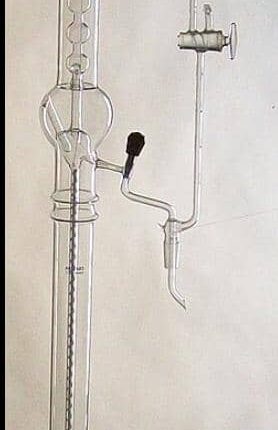
Rotating Belt Distillation Column
A rotating belt distillation column is a type of distillation column used for separating liquids with very similar boiling points.
The main features of this equipment are:
Efficient separation: It is designed to separate compounds with very similar boiling points, which is difficult to achieve with simpler distillation columns such as the Vigreux column.
Presence of a rotating belt: Inside the column tube is a rotating device that rotates at high speed. This device creates a thin liquid film and increases the exchange surface area between the liquid and vapor phases, thus improving separation efficiency.
Operating principle: The rotating belt allows for multiple evaporation and condensation cycles along the column, simulating a large number of theoretical plates and allowing for better vapor rectification.
Applications: It is particularly useful in laboratories for the purification of chemicals or the separation of complex mixtures, where high purity is required.

Rotator Mixer
The Rotator Mixer, also referred to as a “Rucator Mixer” or model KJMR-IV, is designed for consistent mixing of biological samples or cell suspensions, such as whole blood in collection tubes.
**Key Features:**
**Mixing Motion:**
Utilizes a gentle rotating and rocking motion to achieve uniform mixing, preventing sedimentation or coagulation of samples.
**Speed:**
Offers fixed rotation speeds (e.g., 33 rpm or 36 rpm) or digitally adjustable speeds (e.g., 20–99 rpm or 4–30 rpm).
**Applications:**
Ideal for hematological testing, mixing blood samples, viscous materials, and liquid-solid suspensions.
Round Files
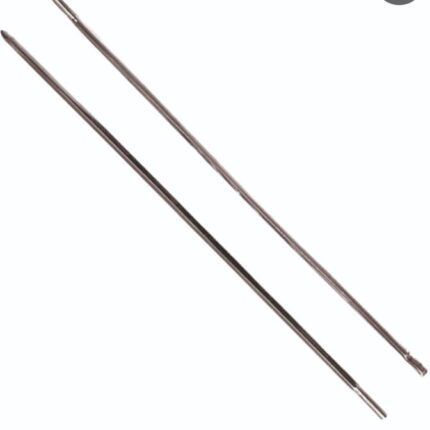
Round files, specifically identified as Makita D-67359 4.0 mm round files.
Their main characteristics are:
Type: Round file.
Diameter: 4.0 mm.
Use: Designed for filing saw chains, particularly those with a 3/8″ P or 1/4″ pitch.
Behavior: They exhibit a smooth behavior.
File Angle: Ideal for a 30° file angle.
Compatibility: Suitable for various types of saw chains such as 25AP, 80TXL, 91VXL, 91P, 91PX, 91VX, and 91VG.
Blade Length: The blade length is 256 mm.
Shank Shape: Single-sided.
Rubella IgM/IgG
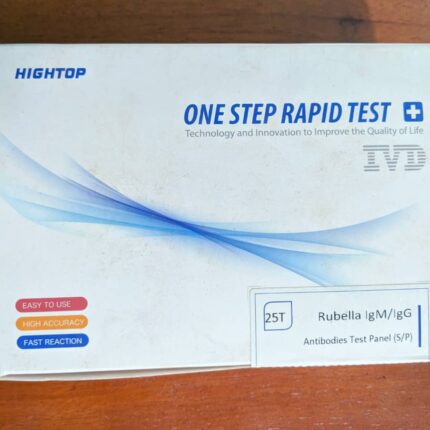
The Hightop One-Step Rapid Rubella IgM/IgG Antibody Test features are as follows:
Test Type: One-step rapid test for the detection of rubella IgM and IgG antibodies.
Ease of Use: The test is designed for ease of use.
Precision: It offers high accuracy.
Fast Reaction: The test provides a fast reaction.
Format: The test panel is available in a 25T format, indicating a pack of 25 tests.
Purpose: It is used to determine the presence of rubella IgM and IgG antibodies in serum or plasma (S/P).