


Plastic Hemolysis Tubes
Plastic hemolysis tubes are often used in laboratories.
Explanation:
Description:
These are round-bottomed test tubes made of polystyrene (PS) or polypropylene (PP), designed to contain liquids, particularly blood samples.
Use:
They are commonly used in laboratories for sample collection, serum or plasma separation after hemolysis (destruction of red blood cells), and various medical or research analyses.
Packaging:
As shown in the image, they are packaged in bulk quantities of 500 pieces, sometimes sterile and without caps.
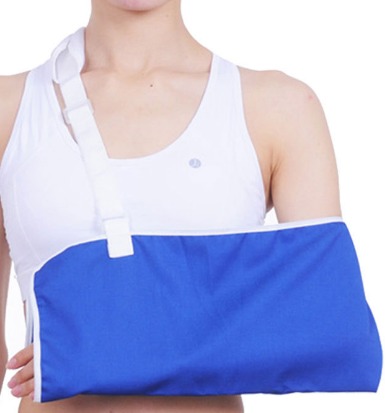
Triangular Sling
A triangular sling for immobilizing the arm and shoulder.
Its main features are as follows:
Materials:
It is often made from soft, comfortable, and breathable composite fabrics, such as polyester or perforated fabric without latex or neoprene, to prevent skin irritation and ensure good ventilation.
Comfort and Ergonomics:
The support strap is usually padded or lined to prevent cutting into the neck or the healthy shoulder, and the design aims to reduce pressure on the shoulders and neck.
Adjustability:
The straps are adjustable in length using buckles or hook-and-loop systems, allowing for precise adjustment to the patient’s body shape and optimal arm positioning.
Immobilization and Support:
It is designed to immobilize the forearm, elbow, and wrist in a 90° flexion position.
It is universal, can be used on the right or left arm, and is suitable for adults of different sizes.
Functionality:
It is designed to support the arm and shoulder after injuries (fractures, dislocations, sprains, contusions), surgery (rotator cuff), or in cases of joint instability, promoting healing and reducing swelling.

Coverslips
Coverslips have the following characteristics:
Material: They are made of D 263 M borosilicate glass, of the first hydrolytic class, known for its chemical resistance.
Quantity: The package contains 100 coverslips.
Dimensions: The coverslips measure 22x22mm.
Optical quality: They are colorless, perfectly clear, and suitable for fluorescence microscopy.
Conformity: They meet all the requirements of DIN ISO 8255.
Thickness: The thickness corresponds to standard No. 1 (0.13-0.16 mm).
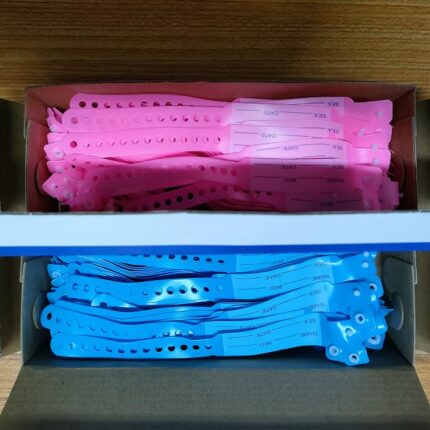
Identification Bracelet
The characteristics of the identification bracelets are as follows:
Color:
The bracelets are available in two distinct colors, pink and blue.
Material:
They are made of a soft, durable plastic or vinyl material commonly used for identification bracelets.
Writable Information:
Each bracelet has pre-printed fields for recording key patient information, such as:
NAME: For the patient’s name.
BED: For the patient’s bed number or location.
SEX: For the patient’s sex.
DATE: For the admission or identification date.
Closure:
The bracelets feature a perforated closure mechanism, allowing for a secure fit around the wrist.
Packaging:
They are packaged in cardboard boxes.

Anti-decubitus mattress
The main features of an anti-decubitus air mattress are:
Prevention and treatment of pressure ulcers:
Designed to reduce pressure on areas of the body prone to pressure ulcers (or pressure sores) in people confined to bed for long periods.
Alternating pressure technology:
Uses a built-in electric pump to inflate and deflate air chambers in regular cycles, which evenly distributes body weight and improves blood circulation.
Durable and hygienic material:
Generally made of medical-grade PVC or TPU, offering durability, water resistance, and hypoallergenic properties, making cleaning and maintenance easier.
Low-noise air pump:
The pump is designed to be quiet so as not to disturb the patient’s sleep.
Thickened fabric:
The mattress features thickened fabric for added strength and durability.
CE Conformity:
Indicates that the product complies with European Union safety, health, and environmental protection standards.
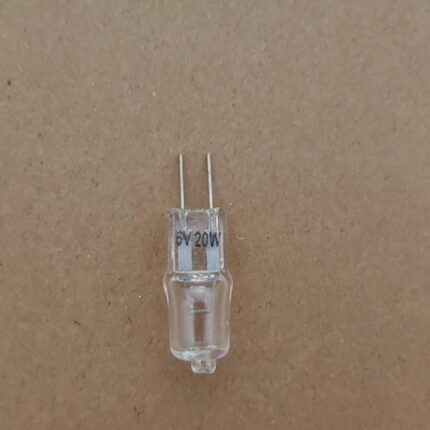
Microscope Bulb
The specifications of a halogen microscope bulb are as follows:
Voltage: 6V
Wattage: 20W
Explanation of specifications:
6V (Volts):
This indicates the nominal electrical voltage at which the bulb is designed to operate. A 6V bulb is generally used in low-voltage applications, such as certain types of machine lighting, microscope lighting, or specific lighting systems requiring low voltage.
20W (Watts):
This represents the electrical power consumed by the bulb when in operation. Wattage relates to the amount of light produced, although luminous efficacy (lumens per watt) can vary depending on the type of bulb.

Blood Bank Refrigerator
The blood bank refrigerator
This equipment is specifically designed for the secure storage of blood and its components, as well as laboratory reagents and biological products, at controlled temperatures (generally between +2°C and +6°C). It is equipped with multiple safety features to ensure optimal preservation of blood products.
Volume: Available in 200L and 400L
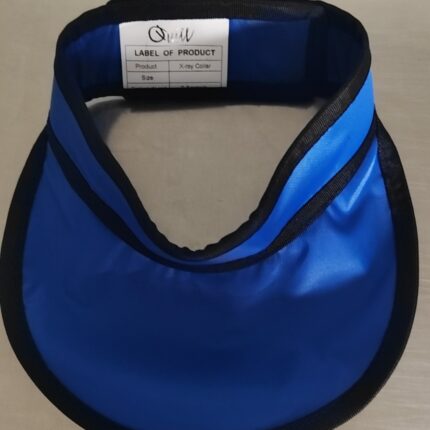
X-ray Protective Collar
The X-ray protective collar, also known as a lead thyroid collar, has the following features:
Radiation Protection:
It is designed to provide optimal protection of the neck and thyroid area from X-rays during radiological examinations. It has a lead equivalent of 0.3 mm or 0.5 mmpb for effective protection.
Design and Materials:
Made of durable lead rubber or polyurethane-coated fabric.
Ease of Use:
The Velcro design on the back allows for easy on and off and allows the collar to be adjusted for a comfortable and secure fit.
It is designed to be lightweight and soft for the comfort of the patient or professional.
Durability:
It is robust and designed for durability, ensuring extended use.
Applications:
Suitable for various medical settings, including dentistry, hospitals, and X-ray offices.
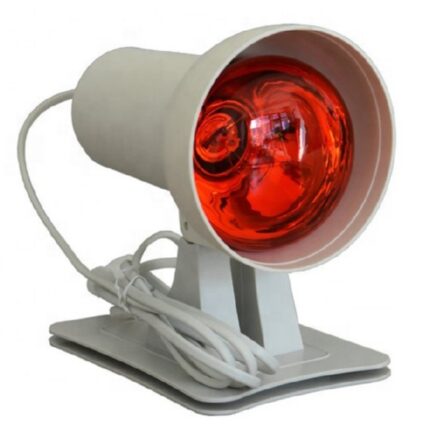
Infrared Lamp
infrared lamp, primarily used for heat therapy. Its main features include:
Bulb Type:
This is an incandescent bulb, type R80 E27, producing infrared heat through a filament (e.g., carbon or tungsten).
Wattage:
These lamps have a power of approximately 100W or 250W, depending on the model and use.
Use:
It is designed for physiotherapy and heat therapy, relieving muscle tension, joint pain, and promoting recovery.
Features:
Some models may include options such as angle adjustment, a timer, and intelligent temperature control.
Therapeutic Benefits:
Infrared heat penetrates deeply, helping to reduce pain and inflammation and accelerate tissue healing.

Single-Use Specula
Disposable vaginal specula, commonly used for gynecological examinations. Their main characteristics are:
Single-use and hygiene:
These specula are designed for single-use, eliminating the need for complex cleaning and sterilization associated with reusable specula. They are generally sterilized with ethylene oxide and individually wrapped to ensure maximum hygiene and reduce the risk of cross-infection.
Material and transparency:
Made of polystyrene resin or transparent plastic, they provide excellent visibility of the vaginal canal and cervix during the examination. Plastic is also perceived as cooler and more comfortable for the patient than metal.
Design and practicality:
They are lightweight and robust, facilitating handling by the healthcare professional. Most incorporate a locking system (often by twisting) to keep the valves open during the examination.
Various Sizes:
Available in several sizes (medium and large) to accommodate different anatomies.
Type:
The specula shown in the image are of the Cusco type, recognizable by their two-valve shape.
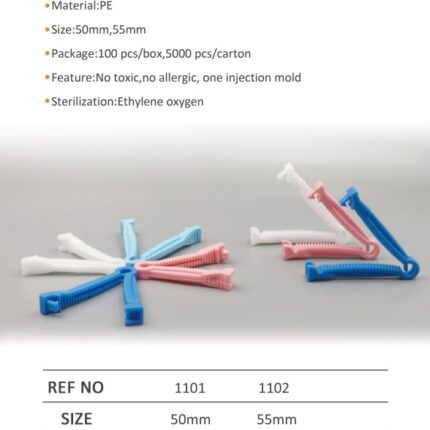
Umbilical Cord Clamp
The characteristics of the umbilical cord clamps shown in the image are as follows:
Material: Polyethylene (PE).
Available sizes: 50 mm and 55 mm.
Packaging: 100 pieces per box, 5000 pieces per carton.
Properties: Non-toxic, non-allergenic, single-injection molded.
Sterilization: Ethylene Oxide
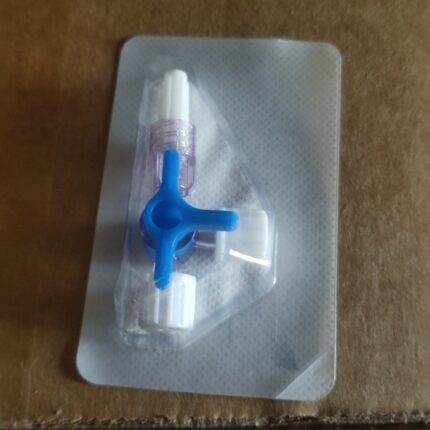
3-Way Stopcock
The characteristics of the 3-way stopcock, commonly used for infusion and sampling, are as follows:
Materials and Composition:
Made of polycarbonate, offering lipid resistance.
Fully transparent housing for clear identification of the open/closed position and flow direction.
Sterilized with ethylene oxide.
Latex-free and pyrogen-free.
Connections and Use:
Features two female inlets and one male outlet, usually Luer Lock type.
360° rotating ring for opening and closing each line.
Designed to manage the flow of infusion fluids and allow for switching flow lines.
Single-use only to prevent cross-infection.
Features and Specifications:
Allows the administration of infusion solutions and intermittent intravenous medications.
Can be used for blood sampling.
Resistance to hydrostatic pressure (e.g., 3-5 bar).
Compatible with blood and blood derivatives.
May be lipid-resistant, cytostatic, and resistant to antiseptics and other caustic drugs.
Conformity:
CE Marking – Class IIa.
Complies with the requirements of European Directive 93/42/EEC as amended by Directive 2007/47/EC.