


S-Shaped Locking Clavicle Plate For the Clavicle
S-Shaped Locking Clavicle Plates
These plates are medical implants used in orthopedic surgery to treat fractures of the clavicle (collarbone) and other related injuries.
Key Features:
Anatomical S-Shape: The unique “S”-shaped design is specifically adapted to the natural curvature of the clavicle, ensuring a precise fit and stable fixation.
Locking and Compression Plates: These use a combination of locking and compression screws. The locking screws secure in holes in the plate, while the compression screws apply pressure to the fracture site to promote healing.
Improved Stability: The S-shape and locking/compression mechanism contribute to improved fracture stability, reducing the risk of plate displacement or loosening.
Laterality: Plates are available in “L” (left) and “R” (right) versions, as shown on some of the implants in the image, to accommodate the specific anatomy of the patient’s side.
Material: Typically made of biocompatible materials such as titanium or medical-grade stainless steel.

Sabouraud Dextrose Agar
ReadyMED Sabouraud Dextrose Agar (RDM-SDA-01) – Technical Specifications
Product Description
ReadyMED Sabouraud Dextrose Agar (SDA) is a selective fungal culture medium optimized for isolation and cultivation of yeasts and molds. The formulation complies with international standards for pharmaceutical and cosmetic testing.
Key Characteristics
1. Composition
| Component | Function | Concentration |
|---|---|---|
| Peptones | Nitrogen/vitamin source | 10 g/L |
| Dextrose | Energy/carbon source | 40 g/L |
| Agar | Solidifying agent | 15 g/L |
2. Selective Properties
-
Natural pH 5.6 creates acidic environment that:
-
Promotes fungal growth
-
Inhibits most bacterial contaminants
-
-
Optional antibiotic supplementation (chloramphenicol/gentamicin) available for enhanced selectivity
3. Performance Characteristics
-
Growth Promotion: Supports robust development of:
-
Pathogenic yeasts (e.g., Candida albicans)
-
Filamentous fungi
-
Dermatophytes
-
-
Colony Morphology: Produces characteristic fungal colonies for easy identification
Quality Attributes
-
Physical Parameters:
-
Dehydrated form: Free-flowing powder
-
Prepared medium: Clear to slightly opalescent
-
Gel strength: Equivalent to 1.5% agar
-
-
pH: 5.6 ± 0.2 at 25°C
Applications
-
Pharmaceutical QC:
-
Sterility testing
-
Microbial limit testing
-
-
Clinical Mycology:
-
Isolation of fungal pathogens
-
-
Cosmetic Testing:
-
Preservative efficacy testing
-
-
Environmental Monitoring:
-
Air and surface sampling
-
Regulatory Status
-
Manufactured under cGMP conditions
-
Meets compendial requirements (USP/EP)
Product Code: RDM-SDA-01
Packaging: 500g dehydrated powder
Shelf Life: 36 months when stored sealed at 15-30°C
Preparation Protocol
-
Suspend 65g in 1L purified water
-
Heat to boiling with stirring
-
Autoclave at 121°C for 15 minutes
-
Cool to 45-50°C before pouring
Incubation Conditions:
-
20-25°C for 3-5 days (molds)
-
30-35°C for 24-48 hours (yeasts)
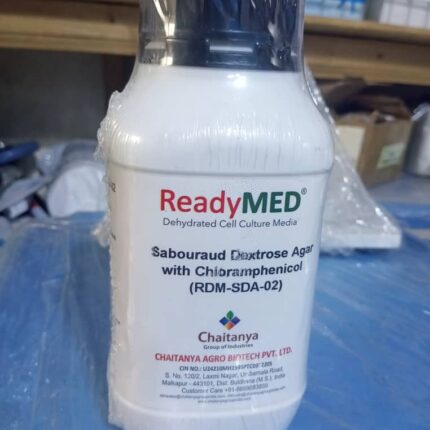
Sabouraud Dextrose Agar with Chloramphenicol
ReadyMED™ Sabouraud Dextrose Agar with Chloramphenicol (RDM-SDA-02)
Manufactured by Chaitanya Agro Biotech Pvt. Ltd.
Product Overview
A selective fungal culture medium optimized for isolation of yeasts and molds, with added chloramphenicol to suppress bacterial contamination. Ideal for clinical, pharmaceutical, and cosmetic testing.
Key Specifications
1. Composition
| Component | Function |
|---|---|
| Dextrose (40g/L) | Primary carbon source |
| Peptones (10g/L) | Nitrogen/vitamin source |
| Agar (15g/L) | Solidifying agent |
| Chloramphenicol | Antibacterial inhibitor |
2. Selective Properties
-
Chloramphenicol (0.05g/L):
-
Broad-spectrum antibiotic
-
Suppresses Gram-positive & Gram-negative bacteria
-
-
Acidic pH (5.6 ± 0.2):
-
Enhances fungal growth
-
Further inhibits bacterial competitors
-
3. Physical Characteristics
-
Form: Free-flowing dehydrated powder
-
Prepared Medium: Clear to slightly opaque
-
Gel Strength: Firm (1.5% agar equivalent)
Applications
-
Clinical Mycology: Isolation of Candida, dermatophytes
-
Pharmaceutical QC: Sterility testing (USP/EP compliant)
-
Cosmetic Testing: Preservative efficacy evaluation
-
Environmental Monitoring: Air and surface fungal sampling
Preparation & Usage
Protocol
-
Suspension: 65g powder per 1L purified water
-
Heating: Boil with stirring until dissolved
-
Sterilization: Autoclave at 121°C for 15 minutes
-
Pouring: Cool to 45-50°C before plating
Incubation
-
Yeasts: 30-35°C for 24-48 hours
-
Molds: 20-25°C for 3-5 days
Quality & Compliance
-
Manufactured under cGMP
-
Meets USP/EP/JP standards
-
Batch-controlled for consistency
Product Code: RDM-SDA-02
Shelf Life: 36 months (unopened, at 15-30°C)
Why Choose ReadyMED SDA-CAF?
✔ Dual selectivity (antibiotic + acidic pH)
✔ Optimized for fastidious fungi
✔ Regulatory-compliant for critical testing

Safety Box
A safety box designed for the secure collection and disposal of used syringes and needles.
Main Features:
- Volume and Capacity: 5-liter capacity, specifically for safe storage of used syringes and needles
- Materials: Constructed from waterproof kraft cardboard or double-layer corrugated cardboard, puncture-resistant and leak-proof to prevent leaks
- Design and Use:
- Square shape with an ergonomic handle for easy transport
- Safe, convenient, and non-toxic
- Designed for incineration to safely dispose of biomedical waste
- Features standard printing with safety messages and biohazard symbols
- Compliance: Meets medical safety standards, including CE and ISO 9001

Safety Tube
A safety tube, also known as a Thistle tube, is a glass laboratory instrument primarily used to add liquids to a solution or apparatus system, or to act as a safety valve to relieve excess pressure.
Its main characteristics are:
Structure: It consists of a long, hollow stem and a funnel-shaped reservoir at its upper end.
Material: It is usually made of glass.
Function:
Liquid Addition: It allows liquids to be slowly introduced into a container, such as an Erlenmeyer flask, by inserting the thin end of the stem through a stopper.
Safety: It can be used to prevent overflow in the event of changes in pressure or temperature. An increase in pressure or expansion of the liquid will cause it to rise up the tube and overflow into the reservoir, thus acting as a safety valve.
Variations: The shape of the stem end can vary, resulting in types such as straight, curly, or multi-chamber safety tubes.

Salmonella Shigella Agar
ReadyMED Salmonella Shigella Agar (RDM-SSA-01) – Product Description
Appearance:
-
Homogeneous, free-flowing powder
-
Light yellow to pink in color
Gel Properties:
-
Forms a firm gel (equivalent to 1.5% agar)
-
Prepared medium appears as a clear to slightly opalescent, reddish-orange gel in Petri dishes
pH:
-
7.0 ± 0.2 (6.3% w/v solution at 25°C)
Composition:
-
Selective Agents: Bile salts, sodium citrate, and brilliant green (inhibit Gram-positive bacteria, coliforms, and Proteus spp.)
-
Nutrients: Beef extract, enzymatic digest of casein, and animal tissue
-
Carbohydrate Source: Lactose
-
H₂S Detection: Sodium thiosulfate and ferric citrate
-
pH Indicator: Neutral red
Cultural Response (After 18-24 hrs at 35-37°C):
| Organism | Colony Characteristics |
|---|---|
| Salmonella | Colorless colonies with black centers (H₂S production) |
| Shigella | Colorless colonies (no H₂S) |
| E. coli | Pink colonies (lactose fermentation) |
| Enterobacter/Klebsiella | Large, mucoid, pale cream to pink colonies |
Use:
-
Selective isolation of Salmonella and Shigella from clinical, food, and environmental samples
Product Code: RDM-SSA-01
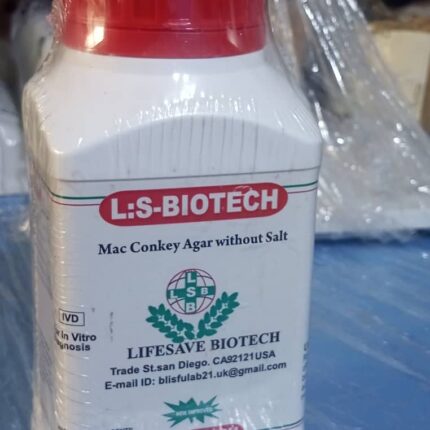
Salt-Free MacConkey Agar
L-S Biotech / Lifesave Biotech Salt-Free MacConkey Agar
(Selective & Differential Medium for Gram-Negative Enteric Bacteria)
Product Description
A specialized salt-free variant of MacConkey Agar designed for superior isolation of Gram-negative enterics while suppressing Proteus swarming.
Key Features
1. Selective Properties
-
Bile salts inhibit Gram-positive organisms
-
Crystal violet-free formulation (varies by product)
-
Salt-free composition prevents Proteus swarming
2. Differential Capability
-
Lactose fermentation detection via neutral red indicator:
-
Fermenters (e.g., E. coli, Klebsiella): Pink/red colonies
-
Non-fermenters (e.g., Salmonella, Pseudomonas): Colorless colonies
-
3. Unique Salt-Free Advantage
-
Eliminates NaCl to:
-
Improve isolation of non-Proteus enterics
-
Reduce overgrowth in mixed cultures
-
Technical Specifications
| Parameter | Detail |
|---|---|
| Format | Dehydrated powder |
| Selective Agents | Bile salts (crystal violet optional) |
| pH Indicator | Neutral red |
| Key Application | Isolation of enteric bacilli from Proteus-rich samples |
| Regulatory Status | IVD use only |
Applications
-
Clinical microbiology (stool/urine cultures)
-
Food/water testing
-
Research on Proteus-contaminated specimens
Typical Workflow:
-
Reconstitute per manufacturer instructions
-
Pour plates and inoculate
-
Incubate 18-24h at 35±2°C
-
Interpret colony morphology/color

Sandwich plate.
Composite Construction: Composed of two composite face sheets (e.g., carbon fiber, glass fiber) and a lightweight core material (e.g., foam, honeycomb, balsa wood).
High Specific Strength and Stiffness: The sandwich structure provides excellent strength and stiffness for its weight, making it ideal for lightweight applications.
Low Construction Weight: The use of a lightweight core significantly reduces the overall weight of the structure.
Load Distribution: The face sheets and core work together to distribute loads effectively across the structure.
Mechanical & Functional Characteristics
Vibration Isolation: They possess excellent vibration damping properties, which reduce noise transmission and enhance comfort.
Crashworthiness: The design enhances crashworthiness, making them resistant to impacts.
Thermal Insulation: Sandwich panels act as thermal insulators, helping to maintain consistent internal temperatures.
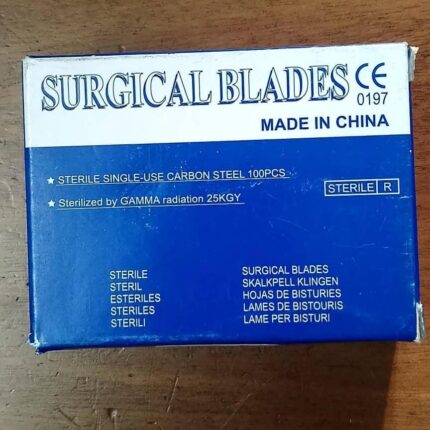
Scalpel Blade
The characteristics of surgical blades are as follows:
Product Type: Surgical Blades
Material: Single-use carbon steel
Sterilization: Sterilized by gamma radiation (25KGY) and ready to use (sterile).
Quantity: Box of 100 pieces
Certification: CE Mark 0197
Packaging: Individually wrapped in foil or peel-off aluminum pouches to maintain sterility.
Use: Single-use only
Compatibility: Compatible with stainless steel scalpel handles, depending on the blade size.
Quality: Renowned for their initial sharpness and durability, ideal for precise incisions.
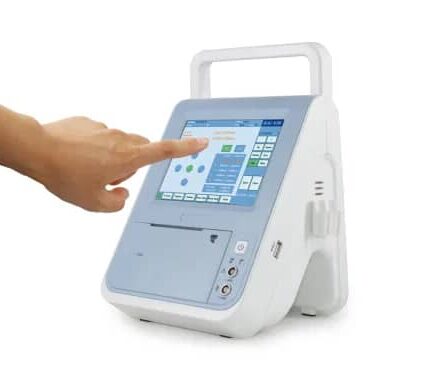
Scan and Pachymeter
Features:
- Excellent quality, Compact design, Defect free, and Axial Length Measurement 10MHz Probe with Fixation Light
- The Occuity PM1 pachymeter will make it easier, faster and safer to diagnose glaucoma by measuring corneal thickness in just a few seconds.
- Automatic reading at single or multiple points for corneal thickness; Multiple measurements at single point for higher reliability; Higher accuracy enabled by ..
- Precise Measurement with both Immersion & Contact modes. Touch Screen Extremely Easy of Use Compact and Portable Design Auto/Manual .
Specifications: A scan probe: 10MHz import small size probe, built-in luminotron. Measuring range: 15mm-40mm. Measurement precision: ±0. 05 …
A-Scan Function: Measures the axial length of the eye and the thickness of internal structures like the lens and retina. This is crucial for accurately calculating the power of intraocular lenses (IOLs) before cataract surgery.
Pachymeter Function: Measures central corneal thickness (CCT) by detecting reflections from the cornea’s anterior and posterior surfaces.
Technology: Can use either ultrasonic waves or focused light to take measurements.
Measurement Types: Offers both immersion and contact methods for A-scan and ultrasound for pachymetry.
Accuracy & Precision: Provides highly accurate and precise measurements, often with electronic resolutions and accuracies of 0.1 mm or better.
Operating Modes: Features automatic and manual capture modes for user preference.
Data Handling: Includes capabilities for storing patient data, EMR/EHR compatibility, and network connectivity.

Scan and Pachymeter SW1000
Functions: Measures axial length, anterior chamber depth, and lens thickness.
Macular Recognition: A built-in function for accurate measurement of axial length.
IOL Calculation: Includes formulas like SRK-II, SRK-T, Hoffer-Q, Holladay, Binkhorst-II, and Haigis.
Eye Modes: Supports phakic, aphakic, and dense eye measurements.
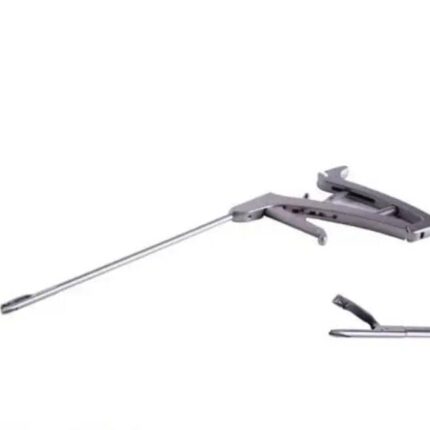
Scorpion Suture Passer
Scorpion suture passers are used in shoulder arthroscopy for rotator cuff and labral repair.
Designed for simplicity, the Scorpion Side-Loading Suture Passer is easy to use and allows for more successful suture passes. The front of the lower jaw is solid to prevent the suture and soft tissue from entering the lower jaw when positioning over the tendon. The upper suture retrieval jaw allows for seamless passage and retrieval of the #2 Fiber suture.
The Scorpion Suture Passer features a quick-loading lower jaw and a suture retrieval upper jaw. The contoured jaws of this intuitive suture passer are designed for easy maneuvering in the glenohumeral space, accommodate a 7.0 mm cannula, and are ideal for passing and retrieving #2 Fiber sutures through a single access port.