

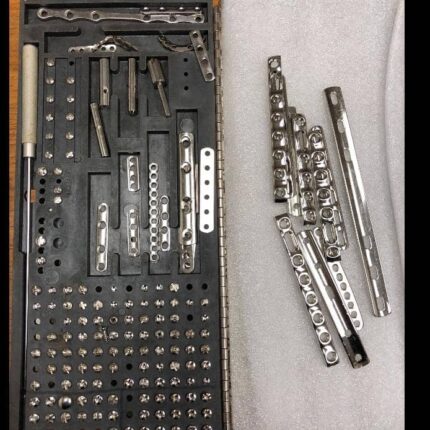
Screw Plate
The characteristics of the surgical plates and screws presented, typically used in orthopedics for bone fixation, include:
Materials: They are often made from biocompatible and corrosion-resistant materials, such as medical-grade stainless steel or titanium alloys.
Fixation Design: Plates are designed to stabilize bone fragments, facilitating healing, while screws ensure secure fixation of the plate to the bone.
Variety of Shapes and Sizes: They are available in various sizes and shapes to accommodate different anatomies and fracture types, whether thin plates, mini-plates, or screws of varying lengths and diameters.
Fixation Mechanisms: Some systems may include captive screws or specific designs to improve stability and ease of installation, such as barrier screws in other settings, but the principle remains secure fixation.
Adaptability: The design’s flexibility allows the implants to be adjusted to each patient’s specific needs and fracture complexity.
Stability and Durability: The combination of plates and screws provides strong fixation, essential for a stable and long-lasting healing process.

Scrub Set
The scrub set shown in the image is a B-well Colombo unisex scrub set. Its main features are:
Composition and comfort: It is made from a cotton and polyester blend (35% cotton, 65% polyester) and weighs 180 g/m² or 200 g/m². The fabric is breathable and durable, making it comfortable for everyday use.
Top: The tunic has a V-neck, short sleeves, and three front pockets, including one for a pen. Side slits are also featured for ease of movement.
Pants: The pants have an elastic waistband for added comfort and tapered legs.
Care: The set is machine washable at 40°C.

Scrub Suit
The scrub suit pictured is a royal blue unisex scrub suit. Its key features, based on similar products, include:
Fabric Composition: The fabric is often a blend of polyester and cotton (e.g., 65% polyester, 35% cotton). Some styles may also contain elastane for four-way stretch, providing increased comfort and freedom of movement.
Design: The suit is unisex and consists of a short-sleeved V-neck top and pants. The top is designed to be loose and comfortable.
Pockets: Tops of this type typically have pockets, often two lower pockets and a chest pocket. The pants may also have multiple pockets, including side and back pockets.
Care: These scrub suits are generally easy to care for and machine washable at high temperatures, which is essential in a medical environment.

Scrub Suit
- The scrubs shown in the image are medical uniforms, also called scrub suits or scrub tops.
- These scrubs are worn by healthcare professionals such as doctors, nurses, and nursing assistants.
- They typically consist of a tunic and pants, designed to be comfortable, allow for freedom of movement, and be easy to wash.
- Wearing this uniform is essential for hygiene and safety, as it protects healthcare staff and patients from contamination and the spread of pathogens.
- The colors of scrubs can vary and are sometimes used to identify different roles or departments within a healthcare facility.

Scyalitique with 04 reflector accumulator
Mobile LED Surgical Light
This advanced mobile LED operating lamp delivers superior illumination for surgical procedures with its cutting-edge features:
Key Specifications:
-
Advanced LED Technology: Provides bright, energy-efficient lighting with excellent color rendering
-
High-Intensity Illumination: Delivers up to 125,000 lux at 1 meter for optimal surgical field visibility
-
Natural Daylight Spectrum: 4000K-6500K color temperature ensures accurate tissue color representation
-
Adjustable Light Field: Variable diameter (14-22 cm) to suit different surgical requirements
-
Optimal Heat Management: Minimal heat emission enhances patient and staff comfort
-
Extended Service Life: Long-lasting LED technology reduces maintenance needs

Security Locking Plate
Features of proximal radius security locking plates for the radial head rim include:
Material: Typically made of medical-grade stainless steel or titanium, ensuring biocompatibility and strength.
Anatomical Design: Specifically designed to conform to the curvature and anatomy of the proximal radius, providing an optimal fit.
Fixed or Variable Angle Locking: Provides stable fixation and prevents radial head collapse. Screws can be placed at fixed or variable angles for improved stability of the bone fragments.
Multi-Angle Fixation: Provides improved angular fixation of the radial head proximally.
Low Profile: Designed to minimize soft tissue irritation with beveled edges, rounded and polished surfaces, and countersunk screws.
Screw Holes: Often include locking holes for fixed-angle screws and combination holes for compression and locking screws.
Indications: Primarily used for the treatment of proximal radius fractures, including those affecting the radial head.
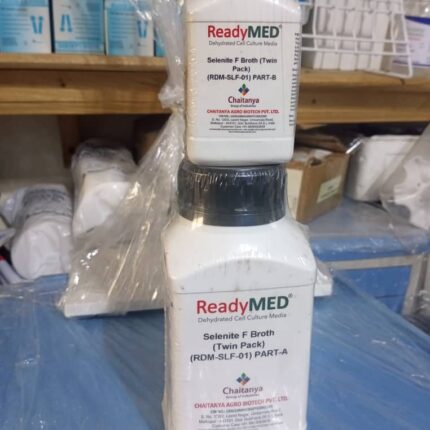
Selenite F Broth
ReadyMED’s Selenite F Broth (Twin Pack) is a dehydrated selective enrichment medium designed for the isolation of Salmonella and Shigella from clinical and non-clinical specimens.
Key Features:
-
Medium Type: Selective enrichment broth (Selenite F formulation).
-
Purpose: Enhances the growth of Salmonella and Shigella while inhibiting competing flora.
-
Packaging: Twin Pack (contains Part-A & Part-B) for convenient medium preparation.
-
Manufacturer: Chaitanya Agro Biotech Pvt. Ltd.
-
Product Code: RDM-SLF-01
Ideal for microbiological testing in clinical, food, and environmental laboratories.

Self retaining cervical retractor frame.
Hands-Free Operation: The primary feature is the ability to hold tissues in place mechanically, freeing the surgeon’s hands for other tasks.
Modular Design: Systems are often modular, allowing for customization with various blade lengths and types to suit different patient anatomies and surgical needs.
Flexible & Malleable Frame Components: Some systems use flexible, belt-like arms or malleable hinges that can be easily positioned and adjusted to fit the patient’s specific anatomy.
Self-Retaining Mechanism: The frame uses a mechanical action, such as a ratchet lock or an integrated pinion mechanism, to maintain tension and stability once the retractor is positioned.
Low-Profile Design: A streamlined and low-profile design improves visualization by allowing greater access to the surgical site and reduces obstruction for the surgical team.
Radiolucent Materials: Many systems are made from lightweight, radiolucent materials like titanium or other

Semi-rigid resin bandages
3M Soft Cast Semi-rigid Resin Bandages, shown in the image, have several distinctive features.
Material: They are made of a soft, inextensible fiberglass mesh coated with a polyurethane resin.
Flexibility and Inextensibility: After curing, the material remains flexible but inextensible, allowing for functional support.
Adaptability and Comfort: They adapt perfectly to the contours of the body, and their soft edges ensure great comfort for the patient.
Breathability: The material is breathable, which contributes to patient comfort.
Rapid Curing: The curing process is rapid, beginning in 3 to 5 minutes and being fully stressful after approximately 20 to 30 minutes.
Support Modulation: The rigidity of the device can be modulated by adjusting the number of layers applied, depending on the patient’s needs and indications.
Therapeutic Benefits: They help reduce muscle atrophy and joint stiffness, improve venous drainage, and accelerate healing.
Ease of Use: The bandage can be removed using standard cast scissors. Versatility: They can be used alone for flexible, non-stretchable support or combined with rigid resins (such as 3M Scotchcast) for functional immobilization devices.
Indications: Suitable for various indications such as sprains, ligament injuries, post-operative immobilization, devices for clubfoot, and offloading slippers for diabetic feet.

Semvine Knee Brace
Slow shock and decompression, disperse knee pressure, improve blood circulation, protect knee from injury.
A knee brace can alleviate pain associated with arthritis, osteoarthritis, and other associated issues. These conditions become more common as we age. A knee brace unloads stress from the affected area and refers the pressure to the thigh, creating better mobility in the knee joint while reducing stiffness.
When are knee braces helpful?Will wearing a knee brace help prevent injury? Knee braces have become a common treatment option for millions of Americans, young and old, who suffer from knee pain. They are inexpensive, easy to find and comfortable to wear. But when are these contraptions really helpful?
Michael Behr, M.D., an orthopedic surgeon at Piedmont, says there are two main reasons to wear a knee brace:
Structural support
Pain relief
Knee braces for structural supportKnee braces are commonly prescribed by physicians for patients who have an ACL tear or some type of knee injury. The knee brace can provide added support during the recovery process.
Three types of knee braces that provide structural support include:
Functional braces. Studies have shown these types of braces provide some protection and additional stability to the knee after it has been injured.
Rehabilitative braces. These limit side-to-side and up-and-down movement of the knee while it is healing after an injury or surgery.
Prophylactic braces. These are designed to prevent injury to the knees during contact sports.
The decision to wear a structural support for the knee should be based on several factors, including:
Which ligaments are injured
What rehabilitation you have done or plan to do
The sport in which you are participating
It is always wise to consult your physician on which knee brace is right for you.
“A knee brace can help athletes through an injury by providing additional support that will allow him or her to continue with physical activity,” Dr. Behr says. “Today, many football players wear knee braces to prevent injury. Football players put an extra amount of pressure on their knees because of the sharp turns and lateral movement in this sport. All this movement can move your bones and ligaments in unnatural ways. Knee braces have proven to be a wise preventative measure in this particular sport.”
Knee braces for pain reliefOthers may find comfort and peace of mind in wearing a knee brace, especially those who suffer from osteoarthritis or chronic pain from a previous injury.
“There is no medical research that says a knee brace is a cure for knee problems, but if it helps the symptoms and provides peace of mind, it is okay,” he says.
A common knee brace for arthritic pain relief is an unloader brace. These are designed to “unload” stress that is caused by arthritis in the inner knee.
This type of brace is custom-designed and made of molded plastic, foam and steel struts to limit side movement. It is designed to put three points of pressure on the thigh bone, which forces the knee to bend away from the painful area
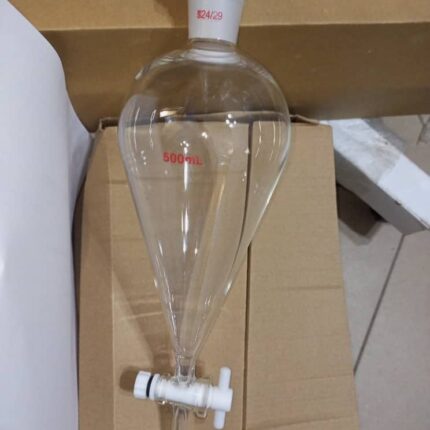
Separating Funnel
The separating funnel has the following characteristics:
Shape:
It is pear-shaped (or conical), optimized for phase separation.
Materials:
Made of borosilicate glass, which gives it chemical resistance and inertness.
Capacity:
The marking on the funnel indicates a capacity of 500 mL.
Stopcock:
It is equipped with a PTFE (polytetrafluoroethylene) stopcock, known for its chemical resistance and leak-tightness. The stopcock allows precise control of liquid flow.
Ground Joint:
The upper neck has a 24/29 type ground joint, indicating compatibility with stoppers or other laboratory equipment of the corresponding size.
Conformity:
This type of funnel complies with international standards such as ISO 4800.
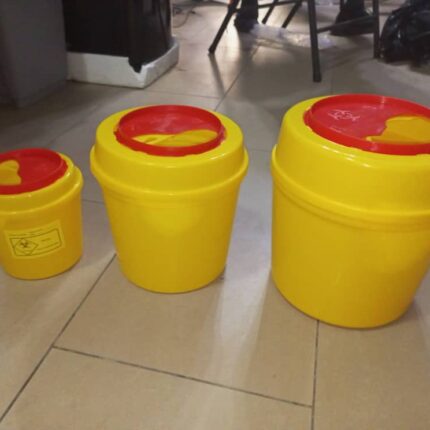
Sharps Container
The characteristics of a sharps container are as follows:
Material and Durability: Generally made of polypropylene (PP), it is designed to be leak-proof and puncture-resistant to safely contain sharps. It is also resistant to moderate temperature fluctuations.
Safety Design: It features a lid with an intermediate and final closure system to prevent needlestick injuries and prevent waste from dispersing.
Purpose: Specifically designed for the collection, storage, and safe disposal of sharps medical waste, such as needles, syringes, lancets, pipettes, and glass slides.
Environmental: The PVC-free PP construction aims to reduce environmental contamination during waste disposal by high-temperature incineration.
Capacity: Available in various capacities, such as 3 liters, 5 liters, and 10 liters, to suit various needs.