


Half Ring
Material: Surgical-grade stainless steel (SS), durable, lightweight, and corrosion-resistant.
Size: Available in a range of sizes, e.g., 100 mm to 200 mm.
Finish: Often a satin finish for a discreet, professional appearance.
Use: Used in orthopedic procedures to aid in bone fixation and consolidation, particularly as part of an implant set.
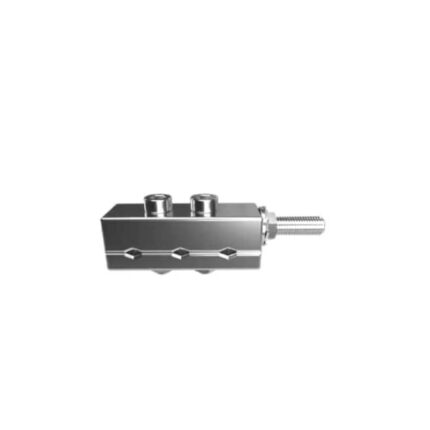
Multiple pin fixation clamp
Multiple fixation points: The clamp is designed to accommodate multiple pins (e.g., 5 or 8 holes), allowing for the creation of solid structures for bone fragment fixation.
Configuration flexibility: Some clamps offer 70 to 80 degrees of movement, allowing independent positioning of pins in three dimensions and thus facilitating the construction of a flexible frame.
Component reduction: They incorporate features that reduce the number of parts required to build the fixation structure, thus optimizing inventory management.
Compatibility with various systems: The clamps are designed to accommodate external fixation systems with various pin and bar sizes, such as 11 mm carbon fiber bars.
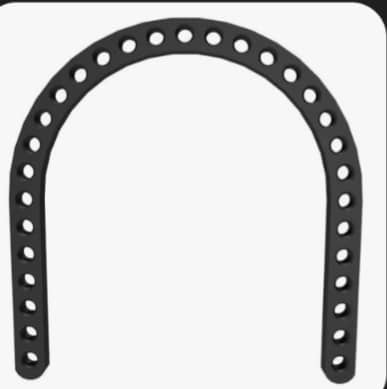
Aluminium foot ring
High Compression Resistance: Aluminium exhibits excellent resistance to compression forces, with studies showing it can withstand up to 24,000 kg/cm².
Good Dimensional Stability: It does not deform under shock, heat, or pressure, ensuring the integrity of its surfaces during sterilization and use.
Poor Flexion and Traction Resistance: Aluminium’s resistance to bending (flexion) and pulling (traction) is significantly lower than most other metals, including stainless steel.
Breakable by Shock: Similar to hardened steel, it is breakable under strong, direct impacts.
Hard but Difficult to Work: Its hardness (grade 9 on the Mohs scale) requires special diamond tools for trimming and cutting, as no other metal can cut it.

Graduated telescopic rods
Telescopic Design: The rod can extend or retract to achieve the desired length, making it versatile for different applications.
Graduated Markings: Etched measurements along the rod provide a precise visual reference for the amount of extension or retraction, allowing for accurate length adjustments.
Adjustable Length: The primary function is to allow for precise length control, crucial in applications like orthopedic surgery for aligning fixation devices.
Material: Often constructed from durable, high-quality materials like stainless steel or aluminum, chosen for their strength, corrosion resistance, and suitability for sterilization.
Portability: When collapsed, they are compact and easy to transport or pack, a significant advantage in field settings like surveying or travel.
Precision and Accuracy: The rod’s graduations and high-quality construction ensure reliable and precise measurements and alignment.

Connection plates with threated ends.
The defining feature is an internally or externally threaded opening, which accepts screws or other components with corresponding threads.
Hexagonal Head: The threaded component typically has a hexagonal head, requiring a 2.5mm hex screwdriver for tightening.
K-Wire Holes: Pre-drilled holes are included for inserting k-wires, allowing for preliminary fixation to the bone and preliminary realignment of fractured femurs.
Compression Slots: Some plates incorporate compression slots, which allow for a controlled amount of compression to achieve a stable fixation.
Material: These plates are made from materials like titanium and its alloys, known for their biocompatibility, high corrosion resistance, and mechanical properties similar to bone.

Blocks for half pins.
Connection to Frame: These blocks connect the half pins, which are inserted into the bone, to a central ring or frame component of the external fixator.
Centers: They typically attach to a ring using a post and a one-hole cube, with a hexagonal set screw used to lock the centering sleeve in place.
Half Pin Attachment: They facilitate the attachment of half pins, allowing for the creation of a more rigid construct.
Size and Hole Configuration: Blocks are available with different numbers of holes (e.g., 2, 3, 4 holes) to accommodate various fixation needs.
Centering Sleeves: Centering sleeves are used to ensure that half pins are properly aligned within the block, providing a more stable connection to the half pin itself.
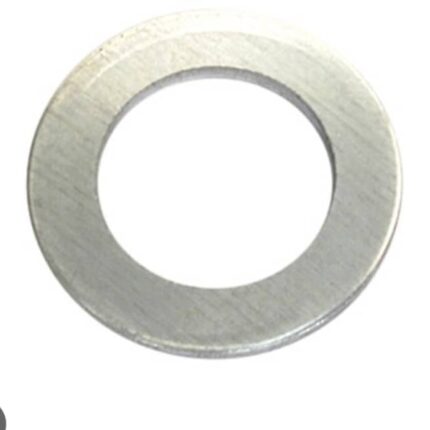
Spacing washers
Load Distribution: Washers and spacers help distribute the load from a fastener across a larger surface area.
Spacing: They create a precise gap or standoff between two components, which is essential for proper alignment and function.
Vibration Absorption: They can help absorb and reduce vibrations within an assembly.
Surface Protection: By providing a barrier, they prevent damage to the surfaces of the connected parts.
Specialized Use (SKF ZW Washers): Specific spacing washers, like those from SKF, are designed for bearing relubrication, creating a channel for fresh grease to pass through.

Conical washers couple
Axial Force: The conical shape allows the washer to act as a spring, providing a constant axial force that maintains tension in a bolted joint, even under vibration or thermal expansion.
Vibration Damping: The spring action absorbs and dissipates vibrations, which reduces mechanical noise, prevents loosening, and minimizes wear on components.
Load-Bearing Ability: Conical washers are designed to provide a high level of load-bearing ability in a small area, making them suitable for various industrial and automotive applications.
Enhanced Locking Properties: The surfaces of these washers can be serrated or toothed, which enhances their locking properties, offering an increased grip and preventing screws from loosening.
Dental Application (Conical Connection)
Bio-mechanical Interface: The conical connection between the dental implant and the abutment (the part that supports the crown) is designed to create a stable and secure junction.

Dina ring clamp
Allows Dynamization: The Dyna Ring Clamp enables controlled dynamization, which means allowing some movement and stress on the bone during the healing process, promoting new bone formation.
Attaches to the LRS Rail: It connects to the double-grooved rail of the Limb Reconstruction System (LRS) to hold the bone screws and provide support.
Facilitates Gradual Correction: It is used to control the gradual correction of bone deformities, both angular and translational, in diaphyseal and metaphyseal regions.
Provides Stability and Controlled
Movement: The clamp can be adjusted to lock the bone segments for rigid fixation or unlocked to permit controlled movement and stress (dynamization).

Ball and Socked clamp Standard.
Corrosion-Resistant Materials: Clamps are typically made from stainless steel (e.g., 304 or 316L) or titanium, ensuring durability and resistance to corrosion in various environments.
Secure Design: The primary function is to securely hold a ball joint within its socket, preventing unwanted movement or separation.
Screw-Locking Devices: Most standard clamps feature a screw-locking mechanism to adjust the clamping force and maintain a tight seal. Some variants are spring-loaded, while others have fixed or simpler tightening systems.
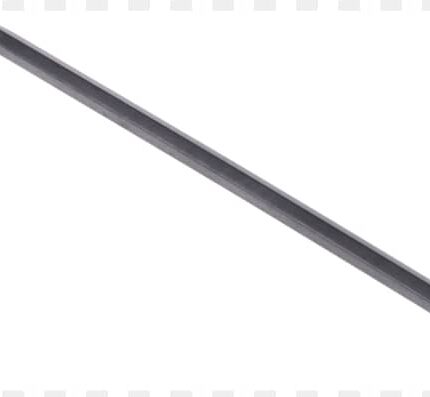
Allen Key
Chamfered Ends: The ends are beveled to allow for smooth, easy insertion into the fastener’s socket, reducing wear and preventing damage.
Standard: Often made to DIN 911 standards, which is a recognized European standard for hexagonal wrenches.
Surface Finish: Can have a black oxide or plain, uncoated finish. A black oxide finish offers some corrosion resistance, while a plain finish will rust over time.

Single adjustable clamp
Adjustable Lever: A disengageable and adjustable lever allows for quick, tool-free fine-tuning of the clamp’s position.
Single-Split Design: The single, split collar design provides more secure and even clamping force than set collars, preventing damage to the shaft.
Sturdy Construction: Clamps are made from durable materials such as stainless steel or aluminum, ensuring long-lasting performance.
Corrosion Resistance: Materials like aluminum are resistant to corrosion, while stainless steel offers robust durability.
Precise Bores & Positioning: The design allows for precise bores and positioning, offering flexibility to secure different materials at specific angles or locations.
Workpiece Versatility: The adjustable jaw and rotating claw enable precise alignment for a range of thicknesses and shapes, from wood and metal to glass and bone.