


Spinal pre cut rod
Titanium Alloys: Offer moderate stiffness and strength.
Cobalt Chrome (CoCr): Provides high stiffness and yield strength.
Stainless Steel: A relatively easy-to-bend material with good strength.
Design and Shaping
Pre-cut Length: Unlike longer rods that must be cut in the operating room, pre-cut rods are a specific length, reducing surgical time and the risk of errors during the procedure.
Pre-bent Options: Some systems offer pre-bent rods to achieve the desired spinal curvature (lordosis), which can improve biomechanics and lower the overall height of the spinal construct.
Patient-Specific Rods (PSRs): These are custom-designed and manufactured to the exact patient’s spinal anatomy, offering a more precise fit and potentially better correction of deformities.

Spoon Stretcher
A spoon stretcher (or lifting stretcher).
Its main features are:
Separable design: It consists of two parts that can be separated by pressing latches, usually located at the top and bottom of the stretcher.
Facilitates patient transfer: This design allows the two parts to slide under the patient without excessive lifting or handling, minimizing the risk of further injury, especially in cases of suspected spinal cord injury.
Materials: It is made of aluminum or ABS plastic, making it both sturdy and lightweight.
Adjustable length: The length of the stretcher is usually adjustable to fit the patient’s height.
Safety straps: It is equipped with straps to secure the patient during transport.
Load capacity: Its sturdy design allows it to support a significant weight, often up to 159 kg.
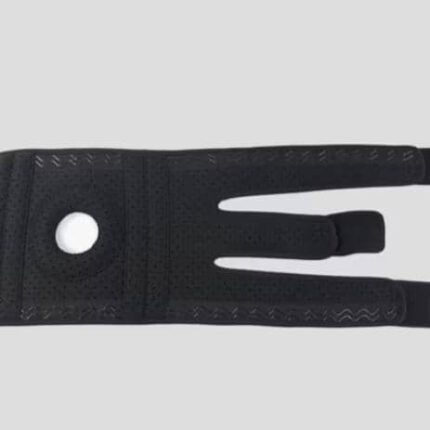
Stabilizing knee brace
The image shows a neoprene stabilizing knee brace with a patellar opening. Its main features are:
Material and Comfort:
- Made of neoprene, it provides a thermo-compression effect that helps maintain body heat and promote blood circulation, which can reduce the risk of strains and aid in the resolution of edema.
- The 3 mm neoprene ensures comfort and flexibility, ideal for sports or everyday use.
- Some models incorporate a breathable and sweat-wicking SBR fabric lining for optimal comfort.
Support and Stability:
- The patellar opening helps keep the kneecap aligned and reduce pressure on it, thus relieving pain and stabilizing the joint.
- Lateral stabilizers or spiral supports can be integrated to improve knee stability and reduce the risk of injury. The adjustable strap systems (double, quadruple, or tabs) allow for compression and support to be adjusted to the user’s needs, ensuring the knee brace stays in place without slipping.
Indications and Benefits:
- Ideal for injury prevention, post-operative and post-traumatic treatment, and pain relief from conditions such as patellar syndrome, ligament sprains, or chondromalacia.
- Provides moderate support to maintain physical activity while protecting the knee.
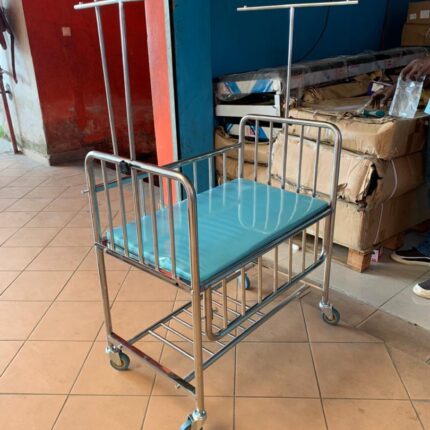
Stainless Steel Baby Crib
Stainless Steel Medical Baby Crib – Model L8063
Construction & Safety:
-
Durable Steel Frame with adjustable stainless steel/aluminum side rails
-
Medical-Grade Materials: Easy-to-sanitize surfaces for clinical environments
Dimensions & Comfort:
-
Mattress Compatibility: 80 x 160 cm (included high-density foam mattress)
-
Adjustable Height: 630–1285 mm for ergonomic caregiver access
-
Reclining Backrest: 0°–45° manual adjustment via crank
Mobility & Stability:
-
4 Locking Wheels: Smooth mobility + secure braking system
Pediatric-Specific Design:
✔ ISO/Medical Compliance (exact certifications to be confirmed)
✔ Newborn-to-Toddler Use

Stainless Steel Bedpan
Stainless Steel Bedpan with Lid – Clinical Hygiene Solution
Key Features:
✔ Medical-Grade Material
-
304 stainless steel – Corrosion-resistant & autoclave-safe (121°C/250°F)
-
Seamless construction prevents bacterial buildup
✔ Ergonomic Patient Comfort
-
Slipper design fits securely under bedridden patients
-
Integrated handle for caregiver ease-of-use
✔ Hygiene Optimization
-
Detachable lid contains odors and spills
-
High-capacity design reduces emptying frequency

Stainless Steel Medical Forceps Holder
The stainless steel serving forceps holder has the following characteristics:
Material: It is made of AISI 304 or 18/10 stainless steel, ensuring durability, corrosion resistance, and hygiene, making it ideal for medical or surgical use.
Dimensions: Common dimensions include a diameter of approximately 50 to 55 mm and a height of approximately 180 to 200 mm.
Design: It generally consists of a tube attached to a stable round base, designed to hold and store medical instruments, particularly forceps.
Sterilization and Cleaning: Stainless steel allows for easy decontamination by immersion in detergent and disinfectant solutions, and it is autoclavable at 121°C.
Use: It is primarily used in medical or hospital environments for the storage and sterilization of surgical forceps or other instruments.

Stainless Steel Pedal Bin
NAME: Stainless steel pedal bin
The items pictured are stainless steel pedal bins.
Here are their main features:
Materials:
Made of stainless steel, they are corrosion- and impact-resistant, and often feature an anti-fingerprint finish.
Opening mechanism:
They are equipped with a pedal for contactless opening, ensuring improved hygiene.
Lid:
The lid generally features a soft-close system to reduce noise.
Hygiene and maintenance:
The inner bucket is removable, making cleaning and inserting the trash bag easier.
Stability:
They include a non-slip system to ensure stability when opening.
Capacity:
Available in various capacities, suitable for home or professional needs.
Design:
Their stainless steel design gives them a modern and elegant look, making them suitable for various environments such as kitchens, bathrooms, offices, and hospitals.

Stainless Steel Vaginal Speculum
Available in several sizes: Small, Medium, and Large.
The characteristics of the stainless steel vaginal speculum are as follows:
Design and Shape: This is a double-bladed gynecological instrument, described as having a “duckbill” shape. Its blades are wider and slightly curved compared to other types of speculums such as the Pederson.
Material: It is generally made of surgical-grade stainless steel, making it reusable and autoclavable for sterilization.
Locking and Adjustment Mechanism: It is equipped with an external lever and a screw mechanism that allows the blades to be opened once inserted and held in position for stable visualization of the vaginal canal and cervix.
Use: The Graves speculum is commonly used during pelvic exams, Pap smears, and to visualize the vagina and cervix. Its wider blade design makes it particularly suitable for multiparous women or those with a wider vaginal canal.
Comfort and safety: It is designed with rounded edges and a smooth surface to ensure optimal comfort during insertion and minimize the risk of injury.
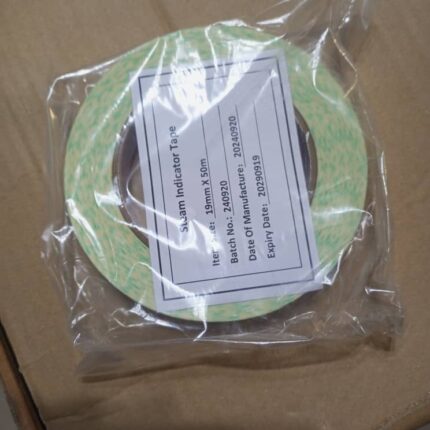
Steam indicator tape
Features of Steam Sterilization Indicator Tape
Steam sterilization indicator tape has the following features:
Indicator function: It is designed to indicate whether an item has been exposed to a steam sterilization process. Stripes printed with heat-sensitive ink change color (usually from white to dark brown or black) after exposure to sufficient heat and steam.
Dimensions: 19mm x 50m, which corresponds to the width and length of the tape.
Batch Number and Dates: The tape is identified by a batch number (“Batch No.: 240920”) and a manufacturing date (“Date of Manufacture: 20240920″).
Material and Adhesive: It is made from saturated crepe paper and uses a natural rubber-based adhesive, providing good adhesion and resistance to heat and humidity.
Standard Compliance: These tapes are designed to comply with international sterilization standards, such as ISO 11140-1:2014, which specifies the requirements for sterilization indicators.
Use: It is used to seal sterilization packages and visually differentiates sterilized items from those that have not yet been sterilized.

Stem Centralizer
A stem centralizer is a component used in hip surgery, particularly during the implantation of cemented hip prostheses. It serves to ensure proper positioning of the femoral stem in the medullary canal and to ensure a uniform thickness of the cement mantle.
Key Features:
Material: Often made of UHMWPE (ultra-high molecular weight polyethylene) or PMMA (polymethyl methacrylate), the same material as bone cement.
Shape and Design: Typically round or pyramidal, designed to fit the distal tip of the femoral stem. Some models are hollow to allow the stem to subside without direct contact with the centralizer, thus avoiding pressure on the stem tip.
Function:
Centering: Helps center the femoral stem in the medullary canal, ensuring a uniform cement mantle around the stem.
Bone-prosthesis contact prevention: Avoids direct contact between the bone and the distal end of the prosthesis.
Cement mantle optimization: Helps maintain a consistent cement thickness, essential for the stability and longevity of the prosthesis.
Positioning: Distal centralizers are available, attached to the end of the stem, and proximal centralizers can improve cement penetration and cementing pressure in the proximal region of the femur.
Sizes: Available in various sizes to match the femoral canal diameter or the size of the cement restrictor.
Placement: Slipped onto the distal tip of the stem prior to implantation, sometimes with a thin layer of cement to ensure good adhesion.

Stepladder
The stepladder is designed to provide safe assistance to patients and staff in medical environments. Its main features include:
Robust and hygienic materials: They are made of stainless steel, ensuring durability, corrosion resistance, and ease of cleaning to maintain hygiene.
Non-slip steps: The steps are covered with a non-slip plastic material to prevent slipping and ensure user safety, especially those with limited mobility.
Stability and safety: The feet are equipped with non-slip rubber tips for optimal grip and increased stability, even on smooth surfaces.
High load capacity: These stepladders are designed to support a significant weight, often up to 150 kg, ensuring reliable and safe use for a wide range of patients.
Adapted dimensions: Available in various heights and with a variable number of steps (often two), their dimensions are designed to facilitate access to examination tables or other medical equipment.
Compact design: Their format is designed to be space-saving and easy to store, which is an advantage in medical spaces where space optimization is important.
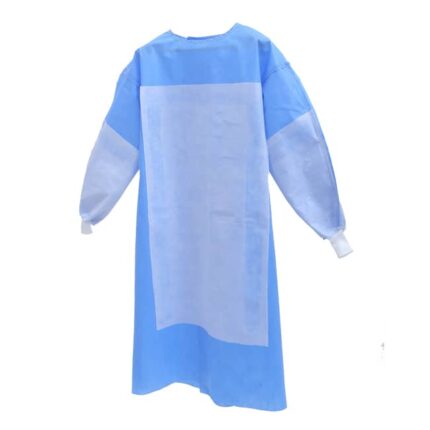
Sterile Single-Use Gown
Disposable surgical gown, typically used in medical environments such as operating rooms or clinics.
Detailed Description:
Material and Design:
This is a blue, non-woven protective gown designed to be worn by medical personnel during procedures requiring strict hygiene.
Features of
Protection:
The gown features long sleeves with elastic cuffs and a lighter-colored, reinforced center section, indicating an area of increased protection against fluids and contaminants.
Use:
It is part of the essential personal protective equipment (PPE) to prevent the spread of infection and ensure the safety of both patients and healthcare professionals during surgical procedures or other medical procedures.