

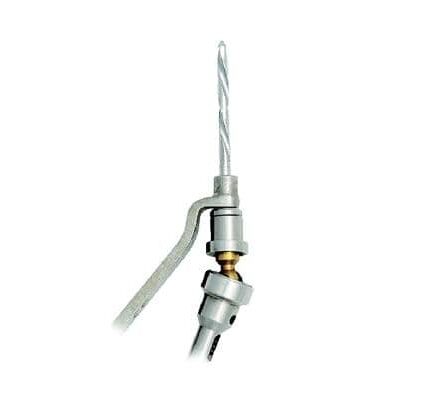
Swivel Drill Stem
Swivel Drill Stem: Designed for soft tissue clearance and variable drill bit angulation while eliminating the open-coil design found in other common drill stems.

T Clamp
Temporary Stabilization: The primary use of T-clamps is for the temporary fixation of complex fractures, especially in unstable pelvic and spinal injuries, to stabilize the area before definitive surgery.
Access for Other Procedures: The design of the T-clamp allows for access to the abdomen, groin, and pelvis for emergent procedures like angiography or endovascular repair without hindering surgical access.
Spinal Fixation: In the spine, a T-clamp is part of a system that uses a band, clamp, and set screw to simplify the correction of spinal pathologies by providing immediate stabilization.
Design and Materials
T-Shape: The characteristic T-shape of the clamp is designed to increase the contact area with the bone, helping to securely guide and attach cables while avoiding loosening.

Tablet cutter
A tablet cutter, also called a pill splitter.
It is designed to cut tablets in half or into smaller portions, making them easier to swallow, especially for the elderly, children, or those with swallowing difficulties.
It usually features a stainless steel blade for a clean and precise cut.
These devices are made of food-safe materials, such as BPA-free plastic.

Talquist Paper
The Tallquist hemoglobin scale, like the R. Terry®, is a quick and easy tool for estimating hemoglobin levels in the blood.
Key Features:
Visual Comparison Method: It compares the color of a drop of blood absorbed onto a filter paper to a predefined color scale to estimate hemoglobin concentration.
Simple and Quick to Use: It does not require sophisticated equipment or electricity, making it useful in resource-limited settings, such as rural areas or primary healthcare centers.
Anemia Screening: It is primarily used for rapid anemia screening by assessing hemoglobin concentration in the blood.
Components: The kit includes a booklet or card with a color scale and absorbent filter papers for collecting blood samples.
Developed in the early 20th century: The Tallquist method was developed around 1900.

Tape Measure
Features of Tape Measures
Tape measures have several typical features of this measuring tool:
Flexible material: Generally made of fabric, plastic, fiberglass, or metal (for the more robust versions), which allows them to adapt to uneven surfaces for measurement.
Clear graduations: They feature precise measurement markings, in centimeters and inches, to make lengths easier to read.
Ease of reading: The scales are designed to be easily read, with a high contrast between the markings and the tape background.
Durability: The ends are reinforced with metal sheets for greater wear resistance.
Variety of colors and lengths: As shown in the image, they are available in different colors and lengths to suit various needs.
Portability: Their flexibility and ability to be rolled up make them easy to transport and store.
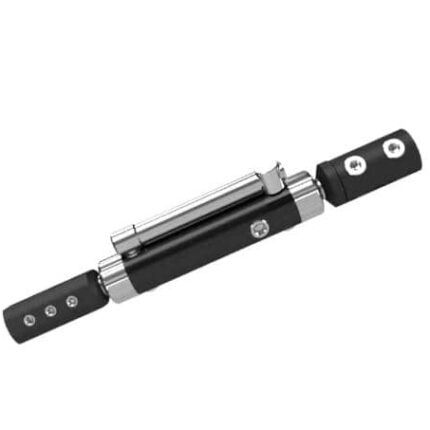
Temporary Fracture Fixator
Temporary fixation of fractures, non-unions, calluses, osteotomies, and non-unions of the femur. Particularly used for the fixation of proximal femur fractures (intertrochanteric, pertrochanteric) in elderly patients for early mobilization, distraction, and compression at the fracture site.

Test Tube Rack
The test tube rack features the following:
Material: It is made of polypropylene (PP), providing good visibility and easy cleaning.
Capacity: The model shown is a 40-position rack, designed to hold 40 test tubes simultaneously.
Design: It features a three-layer structure for greater stability. The top two layers have holes of the same diameter, while the bottom layer has openings of different sizes to ensure stable support for the tubes.
Assembly: This type of rack is detachable or easy to assemble and disassemble, making it convenient for storage, transport, or cleaning.
Use: Ideal for organizing and holding test tubes in the laboratory, for school experiments, or for applications requiring upright tubes.
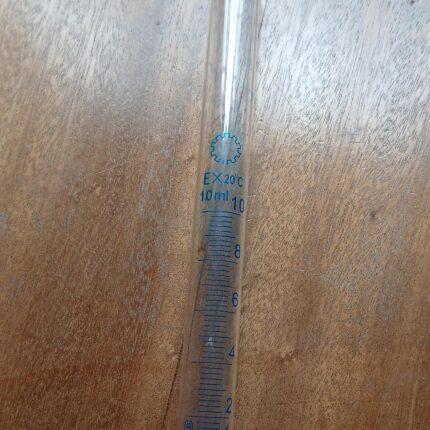
Test Tubes 10ml
The characteristics of a test tube like the one pictured include the following:
Materials:
Clear glass (such as soda-lime glass or borosilicate).
Shape:
A narrow cylindrical body with a base that can be round (U-shaped), conical (V-shaped), or flat, and a top opening. The image shows a flat bottom.
Dimensions and Capacity:
Test tubes come in various sizes and volumes. The one pictured is graduated up to 10 ml, with an accuracy indication of “±0.2”. The visible graduations are 1, 2, 4, 6, 8and 10ml.
Use:
Used in laboratories to hold, mix, and heat chemicals, or for specific analyses such as food quality control or blood tests. The object in the image, being graduated, is more specifically a flask, used to precisely measure liquid volumes.
Resistance:
Resistance to temperature changes and chemicals varies depending on the type of glass
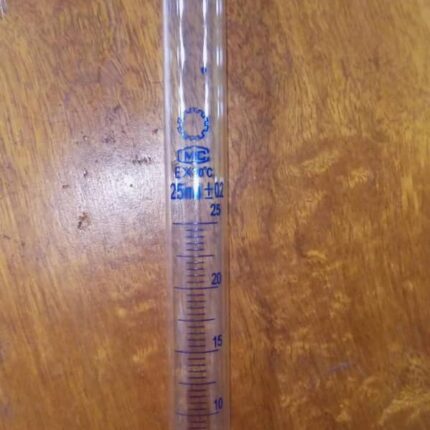
Test Tubes 25 ml
The characteristics of a test tube like the one pictured include the following:
Materials:
Clear glass (such as soda-lime glass or borosilicate).
Shape:
A narrow cylindrical body with a base that can be round (U-shaped), conical (V-shaped), or flat, and a top opening. The image shows a flat bottom.
Dimensions and Capacity:
Test tubes come in various sizes and volumes. The one pictured is graduated up to 25 ml, with an accuracy indication of “±0.2”. The visible graduations are 5, 10, 15, 20, and 25 ml.
Use:
Used in laboratories to hold, mix, and heat chemicals, or for specific analyses such as food quality control or blood tests. The object in the image, being graduated, is more specifically a flask, used to precisely measure liquid volumes.
Resistance:
Resistance to temperature changes and chemicals varies depending on the type of glass.
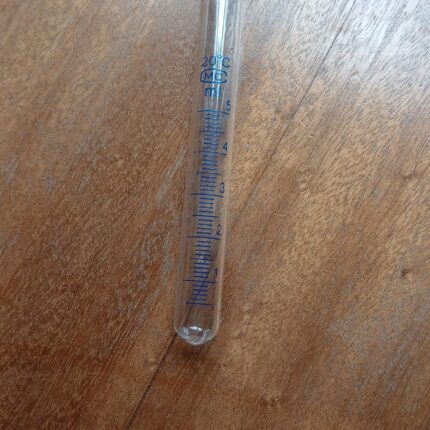
Test Tubes 5ml
The characteristics of a test tube like the one pictured include the following:
Materials:
Clear glass (such as soda-lime glass or borosilicate).
Shape:
A narrow cylindrical body with a base that can be round (U-shaped), conical (V-shaped), or flat, and a top opening. The image shows a flat bottom.
Dimensions and Capacity:
Test tubes come in various sizes and volumes. The one pictured is graduated up to 5ml, with an accuracy indication of “±0.2”. The visible graduations are 1, 2, 3, 4, and 5ml.
Use:
Used in laboratories to hold, mix, and heat chemicals, or for specific analyses such as food quality control or blood tests. The object in the image, being graduated, is more specifically a flask, used to precisely measure liquid volumes.
Resistance:
Resistance to temperature changes and chemicals varies depending on the type of glass.

Thiele Tube
The Thiele tube is a piece of laboratory equipment made of borosilicate 3.3 glass, used to determine the melting point of organic compounds.
Its main characteristics are:
Material: High-quality borosilicate 3.3 glass, known for its thermal and chemical resistance.
Typical Dimensions: Total length of approximately 150 mm (6 inches) and main tube diameter of approximately 25 mm (1 inch).
Design: It features a specific shape with a hollow glass side handle that allows convective circulation of the heated oil, ensuring a nearly uniform temperature throughout the oil bath.
Use: It is designed to contain and heat an oil bath in which a capillary tube containing the sample and a thermometer are immersed to observe the melting point.
Thermal Tolerances: Borosilicate 3.3 glass has specific heat tolerances, including a deformation point of -515°C, an annealing point of 565°C, and a softening point of 820°C.

Thoracic Belt
A thoracic belt or back support belt, and its main features are as follows:
Color and Material: It is black in color and appears to be made of a comfortable and breathable material, possibly cotton or neoprene, ensuring a soft and airy experience.
Design and Comfort: Its soft texture conforms to the body, providing comfort for extended use without irritation. It is designed to be discreet and can be worn under or over clothing.
Support and Fit: It provides effective support for the back or ribs, helping to relieve pain due to intense activity or injury. It features adjustable elastic straps (with hook-and-loop fasteners, as seen in the image) for a customizable fit and targeted support.
Versatility: The belt is suitable for everyday use, whether at home, at work, or during physical activities, and allows freedom of movement.