


Portable Autorefractometer
The features of a portable autorefractometer, such as the one shown, generally include the following:
Accurate refraction measurement: It is capable of objectively measuring refractive errors (myopia, hyperopia, astigmatism) using technologies such as the Shack-Hartmann wavefront.
Portability and ease of use: Designed to be lightweight, compact, and often one-handed with simple one-button operation, it is ideal for clinical or field examinations.
Wide application: It can be used to assess refraction in patients of all ages, from babies to adults, and even in those who wear glasses or contact lenses.
Fast and simultaneous measurement: Some models can take measurements of both eyes simultaneously in seconds, which is particularly useful for children or patients who are difficult to examine.
Comprehensive Data Collection: In addition to refraction, it can provide other important data such as pupil size, interpupillary distance, and gaze symmetry.
Advanced Technology for Clear Images: The integration of super luminescent diodes (SLDs) and high-sensitivity CCD sensors enables clear retinal images, even in cases of low glare or opacities.

Manual Phoropter
Model: AIST VT-8
DESCRIPTION
The AIST VT-8 manual phoropter is an ophthalmic instrument used for the precise measurement of visual functions.
Its main features include:
Design: Elegant butterfly-shaped appearance.
Visual Functions: Capable of checking all visual functions, including myopia, hyperopia, astigmatism, visual balance, heterophoria, stereoscopic vision, and visual amalgamation.
Accuracy and Comfort: Provides accurate and comfortable measurements.
Measuring Ranges:
Spherical Power: From +16.75D to -19.00D (in 0.25D steps).
Cylindrical Power: From 0.00D to -6.00D (in 0.25D steps).
Cylindrical axis: 0 to 180° (in 5° increments).
Cross cylinder: +/-0.25D.
Rotating prism: 0.00D to 20.00D.
Interpupillary adjustment: 48 mm to 75 mm (in 1 mm increments).
Manufacturing technique: Exquisite workmanship for a comfortable feel.
Applicability: Suitable for hospital ophthalmology departments and optical stores.
Color options: Available in white, black, or gray.
Special features: Rotating the lens allows for 3.00D spherical power adjustment for a wide range. It is conveniently and intelligently designed for a specific cross cylinder. An additional lens can increase the measuring range.

Topcon
Model: CV-5000
DESCRIPTION
The Topcon CV-5000 is a digital autophoropter designed for efficient and comfortable ocular refraction examinations. Its key features include:
Compact and Contemporary Design: Its modern aesthetics and compact size allow for easy patient interaction and seamless integration into the practice.
Fast Lens Rotation: The lens discs rotate quickly, reducing examination time and ocular stress for the patient, thus improving patient comfort.
Flexible User Interfaces: It can be controlled via a dedicated console (KB-50S), a tablet, or PC software, providing great flexibility of use.
10.4-inch Color Touchscreen: A large touchscreen clearly displays examination data and allows for user-friendly navigation.
Sales Support and Patient Education Features: Built-in features help advise patients on lens selection and explain visual needs through interactive multimedia content.
Comprehensive Connectivity: It easily integrates with other refractive instruments and patient record management systems (such as IMAGEnet R4), optimizing workflow and minimizing transcription errors.
Advanced Vision Testing: Includes 3D and high-resolution vision tests, as well as binocular tests, for a comprehensive vision assessment.

Potec Automatic Test Projector
Model: Pacp-8000
The Potec PACP-8000 automatic test projector has the following key features:
LED light source: Ensures a bright and clear image, while being energy efficient and long-lasting.
Number of tests: Includes 42 different optometric tests for measuring visual acuity, astigmatism, binocular vision, heterophoria, stereoscopy, and different masks (single, vertical, horizontal).
Fast test changeover: An average test rotation speed of 0.3 seconds.
Compact size: Allows for easy integration into the optometry room.
Focus adjustment: Facilitated by a rotating aperture.
Tilt angle: Can be adjusted up to 20 degrees.
Projection Distance: Variable from 2.5 m to 8 m, with an optional 8 m projection screen.
Test Magnification: 30x when projected from 5 m away.
Resolution: 50 lines/mm.
Remote Control: Included for convenient use.
Refined Design: The projector’s design is designed to blend seamlessly into an optometry environment.
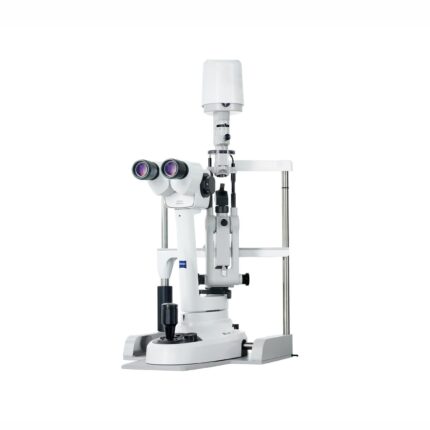
Slit Lamp
Model: ZEISS SL 800
The ZEISS SL 800 slit lamp is a high-performance ophthalmic device designed for biomicroscopic examination of the eye, offering advanced optical and functional features.
Its key features include:
Premium Optics: It is equipped with perfectly balanced ZEISS optics, including apochromatic lenses and a multi-layer anti-reflective coating, ensuring high-resolution images and high contrast for detecting even the smallest details.
Versatile Illumination Options: The VarioLight function offers cool and warm illumination options, complemented by various integrated filters for optimal observation of the anterior and posterior segments of the eye.
Multiple Magnifications: It offers several magnification levels, such as 6x, 10x, 16x, 25x, and 40x, allowing adaptation to the specific needs of the examination.
Ergonomics and Modularity: Its simple and ergonomic operating concept, as well as its modularity, allow the device to be adapted to individual needs and optimize workflow.
Imaging Integration: The ZEISS SL Imaging solution enables high-definition image and video capture, with true-to-life colorimetry and real-time streaming (LiveView up to 40 fps), facilitating documentation, patient communication, and teaching.
Additional Features: It includes features such as AutoView for easy magnification adjustment and an Eco Mode for efficient power management.
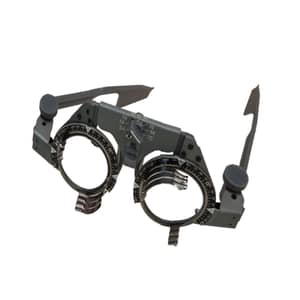
Ophthalmic Trial Frame
The characteristics of an ophthalmic trial frame like the one shown generally include the following:
Material and Design:
Often made of titanium alloy and plastic for lightweight performance.
Simple design for easy fitting.
Lens Capacity:
Holds up to 4 pairs of trial lenses (3 front and 1 back).
Adjustments for a Precise and Comfortable Fit:
Pupillary Distance (PD): Adjust the PD (e.g., 54-70mm) with a single knob.
Lens Axis: Adjust the astigmatic axis by turning a dedicated knob after inserting the lenses.
Temple Angle: Temple angle adjustment knob for optimal positioning (e.g., a tilt angle of approximately 15°).
Temple Length: Adjustable by gently pulling the adjustment part.
Nose Pads: Adjustable in length and angle to fit the patient’s nasal bridge.
Ear Pads: Often equipped with soft ear pads for patient comfort.
Scales and Graduations:
Axis Scale: The axial scale increases counterclockwise along the frame axis, with a marking interval of 5°.
Lenses rotate 360° around the optical axis within the lens frame.
Use:
Suitable for eye examinations in optical stores, hospital ophthalmology departments, schools, and businesses.
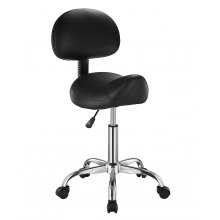
VEVOR Saddle Stool
The VEVOR saddle stool offers several notable features:
Ergonomic Design: It is designed to relieve back and hip tension, promoting good posture.
Thick and Comfortable Cushion: It is made of high-density compressed foam with a thick, water-resistant, and breathable PU leather cover.
High Load Capacity: It can support up to 204 kg (450 lbs) thanks to a sturdy metal frame and SGS-certified hydraulic cylinder.
Adjustable Height: The seat height is adjustable to accommodate different working requirements and heights.
360° Swivel Casters: Equipped with PU casters, it allows for smooth and quiet movement without leaving marks on the floor.
Versatile Use: Ideal for various professional applications such as dental clinics, hair salons, spas, laboratories, and tattoo studios.

Pneumatic Rolling Stool
The EarthLite Pneumatic Rolling Stool, as shown, has the following key features:
Design and Materials:
Upholstered seat (approximately 7.5 cm thick foam) made of 100% CFC-free PU vinyl, easy to clean.
Sturdy metal base, often aluminum or chrome-plated.
Operates with a pneumatic (air) system for height adjustment, rather than a hydraulic system.
Features:
Seat height adjustment via a gas lift, with a typical height range of 48.3 cm to 63.5 cm (19″ to 25″) for the standard version.
Swivel casters (often 5 cm or 2 inches) for easy mobility, sometimes locking for stability.
360-degree swivel seat.
Durability and Capacity:
Sturdy construction designed for commercial use (spa, massage, medical).
Working weight limit up to 158 kg (350 lb).
Eco-Friendly Commitment (for the EarthLite brand):
CFC-free foam, 100% PU vinyl, water-based lacquers, and a commitment to recycling.

Prism Set
The specifications of the LS-22 prism set, like the one shown in the image, are as follows:
Available Diopters: The set generally includes a diopter range from 1/2 to 50, with specific values such as 1, 2, 3, 4, 5, 6, 7, 8, 9, 10, 12, 14, 16, 18, 20, 25, 30, 35, 40, 45, and 50.
Total Number of Pieces: It generally contains 23 pieces, including a red filter.
Prism Material: The prisms are made of K9 glass, renowned for its optical clarity and durability.
Prism Dimensions: Each prism has a compact size of 37mm x 37mm, facilitating handling and storage.
Packaging: The set is delivered in a sturdy aluminum case, ensuring the prisms are protected during transport and storage.
Use: Suitable for the treatment of mild concomitant strabismus, paralytic strabismus with diplopia, or undercorrection/overcorrection after strabismus surgery.

Optical Prisms
The characteristics of optical prisms, such as those shown in the image, are as follows:
Geometric Shape: A prism is a transparent body bounded by two non-parallel plane faces, called refracting faces, and a base. The prisms in the image are individual prisms, often used in ophthalmology.
Light Deflection: The main characteristic of a prism is its ability to deflect light. When a light ray passes through a prism, it is deflected toward the base of the prism.
Chromatic Dispersion: Due to the variation in the refractive index of the prism material depending on the wavelength of light, a prism can disperse white light into its spectral colors (dispersion phenomenon).
Total Internal Reflection: In certain configurations, prisms can use total internal reflection to deflect light with minimal loss, often more effectively than traditional mirrors.
Use in Ophthalmology: Prisms are commonly used in ophthalmology to correct binocular vision problems such as diplopia (double vision) or symptomatic heterophoria by shifting the image to match the eye’s position.
Prismatic Power: The power of a prism is measured in prism diopters (Δ) and indicates the prism’s ability to deflect light. The higher the diopter value, the greater the deviation.
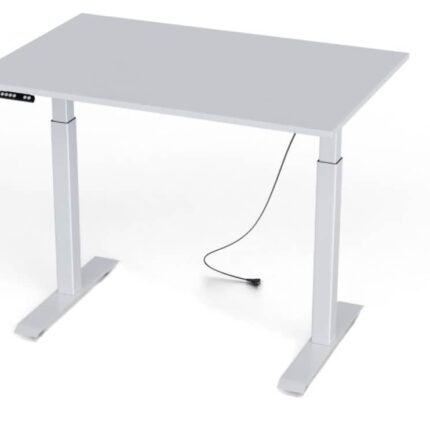
Electric Height-Adjustable Desk
- The image depicts an electric height-adjustable desk, also known as a sit-stand desk.
- It allows for easy switching between sitting and standing positions, helping to improve comfort and health at work.
- The height can be adjusted electrically, often with options to preset preferred heights.
- Using such a desk can help reduce muscle pain and joint problems, and promote better blood circulation.
- There are many models available, varying in size, materials, and features.

Near Vision Tester
Model: NV-100
- The image shows the NV-100 Near Vision Tester.
- This is a device used to assess near visual acuity, often for ophthalmological examinations.
- It features various targets, including letters, symbols (such as “XOX”), and text to be read at different sizes and distances.
- The NV-100 is designed to test near vision, unlike Snellen charts, which measure distance vision.
- Results are often expressed in fractions, such as 20/20, indicating the ability to read at a certain distance compared to normal vision.