


Vortex Mixer
Electrical Specifications:
-
Voltage: AC 220V ±0.5%
-
Frequency: 50/60 Hz
-
Power Consumption: 30W
Operating Modes:
-
Features two selectable modes:
-
Continuous mode for uninterrupted mixing
-
Touch mode (contact/pressure activated) for on-demand stirring
-
Design & Performance:
-
Compact, space-saving design
-
Low noise operation for a quiet laboratory environment
-
Provides rapid and thorough mixing by generating a high-speed vortex, ensuring uniform blending of liquids and suspensions
Stability:
-
Equipped with a heavy base or suction feet to maintain stability during vigorous mixing, preventing unwanted movement
Applications:
-
Ideal for laboratory tasks such as:
-
Mixing liquid samples in test tubes or microtubes
-
Resuspending cells
-
Various biological and chemical sample preparations
-
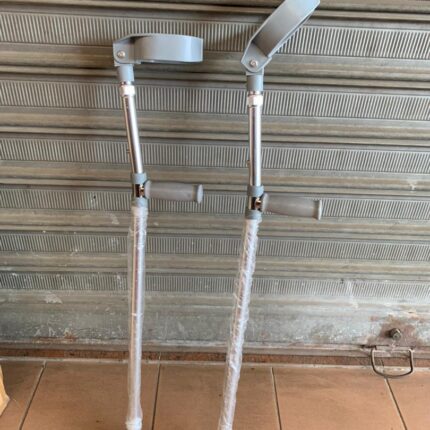
Walking Stick
The main feature of a walking stick, also called an antebrachial crutch, is a medical device to aid walking.
Here are its main features:
Support on the forearm and hand: Unlike simple canes, they offer a double support point, at the handle for the hand and a counter-support for the forearm, which helps better distribute body weight.
Height Adjustable: Most models, like this one, are adjustable to fit the user’s height, ensuring optimal comfort.
Non-Slip Tip: The lower end is equipped with a tip that ensures good grip on the ground, reducing the risk of slipping.
Lightweight and Robust: Made of aluminum, they are designed to be both lightweight for easy handling and robust to support the user’s weight.
Use: It is primarily used to relieve pressure on an injured or weakened lower limb following injury, surgery, or trauma by transferring body weight to the arms and torso.
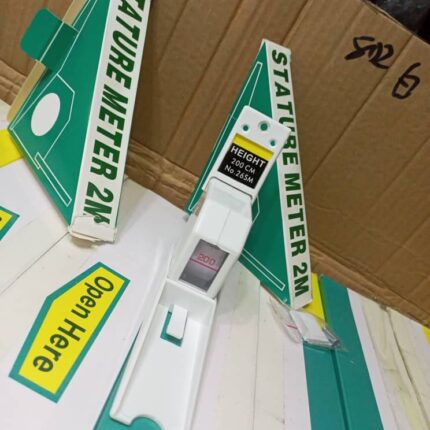
Wall-Mounted Height Chart
Designed for measuring height. Its main features are:
Measuring capacity: It can measure heights up to 2 meters (200 cm).
Design: It is usually wall-mounted, making it ideal for use in a variety of environments such as homes, offices, or clinics.
Material:Made of sturdy ABS plastic, ensuring durability and resistance to wear.
Accuracy:Provides accurate height measurements.
Installation:Easy to install, often using double-sided adhesive tape and/or screws provided for secure mounting.
Use:Easy to use, with clear readings, making it suitable for tracking children’s growth or measuring adult height.
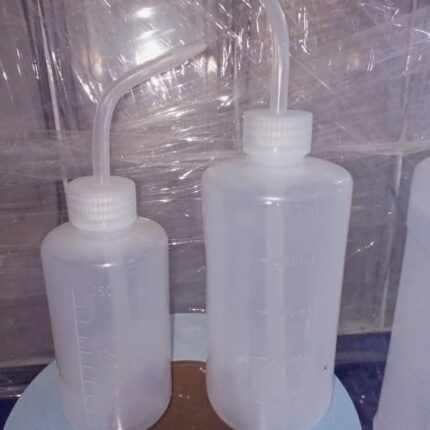
Wash Bottle
The characteristics of the plastic wash bottle are as follows:
Material: Made of soft plastic, such as PE (polyethylene) or HDPE (high-density polyethylene), making it lightweight and easy to squeeze.
Capacity: Available in different capacities, 250 ml, 500 ml, with visible graduations to measure the volume of liquid.
Design:
Curved Spout: Features a long, curved spout for precise control of the flow and direction of the liquid, ideal for rinsing or dosing.
Narrow Mouth: For controlled filling and to prevent spills.
Transparency: The transparent body makes it easy to see the level and type of liquid contained.
Use:
Laboratory: Commonly used in laboratories for cleaning instruments with distilled water, for adding alcohol, solvents, or other washing solutions.
Others
Ease of use: The squeezable body allows for easy and controlled dispensing of liquid with a simple squeeze.

Watch Glass
A laboratory watch glass is a versatile piece of laboratory equipment, usually made of glass (soda-lime or borosilicate).
Main Features:
Shape: Circular and slightly concave.
Material: Mainly made of glass (soda-lime or borosilicate), offering chemical resistance. Borosilicate glass is particularly resistant to thermal shock and chemical agents.
Uses:
Covering beakers to protect them from contaminants.
Weighing powders or small quantities of substances.
Serving as a surface for the evaporation of liquids, allowing the observation of precipitates or crystallizations.
Used as a support for mixing substances or observing them under a stereomicroscope.
Dimensions: Available in various diameters, ranging from 40 mm to 250 mm.
Safety: Its ground edges and consistent thickness reduce the risk of breakage.

Water Bath
MEDELE: DK-420
DESCRIPTION
The DK420 water bath is a laboratory appliance designed for heating and incubating samples at a controlled and stable temperature.
Key Features of the DK-420 Water Bath:
Temperature Control: It is equipped with a digital thermostat that allows precise and automatic temperature control, with a digital display for easy reading. The typical temperature range extends from room temperature +5°C to 99°C or 100°C.
Design and Materials: The DK420 water bath features two stainless steel tanks for corrosion resistance and ease of cleaning, and a high-quality outer casing, sometimes made of powder-coated sheet steel.
Safety and Performance: Heating with a water bath prevents sample burnout, ensuring gentle and uniform heating.
Applications: It is widely used in laboratories for applications such as distillation, concentration, drying, incubation, tempering of emulsions or solutions, and temperature testing.
Technical specifications (example based on similar models):
Capacity: 10 liters for the DK-420 model.
Power: 1000W.
Timer: Includes a timer function, ranging from 0 to 999 minutes.
Voltage: Available in various voltages, such as 110V 60Hz or 220V 50Hz.
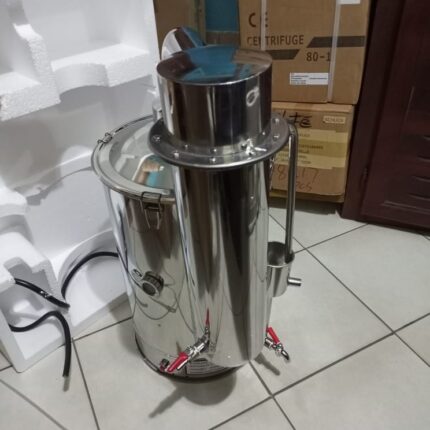
Water Distiller
Available in 10 and 20 liters
The laboratory stainless steel electric water distiller.
Here are its main features:
Material: Made of high-quality stainless steel.
Safety: Automatically cuts off the heating power supply in case of water shortage.
Condensation: Coil-type condensation structure for good cooling effect and high water production.
Water Saving: Cooling water returns to the evaporation barrel to save water resources.
Maintenance: Drain valve to drain concentrated water and improve scaling conditions.
Heating: Copper immersion heating tube with high thermal efficiency and long service life.
Capacity and Power: Available in different capacities (10L, 20L) with corresponding power ratings (e.g., 4.5 kW for 20L/h). Certifications: CE and ISO certified.

Water Distiller
The water distiller shown in the image has several typical features:
Main Function: It is designed to produce distilled water by heating water to 100°C to transform it into vapor, then condensing it back to a liquid state, thus removing impurities.
Capacity: 5 liters and can produce approximately 1 liter of distilled water per hour.
Materials: The interior is made of high-quality stainless steel to ensure the hygiene and purity of the distilled water.
Safety: It is equipped with safety features such as automatic shutoff in case of overheating or insufficient water level, thus protecting both the device and the user.
Design: It is compact and easy to use and clean, with components accessible for maintenance.
Applications: The distilled water produced is suitable for a variety of uses, including medical institutions, laboratories, battery factories, beauty salons, and household use.
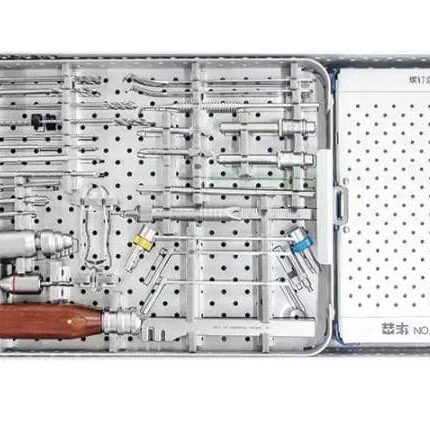
Watson Trauma Instrument Kit
The Watson Trauma Instrument Kit has the following features:
Instrument Type: This is an orthopedic surgical instrument kit specifically designed for trauma, including instruments for general surgery and fractures (femoral, humeral, etc.).
Composition: The kit consists of various orthopedic surgical instruments, made from high-quality materials such as stainless steel for durability and corrosion resistance. It may include pins, retractors, plate trays, and other tools necessary for orthopedic procedures.
Organization and Sterilization: The instruments are neatly organized and presented in a perforated tray, facilitating access and maintaining a sterile surgical environment.
Applications: Ideal for a variety of orthopedic scenarios, including fracture repairs, reconstructions, and arthritis treatments.
Quality and Safety: Each part of the kit is subject to strict quality standards to ensure reliable performance and patient safety.

Weighing Bottle
A weighing bottle, also called a weighing flask.
Its main characteristics are:
Type of laboratory glassware: This is a piece of laboratory equipment commonly used for accurately weighing solids or small quantities of liquids.
Material: Generally made of borosilicate glass (Boro 3.3) for its heat resistance and chemical stability.
Stopper: It is equipped with a ground-in stopper (or milled sealing plug) to ensure a tight seal, preventing the absorption of moisture or carbon dioxide by the reagent and minimizing evaporation.
Dimensions: The numbers “30×50” in the image indicate the dimensions of the bottle, namely 30 mm in diameter and 50 mm in height.

Weitlaner Retractors
Surgical retractor, more specifically a Weitlaner retractor.
Features:
Type: It is a self-locking surgical instrument, meaning it can maintain an open position without requiring constant intervention from the surgeon.
Function: It is used to spread the edges of a surgical incision, tissues, or other parts of the body apart to expose or allow access to the underlying anatomical structure during a procedure.
Design: It has two prongs with teeth (sharp or blunt) that mesh to maintain retraction. The size and type of teeth vary depending on the application (for example, smaller ones are for skin and superficial tissues, larger ones for deeper muscles or bones).
Material: Made of surgical-grade stainless steel, it is designed to be sterile and durable.
Use: To reduce trauma, the position of the retractors should be changed frequently during use.
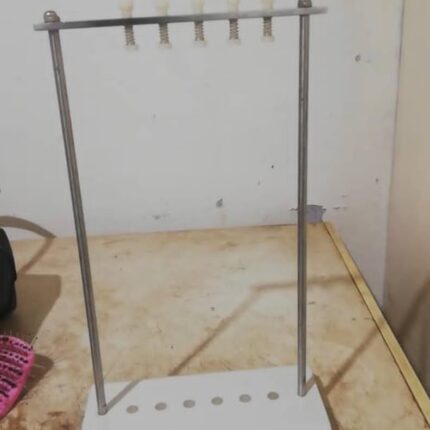
Westergren Pipette Stand
This is a Westergren pipette stand for erythrocyte sedimentation rate (ESR).
Here are its main features:
Function: It is used to hold Westergren pipettes upright during erythrocyte sedimentation rate (ESR) testing, also known as hemo-sedimentation rate (HSR).
Capacity: It can hold multiple pipettes simultaneously, facilitating the organization and reading of results for multiple samples.
Material: Made of metal (such as stainless steel for the stems) and plastic or composite material for the base, ensuring stability and durability.
Design: It is designed to hold Westergren pipettes stably and upright, which is crucial for accurate sedimentation measurements.