

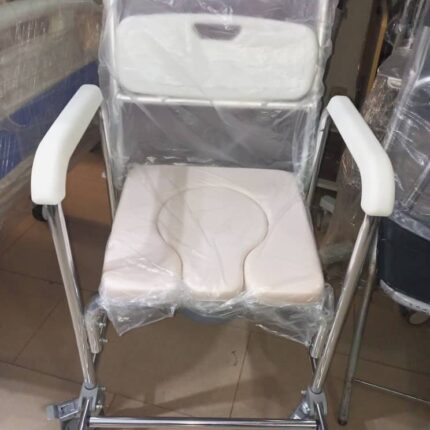
Wheelchair with Potty
Wheelchair Commode Chair – Mobile Hygiene Solution
Key Features:
✔ Dual-Function Design – Combines wheelchair mobility with integrated commode functionality
-
Horseshoe-shaped seat opening for toileting
-
Removable bucket (if included) for easy cleaning
✔ Hygienic Construction –
-
Stainless steel frame (rust-resistant)
-
Waterproof vinyl upholstery (wipe-clean surface)
✔ User Safety & Comfort –
-
Padded seat & backrest for extended use
-
Adjustable armrests for secure transfers
-
Locking casters (4 wheels) for shower/bathroom mobility
✔ Clinical Applications –
-
Ideal for elderly care, post-surgery recovery, and limited-mobility patients
-
Suitable for wet environments (showers/bathrooms)
CATEGORY: Maternity & Pediatric (or “Traumatology & Orthopedics” if preferred)
Why This Categorization?
While “Logistics and medical supplies” could apply, your original list suggests:
-
Maternity & Pediatric: Useful for postpartum recovery or disabled children
-
Traumatology & Orthopedics: Post-injury mobility support
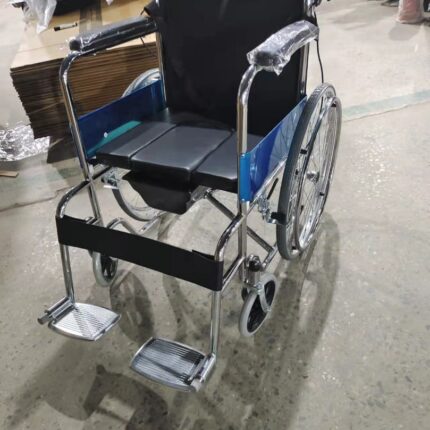
Wheelchair with Potty Seat
Features of a Wheelchair with Potty
A wheelchair with potty, also called a commode or toilet chair, is a piece of medical equipment that combines the functions of a wheelchair and an integrated toilet.
Its main features are:
Frame: Made of chrome-plated steel, providing strength and durability.
Mobility: Equipped with wheels to facilitate user mobility. The casters are equipped with brakes for stability and safety.
Integrated Toilet: A removable potty is located under the seat, providing easy access for the user and facilitating cleaning.
Comfort and Adjustability:
Armrests: Fold down for easy transfers.
Leg/Footrests: Detachable or retractable for comfort and maneuverability.
Seat and backrest: Upholstered for user comfort, in faux leather with a bucket seat.

Wheelless Walker
The features of a wheelless walker generally include the following:
Structure:
It is made of a lightweight aluminum metal frame, designed to provide stable support to the user while walking.
Handles:
It is equipped with two handles, with comfortable padding, to facilitate grip and improve user comfort.
Legs:
This specific model does not have wheels and rests on four legs with non-slip tips to ensure maximum stability, especially indoors.
Stability:
It offers significant support and stability, making it ideal for people who need maximum support and balance assistance.
Mobility:
Unlike wheeled walkers, this type of walker requires lifting and moving with each step.
Adjustability:
The height of the legs is adjustable to suit the user’s height, as indicated by the visible perforations on the leg posts.
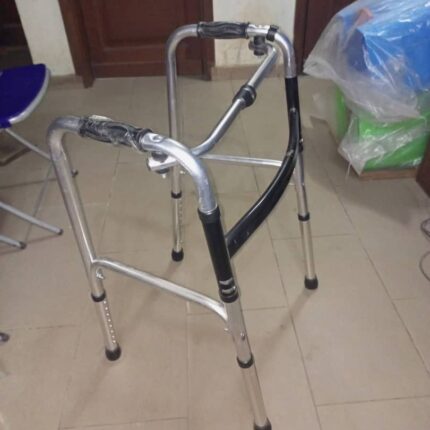
Wheelless Walker
The features of a wheelless walker generally include the following:
Structure:
It is made of a lightweight aluminum metal frame, designed to provide stable support to the user while walking.
Handles:
It is equipped with two handles, with comfortable padding, to facilitate grip and improve user comfort.
Legs:
This specific model does not have wheels and rests on four legs with non-slip tips to ensure maximum stability, especially indoors.
Stability:
It offers significant support and stability, making it ideal for people who need maximum support and balance assistance.
Mobility:
Unlike wheeled walkers, this type of walker requires lifting and moving with each step.
Adjustability:
The height of the legs is adjustable to suit the user’s height, as indicated by the visible perforations on the leg posts.

White cane for the blind
White canes, also called blind canes, are used as a mobility aid for visually impaired or blind people. Their main characteristics are:
Color:
They are usually white, with a distinctive red stripe for better visibility and recognition by other road users.
Materials:
They are made from lightweight and durable materials such as aluminum or carbon fiber.
Foldable or telescopic design:
White canes are designed to be foldable or telescopic, making them easier to transport and store.
Handle:
They are equipped with an ergonomic handle for a comfortable grip.
Tip:
The lower end has a tip that can be fixed or pivoting, allowing the user to detect obstacles and changes in ground texture.

White Coat
The white coat is commonly used in various professional environments. Its general characteristics are as follows:
Material and Design: White aprons are often made of cotton, polyester, or a blend of the two, offering good durability and easy maintenance. Some models are made of elastomer or polyurethane for increased resistance to grease, blood, and cleaning products. They can also be disposable, made of polyethylene.
Protective Function: The main function of the apron is to protect clothing from splashes and stains. Its white color makes it easy to spot dirt, ensuring impeccable hygiene.
Professional Symbol: The white apron is a symbol of hygiene, purity, and professionalism, particularly in the fields of healthcare, food processing, research, and cooking.
Fit Features: Aprons come in a variety of styles, from bib styles to long smocks, with pockets for storing tools or pens. They’re designed for ease of movement and adapt to different body shapes with ties or buttons.

Wrist Braces
Elastic wrist braces, such as the Actesso Elastic Wrist Brace, offer several features and benefits.
Pain Relief and Support: They are designed to relieve pain associated with conditions such as tendonitis, sprains, strains, carpal tunnel syndrome, repetitive strain injury (RSI), and arthritis.
Material: Typically made from cotton and spandex, they provide moderate compression and light support, while remaining breathable.
Comfort and Ease of Use: Their elastic, flexible design ensures a comfortable fit and allows for freedom of movement.
Injury Prevention: They help reduce the risk of wrist injuries, particularly during sports or repetitive use of the wrist.
Specific Indications: Ideal for post-surgical or post-fracture recovery, as well as joint pain and ligament instability.
Fit: Available in various sizes and sometimes with adjustable straps for targeted support.
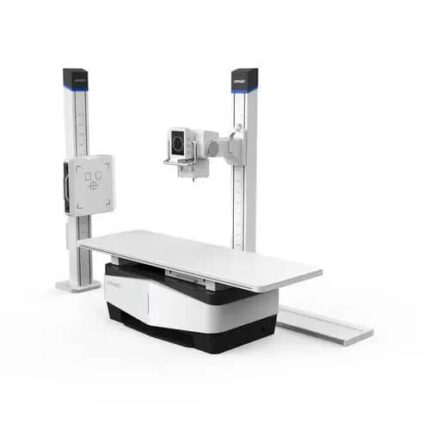
X-RAY machine
Mobile X-RAY machine
Brand: DAWEI
Model:RD-850RS
Description
DAWEI Digital Radiography System: RD‑850RS
Overview
* Product Type: Fixed dual‑column digital X‑ray system with table and floor‑mounted bucky.
* Use Case: Designed for routine imaging of head, spine, chest, abdomen, limbs, and full-body exams, including decubitus and cross-table views.
Design & Workflow Enhancements
* Features a robust dual‑column stand with motorized movement of both tube and detector, supporting flexible positioning for sitting, standing, or lying patients. Improves workflow and reduces operator fatigue.
* Includes a radiography table with under-table bucky and optional vertical detector positioning for various clinical needs.
Core Specifications
* X‑ray Generator: 50 kW high-frequency (40–125 kV, 10–630 mA); exposure time 1–6300 ms; supports AEC, kV‑mA, and kV‑mAs modes.
* X‑ray Tube: Dual focus (0.6 mm / 1.2 mm); ~300 kHu anode heat capacity.
* Detector: 17″ × 17″ CsI TFT; 3072 × 3072 resolution, 139 µm pixels, 16-bit ADC,
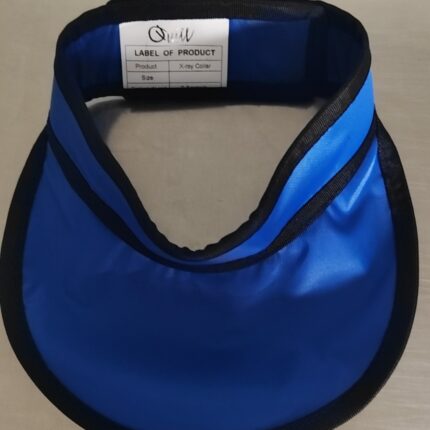
X-ray Protective Collar
The X-ray protective collar, also known as a lead thyroid collar, has the following features:
Radiation Protection:
It is designed to provide optimal protection of the neck and thyroid area from X-rays during radiological examinations. It has a lead equivalent of 0.3 mm or 0.5 mmpb for effective protection.
Design and Materials:
Made of durable lead rubber or polyurethane-coated fabric.
Ease of Use:
The Velcro design on the back allows for easy on and off and allows the collar to be adjusted for a comfortable and secure fit.
It is designed to be lightweight and soft for the comfort of the patient or professional.
Durability:
It is robust and designed for durability, ensuring extended use.
Applications:
Suitable for various medical settings, including dentistry, hospitals, and X-ray offices.
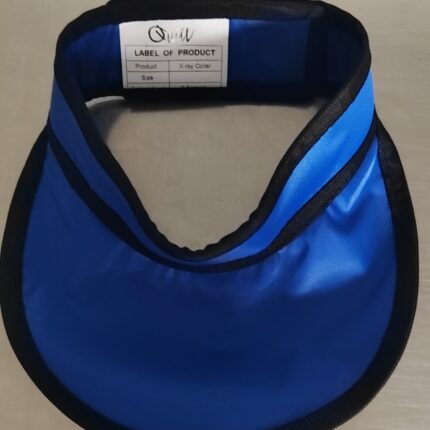
X-ray Protective Collar
The X-ray protective collar, also known as a lead thyroid collar, has the following features:
Radiation Protection:
It is designed to provide optimal protection of the neck and thyroid area from X-rays during radiological examinations. It has a lead equivalent of 0.3 mm or 0.5 mmpb for effective protection.
Design and Materials:
Made of durable lead rubber or polyurethane-coated fabric.
Ease of Use:
The Velcro design on the back allows for easy on and off and allows the collar to be adjusted for a comfortable and secure fit.
It is designed to be lightweight and soft for the comfort of the patient or professional.
Durability:
It is robust and designed for durability, ensuring extended use.
Applications:
Suitable for various medical settings, including dentistry, hospitals, and X-ray offices.
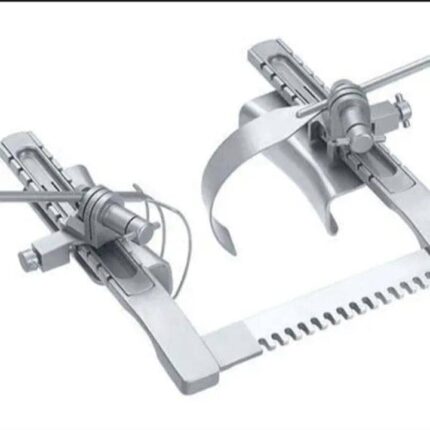
XS Sternal Retractor for the Heart
Median Access for Cardiothoracic Surgery
The Aesculap Heart XS Retraction System is a modular sternal retraction system for open median sternotomy – applicable for surgeries with and without a beating heart machine.
Features
– One retractor, four blade sizes
– Interchangeable blades – rigid or pivoting
– Seven different hooks and retractors
– OPCAB accessory attachment available
Note
In addition to the Heart XS Retraction System, Aesculap offers a variety of other sternal retractors for adults and children – made of stainless steel or aluminum – as well as a mammary retractor. Lateral retractors can be found in the minimally invasive heart valve surgery chapter.

Yellow Tip
Yellow pipette tips have several important features:
Material and Quality: They are made of high-quality, medical-grade polypropylene.
Sterility: These tips are sterile, certified DNAse and RNAse-free, and sterilized by gamma irradiation, especially those with filters.
Filter: The pipette tips include a highly hydrophobic UHMWPE filter to protect samples and the pipette from aerosols and contamination.
Compatibility: They are designed to be compatible with most major brand universal micropipettes.
Autoclavability: Non-sterile
Color and Transparency: The tips are yellow for easy liquid visualization.