


Portable Autorefractometer
The features of a portable autorefractometer, such as the one shown, generally include the following:
Accurate refraction measurement: It is capable of objectively measuring refractive errors (myopia, hyperopia, astigmatism) using technologies such as the Shack-Hartmann wavefront.
Portability and ease of use: Designed to be lightweight, compact, and often one-handed with simple one-button operation, it is ideal for clinical or field examinations.
Wide application: It can be used to assess refraction in patients of all ages, from babies to adults, and even in those who wear glasses or contact lenses.
Fast and simultaneous measurement: Some models can take measurements of both eyes simultaneously in seconds, which is particularly useful for children or patients who are difficult to examine.
Comprehensive Data Collection: In addition to refraction, it can provide other important data such as pupil size, interpupillary distance, and gaze symmetry.
Advanced Technology for Clear Images: The integration of super luminescent diodes (SLDs) and high-sensitivity CCD sensors enables clear retinal images, even in cases of low glare or opacities.

Handheld Auto Refractometer
The HAR-680 handheld auto refractometer offers the following key features, ideal for vision screening and accurate measurement of refractive errors:
Innovative Technology: This wavefront refractometer accurately measures refractive errors in patients from 6 months to adulthood in seconds.
Ease of Use: Designed for convenience and ease of use, it features one- or two-button operation and a short working distance, making it easy to focus.
Versatility: It can refract babies, children, and adults, even when they wear glasses or contact lenses.
Flexible Operating Conditions: No darkroom is required; the device operates in normal light conditions.
Result Display: Results are displayed directly on the device’s screen.
Portability: Its portable and lightweight design makes it very convenient for mass vision screening, home visits, or nursing home visits.
Data Transfer: It offers USB, Wi-Fi, and Bluetooth connections for easy data transfer to a PC or printer (Bluetooth printer optional).
Measuring Range:
Sphere: -10.0D ~ +10.0D, in 0.25D steps.
Cylinder: -5.0D ~ +5.0D, in 0.25D steps.
Astigmatism Axis: 1° ~ 180°, in 1° steps.
Data Acquisition Time: Less than 1 second per eye.
Iris Imaging: Yes.
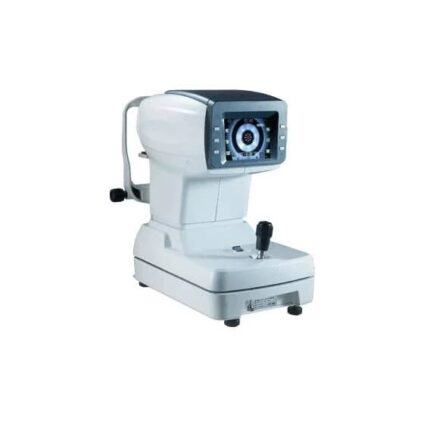
Autorefractometer
An autorefractometer is an ophthalmic device used to measure the optical characteristics of the eye, including refractive errors such as myopia, hyperopia, and astigmatism.
Key Features:
Refraction Measurement: It determines the sphere, cylinder, and axis of astigmatism for each eye.
Automation: Many models are fully automated, with features such as automatic alignment and measurement triggering.
Measurement Technology: Typically uses infrared light projected onto the retina to minimize accommodation and analyzes the reflected light to determine the necessary corrections.
Display and Interface: Equipped with a color LCD display (often tilting and rotating) and interfaces for connection to other equipment.
Keratometry: Some models, called autorefractokeratometers, also measure corneal radii of curvature and corneal astigmatism.
Speed and Accuracy: Allows rapid measurements (sometimes in seconds) with good accuracy, close to the final subjective refraction.
Additional Features: May include measurement of pupil diameter, interpupillary distance, and an optimized blurring system to minimize accommodation.

Optical Biometer
The AL-VIEW optical biometer is an ophthalmic instrument designed for precise eye measurements, particularly for calculating intraocular lens (IOL) fit prior to cataract surgery.
Its main features include:
High-precision measurement: It is capable of measuring and calculating the visual axis and IOL with high accuracy.
Measurement functions: It can measure axial length, keratometry (corneal radii of curvature), and pupillometry.
Automatic operation: The device allows automatic operation without manual manipulation; results are obtained with a simple touch.
Compact design: It incorporates a computer into its design, making it compact and self-contained.
Micron accuracy: It ensures accurate measurement of the eye’s axial length to the micron level.
Biological progression analysis: Biological progression analyses are available.
Built-in thermal printer: It features a built-in thermal printer for printing results.
Connectivity: It can be equipped with USB ports and a network connection to communicate with patient management software.
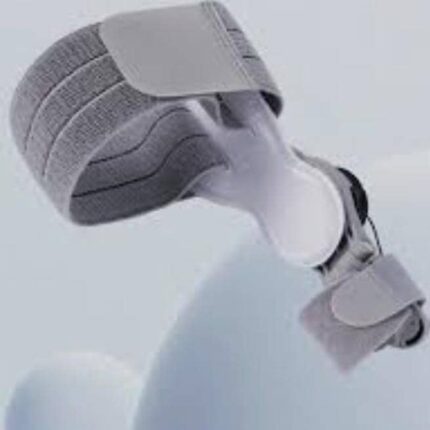
Bunion Corrector
Bunion correctors, like the one pictured, offer several key features aimed at correcting big toe alignment and relieving pain:
Adjustable Design: They often feature adjustable straps, Velcro closures, or precise adjustment mechanisms to accommodate different foot sizes and allow for personalized control of the correction angle and pressure.
Comfortable and Breathable Materials: Made from soft, breathable, medical-grade fabrics to ensure maximum comfort during extended use, day or night.
Realignment Support: Often incorporate an aluminum splint or silicone tendon to help straighten the big toe and maintain it in a more natural position, thus reducing the hallux valgus deformity.
Pain Relief: By realigning the big toe and reducing pressure on the bunion, they help relieve the pain and discomfort associated with this condition.
Versatile Use: Some models are designed to be worn during the day, even with shoes, while others are optimized for nighttime use, applying gentle corrective force while you sleep.
Durability and Ease of Use: Designed to be sturdy and easy to put on and take off, ensuring practical everyday use.

Thoracic Belt
A thoracic belt or back support belt, and its main features are as follows:
Color and Material: It is black in color and appears to be made of a comfortable and breathable material, possibly cotton or neoprene, ensuring a soft and airy experience.
Design and Comfort: Its soft texture conforms to the body, providing comfort for extended use without irritation. It is designed to be discreet and can be worn under or over clothing.
Support and Fit: It provides effective support for the back or ribs, helping to relieve pain due to intense activity or injury. It features adjustable elastic straps (with hook-and-loop fasteners, as seen in the image) for a customizable fit and targeted support.
Versatility: The belt is suitable for everyday use, whether at home, at work, or during physical activities, and allows freedom of movement.
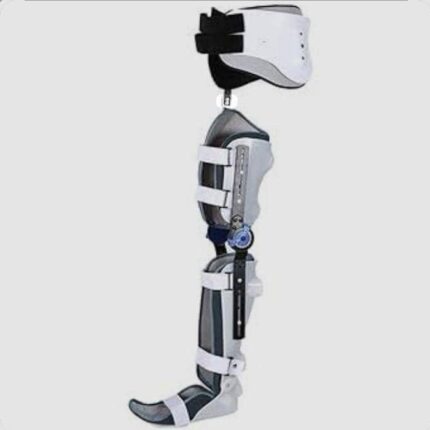
Adjustable Hip Orthosis
The orthosis pictured is an adjustable hip, knee, ankle, and foot orthosis designed for post-surgical rehabilitation of the femur and other lower limb conditions.
Its main features include:
High-quality material: Made of aluminum alloy and PE (polyethylene), ensuring lightness, strength, and durability.
Angle and length adjustment: The adduction, abduction, flexion, and extension angles of the hip joint can be adjusted according to the patient’s needs. The knee joint allows controlled movement from 0 to 120° and can be fixed in various positions.
Ergonomic design: The special board is designed to more closely fit the curve of the human body, and the plastic hoops and lining feature ventilation holes for comfort and moisture wicking.
Secure Fixation: Equipped with high-quality Velcro straps to reinforce the fixation, facilitating disassembly, transport, and cleaning.
Various Applications: Used for fixation after hip, foot, ankle, and femoral fractures, severe ankle sprains, soft tissue, tendon, and ligament injuries, as well as for the prevention of dislocation after hip replacement.

Hip abduction orthosis
The hip abduction orthosis pictured is a medical device designed to stabilize the hip joint and maintain proper alignment, particularly after surgery or injury.
Its main features include:
Support and stabilization: It is used to hold the femoral head in the acetabulum and limit the leg’s range of motion, thus promoting healing and reducing pain.
Materials: Typically made from materials such as stainless steel for durability and structural support, and breathable fabrics to prevent moisture buildup and improve comfort.
Comfort: Features padding and cushioning for increased comfort during extended wear.
Adjustability: Often equipped with adjustable straps and closures (such as Velcro) for a custom, secure fit, adapting to different sizes and body shapes.
Pediatric Functionality: Pediatric versions, such as the Rhino Cruiser Pediatric Hip Abduction Brace, are specifically designed to keep children’s legs and hips apart to ensure stability and proper hip development.
Post-operative Use: It is crucial for post-operative recovery, particularly after hip revision surgery, by providing protection and proper positioning.

Posture Corrector
The posture corrector shown in the image, labeled “The Natural Posture Complete Back Care Brace,” has several key features:
Postural Support: It is designed to correct posture by pulling the shoulders back and aligning the spine, which can help reduce neck, shoulder, and back pain.
Comfort and Adjustability: Made with soft, breathable materials, it is adjustable with straps and Velcro straps to accommodate different sizes and shapes, providing a personalized and comfortable fit.
Discreetness: Its design is often intended to be discreet and can be worn under or over clothing without being too visible, allowing it to be used in a variety of situations (work, home, leisure).
Enhanced Support: Some models, like this one, may include support bars or targeted compression bands to enhance the support and effectiveness of the posture correction.
Materials: It uses materials such as latex-free neoprene, known for its softness and breathability, ensuring prolonged comfort.

Posture Corrector
The posture corrector shown has the following features:
Materials: It is made from high-quality, durable materials, often lightweight and breathable, such as elastic fabric or honeycomb mesh, which absorb perspiration and increase comfort.
Design: Its design is often humanized and ergonomic, with a figure-8 support or an open-shoulder design to help gently realign the shoulders and back.
Adjustability: It is adjustable using Velcro straps or an easy-to-use adjustment system, allowing you to adjust the degree of tightness and adapt to different body shapes (men and women, various chest sizes).
Functionality:
It provides support for the clavicle and helps correct poor posture by pulling the shoulders back and aligning the spine.
It aims to relieve back, neck, and shoulder pain caused by poor posture or prolonged sitting.
Comfort and Discretion: The thin, lightweight material makes it comfortable to wear all day and can be worn discreetly under clothing.
Ease of Use: It’s easy to put on and take off, and adjustments can be made easily by the user.

Heating and Massaging Lumbar Belt
Here are the main features of the heating and massaging lumbar belt shown in the image:
Material and Comfort: Made of high-quality diving fabric, it is lightweight, soft, elastic, and provides good thermal insulation for a comfortable feel.
Combination Functions: It combines infrared red light heating and vibration massage, with a dual vibration motor.
Operating Modes: The heating and massage functions can be used simultaneously or separately, providing flexibility of use.
Settings: It has three temperature settings and three vibration modes to customize the experience.
Display and Control: A touch screen allows you to turn the device on/off and easily adjust the temperature or massage mode.
Power Supply: It is USB rechargeable and features a high-capacity 5000mAh battery, allowing for cordless use.
Lumbar Support: It features an ergonomic support system with integrated removable steel bars and springs for strong lumbar support.
Benefits: It is designed to effectively relieve muscle pain, relax muscles, and promote blood circulation.

Semi-rigid resin bandages
3M Soft Cast Semi-rigid Resin Bandages, shown in the image, have several distinctive features.
Material: They are made of a soft, inextensible fiberglass mesh coated with a polyurethane resin.
Flexibility and Inextensibility: After curing, the material remains flexible but inextensible, allowing for functional support.
Adaptability and Comfort: They adapt perfectly to the contours of the body, and their soft edges ensure great comfort for the patient.
Breathability: The material is breathable, which contributes to patient comfort.
Rapid Curing: The curing process is rapid, beginning in 3 to 5 minutes and being fully stressful after approximately 20 to 30 minutes.
Support Modulation: The rigidity of the device can be modulated by adjusting the number of layers applied, depending on the patient’s needs and indications.
Therapeutic Benefits: They help reduce muscle atrophy and joint stiffness, improve venous drainage, and accelerate healing.
Ease of Use: The bandage can be removed using standard cast scissors. Versatility: They can be used alone for flexible, non-stretchable support or combined with rigid resins (such as 3M Scotchcast) for functional immobilization devices.
Indications: Suitable for various indications such as sprains, ligament injuries, post-operative immobilization, devices for clubfoot, and offloading slippers for diabetic feet.