

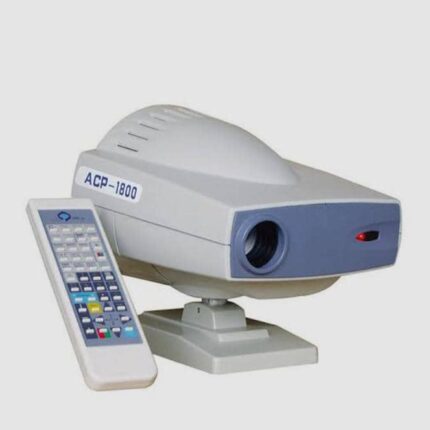
Automatic Chart Projector
MODEL: ACP-1800
The ACP-1800 Automatic Chart Projector is an ophthalmic instrument used for vision testing. Its main features are:
Projection Distance: It can project images at distances ranging from 1.5 m to 6 m.
Projection Magnification: The magnification is 30x at a distance of 5 m.
Projection Size: The projected image size is 330 mm (width) x 270 mm (height) at 5 m.
Number of Charts: It has 30 types of charts or graphs for vision testing.
Chart/Mask Change: Card or mask change is fast, taking 0.03 seconds per chart or mask image.
Lamps: It uses a 12V, 50W halogen lamp.
Programmability: Icons can be displayed in a predefined sequence via programming, and a single icon can be displayed via a multi-function mask plate.
Easy Installation and Maintenance: Bulb replacement is simple and requires no adjustment of focus or position.
Automatic Shutdown: The device automatically turns off after 10 minutes of inactivity.
Accessories: It comes with a remote control, a polarized metal shield, polarized glasses, fuses, and batteries.
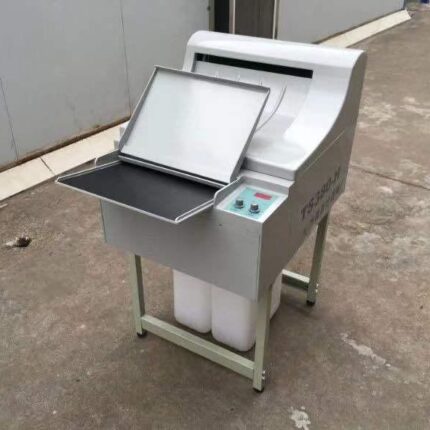
Automatic Film Processor
Model: TS350-N
The automatic analog X-ray film processor, also known as the TS350-N Automatic Analog X-ray Film Processor.
Main Features:
Function: This device is designed to automatically process films used in analog radiology.
Application: It is used in the field of medical imaging for processing X-ray images.
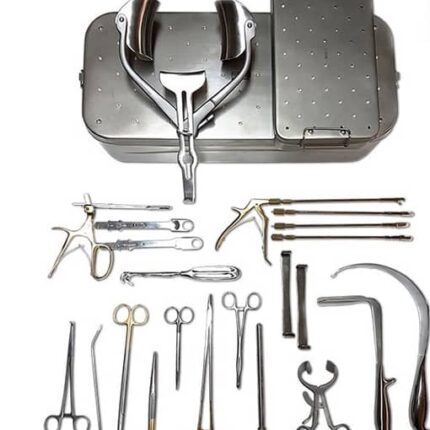
Autopsy Box
Autopsy boxes generally include a set of specific surgical instruments designed for postmortem examination procedures.
Key Features:
Material: The box and instruments are usually made of stainless steel to ensure sterility, durability, and corrosion resistance.
Varied Contents: The box contains a range of instruments for different stages of the autopsy, such as knives, scissors, forceps, retractors, and specific instruments like the rachitome or Collin mallet.
Specialized Instruments: These include cartilage and autopsy knives of various sizes, enterotomy scissors, cutting and dissecting forceps, olive stylets, and sometimes saws or chisels for bone examination.
Suitable Dimensions: The size of the box is designed to hold all the instruments in an organized manner.
Hygiene and ease of maintenance: The materials and design are designed to facilitate cleaning and disinfection to maintain a sterile environment.
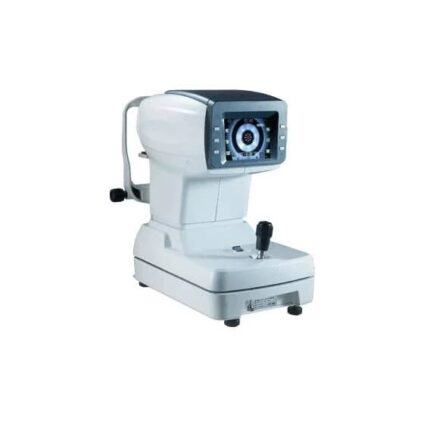
Autorefractometer
An autorefractometer is an ophthalmic device used to measure the optical characteristics of the eye, including refractive errors such as myopia, hyperopia, and astigmatism.
Key Features:
Refraction Measurement: It determines the sphere, cylinder, and axis of astigmatism for each eye.
Automation: Many models are fully automated, with features such as automatic alignment and measurement triggering.
Measurement Technology: Typically uses infrared light projected onto the retina to minimize accommodation and analyzes the reflected light to determine the necessary corrections.
Display and Interface: Equipped with a color LCD display (often tilting and rotating) and interfaces for connection to other equipment.
Keratometry: Some models, called autorefractokeratometers, also measure corneal radii of curvature and corneal astigmatism.
Speed and Accuracy: Allows rapid measurements (sometimes in seconds) with good accuracy, close to the final subjective refraction.
Additional Features: May include measurement of pupil diameter, interpupillary distance, and an optimized blurring system to minimize accommodation.
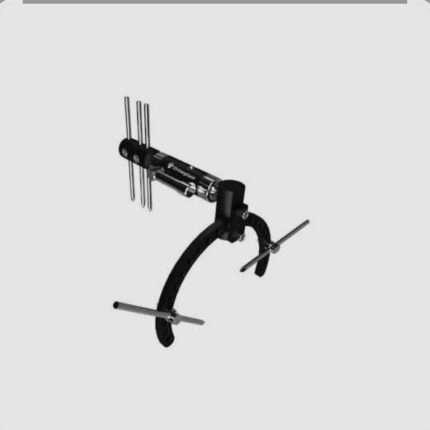
Aysam Hybrid Femur-Tibia External Fixator
The Aysam Hybrid Femur-Tibia External Fixator has the following main features and uses:
Fracture stabilization: It is designed for temporary fixation of various femur and tibia conditions, including fractures, nonunions, calluses, and osteotomies.
Specific Applications:
- Particularly useful for open fractures of the proximal femur.
- Used for proximal femur fractures (intertrochanteric, pertrochanteric) in elderly patients to allow early mobilization.
- Used for distraction and compression at the fracture site, promoting progressive bone lengthening or correction of deformities.
Soft Tissue Management: External fixators, such as this one, can help correct soft tissue injuries or defects by stabilizing and aligning the tissues around the injured bone.
Joint Stability: It can be used to stabilize joints, particularly in cases of severe ligament or tendon injuries.
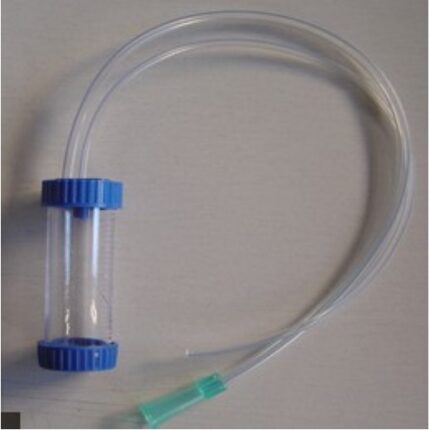

Baby Nasal Aspirator
MODEL: FY-800
The FY-800 electric baby nasal aspirator has several features to facilitate nasal cleaning for infants and young children.
Key Features:
Adjustable Suction Levels:
It typically offers multiple suction levels (e.g., 3 to 5 levels) to adapt to the amount of mucus and the child’s sensitivity.
Soft and Safe Design:
The nasal tips are made of soft silicone to ensure the baby’s comfort and safety, and are available in different sizes.
Ease of Use and Cleaning:
It is designed for one-handed use, and its removable parts (such as the mucus collector and tips) are easy to remove and clean, often by rinsing with warm soapy water and sterilizing.
Rechargeable and portable:
Most models are equipped with a rechargeable battery (e.g., via USB-C) for convenient use at home or on the go.
Additional features:
These include LED lights, soothing music to distract the baby, or quiet operation to avoid frightening them.
Hygiene:
The mucus collector is designed to prevent leaks and protect the motor.
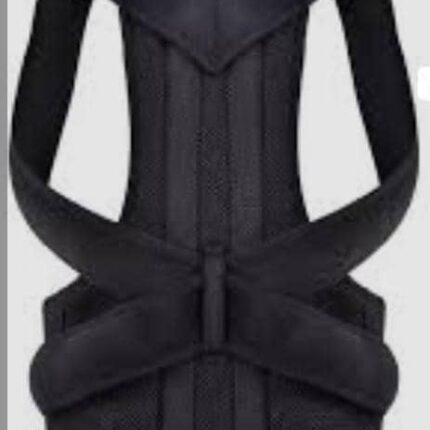
Back Posture Corrector
The back posture corrector, as shown, has several key features aimed at improving posture and relieving back pain:
Ergonomic Design: It is designed to conform to the body’s shape and provide targeted support to the back and shoulders.
Breathable and Comfortable Materials: Made from comfortable and breathable fabrics, it ensures comfortable wear even for long periods.
Adjustable Straps: The straps are adjustable to accommodate different body shapes and allow for a personalized fit, ensuring optimal support.
Discreet: Its design allows it to be worn discreetly under clothing, making it suitable for everyday use.
Posture Support: It helps straighten the shoulders and back, promoting correct posture and helping to relieve pain related to poor posture.
Ease of Use: It is generally easy to put on and adjust yourself.
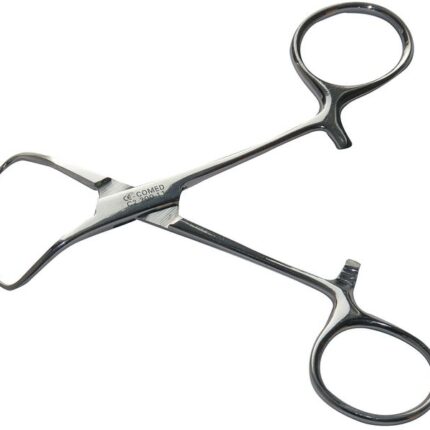
Backhaus drape forceps
The characteristics of the Backhaus drape forceps are as follows:
Primary use: They are primarily used in surgery to secure surgical drapes, but can also be used to puncture and hold tissue or compresses.
Material: They are made of high-quality stainless steel, ensuring corrosion resistance and durability.
Design: They are scissor-shaped with curved, pointed jaws, providing a good grip. They feature a ratchet locking system for secure fixation.
Sterilization: They are autoclavable at 134°C for 18 minutes and can be cleaned manually or in a washing machine with products suitable for stainless steel.
Sizes: They are available in various lengths, commonly 9 cm, 12 cm, and 14 cm.
Regulation: This is a regulated medical device bearing the CE mark.
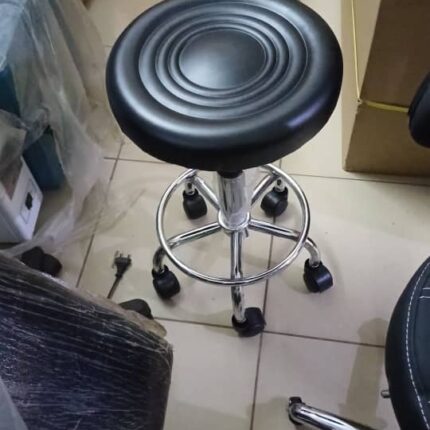
Backless Laboratory Stool
The backless laboratory stool with height-adjustable casters.
Here are its main features:
Height adjustment: It is equipped with a hydraulic lift allowing easy height adjustment to accommodate different uses and ergonomic sitting positions.
Swivel: The seat swivels, offering the user great freedom of movement.
Casters: It has several casters (five) on its base for easy movement and maneuverability.
Design: It features a round, padded seat in black faux leather and a sturdy chrome-plated metal base.
Versatility: This type of stool is functional and can be used in various professional environments such as laboratories, hair salons, beauty or dental offices, bars, studios, or as an office stool.
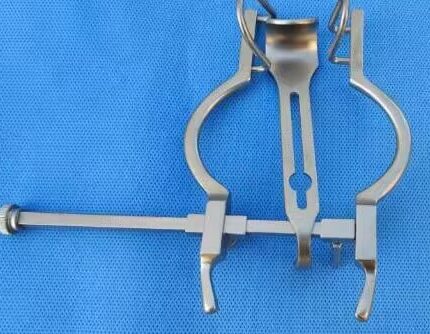
Balfour Abdominal Retractor
The Balfour Abdominal Retractor. Its main features are as follows:
Instrument Type: It is a self-locking retractor, meaning it can hold an incision open without requiring constant manual holding during surgery.
Material: It is generally made of medical-grade stainless steel, often German stainless steel, which ensures its durability, corrosion resistance, and ability to be sterilized and reused.
Design: It consists of an adjustable main frame, side blades (often fenestrated or solid, removable or fixed), and a central blade. The central blade is usually removable and available in various sizes to suit the specific needs of the procedure and the patient.
Use: It is primarily used in abdominal surgery to hold large incisions open, providing better visibility and optimal access to the abdominal cavity, particularly during procedures such as cesarean sections.
Benefits: Its robust design and adjustable blades allow for stable retraction of tissues and organs, improving surgical visibility and precision.
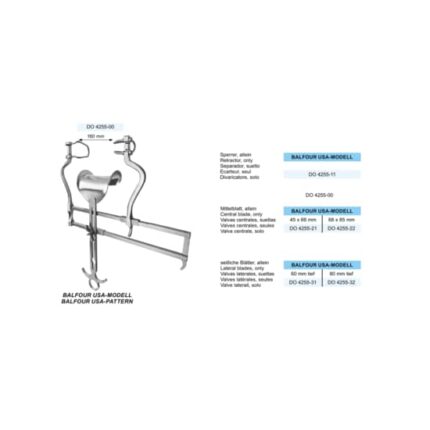
Balfour Retractor
The Balfour Abdominal Retractor is a self-retaining surgical instrument used to hold abdominal incisions open and improve visibility during surgical procedures.
Type: Abdominal retractor, specifically a Balfour retractor.
Use: Holds abdominal incisions open during surgery for better exposure of the surgical field.
Material: Made of high-quality German stainless steel.
Features: Includes adjustable sidewalls and, in some cases, a removable or fixed central blade to accommodate different surgical needs.