


LCP Olecranon 3.5mm
- LCP Olecranon trauma plate 3.5mm is a specific type of trauma implant used to fix fractures in the olecranon, which is the prominent bony projection at the end of the ulna bone in the forearm, forming the point of the elbow.
- This plate is a part of the LCP design that uses locking screws and plates to securely fix broken bones for proper healing
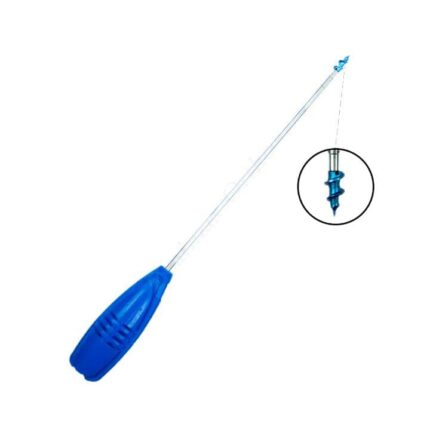
Ligament Anchor, Titanium Loaded with 2 PC fiber
6.5mm Ligament Anchor, Titanium Loaded with 2 PC fiber
- The 6.5mm Ligament Anchor is a titanium orthopedic implant designed for soft tissue fixation in orthopedic procedures.
- It is loaded with 2 PC Fiber, a type of polyethylene material, to provide additional strength and stability to the anchor.
Specifications
- Made of high-strength titanium for durability and corrosion resistance
- Designed with a low profile to minimize tissue irritation
- Self-drilling and self-tapping for ease of insertion
- Available in different lengths to accommodate various surgical techniques
- Anchor diameter: 6.5 mm
Material: Titanium
Fiber type: 2 PC Fiber (polyethylene)
- Indications
- Ligament reconstruction
- Tendon repair
- Fracture fixation
- Joint stabilization
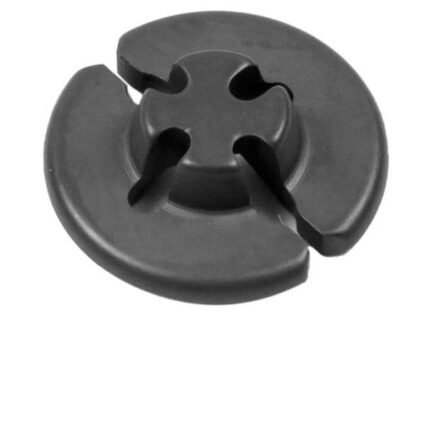
Loop Washer
- A Loop Washer is an arthroscopic implant, primarily used in knee ligament reconstruction surgeries.
- It provides secure fixation to the graft by creating an adjustable loop that attaches to various button configurations.
- The use of a loop washer in an arthroscopic surgery enables surgeons to achieve secure customized graft fixation through small incisions, promoting faster post-operative results
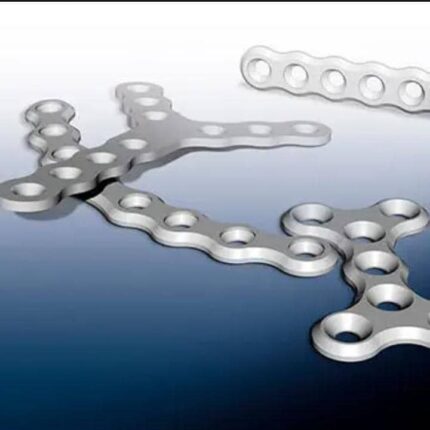
Maxillofacial Compression Plate
The “Biosorb Plating System” is composed of 82:18 poly(L-lactide-coglycolide). This raw material is formed by the copolymerization of L-lactide and glycolide. This copolymer is biocompatible, resorbable, and osteoconductive. It provides sufficient physical strength for craniomaxillofacial bone reconstruction.
BENEFITS AND FEATURES
Strength maintained for at least 16 weeks
Biodegradable in vivo in 12-24 months
No secondary surgery required
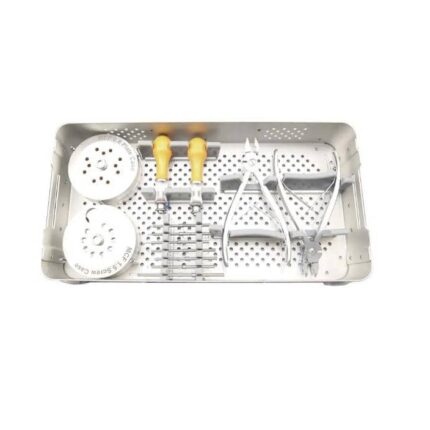
Maxillofacial Surgery Kit
- The MCF instrumentation kit includes a range of installation tools specifically designed for craniofacial, mandibular, and orthognathic surgeries.
- The plates and screws are meticulously arranged in metal cases, each labeled for easy identification.
- The tools are securely mounted on holders, allowing the surgeon quick access and maintaining clarity throughout the surgical procedure.
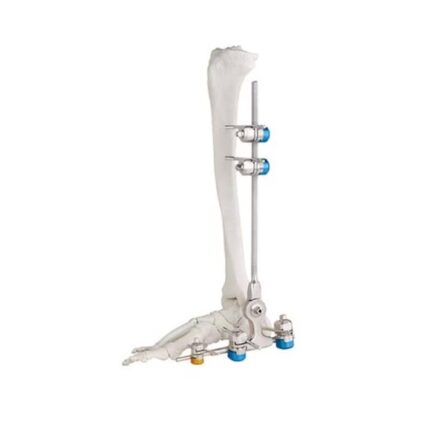
Medical External Fracture Fixation Device
Characteristics of an External Fixator
An external fixator, such as the one shown in the leg and foot, is a medical device used to stabilize fractured or deformed bones from outside the body.
General Characteristics:
External Components: It consists of pins or screws inserted into the bone, connected to external rods or rings that maintain stability.
Stability and Alignment: It helps maintain the fractured bone in the correct position and alignment until it heals, or to make corrections to a limb.
Adjustability: External fixators can be adjusted to change their length, angle, or compression/distraction, facilitating fracture reduction or deformity correction.
Biocompatibility: The materials used, such as stainless steel or titanium, are chosen for their biocompatibility with human tissue.
Temporary or permanent use: They can be used temporarily, pending internal osteosynthesis, or permanently, sometimes combined with minimal osteosynthesis.
Specific characteristics (depending on the type):
Monolateral fixators: Used for periarticular fractures and providing stable fixation.
Hybrid fixators: Combine rings and pins for high mechanical stability and precise correction of deformities.
Tubular fixators: Consisting of clamps, a rail, and a distraction-compression unit, designed to stabilize bone segments.
Advantages:
Less invasive: Requires smaller incisions compared to some internal fixation methods.
Visibility of the injury site: Allows easy access for wound care, particularly useful in open fractures.
Considerations:
Care and follow-up: Regular follow-up is essential to monitor healing and prevent complications, including infections at the pin site.

Mini rail horizontal axis
Purpose: Used for temporary and permanent fixation of open and contaminated fractures, nonunions, malunions, and osteotomies, especially in metacarpal and metatarsal bones.
Design: Features self-drilling screws or threaded wires for bone fixation, and a compact rail system for stable support.
Benefits:
- Minimal damage to blood supply and soft tissue. Rapid application in emergencies.
- Allows for fracture reduction and stable fixation without surgery, and even supports bone transport.
- Suitable for high-risk infection situations.
In the context of linear guides:
Purpose: To provide smooth and silent linear motion with high precision.
Design: Utilizes cold-drawn carbon steel profiles with induction-hardened raceways and adjustable rollers for preload.
Benefits:
Extremely compact, saving valuable space.
Smooth and quiet operation.
An adaptive design that allows for easy customization.

Mini rail vertical axis
Purpose: Used for the treatment of fractures, bone lengthening, and correction of complex soft tissue and bone deformities in small bones like those in the hand and foot.
Mechanism: A hinged system that provides controlled compression and distraction of the bone segments.
Key Feature: The hinge allows for adjustment in a horizontal or vertical plane, offering flexibility during treatment.
Application: Treats conditions such as foot or hand arthrodesis and hand/wrist contractures.
Accessories: Utilizes self-drilling screws or threaded wires for bone fixation.

Modular Dual Mobility, Mobile Bearing Hip System
Modular Dual Mobility
Mobile Bearing Hip System
- Dislocation is one of the most common causes of total hip arthroplasty failure, both in primary and revision procedures. The Modular Dual Mobility 1-4 (MDM) is designed to help prevent dislocation and achieve your operative goals of stability, longevity, and advanced fixation for fractures, primary, or revision total hip arthroplasty cases.
Key Benefits: Stability, Versatility, Longevity, Cost-Effective, Clinical Evidence, Videos
- The Stryker MDM consists of a modular cobalt-chromium insert, a large-diameter X3 polyethylene insert, and a femoral head. The highly polished, modular cobalt-chromium insert can be assembled to any Stryker acetabular cup using the Trident locking mechanism.
- Together, these components form a dual-mobility device with two points of articulation: one between the X3 polyethylene insert and the metal insert (outer tray), and the other between the X3 polyethylene insert and the femoral head (inner tray). The primary movement occurs at the inner tray, while the outer tray moves during extreme range of motion, which can minimize wear, reduce friction torque, and improve stability.

Modular Revision Femoral Stem
The M-Vizion® Modular Revision Femoral Stem features the following:
Intelligent Modular Design: The M-Vizion system is designed with a modular approach to meet the challenges of femoral revision surgery, providing intraoperative flexibility.
Robust Modular Junction: The M-Vizion stem incorporates a proprietary mechanical design that improves the taper’s resistance to fretting-induced fractures, ensuring greater stability at the modular junction.
High mechanical strength of the taper and conical connection.
Diaphyseal Stability: The distal portion of the stem is based on the clinically proven Wagner concept, which provides immediate diaphyseal stability while avoiding areas of proximal bone loss.
Wagner-type cross-section with 8 longitudinal ribs for immediate stability and improved fixation.
Improved Proximal Fixation: The addition of a Mectagrip titanium plasma coating on the proximal body promotes proximal bone fixation.
Coatings and Surfaces:
TiNbN surface coating to prevent cold welding.
Grit Blasted Surface for long-term stability through bone fixation.
Specific Design Features:
Mirror-polished neck to minimize soft tissue damage and liner wear.
Rounded shoulder to facilitate greater trochanter reassembly.
Bullet-shaped tip for easier stem insertion.
Short stem with 12/14 taper to reduce the risk of liner wear.
3 holes for compatibility with cerclage cables and greater trochanter reconstruction.
Dimensions: Available in various lengths (e.g., 190 mm, 240 mm, 290 mm) and diameters (e.g., 12-26 mm), with proximal bodies of various sizes and offset options (standard and lateralized).
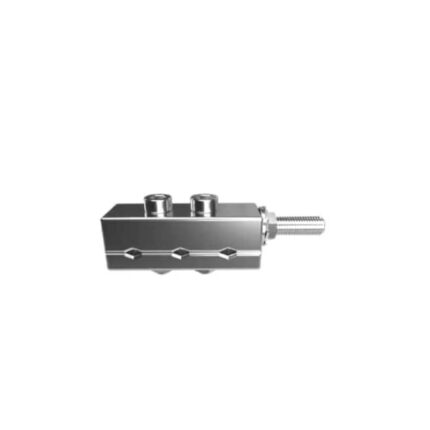
Multiple pin fixation clamp
Multiple fixation points: The clamp is designed to accommodate multiple pins (e.g., 5 or 8 holes), allowing for the creation of solid structures for bone fragment fixation.
Configuration flexibility: Some clamps offer 70 to 80 degrees of movement, allowing independent positioning of pins in three dimensions and thus facilitating the construction of a flexible frame.
Component reduction: They incorporate features that reduce the number of parts required to build the fixation structure, thus optimizing inventory management.
Compatibility with various systems: The clamps are designed to accommodate external fixation systems with various pin and bar sizes, such as 11 mm carbon fiber bars.
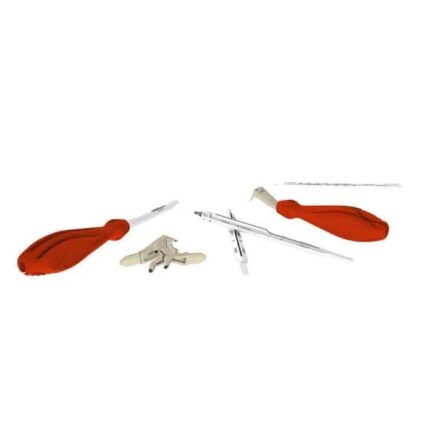
N’oses Trauma Instrument Kit
In2Bones products meet European standards for manufacturing, traceability, safety, labeling, and packaging. True innovation must address the constraints and requirements of each healthcare provider.
The In2Bones® Single-Use solution guarantees equipment that is always sterile, complete, and ready to use. Our instrumentation thus overcomes most of the drawbacks inherent in traditional systems. Whether it’s the surgeon, medical teams, the facility, or the patient, everyone benefits from the advantages of this innovative approach in terms of safety and efficiency.
In2Bones® single-use instrumentation is made of recyclable polymer. It has been specially developed for single use while ensuring consistent effectiveness and comfort for the practitioner. The instrument design ensures precision and resistance to associated torsional stresses.
In2Bones products meet European standards for manufacturing, traceability, safety, labeling, and packaging. True innovation must address the constraints and requirements of each healthcare provider.
The In2Bones® Single-Use solution guarantees equipment that is always sterile, complete, and ready to use. Our instrumentation thus overcomes most of the drawbacks inherent in traditional systems. Whether it’s the surgeon, medical teams, the facility, or the patient, everyone benefits from the advantages of this innovative approach in terms of safety and efficiency.
In2Bones® single-use instrumentation is made of recyclable polymer. It has been specially developed for single use while ensuring consistent effectiveness and comfort for the practitioner. The instrument design ensures precision and resistance to associated torsional stresses.