

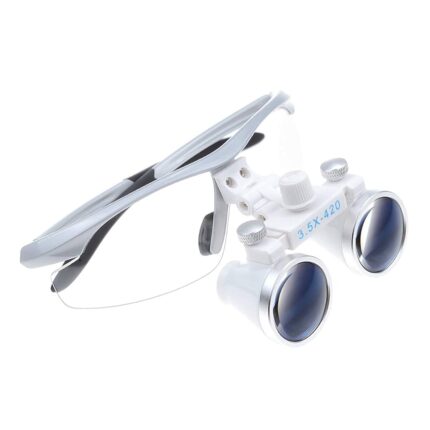
Children frame/trial frame
Lightweight and Comfortable:
Designed to be less burdensome and more comfortable on a child’s face, allowing for better cooperation during eye examination
Smaller Dimensions:
Smaller overall size and often fixed Pupillary Distance (PD) options, including specific infant and child sizes, to ensure a proper fit.
Adjustable Features:
Adjustable Temples: Allow for a customized length and fit to suit the child’s head size.
Lens Capacity:
Typically has multiple slots (often 3 or 4) to hold trial lenses and accessories like occluders or prisms.
Axis & PD Controls:
Knobs are present for rotating the cylindrical lens to adjust the astigmatism axis and for adjusting the interpupillary distance for accurate measurements.
Secure Fit Options:
An elastic headband can be included or used to help keep the frame centered on the child’s face.
Durable Materials:
Made from high-quality, durable, and long-lasting materials, often a combination of lightweight in
plastic and metal.

Cholesterol LR MONO
The characteristics of the SGM Italia “CHOLESTEROL LR MONO Enzymatic Trinder method” total cholesterol enzymatic assay kit, based on similar information for cholesterol enzymatic assay kits, are as follows:
Assay method: Trinder enzymatic method (CHOD-POD, Phenol), using colorimetric spectrophotometry.
Reaction type: Endpoint.
Reading time: Approximately 5 minutes.
Kit composition: A single reagent and a standard for calibration. The kit contains 4 x 100 mL of reagent (R1) and 1 x 5 mL of standard.
Use: For in vitro diagnostic use only, reserved for professional laboratory use.
Stability/Storage: The serum is stable for several days between +2 and +8°C.
Precautions: Do not pipette by mouth; Follow precautions for handling laboratory reagents.
Sensitivity: The detection limit is approximately 1 mg/dL.
Interferences: Characteristics may vary depending on the analyzer used; interference with hemoglobin or bilirubin may be observed at certain concentrations.

Circumcision Kit
The circumcision kit contains a set of surgical instruments essential for the procedure. Its main features include:
Kit Contents: The illustrated kit includes various surgical instruments such as scissors, hemostats (straight and curved), dissecting forceps (tweezers), and a retractor or probe-type instrument.
Material: The instruments are generally made of high-quality stainless steel, ensuring durability, sterility, and corrosion resistance.
Presentation: The instruments are organized and stored in a compact, portable case, often made of nylon or a similar material, with elastic bands to hold each instrument in place.
Use: Although the kit is advertised as a “Circumcision Set,” similar instruments can be found in training kits or dissection kits for educational purposes.
Sterility and Protection: In a real-world medical setting, these kits are sterile packaged and may include additional items such as drapes, gauze, and gloves to maintain an aseptic surgical environment

CK NAC LR
The CK NAC LR kit features are as follows:
Product Name: CK NAC LR.
Use: Kit for measuring creatine kinase (CK) in serum or plasma.
Method: Optimized kinetic method DGKC-IFCC.
Reference (REF): 10197.
Batch Number (LOT): 5908.
Contents: 60 + 15 ml, including R1 (1 x 60 ml) and R2 (1 x 15 ml).
Manufacturer/Distributor: SGM Italia srl, located in Via Olivadi 20 – 00126 Rome, Italy.
Clinical Significance: CK measurement is used in the diagnosis and treatment of myocardial infarction and muscle diseases such as progressive muscular dystrophy. N-acetylcysteine (NAC) acts as a CK activator.
Use: For in vitro diagnostic use only.
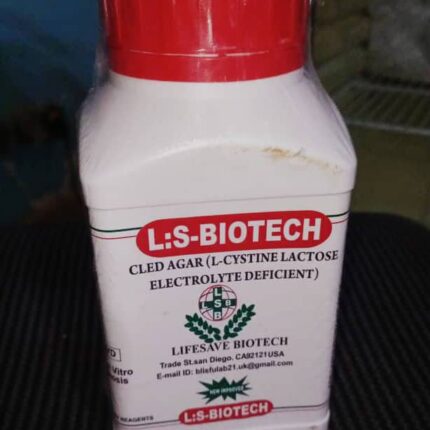
Cleb Agar Culture Medium
CLED Agar (Cystine Lactose Electrolyte Deficient Medium)
CLED Agar is a differential, non-selective culture medium designed for isolating, enumerating, and differentiating urinary tract microorganisms.
Key Features:
-
Differential Properties:
-
Supports the growth of most urinary pathogens while distinguishing them based on lactose fermentation.
-
Lactose fermenters (e.g., E. coli, Klebsiella) produce yellow colonies due to acid production.
-
Non-lactose fermenters (e.g., Proteus, Pseudomonas) form blue/green colonies.
-
-
Electrolyte Deficiency:
-
Prevents swarming of Proteus, which can overgrow other bacteria in conventional media.
-
-
Composition:
-
L-Cystine: Promotes growth of cysteine-dependent dwarf coliforms.
-
Lactose: Serves as a fermentable carbohydrate source.
-
Bromothymol Blue: pH indicator for colony differentiation.
-
-
Primary Use:
-
Ideal for urine culture (ECBU), especially for quantitative bacterial counts in diagnostic microbiology.
-

Clinical Thermometer
CR.W23 Clinical Thermometer
Precision Axillary Temperature Measurement
Key Features:
✔ Safe & Accurate Measurement
-
Mercury-free Galinstan alloy (gallium/indium/tin)
-
Specifically designed for axillary (armpit) use
-
Measurement range: 34.7°C – 37.5°C (normal axillary range)
✔ Clinical Guidance
-
For core temperature estimation: add 0.8°C-1°C to displayed axillary reading
-
3-5 minute measurement time for accurate results
✔ Certified Quality
-
CE0197 certified (meets EU medical device standards)
-
Clinically validated for reliability
✔ User-Friendly Design
-
Easy-to-read scale markings
-
Shock-resistant construction
-
Easy disinfection for clinical hygiene

Coagulometer
URIT 610 Semi-Automatic Coagulometer – Technical Specifications
Key Features
✅ 4-Channel Multi-Parameter Analysis
✅ Advanced Interference Resistance (HIL-resistant)
✅ Compact & Efficient Design
Technical Specifications
Operating Principle
-
Dual-Magnetic Circuit Method with mechanical bead detection
-
Optical Detection System for clot formation
Performance & Capacity
-
Simultaneous Testing: 4 independent channels
-
Throughput: Up to 100 tests/hour
-
Sample/Reagent Capacity:
-
16-sample incubator (pre-warmed to 37°C)
-
4 dedicated reagent wells
-
Measured Parameters
| Parameter | Abbreviation | Clinical Application |
|---|---|---|
| Prothrombin Time | PT | Warfarin monitoring |
| Activated Partial Thromboplastin Time | APTT | Heparin therapy |
| Thrombin Time | TT | Fibrinogen disorders |
| Fibrinogen | FIB | Clotting factor assessment |
Advanced Technology
-
HIL (Hemolysis/Icterus/Lipemia) Compensation – Reduces false results
-
Auto-calibration for reagent batches
-
Built-in QC with Levey-Jennings charts
User Interface
-
LCD Touchscreen for intuitive operation
-
Printer Connectivity for instant reports
-
LIS Compatibility via RS-232/USB
Workflow Advantages
✔ Error Reduction – Minimizes manual steps
✔ Rapid Results – <10 mins for most assays
✔ Cost-Effective – Low reagent consumption
Ideal for:
-
Hospital coagulation labs
-
Anticoagulation clinics
-
Research institutions
Quality Assurance
-
CE Marked & ISO 13485 Certified
-
Includes:
-
Starter reagent kit
-
Cleaning supplies
-
Operation manual
-

Coil
A coil is a spiral condenser, also called a serpentine condenser or Graham condenser.
Its main characteristics are as follows:
Form and function: It is a glass tube wound in a helix (solenoid shape) inside an outer shell. It is designed to serve as a refrigerating instrument, primarily in stills or distillation and reflux rigs in chemistry.
Operating principle: A hot gas or vapor passes through the helical tube, while a refrigerant liquid (water) circulates in the outer shell, around the coil. Indirect contact with the cold liquid causes the gas or vapor to condense.
Material: It is made of glass.
Use: It is used to condense vapors during chemical reactions requiring reflux or to separate components by distillation.
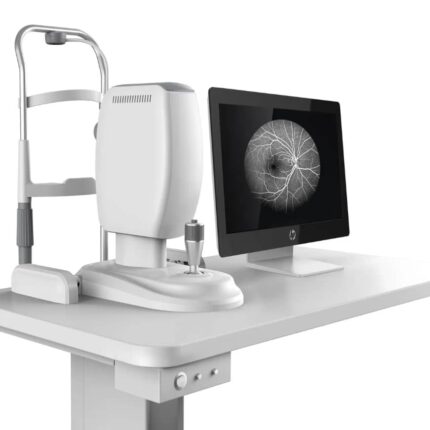
Color Fundus Camera
The device shown is a color fundus camera, a confocal ophthalmoscope for retinal angiography.
Its key features include:
Confocal laser scanning technology: Enables high-resolution imaging and stereoscopic viewing for depth perception.
High-resolution video capture: Ability to record videos at high resolutions, up to 1024 x 1024 pixels.
Multi-band fluorescence imaging and photography: Allows the use of different dyes such as fluorescein and indocyanine green to visualize retinal and choroidal vessels, although OCT angiography can reduce the need for dyes.
Non-mydriatic and continuous operation: Ability to capture images without prior pupil dilation, providing smoother operation.
Wide Field of View: Capable of capturing a 65-degree angle in a single undilated fundus photograph, with composite fields of view up to 120°.
High Resolution: Up to 1536 x 1536 pixels for high-resolution images.
Multiple Laser Sources: Uses different laser wavelengths (e.g., 488 nm for FA, 795 nm for ICGA, 830 nm for IR) for various imaging applications.
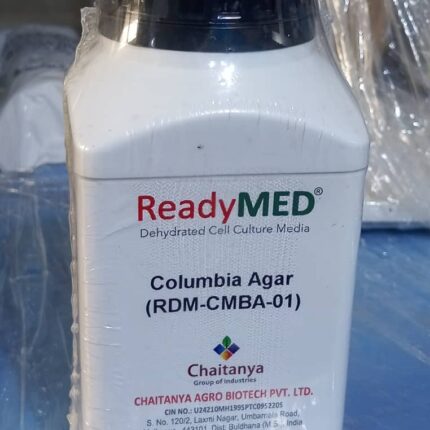
Columbia Agar
ReadyMED Columbia Agar (RDM-CMBA-01) – Product Overview
General Description
ReadyMED Columbia Agar is a highly nutritious, dehydrated culture medium designed for the isolation and cultivation of a broad spectrum of microorganisms, including fastidious organisms such as Streptococci and Pneumococci.
Key Features
1. Primary Applications
-
Isolation and cultivation of diverse microorganisms, particularly fastidious bacteria
-
Ideal for clinical specimens where broad-spectrum recovery is needed
-
Hemolysis detection when supplemented with blood (e.g., 5% sheep blood)
2. Composition & Functionality
| Component | Function |
|---|---|
| Protein hydrolysates (polypeptones, pancreatic heart peptone) | Promotes rapid growth of fastidious organisms |
| Corn starch | – Energy source – Absorbs toxic metabolites – Enhances streptococcal hemolysis |
| Yeast extract | Supplies essential B vitamins for growth |
| Sodium chloride | Maintains osmotic balance |
| Agar | Solidifying agent |
3. Preparation
-
Form: Dehydrated powder
-
Preparation Steps:
-
Dissolve in distilled water
-
Boil to ensure complete dissolution
-
Sterilize by autoclaving
-
-
Optional: Add 5% defibrinated sheep blood for hemolysis studies
4. Quality & Compliance
-
Meets harmonized USP/EP/JP pharmacopeial requirements
-
Ensures consistent performance for diagnostic and research applications

Complete Delivery Kit
Features of the Complete Delivery Kit
A complete delivery kit is a set of essential medical instruments for childbirth, made of stainless steel to ensure durability and frequent sterilization.
Here are the main features and commonly included instruments:
Varied Composition: It contains an assortment of instruments needed for different stages of delivery, from examination to managing potential complications.
Quality Materials: The instruments are generally made of stainless steel, ensuring good durability and compatibility with sterilization methods such as autoclaves.
Compliance with Standards: The equipment meets the requirements of current medical standards and is CE marked.
Initially Non-Sterile: The product is not sterile upon purchase and requires sterilization before use.
Warranty: Complete kits come with a warranty, such as a 24-month warranty.
Examples of frequently found instruments: 400x200x90mm stainless steel box, standard scissors, (curved) blunt, Bar umbilical clamp, Tanier forceps with tractor, Richelieu insufflator with pear, Jean Louis Faire forceps, (curved) A/G, membrane piercer, female catheter, 12CH, Pinard obstetric stethoscope, aluminum.

Complete Knee Solution
Zimmer Biomet’s NexGen Complete Knee Solution offers several notable features:
Implant Interchangeability: Femoral implants are interchangeable with pre-coated stemmed tibial components, A/P wedges, and trabecular metal tibial components.
Fixation Options: Cemented and cementless options are available for femoral, tibial, and patellar components.
High Range of Motion: CR Flex and LPS Flex components allow for a wide range of motion, with femoral flexion up to 125°-155°.
Materials: The implants are composed of non-ferromagnetic materials such as Zimaloy cobalt-chromium-molybdenum alloy, ultra-high molecular weight polyethylene, and titanium-aluminum-vanadium alloy (Ti-6Al-4V).
Kinematic Alignment: This system pioneered the concept of “kinematic alignment,” a surgical approach that aims to preserve the natural biomechanics of the joint by recreating the patient’s pre-arthritis knee motion patterns.
Modularity: The modular design of the NexGen Rotating Hinge (RH) allows for bone preservation and seamless intraoperative conversions from the NexGen Legacy Condylar Constrained Knee (LCCK).
Condylar Loading: The NexGen RH Knee’s femoral component and articulating surfaces are designed to maintain centralized contact throughout the entire range of motion, ensuring 95% condylar loading through the tibial condyles.