

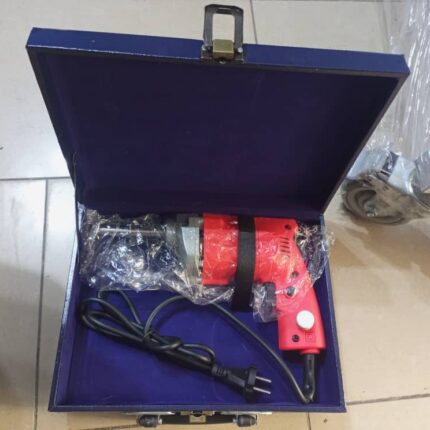
Cast Saw
A medical device used primarily for removing orthopedic casts.
Main Features:
- Cutting Mechanism: High-speed oscillating blade that moves side to side, cutting through hard cast material without harming underlying skin
- Safety: Oscillating blade technology minimizes the risk of patient injury by preventing accidental tissue damage
- Ergonomic Design: Lightweight with a comfortable grip to reduce fatigue during extended use by healthcare professionals
- Power Supply: Operates on 220V/50Hz electricity

Cataract Surgery Box
A cataract surgery box is a set of ophthalmic surgical instruments, housed in a sterilization box, and designed for cataract procedures.
General Features:
Container: A stainless steel box with a silicone mat to hold the instruments in place.
Sterilization: Designed to be sterilized by standard methods such as autoclave, ethylene oxide, dry heat, or cold solutions.
Contents: It includes a selection of ocular microsurgery instruments specific to cataract surgery.Examples of commonly found instruments:
Blepharostat: To hold the eye open during surgery.
Scissors: Such as Vannas scissors (straight or curved), corneal scissors, or cataract scissors.
Forceps: Including Bonn-Moria forceps, capsulorhexis forceps, and corneal scleral forceps.
Cannulas: For injection or aspiration, such as the Rycroft cannula or Bonnet cannula.
Other instruments: Such as microneedle holders, Buratto-Sinskey manipulators, or phacocleavers.
These boxes contain instruments from various well-known brands in surgical ophthalmology, such as Storz, Moria, and Corneal.
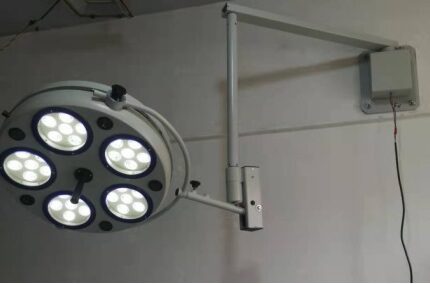
Ceiling-Mounted Surgical Light
The ceiling-mounted surgical light is a shadowless surgical light designed to provide optimal illumination during medical procedures. Its key features include:
LED Light Source:
Uses LED bulbs for a cool, infrared-free light, reducing heat and energy consumption.
Brightness and Color Temperature:
Adjustable:
Offers the ability to adjust light intensity and color temperature to adapt to the specific needs of the procedure and improve tissue color rendering.
Shadowless Design:
The LED arrangement and optical design minimize shadowing, ensuring clear visibility of the surgical field.
Flexibility and Maneuverability:
The articulated arm system allows for easy rotation and positioning of the light head to illuminate from different angles and heights.
LED Lifespan:
LED bulbs have a long lifespan.
Hygienic design:
The sleek, fully enclosed design facilitates sterilization and meets operating room hygiene requirements.
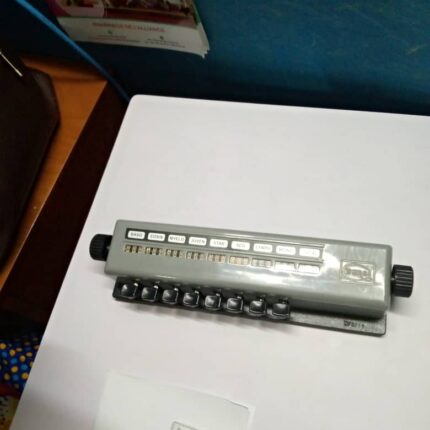
Cell Counter
Manual differential blood cell counter, commonly used in laboratories for counting different types of blood cells.
Key Features:
Differential Counting:
Allows manual counting and differentiation of blood cell types (e.g., BASO, EOSIN, MONO, LYMPH, POLY) using specific buttons for each category.
Totalizer:
Includes a window to display the total number of cells counted, with an audible signal (bell) typically indicating a count of 100 cells.
Reset Function:
Equipped with reset buttons to clear individual counts and the totalizer.
Robust Design:
Made with a metal or ABS housing that is impact and chemical resistant, making cleaning and disinfection easy.
Stability:
Equipped with a stable base with rubber feet for secure use on a work surface.
Counting Capacity:
Each key can store up to 999 units, and the device is available in different configurations (e.g., 5 or 8 keys).

Cemented Cup
The cemented cup is an acetabular component used in total hip replacements. Its main features include:
Fixation Type: Cemented, allowing for rapid postoperative mobilization.
Design: Often hemispherical to maximize bone preservation and ensure uniform distribution.
Materials: Typically made of ultra-high-density polyethylene (UHMWPE) for the main component, offering low abrasion. A radiopaque marking ring, often made of stainless steel, is included for surgical positioning and postoperative checks.
Stability and Mobility: Can be designed for dual mobility to reduce the risk of dislocation, with movement between the femoral head and liner, and between the liner and cup. Grooves on the external surface can increase grip and limit micro-movements.
Indications: Used in primary arthroplasty in patients at high risk of dislocation or in revision arthroplasty in cases of repeated dislocations. The choice between cemented and uncemented implants depends on factors such as patient age and bone quality.

Cemented Femoral Stem
The characteristics of a cemented femoral stem generally include the following:
Material and Finish:
Made of stainless steel or pure titanium.
Highly polished surface to minimize wear between the prosthesis and the cement mantle.
Design and Shape:
Simple and effective shape with proximal support.
Homothetic stem progression.
Tapered design helps transform vertical loads into compressive forces.
Neck-shaft angle of 127° or 130° for increased stability and reduced risk of dislocation.
Often collarless to prevent bone resorption due to stress shielding.
Fixation and Stability:
Fixed with bone cement, which holds it securely in position within the femur.
The unique centralizer design can provide space for stem subsidence.
Indication:
Indicated for acute traumatic fractures of the femoral head or neck.
Used in total hip arthroplasty, including cases of altered anatomy such as congenital hip dysplasia.
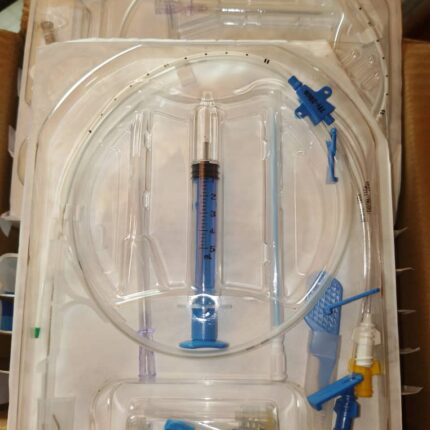

Central Venous Catheter
Central Venous Catheter Kit Features
The central venous catheter kit has the following features:
Catheter Type: 7Fr-20cm Triple Lumen Catheter (7 French, 20 cm long).
Material: Radiopaque polyurethane with FlexTip.
Included Components:
Indwelling catheter with integral extension line, extension line clamp, and integral suture wing.
Guidewire (straight soft tip on one end, “J” tip on the other) with advancement.
Attachment: Catheter clamp.
Introducer Needle: 18G x 2-3/5″ (6.5 cm).
5 ml Syringe / 5 ml Guidewire Introducer Syringe.
Clamp(s).
Vessel Dilator: 8Fr x 4″ (10 cm). Injection Cap(s).
No. 7 Injection Needle.
Flow Rates:
Distal: 54 ml/min.
Medial: 20 ml/min.
Proximal: 20 ml/min.
Intended Use: Superior vena cava catheterization using the Seldinger technique for short-term infusion therapy, parenteral nutrition, administration of hyperosmolar or venous irritant solutions, intermittent or continuous venous pressure monitoring, and blood sampling.
Sterility: Sterile; do not use if the package is opened or damaged. Fluid path components are non-pyrogenic and do not contain any drugs.
Single use only; do not resterilize. Sterilized with ethylene oxide.
Latex-Free: Yes.
Traceability Information:
Lot Number: WF240496.
Sterilization Date: 2024-04-08.
Conformity: CE Mark (2460).
Warning: Read all warnings, precautions, and instructions in the package leaflet before use to avoid serious patient injury or death.

Centrifuge
MODEL: 80-1
DESCRIPTION
It offers several key features:
Capacity and Speed
It is designed for a capacity of 80 ml and can reach a maximum speed of 4000 revolutions per minute (rpm).
Use:
This model is commonly used in various laboratory applications, including hospitals, chemistry, and biology for analytical experiments.
Features:
It is equipped with a variable speed control and a timer, and can accommodate six 20 ml tubes.
Design:
The 80-1 centrifuge is described as a versatile and reliable piece of equipment for laboratories.

Centrifuge Tube
Centrifuge tubes have several distinct characteristics:
Material: They are made of glass (often borosilicate glass for thermal and chemical resistance).
Bottom Shape: They come in conical bottoms (to promote pellet sedimentation) or round bottoms (for general applications).
Graduations: These tubes are graduated to allow precise volume measurement, while others are not. The graduations are in milliliters (ml).
Caps/Closures: They are equipped with screw caps for a tight seal, or plain necks without caps.
Strength: Centrifuge tubes are designed to withstand high centrifugal forces (expressed as RCF or xg).
Sterility: They can be supplied sterile, particularly for cell culture.
Volume: They are available in a range of sizes, typically from a few milliliters to 50 ml or more.
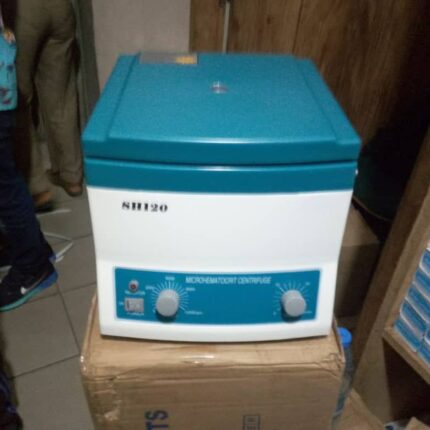
Centrifuge with Hematocrit
MODEL: SH120
DESCRIPTION:
The SH120 centrifuge with hematocrit is a laboratory device designed for the precise determination of the specific volume of blood cells and the separation of traces of blood or solutions.
Main Features:
Speed and Centrifugal Force:
It reaches a maximum speed of 12,000 rpm and a maximum relative centrifugal force (RCF) of 15,300 x g.
Capacity:
It is designed to accommodate 24 1.5 x 75 mm capillary tubes.
Motor:
It is equipped with a brushless motor, ensuring quiet, maintenance-free operation and no carbon dust pollution.
Control and Safety:
It features microcomputer control and an automatic balancing system for optimal precision. Safety features include a durable plastic housing with a metal cover, a mechanical door lock, and a safety switch.
Operation:
It is easy and safe to use, with low noise and stable performance, enabling rapid centrifugation even with small amounts of blood.

Cerclage System
Features of the SuperCable® Iso-Elastic™ multifilament polymer cerclage system, shown in the image, include:
Iso-elasticity: Allows long-term dynamic compressive loading on bone fragments, promoting better healing and greater construct strength.
Superior fatigue resistance: Compared to metal cables and wires, reducing complications related to fracture.
Polymer cable: Eliminates metal contact with metal implants, the risk of sharps injuries, and glove tears.
Unique “no-crimp” locking mechanism: Allows for easy cable tightening, saving time in the operating room and reducing the number of cables required.
Biocompatibility: The cable is composed of UHMWPE strands braided over a nylon core, and the clasp components are made of titanium alloy.
Flexible Design: The polymer cable is flexible and has high fatigue and tensile strength.
Larger Footprint: The double-stranded cable can minimize penetration into soft bone.
Ease of Use: The polymer cable is easy to handle and can be quickly cut with a scalpel for rapid reinsertion in an emergency.
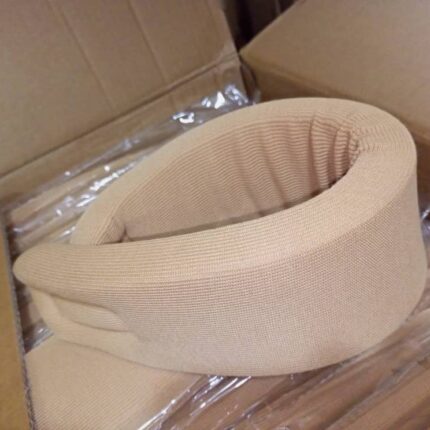
Cervical Collar
Navid Code 154 Medical Cervical Collar – Features & Applications
Key Specifications:
-
Materials: Soft sponge core with breathable fabric cover
-
Closure System: Adjustable hook-and-loop (Velcro®) strap for secure fit
-
Hypoallergenic: Anti-irritation design for sensitive skin
-
Origin: Manufactured in Iran
Design & Comfort:
-
Balanced Support: Maintains natural cervical alignment while allowing gentle mobility
-
Lightweight & Comfortable: Ideal for prolonged wear without skin irritation
-
Contoured Shape: Anatomically designed to reduce pressure on the jaw and occiput
Medical Applications:
-
Cervical Stabilization:
-
Post-traumatic support (whiplash, minor cervical injuries)
-
Management of cervical osteoarthritis (spondylosis)
-
Torticollis (congenital or acquired) correction
-
-
Therapeutic Benefits:
-
Reduces nerve root compression via mild axial traction
-
Alleviates muscle spasms and ligament strain
-
Prevents abnormal neck flexion/extension
-
-
Post-Surgical Use:
-
Supplemental support after cervical spine procedures
-
Target Conditions:
✔ Cervical radiculopathy
✔ Cervicalgia (neck pain syndromes)
✔ Mild cervical disc herniation
✔ Postural neck deformities
Advantages:
-
Non-restrictive for daily activities
-
Adjustable fit accommodates varying neck circumferences
-
Easy to clean (hand wash recommended)
Note: For moderate to severe instability, consult a physician for rigid collar alternatives.