

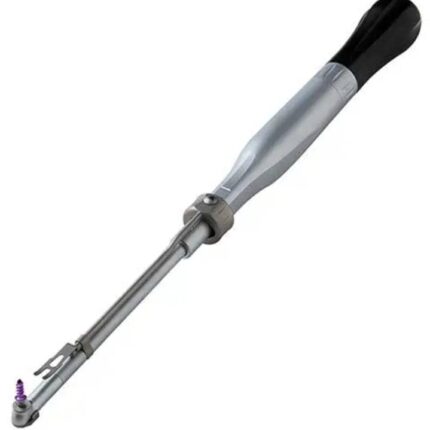
OPTIMUS Manual Orthopedic Screwdriver
The OSTEONIC 90° Angled Screwdriver allows surgeons to perform intraoral osteosynthesis in the mandible without a transoral approach.
Applicable to fractures of the mandible body, condylar neck, and ramus.
FEATURES AND BENEFITS
Low-profile head allows for better visibility and movement for intraoral treatment
Quick and easy intraoperative tool changes
Simple disassembly for easy cleaning

Orbital shaker
MODEL: KJ-201BS
The KJ-201BS labofeature orbital shaker, manufactured by TECHNOLAB, features the following:
Device Type: This is a magnetic stirrer (orbital shaker) designed for laboratory applications, including mixing RPR test cards for syphilis, TRUST, and VDRL.
Performance: It is equipped with a high-quality DC motor with a lifespan of over 1,000 hours. The rotation speed is adjustable, typically from 0 to 230 revolutions/minute (rpm), and can be adjusted via an analog dial for continuous adjustment.
Design and Stability: Its compact, compact, and robust structure ensures high stability during operation and reduces noise. It is suitable for various laboratory environments.
Worktop Dimensions: The worktop measures approximately 224 x 152 mm.
Portability: The KJ-201BS series models are portable.

Orliman Textile Night Splint
The Orliman Textile Night Splint, also known as the Fastitech Night Orthosis, is designed for the nighttime treatment of plantar fasciitis and similar problems.
Its key features include:
Design and Materials:
Made with Space 3D laminated fabric, featuring a terrycloth inner lining and a highly breathable outer mesh.
Incorporates a non-slip base to prevent falls.
Reinforced tongue with two stays for added support.
Functionality and Fit:
The orthosis fastens with six straps over pin buckles, ensuring a secure fit.
An adjustable front strap, running from the tip of the tongue to the toes, allows for tension adjustment and dorsiflexion control.
Designed to immobilize the ankle and foot overnight and induce dorsiflexion of the metatarsophalangeal joints to reduce pain associated with inflammation.
Indications:
Primarily used for the treatment of plantar fasciitis, Achilles tendonitis, and other symptoms of posterior chain muscle stiffness.
Helps increase and/or maintain ankle dorsiflexion range of motion overnight.

Orthopedic Bone Cutter for Spine Surgery
The instruments shown in the image are orthopedic rod cutters, also known as bone cutters or rod cutters for spinal surgery. Here are their main features:
Material: Made of high-quality stainless steel.
Cutting Diameter Range: Designed to cut rods or bones with a diameter ranging from 4.0 mm to 6.5 mm, providing high precision during operations.
Total Length: Approximately 550 mm, improving maneuverability during surgery.
Operation: Simple manual operation for precise cutting and increased patient safety.
Design: Ergonomically designed to reduce hand fatigue and ensure comfort during prolonged use.
Versatility: Suitable for a wide range of applications, particularly in orthopedic and spinal surgery.
Blades: Sharp blades for precise bone cutting, increasing surgical efficiency.
Specific Use: Can be used as a pin cutter for bone pins and for in situ cutting of 3.5 to 4.5 mm rods.
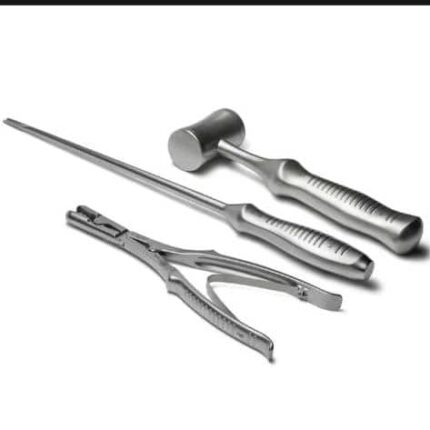
Orthopedic Instruments
Orthopedic instruments offer several key features and benefits:
Ergonomic Design: They are designed to reduce pressure points and joint stress for the surgeon, providing better handling and reduced fatigue.
Material and Durability: Made entirely of stainless steel, they are robust and have no critical interfaces with other materials, ensuring their durability.
Improved Grip: Their unique design offers a significant improvement in grip (up to 70% more than previous products), requiring less force for safe use.
Ease of Reprocessing: The instruments are designed for fully automated cleaning, eliminating manual pre-cleaning steps and saving considerable time during reprocessing.
Safety and hygiene: They help improve daily work in central sterilization departments (CSSD) by facilitating visual inspection and ensuring the safety of staff and patients thanks to their uniform surfaces and rounded shapes.
Interchangeable jaws: Some instruments, such as forceps, can have interchangeable jaws, providing greater flexibility for repairs and various procedures.
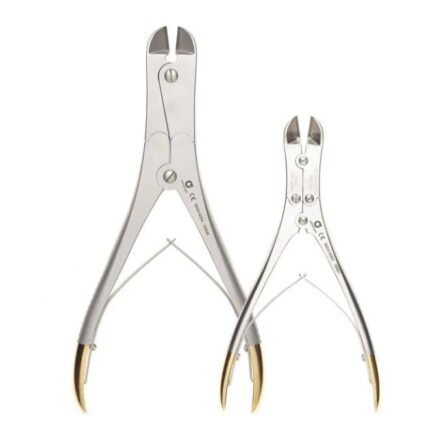
Orthopedic Nippers
Available in 2 sizes
Choice of two cutting pliers. One cuts up to a diameter of 1.6 mm, while the other cuts up to 2.5 mm.
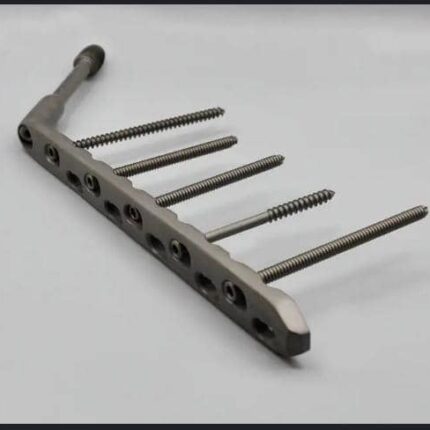
Orthopedic Plate and Screw
Characteristics of Orthopedic Plates and Screws
Orthopedic plates and screws, like the ones pictured, are medical devices used in surgery to stabilize fractures and promote bone healing.
Their main characteristics are as follows:
Material: They are generally made of stainless steel or titanium alloys (such as Ti-6Al-4V), chosen for their biocompatibility, corrosion resistance, and strength. Titanium is often preferred for its light weight and lower modulus of elasticity, which can reduce the stress shielding effect on the surrounding bone compared to stainless steel.
Biocompatibility: The materials used are selected to be well tolerated by the human body, thus minimizing the risk of rejection or allergies.
Design:
Plates: These act as internal splints, providing a framework for fixation of bone fragments and facilitating anatomical fracture reduction. They can have specific designs, such as locking compression plates (LCPs) with combination holes for different types of screws.
Screws: These are designed to secure the plates to the bone and can vary in diameter, length, and thread type (cortical for dense bone, cortico-cancellar for less dense bone) depending on the anatomical area and bone characteristics. Screws are also available in different types, such as malleolar, cortical, and cancellous screws.
Function: They are used for internal fixation of fractures, correction of deformities, and support of bone healing. They provide the necessary stability during the healing process.
Strength and Durability: The materials chosen give the implants high mechanical strength to withstand the stresses exerted on the bone during healing and ensure long-lasting fixation.

Orthopedic Splints
The object in the image is an orthopedic splint, likely for the wrist and/or hand, and its main characteristics are:
Immobilization and Support: It is designed to maintain and immobilize a portion of the upper limb (wrist, hand, fingers) in a neutral or therapeutic position, aiding in healing or pain relief.
Material and Comfort: Made of a soft and potentially thermoformable material to adapt to the user’s morphology, it may include padded elements for comfort, such as fabric linings (e.g., jersey).
Closure System: It uses hook-and-loop straps (Velcro) for easy closure, a secure fit, and complete support of the limb.
Adaptability: Some splints of this type can be thermoformed for a precise fit and can be cut to fit the user’s specific morphology.
Function: It is used for various conditions such as sprains, fractures, tendonitis, or osteoarthritis (such as rhizarthrosis of the thumb), providing support and compression.

Orthopedic Surgery Instrument Set
The image shows a set of surgical instruments for orthopedic procedures, such as femoral or tibial nails. General characteristics of such sets may include:
Material: Typically made of titanium or medical-grade stainless steel.
Components: The set includes nails (such as interlocking tibial or femoral nails), screws, rods, drills, screwdrivers, and other tools specific to bone surgery.
Sizes: Instruments, particularly nails and screws, are available in various lengths and diameters to suit the patient’s anatomical needs. For example, femoral nails can range from 280 mm to 400 mm in length with a diameter of 11 mm.
Application: Designed for internal fixation of bone fractures, particularly those of the tibia and femur.
Finish: Instruments may have a glossy finish.
Certifications: Surgical instruments of this type often comply with international quality standards such as CE, ISO 9001, and ISO 13485.
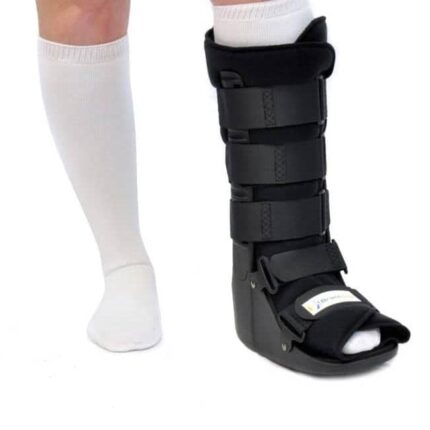

Orthopedic Walking Boot
Features of the orthopedic walking boot (Brace Direct Air CAM Walker Fracture Boot Tall) shown in the image include:
Lightweight, Low-Profile Design: Promotes a more natural walking gait with a low-profile rocker sole and lightweight design.
Durable Support and Protection: Provides robust support for foot, ankle, or leg injuries, including fractures, severe sprains, and post-surgery protection.
Adjustable Pneumatic Compression System: A built-in air pump allows for customized compression to stabilize the foot and ankle, reduce swelling, and improve recovery.
Comfort and Breathability: Featuring an ultra-soft, breathable cushioned bootie and an open-toe design to maximize airflow and minimize skin irritation.
Custom Fit: Adjustable medical-grade Velcro straps accommodate swelling, bandages, and post-operative dressings.
Versatility: Can be worn on the left or right foot and is available in various sizes for a precise fit.
Non-Slip Sole: The non-slip tread helps maintain stability and prevent falls.
Shock Absorption: A shock-absorbing insole makes every step less painful.

Otoscope
Professional Otoscope for Ear Examination
Clinical Purpose:
A precision medical device designed for detailed visualization of the ear canal and tympanic membrane (eardrum).
Key Features:
-
Optical System
-
3x or higher magnification lens
-
High-intensity LED illumination (cool, white light)
-
Wide-angle viewing capability
-

Oxygen Concentrator
Specification
JAY-10
Flow Rate
0.5-10L/min
Outlet Pressure 6-10PSI(0.04-0.07mpa)
Oxygen Concentration 93% (±3%)
Power Consumption ≤ 880W
Sound Level ≤ 50dB
Dimension 360*375*600mm
Alarm
1. Power failure alarm;
2. High and low pressure alarm;
3. Low oxygen concentration alarm;
Features
✧ With medical grade oxygen concentration above 90%, better treatment effect for patients with pulmonary fibrosis;
✧ Innovative cooling technology to ensure 24/7/365 operation;
✧ Humidifier bottle with a pressure relief value of 6PSI, safer and more comfortable;
✧ Four flexible castors with two brakes, easy to move or situate in any direction, safer and more convenient;
✧ Simple operation functions and easy-to-read LCD Display;
✧ Apply for HFNC, provide oxygen with stable high concentration, more comfortable;