1ml Syringe

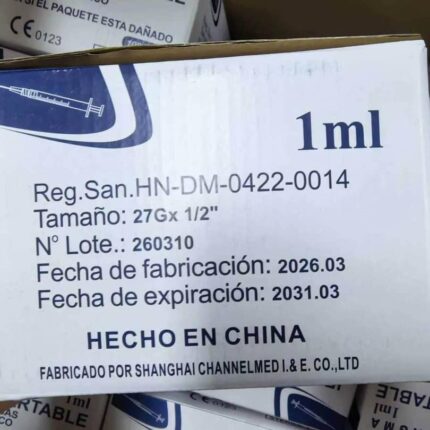
The characteristics of the 1ml disposable syringe are as follows:

Type and Sterility:
This is a sterile, non-toxic, and non-pyrogenic (pyrogen-free) disposable syringe. It is intended for single use only and should not be used if the package is opened or damaged.

Capacity and Tip Type:
It has a capacity of 1 ml/cc and is equipped with a Luer Slip tip.

Materials and Transparency:
The syringe body is made of medical-grade polypropylene, transparent enough to allow easy observation of the mixing and liquid flow. The graduations are indelible for easy reading.

Manufacturing and Standards:
It is manufactured in China and complies with ISO 13485 and EN550 standards, being sterilized by ethylene oxide gas (EOG).

Safety and Use:
The design ensures easy handling, and the plunger allows for smooth, leak-free circulation. It is individually sealed in a package ensuring maximum safety and sterility.

Draps d’examen

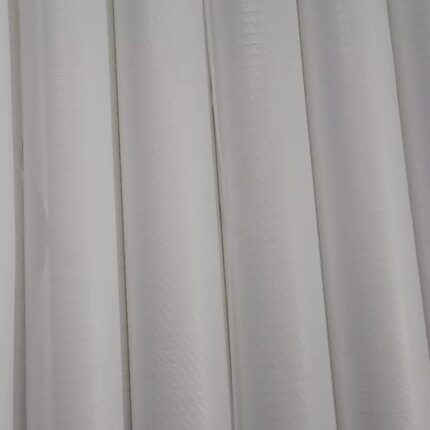
Les draps d’examen, couramment utilisés dans les milieux médicaux ou esthétiques pour recouvrir les tables ou divans d’examen.

Caractéristiques générales des draps d’examen :

Matériaux:
Généralement fabriqués en pure ouate de cellulose, parfois avec plusieurs plis (ex: 2 plis) pour une meilleure absorption et résistance. Certains peuvent être plastifiés pour une imperméabilité accrue.
Dimensions :
Disponibles en différentes laizes (largeurs), couramment 50 cm ou 50 cm, et en rouleaux de diverses longueurs, souvent prédécoupés en formats standards , pour faciliter l’utilisation et l’hygiène.

Type :
Sont lisses pour une meilleure tenue et absorption.

Hygiène :
Conçus pour un usage unique afin de garantir une propreté maximale et prévenir la contamination croisée entre les patients.

Conditionnement :
Souvent vendus en cartons contenant plusieurs rouleaux.

Shoe Covers

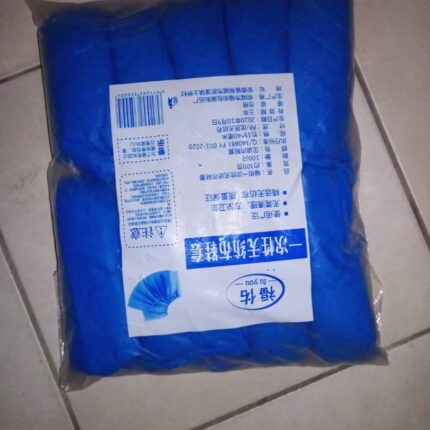
The characteristics of the disposable shoe covers shown are as follows:

Product Name: Fuyou Disposable Non-woven Shoe Covers.

Material: Polypropylene (PP) / High-quality non-woven fabric.

Weight: Approximately 300 grams.

Quantity: 100 pieces per pack.

Color: Blue.

Execution Standard: Q/340881 FY 001-2020.
Specifications: Approximately 15-40 g
Shelf Life: Three years.
Grade: Qualified.
Manufacturer: Fuyou Packaging Products Factory of Tongcheng City.
Manufacture Location: Tuqiao Village, Xindu Town, Tongcheng City, Anhui Province.

Advantages: Widely used, no cleaning required, practical and hygienic, ensuring quality thanks to the selected non-woven fabric.

Probe cleaner

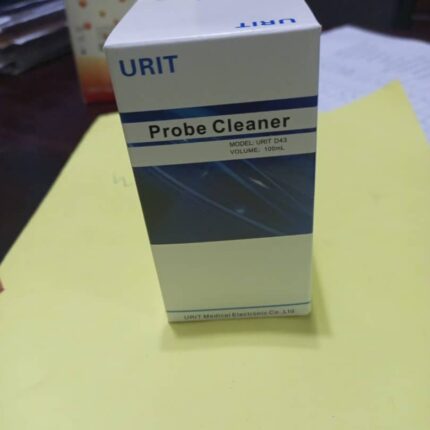
Le “Probe Cleaner URIT” es un réactif de nettoyage utilisé spécifiquement pour les analyseurs d’hématologie URIT.
Caractéristiques principales :

Type de produit : Nettoyant de sonde (Probe Cleaner).
Modèle : URIT D43.
Volume : 100 ml.
Fonction : Il est conçu pour effectuer des nettoyages de routine des équipements d’hématologie, aidant à éliminer les caillots ou les résidus de sang qui peuvent rester dans le système.

Compatibilité : Il est approprié pour la série d’analyseurs d’hématologie automatisés URIT.
Conditions de stockage : Il doit être conservé à une température de 2 à 40 ℃ et à l’abri de la lumière directe du soleil.

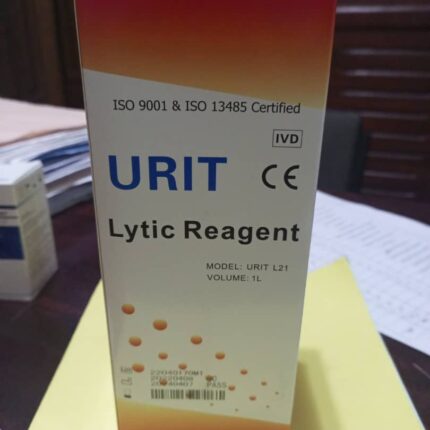
Lyse

MODEL: URIT L21

URIT Lytic Reagent.
URIT Lyse Reagent Description:

Use:
This reagent is specifically designed for use with the URIT series automated hematology analyzers.

Function:
Its primary function is to measure blood cell content, which is essential for blood analysis.

Composition:
It is composed of various ingredients, including chloride, sulfate, preservative solution, anticoagulant, buffer solution, and quaternium.

Certification:
The product is certified according to ISO 9001 and ISO 13485 standards and bears the CE mark, indicating its compliance with European standards.

Model and Volume:
The specific model shown in the image is the URIT L21, and it is packaged in a 1-liter volume.

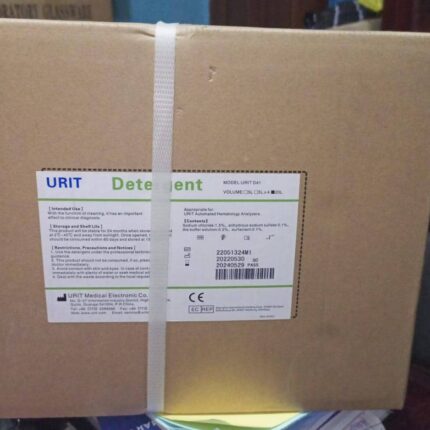
Detergent

The characteristics of URIT Detergent, as indicated on the packaging, are as follows:
Product Name: URIT Detergent
Model: URIT 041
Volume: 20L
Intended Use: Cleaning for URIT automated hematology analyzers, with an important impact on clinical diagnosis.
Contents: Sodium chloride (1.5%), anhydrous sodium sulfate (0.2%), buffer solution (0.2%), surfactant (0.1%).
Storage and Shelf Life: Stable for 24 months when stored between 2 and 40°C and protected from light. Once opened, it must be consumed within 60 days and stored at 18°C.
Restrictions, Precautions, and Warnings:
Use the detergent under professional supervision. Do not consume this product; if swallowed, seek medical advice immediately. Avoid contact with skin and eyes; if contact occurs, rinse immediately with plenty of water. Dispose of waste in accordance with local regulations.
Additional Information:
Batch Number: 22051324M1
Certification: CE Marked
Manufactured by: URIT Medical Electronic Co. Ltd.

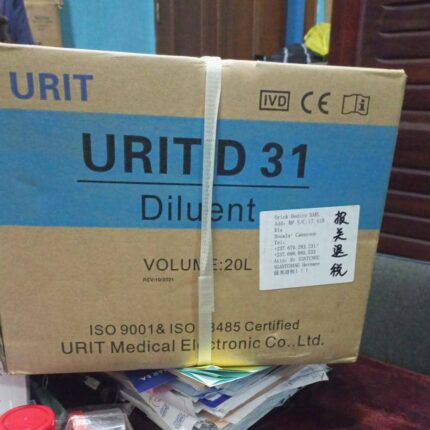
Diluent

The product presented is URIT D 31 Diluent, and its main characteristics are as follows:
Product Type: Diluent.
Volume: 20 Liters.
Manufacturer: URIT Medical Electronic Co., Ltd.
Certifications: ISO 9001 and ISO 13485.
Possible Uses: URIT D 31 Diluent is used in urine analyzers, such as the URIT-31 Urine Analyzer.
Revision: REV: .

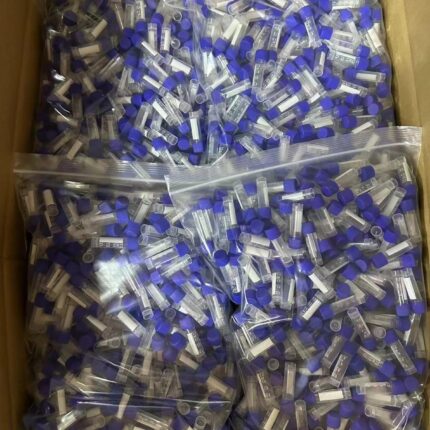
Cryotubes

2 ml cryotubes, such as those shown in the image, have several important characteristics for their use in laboratories:

Materials:
They are generally made of high-quality polypropylene, a material resistant to corrosion, extreme temperatures (low and high), and acids and bases.

Capacity and Dimensions:
The typical capacity is 2 ml, with dimensions of approximately 11 x 50 mm (diameter x length).

Leak-Proof:
They are designed with a screw cap and often equipped with a silicone washer to ensure an excellent seal, preventing leaks and sample volatilization, even at very low temperatures (down to -180°C or -200°C).
Freestanding:
These vials have a round or conical bottom that allows them to stand upright, facilitating handling and storage.

Graduations and Writable Area:
They feature clear graduations to facilitate volume measurement and a writable area on the tube for labeling and sample identification.

Resistance:
They are designed to withstand very low temperatures (down to -180°C or -200°C) and can withstand high temperature and high pressure conditions, such as autoclaving.

Sterility and Non-Toxicity:
Many cryogenic vials are sterile, non-pyrogenic, and non-cytotoxic, ensuring the safety of biological samples.

Plastic Hemolysis Tubes

Plastic hemolysis tubes are often used in laboratories.
Explanation:
Description:
These are round-bottomed test tubes made of polystyrene (PS) or polypropylene (PP), designed to contain liquids, particularly blood samples.

Use:
They are commonly used in laboratories for sample collection, serum or plasma separation after hemolysis (destruction of red blood cells), and various medical or research analyses.

Packaging:
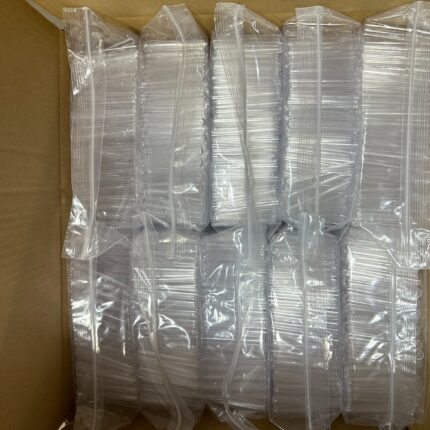
As shown in the image, they are packaged in bulk quantities of 500 pieces, sometimes sterile and without caps.

Coverslips

Coverslips have the following characteristics:

Material: They are made of D 263 M borosilicate glass, of the first hydrolytic class, known for its chemical resistance.

Quantity: The package contains 100 coverslips.

Dimensions: The coverslips measure 22x22mm.

Optical quality: They are colorless, perfectly clear, and suitable for fluorescence microscopy.

Conformity: They meet all the requirements of DIN ISO 8255.

Thickness: The thickness corresponds to standard No. 1 (0.13-0.16 mm).

Identification Bracelet

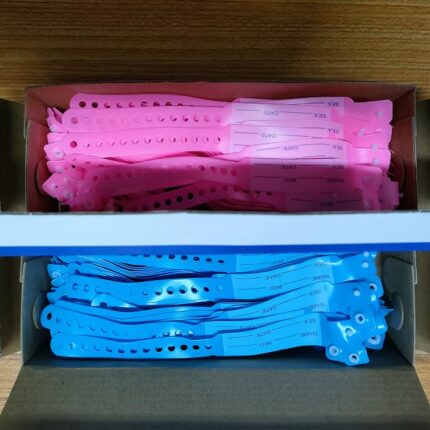
The characteristics of the identification bracelets are as follows:

Color:
The bracelets are available in two distinct colors, pink and blue.

Material:
They are made of a soft, durable plastic or vinyl material commonly used for identification bracelets.

Writable Information:
Each bracelet has pre-printed fields for recording key patient information, such as:
NAME: For the patient’s name.
BED: For the patient’s bed number or location.
SEX: For the patient’s sex.
DATE: For the admission or identification date.

Closure:
The bracelets feature a perforated closure mechanism, allowing for a secure fit around the wrist.

Packaging:
They are packaged in cardboard boxes.

Microscope Bulb

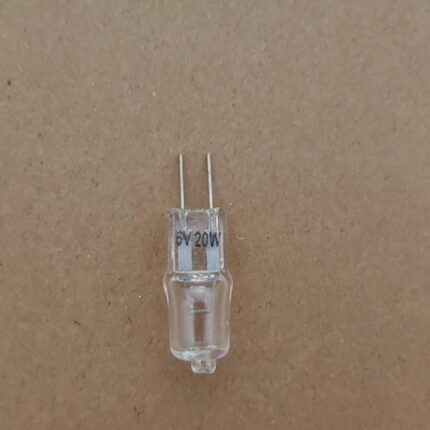
The specifications of a halogen microscope bulb are as follows:
Voltage: 6V
Wattage: 20W
Explanation of specifications:
6V (Volts):
This indicates the nominal electrical voltage at which the bulb is designed to operate. A 6V bulb is generally used in low-voltage applications, such as certain types of machine lighting, microscope lighting, or specific lighting systems requiring low voltage.

20W (Watts):
This represents the electrical power consumed by the bulb when in operation. Wattage relates to the amount of light produced, although luminous efficacy (lumens per watt) can vary depending on the type of bulb.