

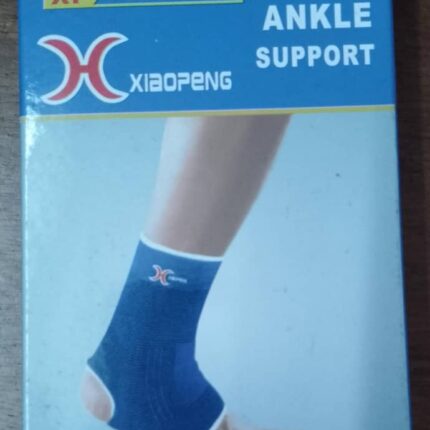
Ankle Brace
The “XP Sports Goods X” ankle support brace has the following features:
Brand and Model: XP Sports Goods, Model No. 6602, under the brand name Xiaopeng.
Function: Designed to provide ankle support, potentially helping prevent injuries such as sprains and relieve pain through targeted compression.
Design: Ergonomic and form-fitting, allowing it to be worn under socks and in shoes without discomfort.
Material: Likely made from a stretchy, breathable fabric to ensure comfort and effective support.
Use: Ideal for sports, strength training, fitness, aerobics, or post-injury recovery.
Size: Available in one size and adjustable, providing a firm and comfortable fit.
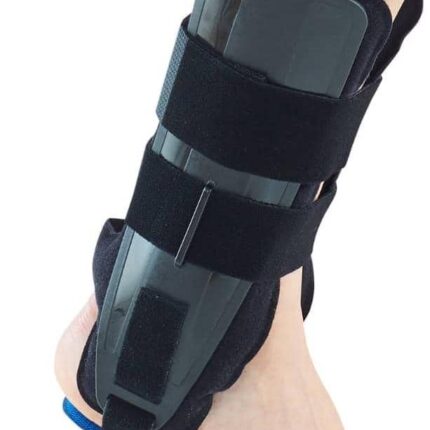
Ankle Brace
The ankle brace presented has several features designed to support and stabilize the ankle:
Rigid Structure and Support Straps: The brace incorporates rigid reinforcements, likely made of thermoplastic material, that wrap around the ankle to limit unwanted movement and prevent recurring sprains. Non-elastic Velcro straps provide a secure and adjustable fit around the lower leg and foot.
Comfort and Adjustability: The interior of the brace is often made of terry cloth for increased comfort and better moisture absorption. The design generally accommodates various sizes and shapes of ankles, including swollen or deformed ankles, thanks to a large opening and adjustable straps.
Prevention and Recovery: It is designed to protect the ankle from incorrect movement, relieve pain and inflammation, and improve blood circulation to promote faster healing after injuries such as sprains.
Additional features: Some splints may include gel pads for targeted compression and massaging, or silicone padding to protect against shock and vibration. Features like an integrated application tab can make donning easier.
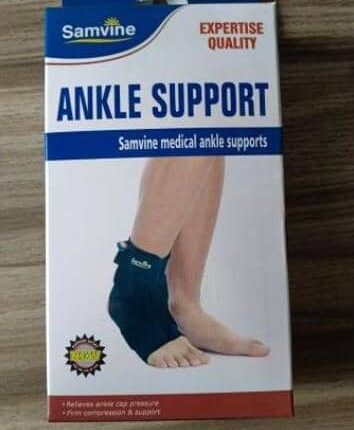
Ankle support
Ankle Support/ Brace works perfectly for women and men. It is carefully designed to protect and heal ankle sprain. It possesses Quick sweat-absorbent feature that gives thermal compression for long hours of continuous use!Perfect for running, aerobics, football, weightlifting, hiking, and can also be worn during your daily activities. Seamlessly made with Soft-wavy Silicon with added friction aims to perfectly hold in the ankle in place coupled with an Open Heel DesigN
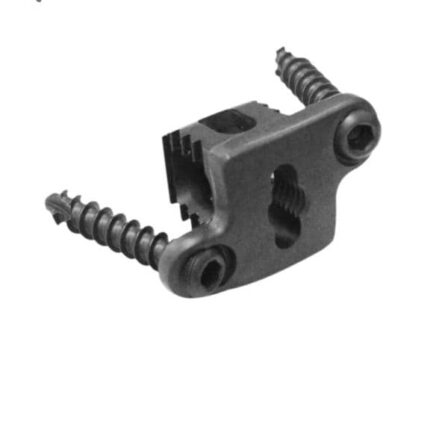
Anterior Cervical Cage Peek
- An Anterior Cervical Cage Titanium is a spinal implant used in spinal surgeries involving the cervical spine.
- The small, hollow design of the cage allows it to be placed between the vertebrae between the vertebrae in the cervical spine.
- The lordotic curve of the implant mimics the natural curvature of the spine.
- Especially used in Anterior Cervical Discectomy and Fusion Surgery (ACDF), this cage supports the space between the vertebrae after the removal of a damaged disc, promoting bone growth and spinal alignment for better stability.
- Made out of PEEK material, these cages prove to be lighter, potentially reducing post-operative stress on the spine

Anti-bedsore mattress
Installation and connection: Lay the mattress out on a hospital or single bed, connect the pump’s air tube to the mattress, and plug the air pump into an electrical socket, placing it more than 20 cm from the floor in a dry, clean place.
Switching on: Switch on the air pump; the indicator light will come on and the mattress will begin to operate.
Precautions for use: Switch off the power supply immediately and stop using the pump if it operates abnormally (loud noise, strange smell).
Weight restrictions and medical advice: This mattress must not be used by patients weighing more than 135 kg and must only be used under the supervision of a doctor.

Anti-decubitus mattress
The main features of an anti-decubitus air mattress are:
Prevention and treatment of pressure ulcers:
Designed to reduce pressure on areas of the body prone to pressure ulcers (or pressure sores) in people confined to bed for long periods.
Alternating pressure technology:
Uses a built-in electric pump to inflate and deflate air chambers in regular cycles, which evenly distributes body weight and improves blood circulation.
Durable and hygienic material:
Generally made of medical-grade PVC or TPU, offering durability, water resistance, and hypoallergenic properties, making cleaning and maintenance easier.
Low-noise air pump:
The pump is designed to be quiet so as not to disturb the patient’s sleep.
Thickened fabric:
The mattress features thickened fabric for added strength and durability.
CE Conformity:
Indicates that the product complies with European Union safety, health, and environmental protection standards.
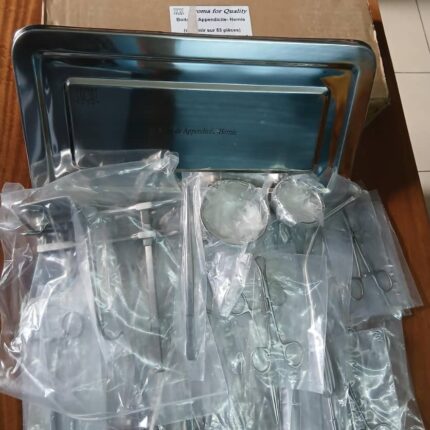
Appendicitis-Hernia Box
The appendicitis and hernia box is a set of surgical instruments specifically designed for procedures related to appendicitis and hernias.
Features of the appendicitis and hernia box:
Container: It is generally contained in an autoclavable stainless steel or aluminum box.
Instruments: The box contains a variety of surgical instruments essential for these operations, such as:
Forces (dressing, drape, Halstead, Chaput, Bengolea)
Scalpel handle
Sterilization: The instruments are delivered in an autoclavable container, allowing them to be sterilized before surgical use.
Use: This set is intended to facilitate surgical procedures for the removal of an inflamed appendix (appendectomy) and the repair of hernias, particularly inguinal hernias.
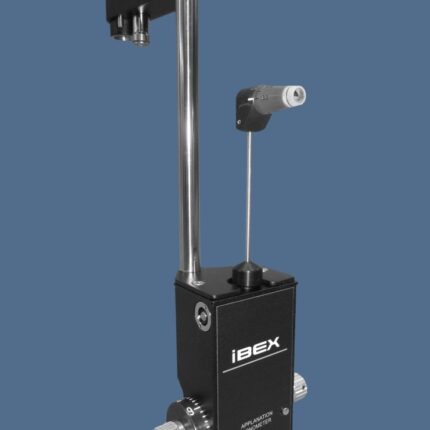
Applanation Tonometer
CT) use a puff of air to flatten the cornea, eliminating the need for anesthesia or contact.
Corneal Thickness Influence: The rigidity and thickness of the cornea affect the measurement; thinner corneas may result in artificially low readings, while thicker corneas may lead to falsely high ones.
Slit-Lamp Integration: The most common Goldmann applanation tonometer is mounted on a slit lamp.
Calibration: Instruments require daily calibration using standard weights to ensure accuracy.
Mire Rings (Goldmann): A split-image prism creates mires (marked rings) that are aligned to determine the applanation point and thus the IOP.

Armpit Crutch
Characteristics of Armpit Crutches
Armpit crutches have the following characteristics:
Type: These are underarm crutches, designed to be used under the armpits, providing support for body weight and balance.
Materials: They are generally made of aluminum alloy for lightness and strength, with rubberized handles and tips for comfort and grip.
Adjustability: They are height-adjustable, allowing them to adapt to the user’s height, and often also at the handle level for ergonomic positioning.
Components: They include padded armpit supports, hand grips, and non-slip tips on the base for stability.
Use: They are used as walking aids for people who have difficulty moving due to injury, surgery, or a medical condition affecting lower limb mobility.
Condition: New crutches, wrapped in plastic, suggesting they have not yet been used.
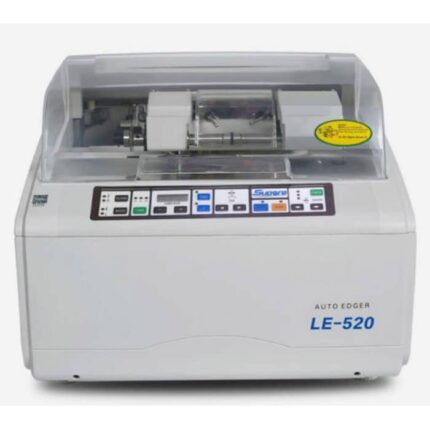
Auto Lens Edger
MODEL: LE-520
The LE-520 Auto Edger is an optical equipment designed for the automatic edger of eyeglass lenses.
Here are its main features:
Capable of processing CR39, glass, and PC (polycarbonate) lenses
Flat edge polishing and beveling functions
Equipped with a universal non-slip chuck
Standard PC functionality
Precision and Stability: Designed to process lenses with precision and stability
Ease of Use: Inherits the design style of Supore’s LE series, making it easy to use
Power Supply: 220V/50Hz
Unit Weight: Approx. 50 kg.
Power Consumption: 500W.
Technical Parameters (min/max):
Lens Size: Minimum 22 mm, Maximum 100 mm.
Adjustable Measuring Range: -6.0 mm to +6.0 mm in 0.05 mm increments.
Dimensions: 510 mm x 490 mm x 40 mm.
Grinding Wheels (Typical Configuration): Includes wheels for glass, CR, and polycarbonate, as well as a polishing wheel and a V-groove wheel.

Autoclave
AVAILABLE IN 50, 75, and 100 liter sizes
Features of the 50, 75, and 100-liter Autoclaves
The 50, 75, and 100-liter autoclaves are sterilization devices commonly used in laboratories, hospitals, and research centers. Their main features include:
Capacity: 50, 75, and 100 liters, allowing for the simultaneous sterilization of a large volume of instruments or materials.
Materials: Constructed of stainless steel (304 or S30408), resistant to corrosion and high temperatures.
Operating Temperature: Sterilization temperature range typically between 105°C and 134°C.
Operating Pressure: Typical working pressure range between 0.04 and 0.15 MPa, with a safety valve for overpressure protection.
Timer: Allows you to set the sterilization cycle time from 0 to 60 minutes.
Safety Features: Includes overload, leakage, overheating, overpressure, and water shortage protection, as well as a safety door interlock.
Indicators: Indicator lights indicating operating status and a dual-scale pressure gauge.
Design: Vertical type with a quick-opening handwheel door structure.

Autoclave
- Type: Portable, electrically heated steam autoclave for laboratory or medical use
- Material: High-quality SUS304 stainless steel
- Heating System: Electric heating system
- Leak-Proof: Silicone gasket for a secure, leak-proof seal
- Pressure Gauge: Dual-scale gauge to monitor working pressure
- Safety: Double safety valve for enhanced protection
- Tap: High-pressure tap included
- Volumes and Dimensions: Available in multiple volumes (e.g., 18L, 24L, 30L) with chamber sizes (e.g., Φ300-330mm for 18L, Φ300-460mm for 24L)
- Operating Temperature and Pressure: 115-129°C, 0.145-0.165 MPa
- Control: Features time (0-80 min) and temperature control, plus water shortage protection